Know the six approaches to Psychology and the focus of each
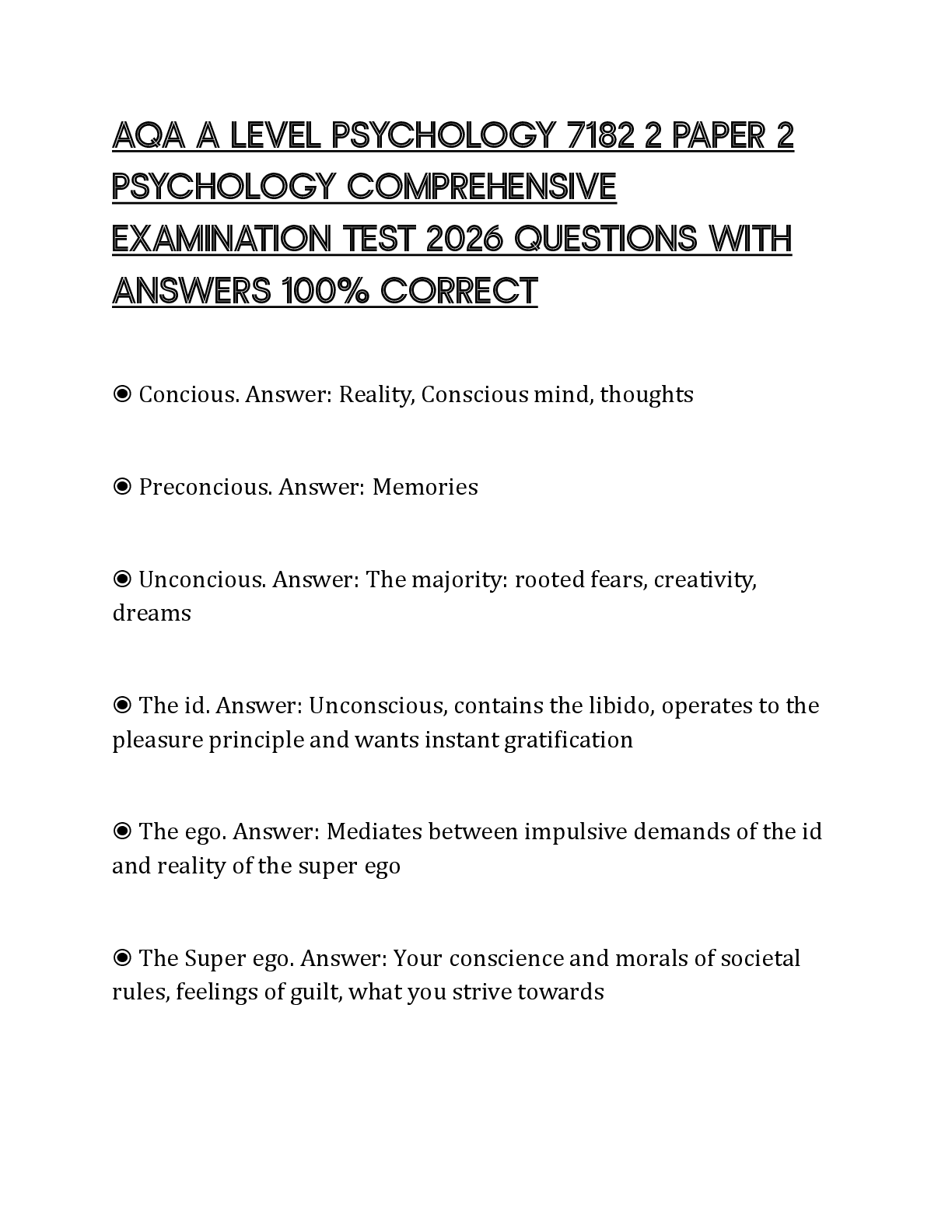
a. Psychoanalytic (Freud) – unconscious mind that effects our behavior, childhood & sex
on personality development
b. Behavorial (Watson, Skinner) – concentr
...
Know the six approaches to Psychology and the focus of each
a. Psychoanalytic (Freud) – unconscious mind that effects our behavior, childhood & sex
on personality development
b. Behavorial (Watson, Skinner) – concentrates on what the subject does rather than
feels
c. Gestalt (Kohler, Wertheimer) – whole experience is the sum of the parts, need all of
consciousness to understand
d. Humanistic (Maslow, Rogers) – all humans are motivated to reach full potential
e. Cognitive – study cognition instead of behavior
f. Biological/Medical/Physiological – interdisciplinary work
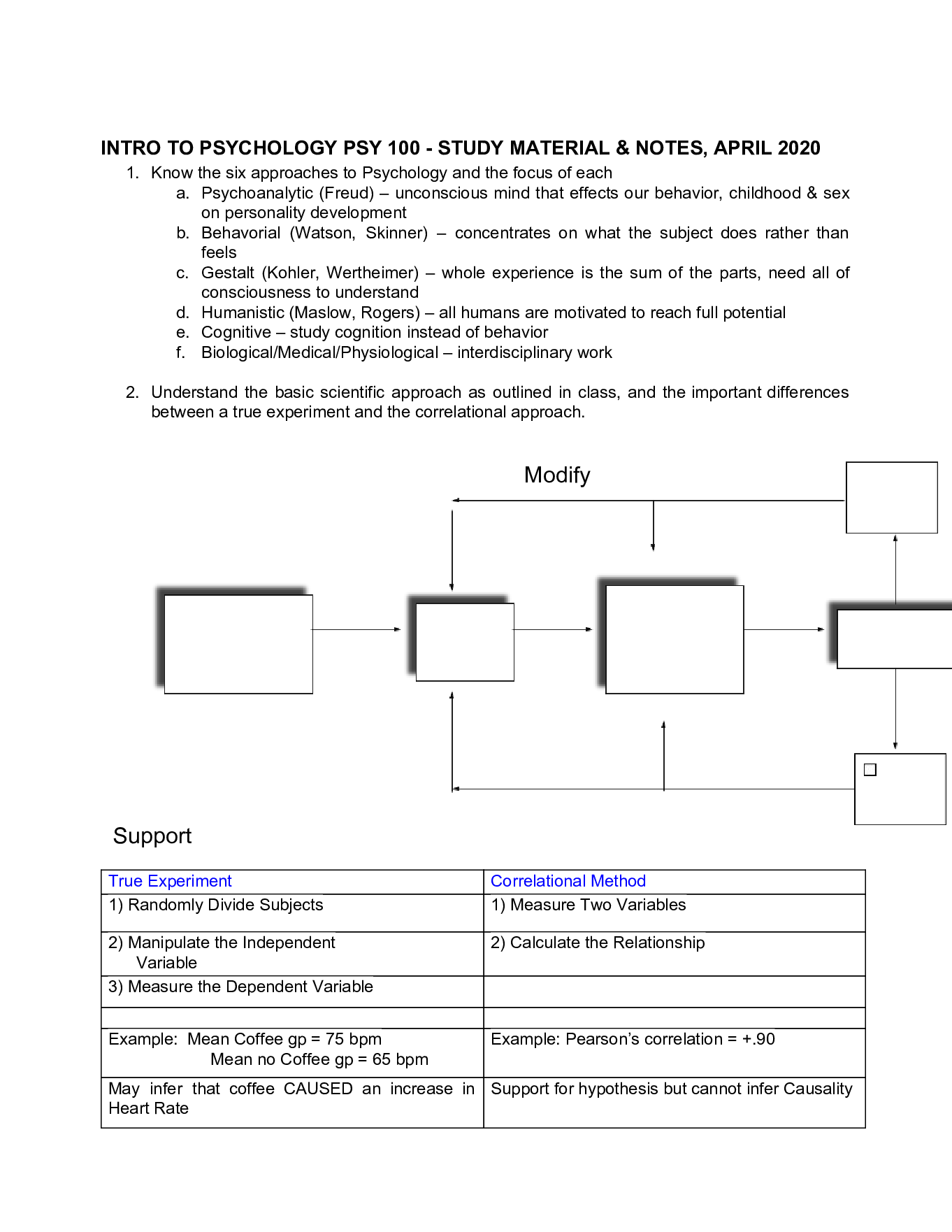
2. Understand the basic scientific approach as outlined in class, and the important differences
between a true experiment and the correlational approach.
Modify
Support
True Experiment Correlational Method
1) Randomly Divide Subjects 1) Measure Two Variables
2) Manipulate the Independent
Variable
2) Calculate the Relationship
3) Measure the Dependent Variable
Example: Mean Coffee gp = 75 bpm
Mean no Coffee gp = 65 bpm
Example: Pearson’s correlation = +.90
May infer that coffee CAUSED an increase in
Heart Rate
Support for hypothesis but cannot infer Causality
3. William James, Whilhelm Wundt, Charles Darwin, Sir Francis Galton, James Watson, Titchener
a. William James – functionalism focusing on consciousness not the structure (disagreed
with structuralism), Stream of Consciousness where you may focus on something and
then find yourself thinking of something else
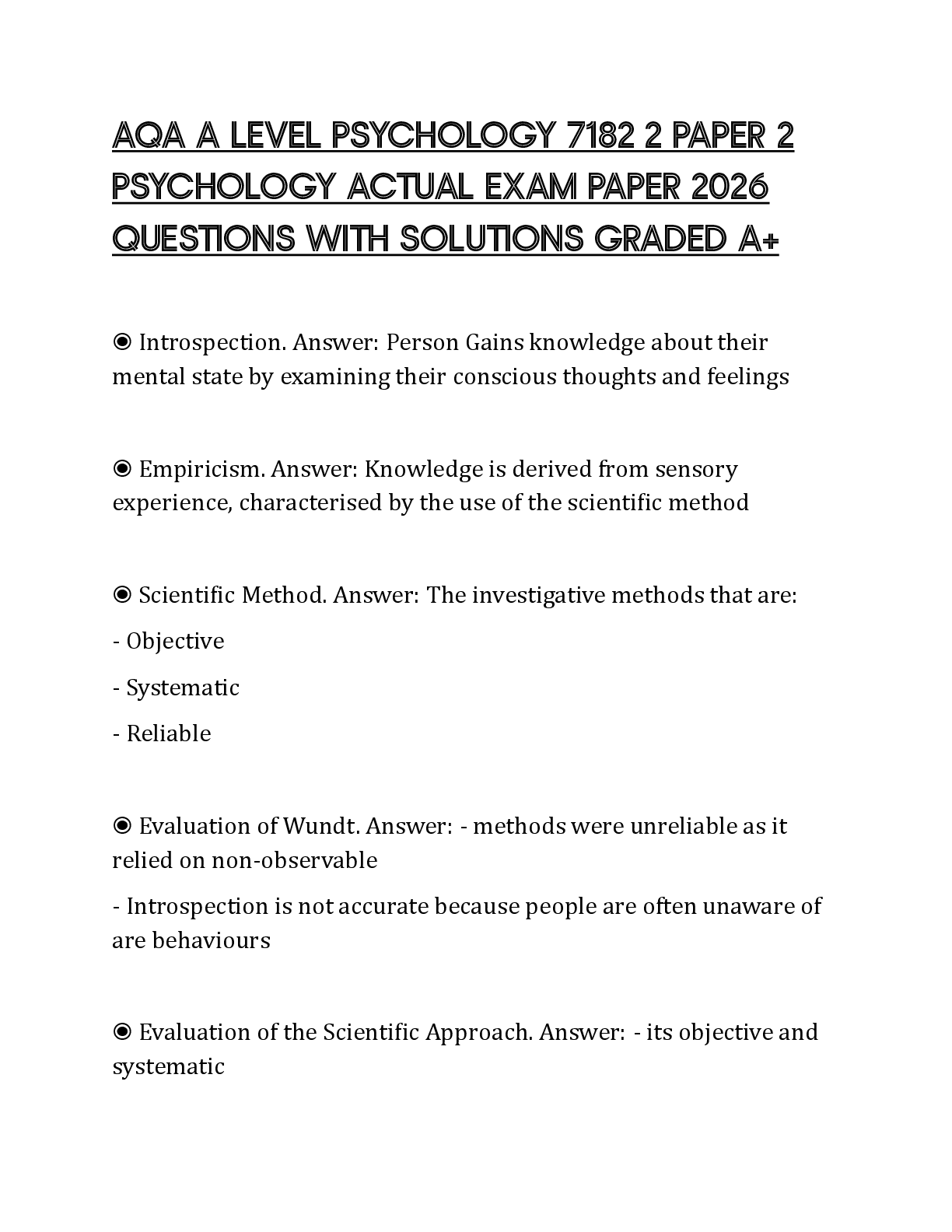
b. Whilhelm Wundt – introspection
c. Charles Darwin – evolution, natural selection, no matter what there is normal distribution
d. Sir Francis Galton – Darwin’s cousin, Hereditary Genius (book) saying certain things such
as intelligence ran in families, anthrometric (measuring everything they could about
humans)
[Show More]