Pathways to airflow limitation in asthma
Airflow limitation in asthma is caused by bronchospasm and/or inflammation
Bronchitis (COPD) pathway to airflow limitation
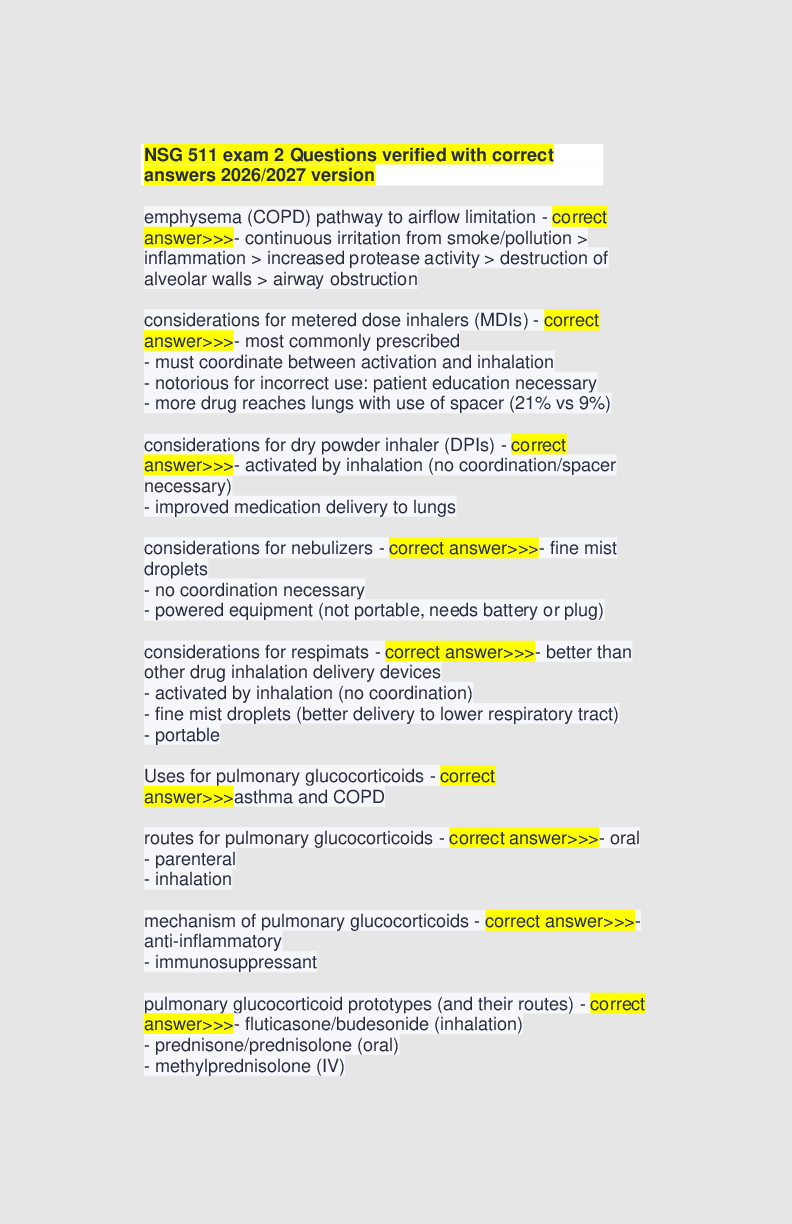
Emphysema (COPD) pathway to airflow limitation
Consi
...
Pathways to airflow limitation in asthma
Airflow limitation in asthma is caused by bronchospasm and/or inflammation
Bronchitis (COPD) pathway to airflow limitation
Emphysema (COPD) pathway to airflow limitation
Considerations for metered dose inhalers (mdis)
Considerations for dry powder inhaler (dpis)
Considerations for nebulizers
Considerations for Respimat’s
Uses for pulmonary glucocorticoids
Routes for pulmonary glucocorticoids
Mechanism of pulmonary glucocorticoids
Pulmonary glucocorticoid prototypes (and their routes)
Indications for pulmonary glucocorticoids
Prophylaxis for obstructive airway diseases
temporary use for severe obstructive disease when unable to deliver drug via inhalation
Side effects for pulmonary glucocorticoids
why are side effects of inhaled glucocorticoids rare (other than thrush)?
Short acting beta agonists (SABA) prototype and route
Long-acting beta agonists (LABA) prototype
"-terol" mechanism of action
Short acting beta agonist (SABA) indications
Long-acting beta agonist (LABA) indications
Side effects of -terols
Types of bronchodilators
Pulmonary muscarinic antagonist prototypes and route
Pulmonary muscarinic antagonist mechanism of action
Leukotriene modifiers for asthma prototype drug
Montelukast mechanism of action
Indications and route for montelukast
Montelukast side effects
Cromolyn mechanism of action
Cromolyn indications and route
Phosphodiesterase inhibitor prototypes
Theophylline mechanism of action
Indications for theophylline
Considerations for theophylline
Theophylline drug levels
What is the normal half-life for theophylline and what causes variability in this number?
Roflumilast mechanism of action
Indications for roflumilast
Considerations for roflumilast
Side effects of roflumilast
How is asthma classified?
What are the variables when examining degree of impairment with asthma?
Goals of asthma therapy
Considerations for asthma treatment
How often do you evaluate asthma therapy?
A patient requiring oral corticosteroids for asthma is considered:
What is the sole treatment for intermittent asthma?
What is used for management of an acute asthma attack?
What drug is used in every step of asthma treatment?
What is the progression of drugs used for persistent asthma?
When to step up asthma therapy?
When to step down asthma therapy?
What does it mean if asthma is "well controlled"?
True or false
a patient with well controlled persistent moderate asthma should stop using inhaled corticosteroids or LABA
COPD is (more/less?) complex than asthma
There are (more/less?) Treatment options for COPD than asthma
Why are long-acting muscarinic antagonists (lamas) commonly used to treat COPD?
T/f
cough and cold medicines should not be used in children less than 6 years old
T/f
home remedies for upper respiratory symptoms (common cold, viral illness, etc.) are less effective than abx or cold and flu medicines
Home remedies for upper respiratory symptoms
do not give honey to infants under 1 year old
What is allergic rhinitis?
Drug treatments for allergic rhinitis
Prototype antihistamines
Prototype nasal decongestant
Nasal decongestant mechanism of action
Considerations for nasal decongestants
Side effects of pseudoephedrine
What are antitussives?
What are used as antitussives?
What are tussives?
Antitussive prototype
Expectorant prototype
Mucolytic prototype
Bonus effect of acetylcysteine
What cold/flu meds are prn?
What cold/flu meds should be taken on a regular schedule?
What cold/flu meds cause sedation?
What cold/flu meds are stimulants?
Pathophysiology of Alzheimer's
Main theories for neuronal degeneration in AD
Drugs to treat Alzheimer's Disease
Donepezil mechanism of action
Considerations for donepezil
Predictable side effects of donepezil
Pathophysiology for Parkinson’s disease
Parkinson’s disease presentation mnemonic
Pharmacological therapy for Parkinson’s
Why is carbidopa-levodopa preferred over levodopa alone?
What is the efficacy of levodopa/carbidopa?
Considerations for carbidopa/levodopa therapy
Side effects of carbidopa/levodopa
Nociceptive pain
Neuropathic pain
Who uses DVPRS pain scale?
Who uses CPOT pain scale?
How is the CPOT scale used?
Considerations for pain interventions
Prototype opioid agonist
Prototype opioid agonist-antagonist
Prototype opioid antagonist
Prototype cyclooxygenase (COX) inhibitors
Combination analgesic prototype
Cancer pain adjuvant prototypes
Opioid definition
Three main types of opioid receptors are:
Important responses to activation of mu receptors
Important responses to activation of kappa receptors
Indications for morphine
Morphine mechanism of action
Morphine pharmacokinetics/dynamics
What to check when reassessing pain after giving morphine?
Morphine adverse effects
Considerations for morphine
What opioid effects do patients build a tolerance to?
Discuss physical dependence of morphine (opioids)
Abstinence syndrome symptoms
Substance abuse disorder (as opposed to addiction)
Pentazocine
- never give to a cancer patient, immediately puts them into withdrawal
Naloxone (Narcan)
Stomach cox isoform, response, and effects of inhibition
Platelet cox isoform, response, and effects of inhibition
Blood vessels cox isoform, response, and effects of inhibition
Kidney cox isoform, response, and effects of inhibition
Injured tissue cox isoform, response, and effects of inhibition
Brain cox isoform, response, and effects of inhibition
Colon/rectum cox isoform, response, and effects of inhibition
Cox inhibitors
First generation NSAIDs
Second generation NSAIDs
Non-anti-inflammatory Cox inhibitor
Aspirin mechanism of action
Aspirin indications
Side effects/adverse reactions of aspirin
Nursing considerations for aspirin
Ibuprofen class and mechanism of action
Indications for ibuprofen
Ibuprofen considerations/side effects
Celecoxib mechanism of action
Celecoxib side effects
Indications for celecoxib
Acetaminophen mechanism of action
Acetaminophen indications
Acetaminophen pharmacokinetics
Acetaminophen dosing
Acetaminophen side effects
Considerations for pain r/t cancer and cancer treatments
Considerations for combined opioids (opioid + acetaminophen) for cancer related pain
Considerations for non-opioid analgesics for cancer pain
T/f while all cancer patients with chronic opioid use develop dependence, <1% develop addiction
Amitriptyline
Gabapentin
The nurse is working on a postoperative unit in which pain management is part of routine care. Which statement is the most helpful in guiding clinical practice in this setting?
a. At least 30% of the U.S. population is prone to drug addiction and abuse.
b. The development of opioid dependence is rare when opioids are used for acute pain.
c. Morphine is a common drug of abuse in the general population.
d. The use of PRN (as needed) dosing provides the most consistent pain relief without risk of addiction.
Opioid analgesics are indicated for all of the following situation except (select all that apply)
a. Acute post operative pain
b. Back pain from cancer metastasis
c. Burning pain in the feet from peripheral neuropathy
d. Lumbar pain secondary to muscle strain
The nurse assesses a patient who takes ibuprofen [Advil] on a regular basis. Which finding does the nurse know is an adverse effect of ibuprofen [Advil] therapy?
a. Hives
b. Hematemesis
c. Dysmenorrhea
d. Jaundice
A nurse provides discharge instructions for a patient who is taking acetaminophen [Tylenol] after surgery. The nurse should instruct the patient to avoid which product while taking acetaminophen?
a. Alcoholic drinks
b. Leafy green foods
c. Bananas
d. Dairy products
Which prescription would be the most appropriate for treating persistent cancer pain?
a. Morphine [Duramorph] 10 mg orally (PO) as needed (PRN)
b. Meperidine [Demerol] 100 mg PO every 4 hours
c. Pentazocine [Talwin] 75 mg intramuscularly (IM) every 3 to 4 hours PRN
d. Morphine [Duramorph] 30 mg every 3 to 4 hours
1. The client diagnosed with chronic obstructive pulmonary disease is prescribed methylprednisolone (Solu-Medrol), a glucocorticoid, IVP. Which laboratory data would warrant immediate intervention by the nurse?
a. WBC 15,000
b. Hb 13 g/dL
c. HCT 39%
d. Glucose 138 mg/dL
e. Creatinine 1.2 mg/dL
2. A client diagnosed with COPD is being discharged and is prescribed prednisone. Which scientific rationale supports why the nurse instructs the client to taper off the med?
A. The pituitary gland must adjust to the decreasing dose
B. The beta cells of the pancreas have to start secreting insulin
C. This will allow the adrenal glands time to start functioning
D. The thyroid gland will have to start producing cortisol
3. A client diagnosed with status asthmaticus is prescribed IV theophylline. Which assessment data would warrant immediate intervention?
A. The theophylline level is 12 mcg/mL
B. The client has expiratory wheezing
C. The client complains of muscle twitching
D. The client is refusing to eat the meal
Which is the scientific rationale for prescribing decongestants for a client with a cold?
A. Decongestants vasoconstrict the blood vessels, reducing nasal inflammation.
B. Decongestants decrease the immune system's response to a virus.
C. Decongestants activate viral receptors in the body's immune system.
D. Decongestants block the virus from binding to the epithelial cells of the nose.
Which medical treatment is recommended for the client who is diagnosed with mild intermittent asthma?
A. This classification of asthma requires a combination of long-term control medication plus a quick-relief medication.
B. Mild intermittent asthma needs a routine glucocorticoid inhaler and a sustained- relief theophylline.
C. This classification requires daily inhalation of an oral glucocorticoid and daily nebulizer treatments.
D. Mild intermittent asthma is treated on a PRN basis and no long-term control medication is needed.
Patients with Alzheimer disease are prescribed __________ which increases the level of __________.
Options for 1st blank
A. Levodopa/Carbidopa
B. Donepezil
Options for 2nd blank
A. Acetylcholine
B. Dopamine
A patient is receiving gabapentin (Neurontin), an anticonvulsant, but has no history of seizures. The nurse expects that the patient is receiving this drug for which condition?
A. Inflammation pain
B. Pain associated with peripheral neuropathy
C. Depression associated with chronic pain
D. Prevention of seizures
78-year-old patient is in the recovery room after having a lengthy surgery on his hip. As he is gradually awakening, he requests pain medication. Within 10 minutes after receiving a dose of morphine sulfate, he is very lethargic and his respirations are shallow, with the rate of 7 per minute. The nurse prepares for which priority action at this time?
A. Assessment of the patient's pain level
B. Immediate intubation and artificial ventilation
C. Administration of naloxone (Narcan)
D. Close observation of signs of opioid tolerance
9. The nurse is assessing a patient for contraindications to drug therapy with acetaminophen (Tylenol). Which patient should not receive acetaminophen?
A. A patient with a fever of 101 F.
B. A patient who is complaining of a mild headache
C. A patient with a history of liver disease
D. A patient with a history of kidney disease
The nurse should instruct a patient receiving NSAIDs to report which of the following adverse effects?
A. Blurred vision
B. Nasal stuffiness
C. Urinary retention
D. Black or tarry s
[Show More]
.png)



.png)
.png)


 (Q&A).png)
.png)
.png)
.png)
.png)
.png)
.png)
.png)

