Date of Completion
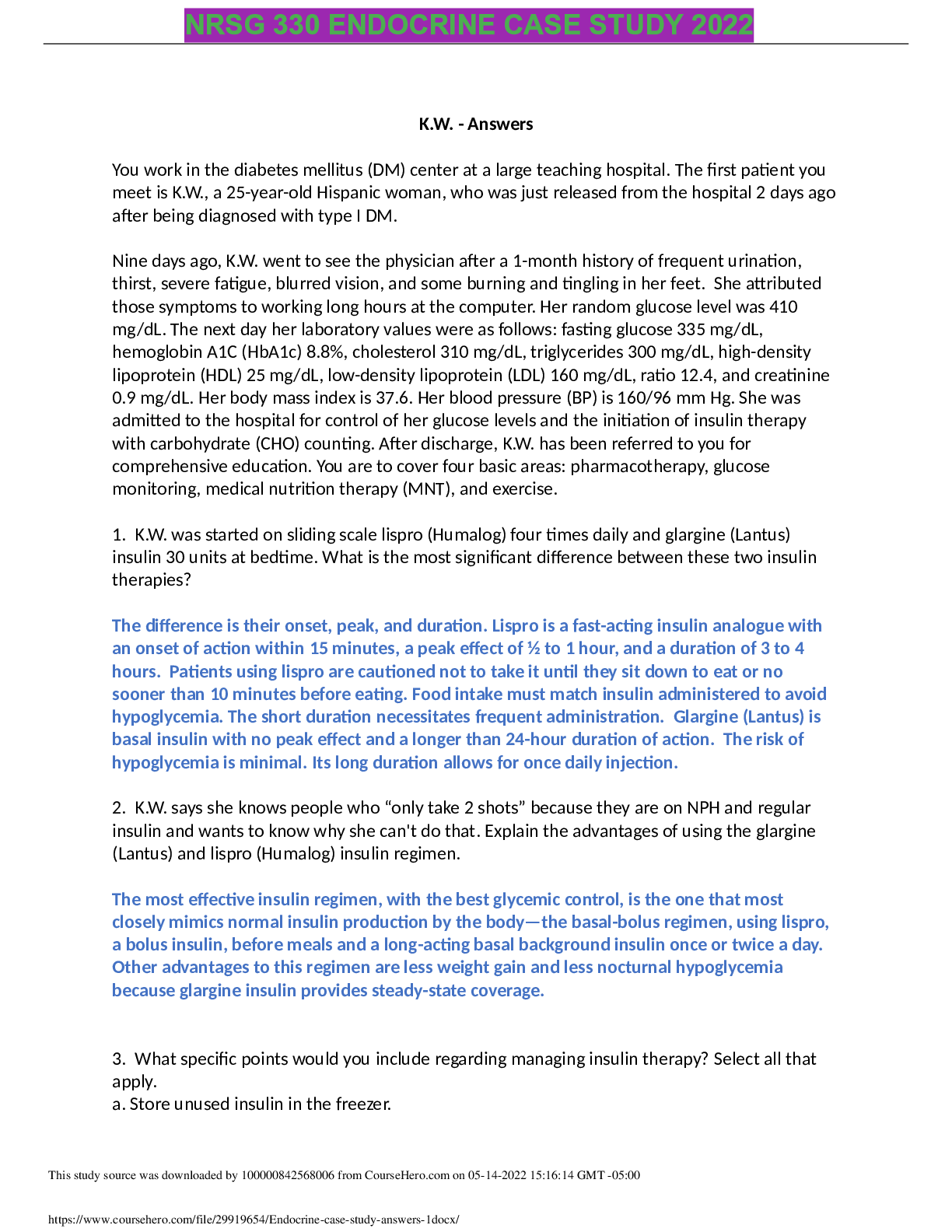
Nov 02, 2020 10:19 PM
David Carter
Age: 28 years
Diagnosis: Schizophrenia
Score
1
0
0
97%
Feedback Log
0:00 Patient
0:00 You checked scene safety. It was correct to che
...
Date of Completion
Nov 02, 2020 10:19 PM
David Carter
Age: 28 years
Diagnosis: Schizophrenia
Score
1
0
0
97%
Feedback Log
0:00 Patient
0:00 You checked scene safety. It was correct to check scene safety in order to
maintain your own safety.
0:06 You introduced yourself.
0:35 You washed your hands.
0:48 You identified the patient.
This study source was downloaded by 100000852290574 from CourseHero.com on 02-01-2023 06:10:41 GMT -06:00
https://www.coursehero.com/collection/72230398/Vsim-David-Carter-Part-2pdf/
11/2/2020 Feedback Log & Score — David Carter Nov 02, 2020 10:19 PM
https://simserver.wkhpe.com/debriefing/debrief.aspx?dss=https%3A%2F%2Fphoenix-app.thepoint.lww.com%2Fapi%2Fexerciseresult-laerdal-api%2Fapi%2Fdebriefi… 2/5
1:05 You asked the patient: Is it OK for your mother to be here, while we talk? It was
correct to let the patient give his consent for letting his mother be a part of the
interview.
1:19 The patient said: I feel bad that I scared my mom.\nYou answered: What seemed
to lead up to your conflict with your mom? \nYou used the therapeutic technique
of placing event in time or sequence.
1:25 You asked if the patient had any known allergies.
1:33 You performed medication reconciliation.
1:57 You assessed the respiration.
2:09 You checked the pulse oximetry.
2:26 You checked the radial pulse.
2:38 You measured the blood pressure.
3:10 You asked the patient: Have you taken your medication?
3:23 The patient said: I will try to remember to take my medicine.\nYou answered: Do
you have concerns about taking your medication? \nYou used the therapeutic
technique of encouraging description and encouraging expression.
3:31 You asked the patient: Can you tell me a little bit more about what's going on
with you today? It was appropriate to ask the patient what was going on with
him to get an understanding of this.
3:43 The patient said: I'm worried that the voices will come back.\nYou answered: If
the voices do come back, how might you handle it? \nYou used the therapeutic
technique of formulating a plan of action.
3:52 You asked the patient: Over the past year, when did you feel your best?
4:04 The patient said: I'm afraid that I'll get sick again.\nYou answered: Go on. \nYou
used the therapeutic technique of offering general leads.
4:13 You asked the patient: Do you have any pain? The patient said: No, I don't have
any pain.
4:27 You asked the patient: Have you had any changes in your appetite over the past
month?
4:38 The patient said: I'm going to be very careful about what I eat.\nYou answered:
What do you mean by "careful"? \nYou used the therapeutic technique of
seeking information.
4:49 You asked the patient: Tell me about any changes you have had in your sleep
over the past few weeks? The patient said: I am sleeping okay. They make me
get up for meetings so I don't stay in bed as long.
5:04 You asked the patient: Do you have energy to do the normal activities necessary
This study source was downloaded by 100000852290574 from CourseHero.com on 02-01-2023 06:10:41 GMT -06:00
https://www.coursehero.com/collection/72230398/Vsim-David-Carter-Part-2pdf/
11/2/2020 Feedback Log & Score — David Carter Nov 02, 2020 10:19 PM
https://simserver.wkhpe.com/debriefing/debrief.aspx?dss=https%3A%2F%2Fphoenix-app.thepoint.lww.com%2Fapi%2Fexerciseresult-laerdal-api%2Fapi%2Fdebriefi… 3/5
to get through the day?
5:20 The patient said: It's important that I take care of myself, shower, and wear clean
clothes.\nYou answered: Do you have any concerns about taking care of
yourself? \nYou used the therapeutic technique of exploring.
5:29 You asked the patient: Do you have energy to do the activities that give you
enjoyment?
5:44 The patient said: I'm not nearly as tired as I was before.\nYou answered: Maybe
you and I can talk about healthy sleep habits before you leave. \nYou used the
therapeutic technique of translating.
6:30 You asked the patient: I would like to ask you a series of questions about how
you are feeling to help me better understand how together we can start to plan
your care. These are questions I ask all of the patients I see. May I ask you these
questions? The patient said: Yes, you may.
10:22 You asked the patient: Please tell me your name. The patient said: David Carter.
10:40 You asked the patient: Can you tell me where we are? The patient said: Still in
the hospital.
11:02 You asked the patient: How would you describe your mood? The patient said:
My mood is okay.
11:19 You asked the patient: Have you lost interest in activities that you once enjoyed?
The patient said: No, not really.
11:32 You asked the patient: Can you tell me what you ate for breakfast? The patient
said: I had some coffee and a bowl of cold cereal.
11:45 You asked the patient: Can you name the last five American presidents starting
with Barack Obama and going back? The patient said: Barack Obama, George
W. Bush, Bill Clinton, George H. W. Bush, Ronald Reagan.
12:11 You asked the patient: Do you have any thoughts or wishes to harm or kill
yourself? The patient said: No, I don't have any ideas about hurting myself.
12:29 You asked the patient: Do you think it would be better if you were not alive? The
patient said: No.
12:37 You asked the patient: Do you have any thoughts or wishes to harm anybody
else? The patient said: No.
12:47 You asked the patient: Can you tell me what a desired outcome of treatment
would be for you?
13:01 The patient said: I hope I can go back to work.\nYou answered: What are your
feelings about going back to work? \nYou used the therapeutic technique of
encouraging expression.
13:17 You asked the patient: How do you understand your problems?
13:27 The patient said: I'd like to be able to live on my own soon.\nYou answered:
[Show More]





, 6e by Russell Hoye, Katie Misener, Michael Naraine, Catherine Ordway.png)
.png)
 (1).png)