NURSING > Class Notes > NR565 Week 5 Study Outline (All)
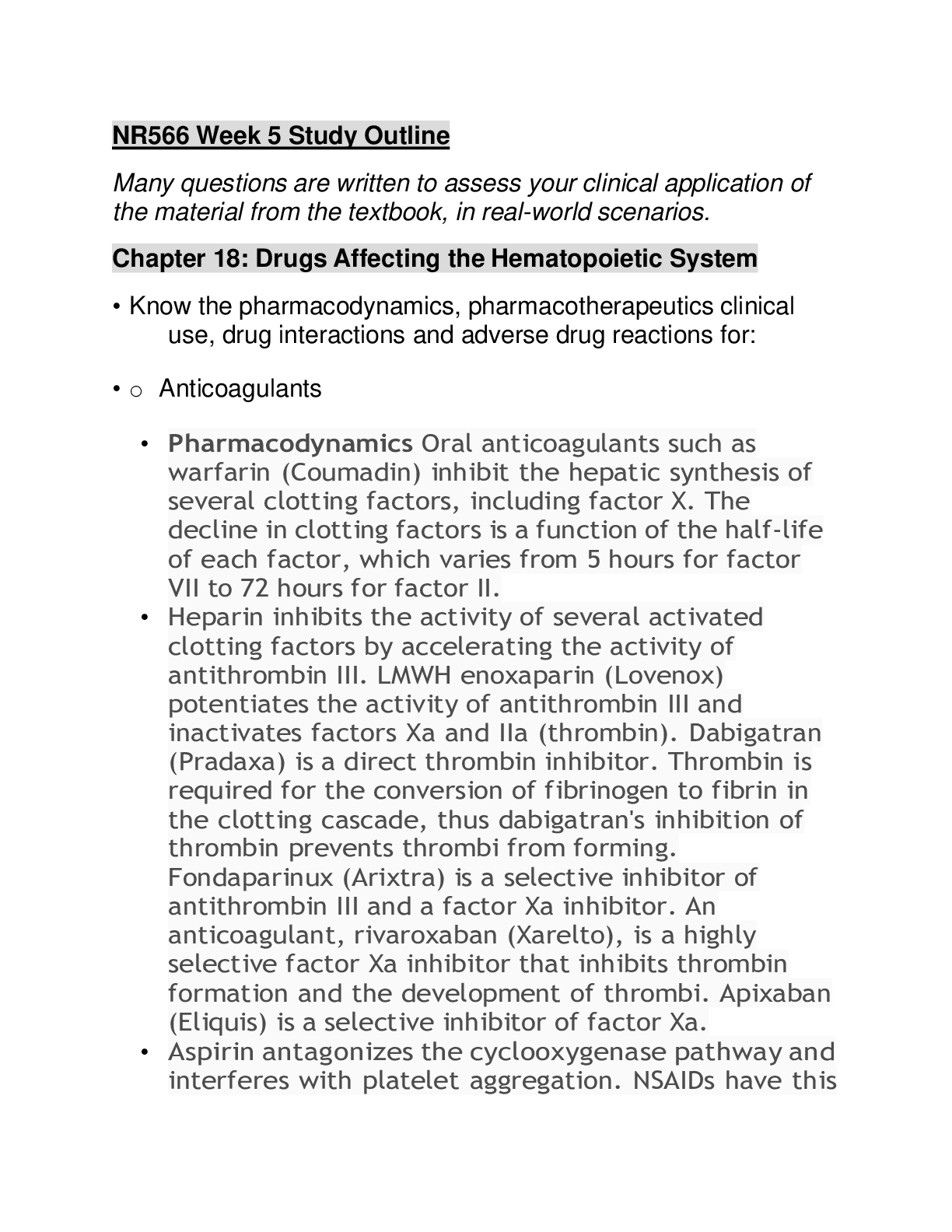
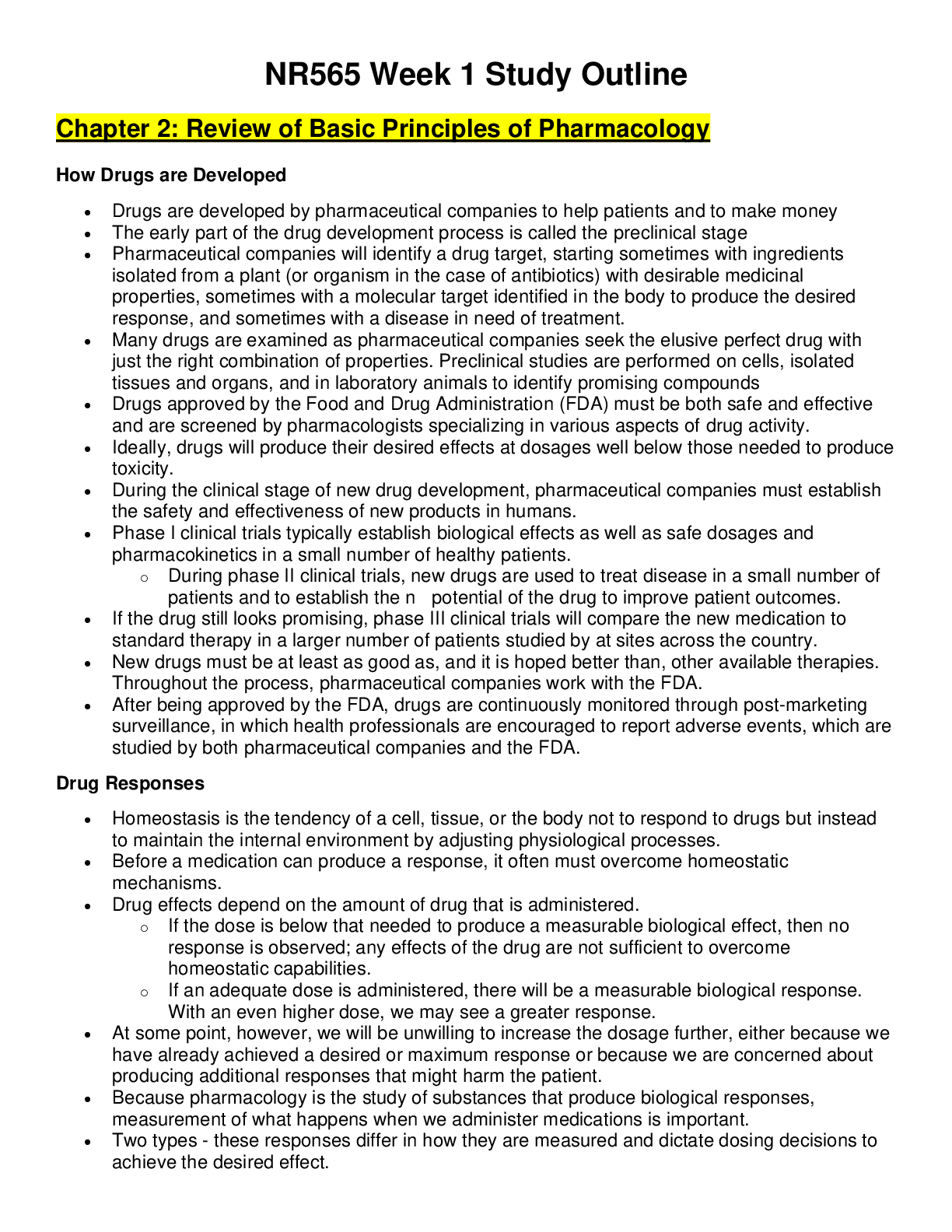
NR565 Week 5 Study Outline
Document Content and Description Below
NR565 Week 5 Study Outline
:Many questions are written to assess your clinical application of the material from the textbook, in real-world scenarios.
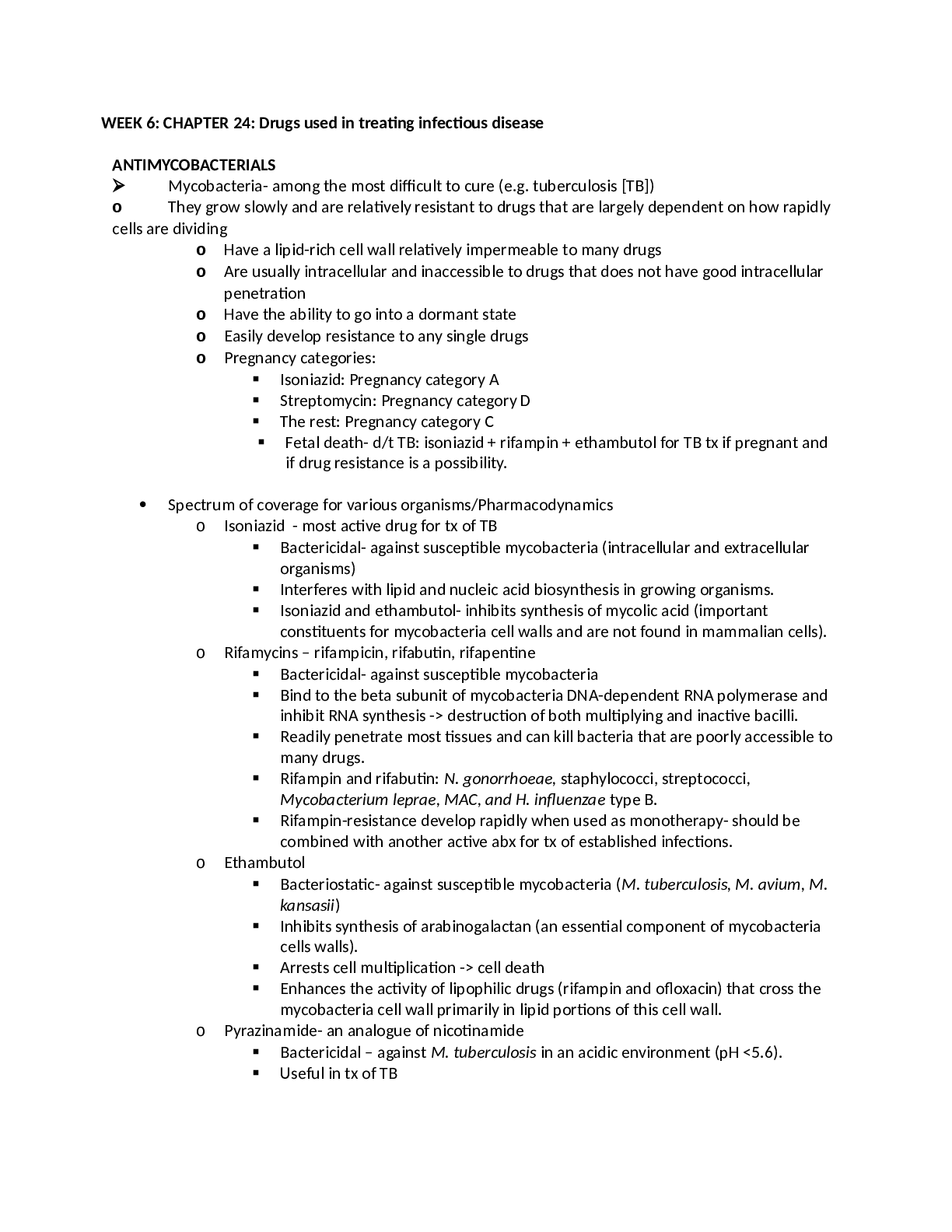
Chapter 24: Drugs used in treating infectious diseases (p. 692-76
...
[Show More]
Last updated: 3 years ago
Preview 1 out of 15 pages
Instant download
Buy this document to get the full access instantly
Instant Download Access after purchase
Reviews( 0 )
Document information
Connected school, study & course
About the document
Uploaded On
Nov 20, 2020
Number of pages
15
Written in
All

Additional information
This document has been written for:
Uploaded
Nov 20, 2020
Downloads
0
Views
167
Document Keyword Tags
Recommended For You
Get more on Class Notes »
$12.5
15 Pages
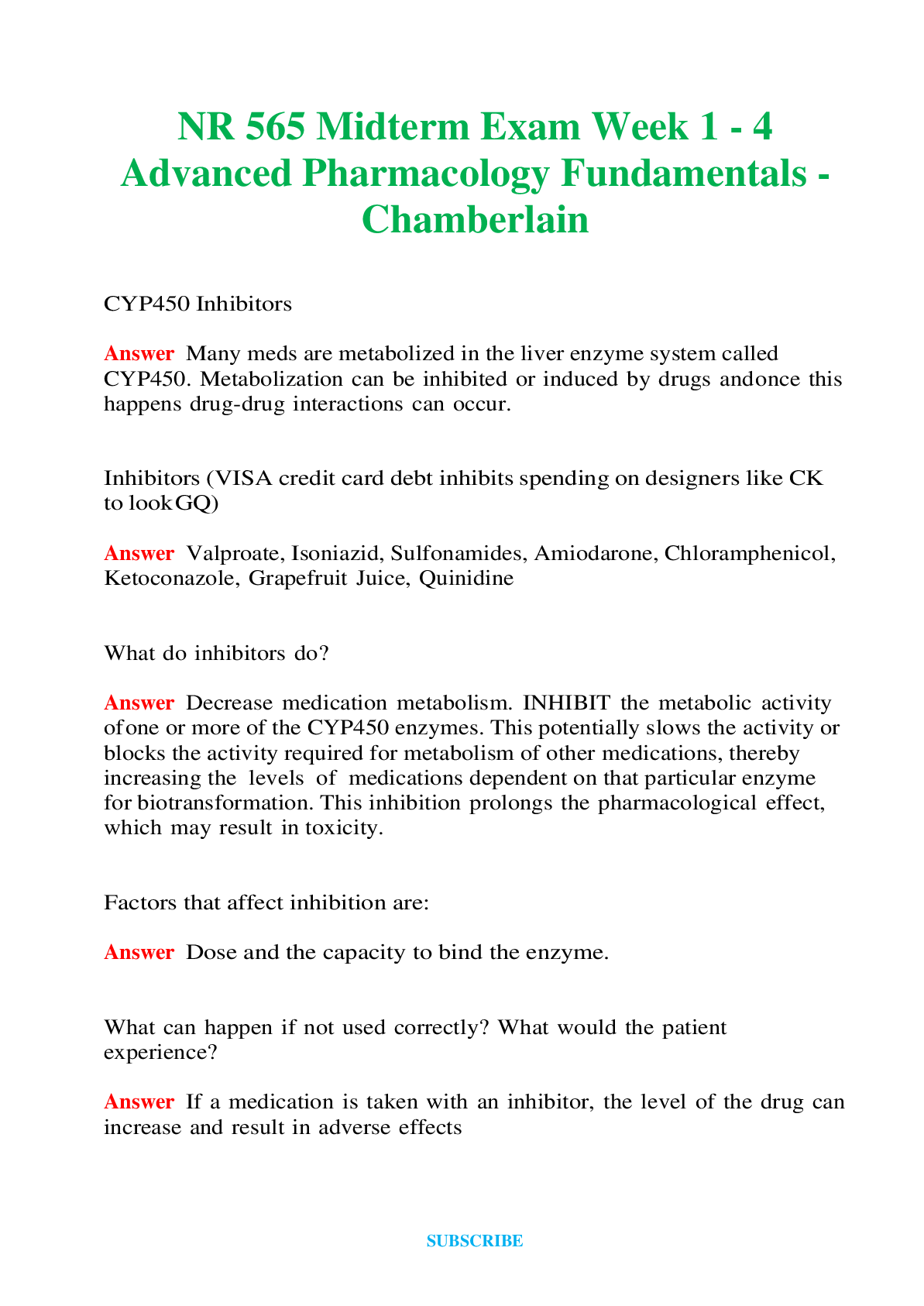
NR 565 Midterm Exam Week 1 - 4 Advanced Pharmacology Fundam...
$12.5
5 Pages
NR 565 Final Exam Week 8 Advanced Pharmacology Fundamentals...
$12.5
5 Pages
NR 565 Final Exam Week 7 Advanced Pharmacology Fundamentals...


$6
39 Pages
NR565 / NR 565: Advanced Pharmacology Fundamentals Week 2 Stud...

$6
39 Pages
NR565 / NR 565: Advanced Pharmacology Fundamentals Week 2 (NR...
$6
11 Pages
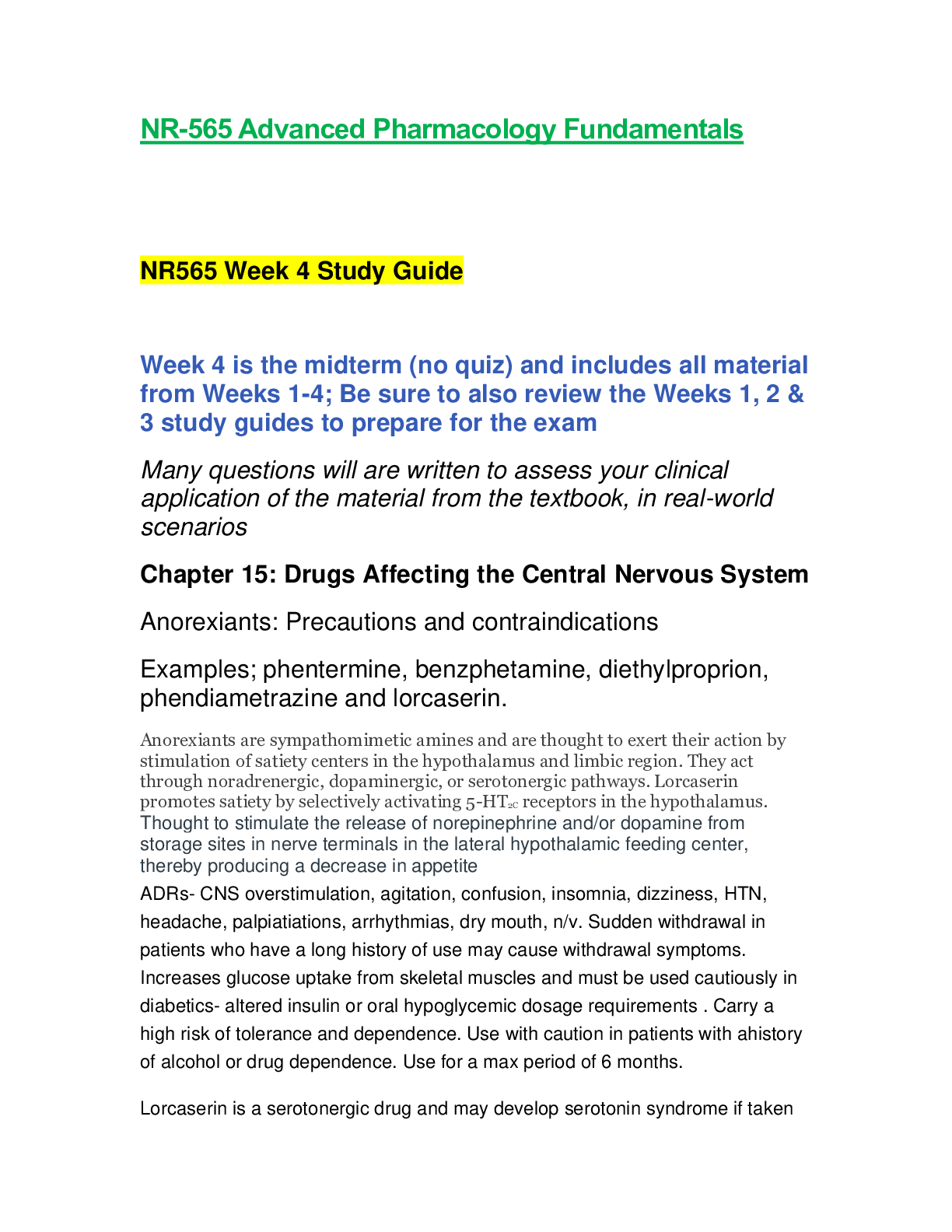
NR 565/NR565 ADVANCED PHARMACOLOGY WEEK 4 STUDY GUIDE(latest)
$13
23 Pages
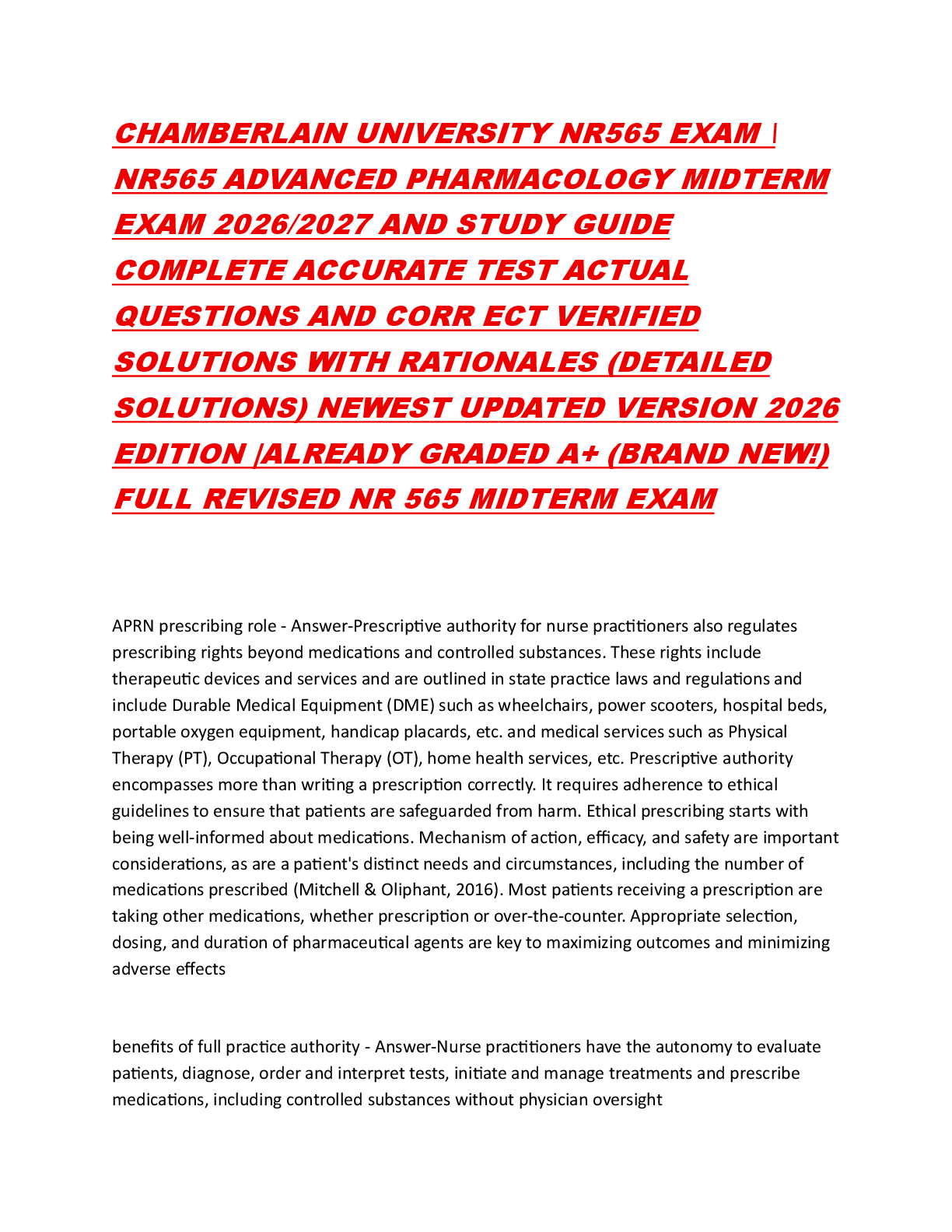
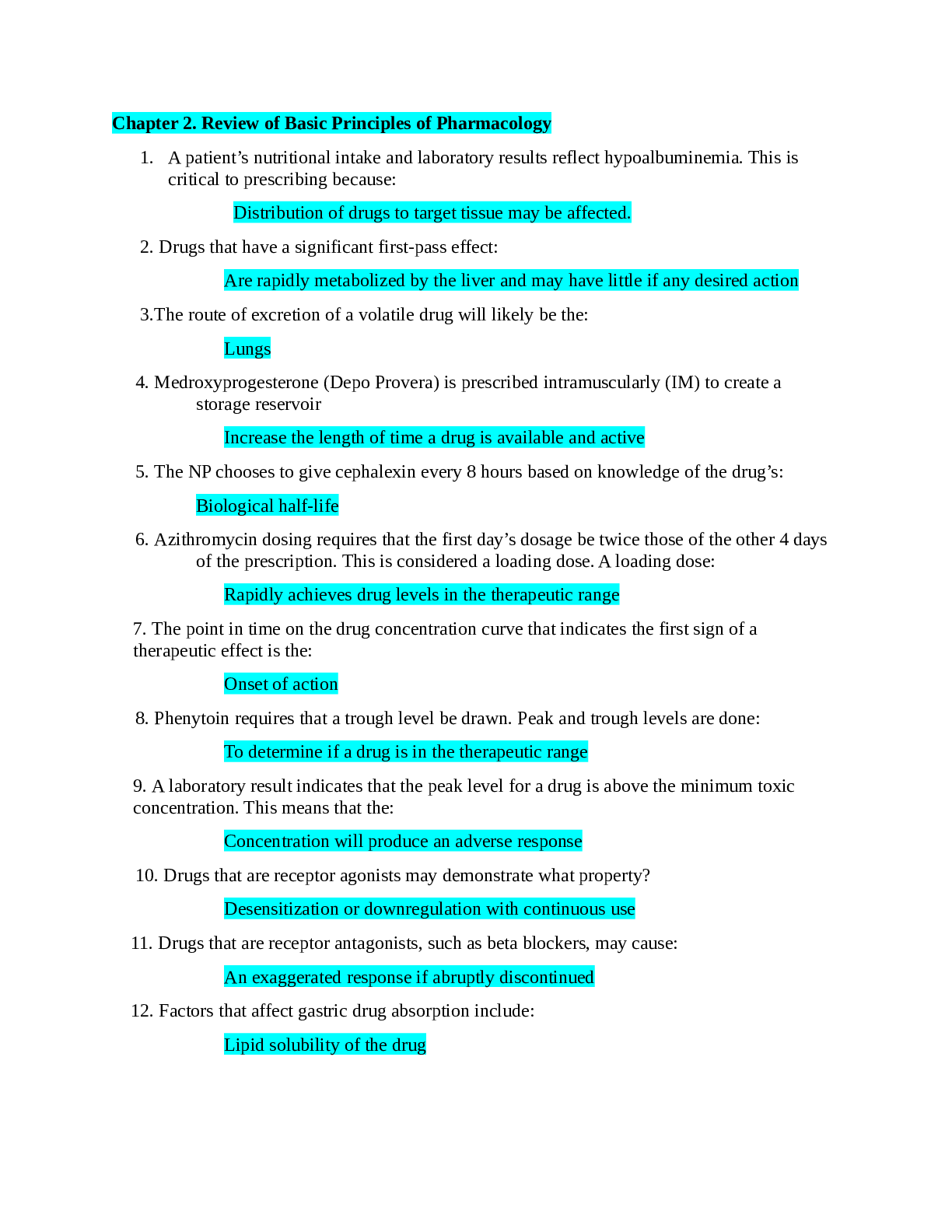
NR 565 Midterm Chapter 2. Review of Basic Principles of Pharma...

$18.5
14 Pages
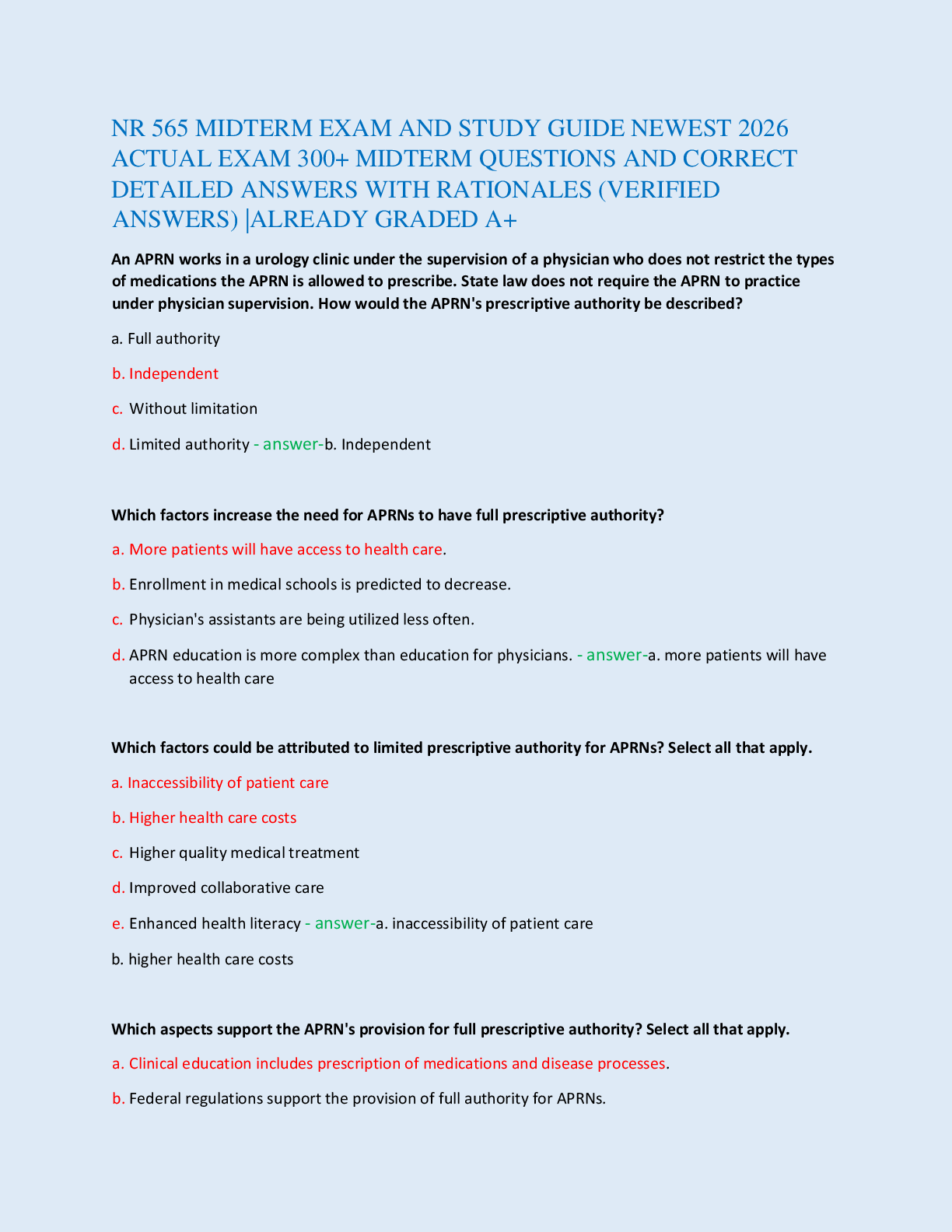
Quiz 1 – Chapters 3–6 | Class Notes, Study Guide & Test Bank (...

$22.5
307 Pages
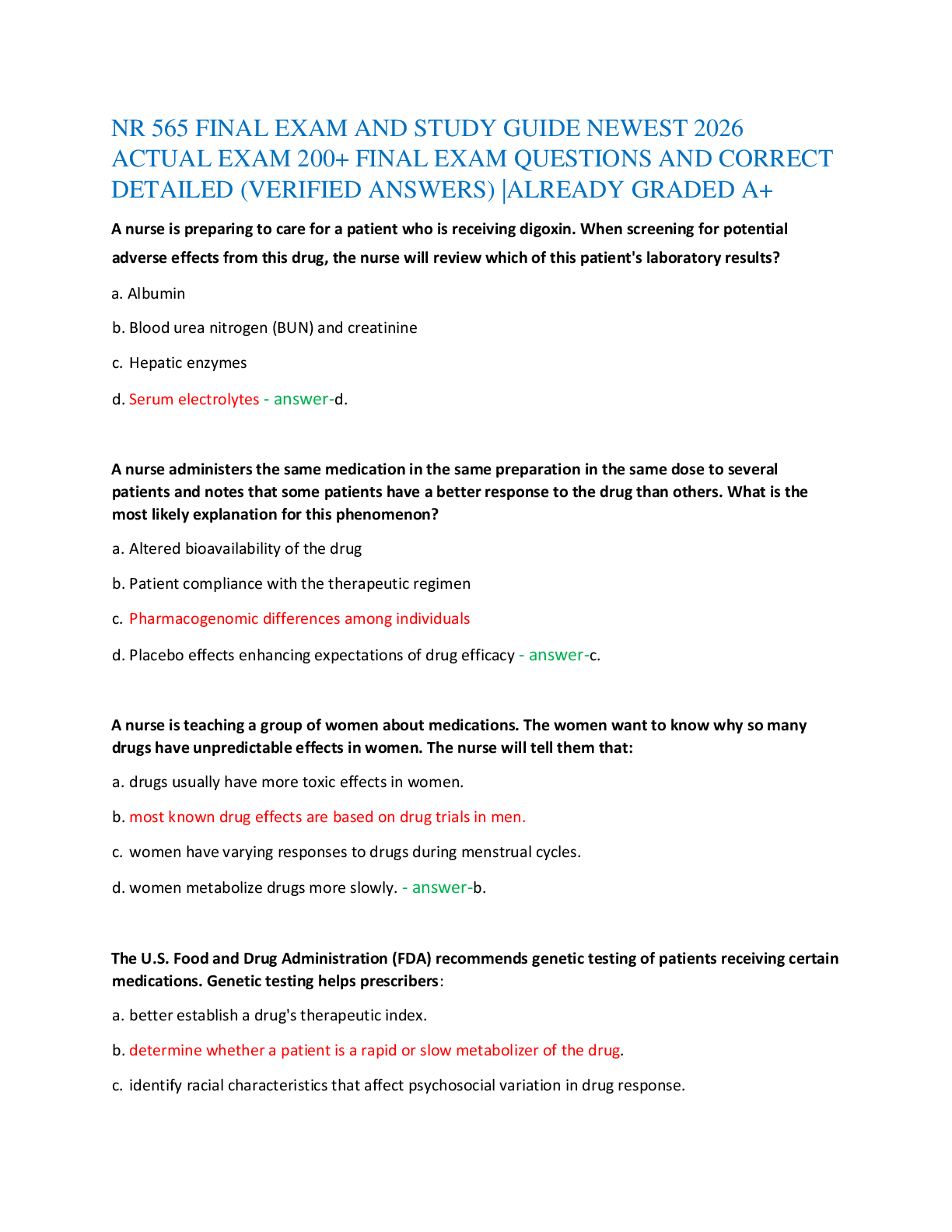
TEST BANK for Davis Advantage for Psychiatric Mental Health Nu...

$21
53 Pages
ATI NCLEX Predictor Remediation Study Notes (2019) Complete A+...
More related documents below