NR-507 Study Guide
Chapters 1-5, 11-14, 16-20, 21-25, 27-3-33, 34-39, 40-47
1. Types of immunity-e.g. innate, active, etc
Innate immunity includes two lines of defense: natural barriers and inflammation Natural bar
...
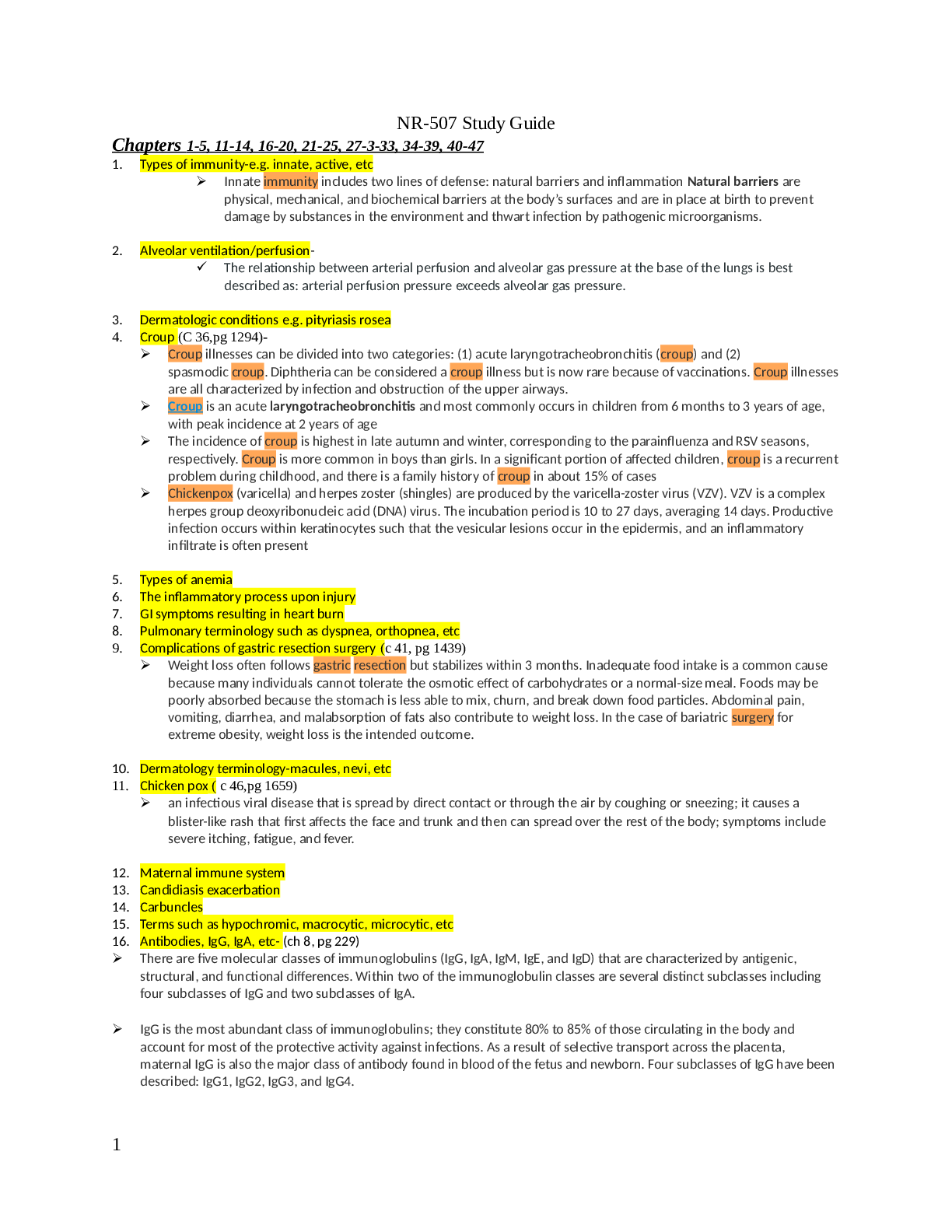
NR-507 Study Guide
Chapters 1-5, 11-14, 16-20, 21-25, 27-3-33, 34-39, 40-47
1. Types of immunity-e.g. innate, active, etc
Innate immunity includes two lines of defense: natural barriers and inflammation Natural barriers are
physical, mechanical, and biochemical barriers at the body’s surfaces and are in place at birth to prevent
damage by substances in the environment and thwart infection by pathogenic microorganisms.
2. Alveolar ventilation/perfusion-
The relationship between arterial perfusion and alveolar gas pressure at the base of the lungs is best
described as: arterial perfusion pressure exceeds alveolar gas pressure.
3. Dermatologic conditions e.g. pityriasis rosea
4. Croup (C 36,pg 1294)-
Croup illnesses can be divided into two categories: (1) acute laryngotracheobronchitis (croup) and (2)
spasmodic croup. Diphtheria can be considered a croup illness but is now rare because of vaccinations. Croup illnesses
are all characterized by infection and obstruction of the upper airways.
Croup is an acute laryngotracheobronchitis and most commonly occurs in children from 6 months to 3 years of age,
with peak incidence at 2 years of age
The incidence of croup is highest in late autumn and winter, corresponding to the parainfluenza and RSV seasons,
respectively. Croup is more common in boys than girls. In a significant portion of affected children, croup is a recurrent
problem during childhood, and there is a family history of croup in about 15% of cases
Chickenpox (varicella) and herpes zoster (shingles) are produced by the varicella-zoster virus (VZV). VZV is a complex
herpes group deoxyribonucleic acid (DNA) virus. The incubation period is 10 to 27 days, averaging 14 days. Productive
infection occurs within keratinocytes such that the vesicular lesions occur in the epidermis, and an inflammatory
infiltrate is often present
5. Types of anemia
6. The inflammatory process upon injury
7. GI symptoms resulting in heart burn
8. Pulmonary terminology such as dyspnea, orthopnea, etc
9. Complications of gastric resection surgery (c 41, pg 1439)
Weight loss often follows gastric resection but stabilizes within 3 months. Inadequate food intake is a common cause
because many individuals cannot tolerate the osmotic effect of carbohydrates or a normal-size meal. Foods may be
poorly absorbed because the stomach is less able to mix, churn, and break down food particles. Abdominal pain,
vomiting, diarrhea, and malabsorption of fats also contribute to weight loss. In the case of bariatric surgery for
extreme obesity, weight loss is the intended outcome.
10. Dermatology terminology-macules, nevi, etc
11. Chicken pox ( c 46,pg 1659)
an infectious viral disease that is spread by direct contact or through the air by coughing or sneezing; it causes a
blister-like rash that first affects the face and trunk and then can spread over the rest of the body; symptoms include
severe itching, fatigue, and fever.
12. Maternal immune system
13. Candidiasis exacerbation
14. Carbuncles
15. Terms such as hypochromic, macrocytic, microcytic, etc
16. Antibodies, IgG, IgA, etc- (ch 8, pg 229)
There are five molecular classes of immunoglobulins (IgG, IgA, IgM, IgE, and IgD) that are characterized by antigenic,
structural, and functional differences. Within two of the immunoglobulin classes are several distinct subclasses including
four subclasses of IgG and two subclasses of IgA.
IgG is the most abundant class of immunoglobulins; they constitute 80% to 85% of those circulating in the body and
account for most of the protective activity against infections. As a result of selective transport across the placenta,
maternal IgG is also the major class of antibody found in blood of the fetus and newborn. Four subclasses of IgG have been
described: IgG1, IgG2, IgG3, and IgG4
[Show More]