Definition
Auditing is the process of examining an organization's financial records, statements, transactions, and operations to ensure accuracy, legality, and compliance with relevant regulations and standards.
Key O
...
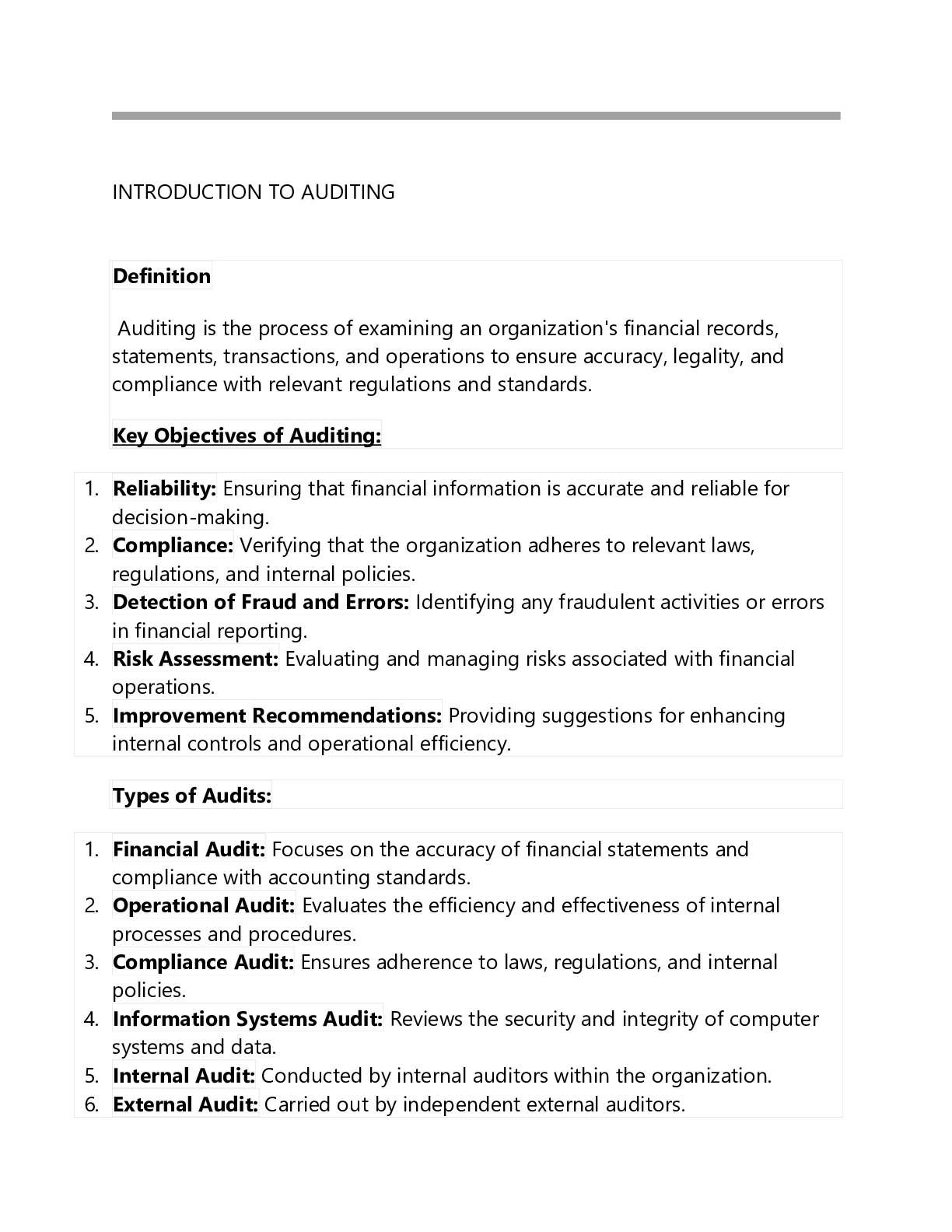
Definition
Auditing is the process of examining an organization's financial records, statements, transactions, and operations to ensure accuracy, legality, and compliance with relevant regulations and standards.
Key Objectives of Auditing:
1. Reliability: Ensuring that financial information is accurate and reliable for decision-making.
2. Compliance: Verifying that the organization adheres to relevant laws, regulations, and internal policies.
3. Detection of Fraud and Errors: Identifying any fraudulent activities or errors in financial reporting.
4. Risk Assessment: Evaluating and managing risks associated with financial operations.
5. Improvement Recommendations: Providing suggestions for enhancing internal controls and operational efficiency.
Types of Audits:
1. Financial Audit: Focuses on the accuracy of financial statements and compliance with accounting standards.
2. Operational Audit: Evaluates the efficiency and effectiveness of internal processes and procedures.
3. Compliance Audit: Ensures adherence to laws, regulations, and internal policies.
4. Information Systems Audit: Reviews the security and integrity of computer systems and data.
5. Internal Audit: Conducted by internal auditors within the organization.
6. External Audit: Carried out by independent external auditors.
Auditing Process:
1. Planning: Establishing audit objectives, scope, and methodologies.
2. Risk Assessment: Identifying potential risks and areas of concern.
3. Testing: Examining financial records, transactions, and internal controls.
4. Evidence Gathering: Collecting sufficient and appropriate evidence to support audit findings.
5. Analysis and Evaluation: Assessing the accuracy, completeness, and validity of financial information.
6. Reporting: Communicating audit findings, conclusions, and recommendations to stakeholders.
7. Follow-Up: Monitoring the implementation of audit recommendations and corrective actions.
Key Principles of Auditing:
[Show More]