Psychology > HESI > Chapter_9_Conduct_Problems Psychology (All)
Chapter_9_Conduct_Problems Psychology
Document Content and Description Below
1. Which of the following is true regarding antisocial behavior in adolescents?
a. Very few adolescents completely refrain from antisocial behavior, and they tend not to be well-adjusted.
b. Antisocial behavior i
...
[Show More]
Last updated: 3 years ago
Preview 1 out of 20 pages
Instant download

Buy this document to get the full access instantly
Instant Download Access after purchase
Reviews( 0 )
Document information
Connected school, study & course
About the document
Uploaded On
Feb 04, 2021
Number of pages
20
Written in
All

Additional information
This document has been written for:
Uploaded
Feb 04, 2021
Downloads
0
Views
194
Document Keyword Tags
Recommended For You
Get more on HESI »
$22
186 Pages
Test Bank for The Principles of Learning and Behavior, 7th Edi...
$25
678 Pages
Health Psychology: A Biopsychosocial Approach 6th Edition by R...

$25
1615 Pages
Discovering Psychology 7e by Sandra Hockenbury, Susan Nolan, D...
$25
33 Pages
A History of Psychology in Ten Questions 1st Edition By Michae...
$18
488 Pages
Exploring Psychology in Modules,12e David Myers, (Test bank)
$20
477 Pages
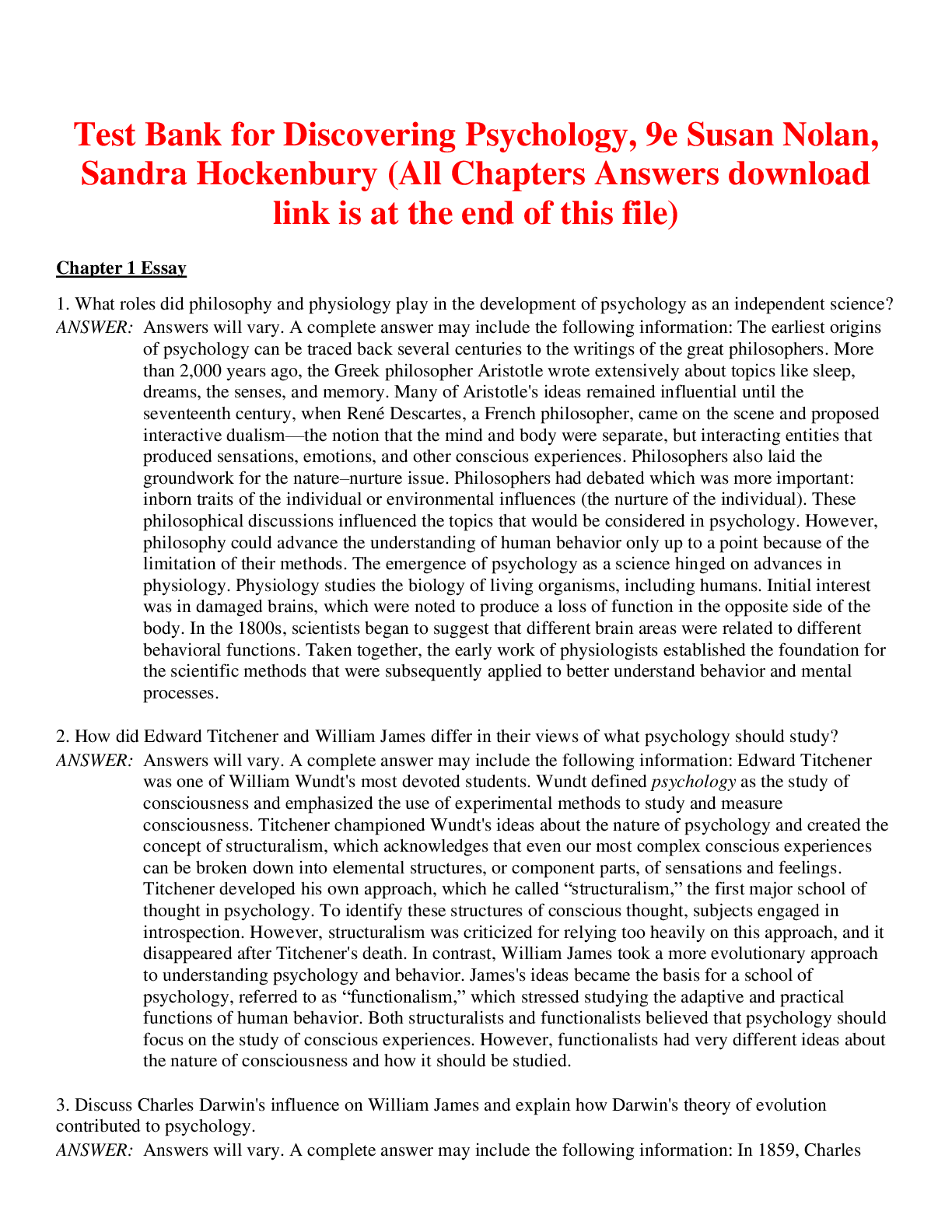
Discovering Psychology, 9e Susan Nolan, Sandra Hockenbury (Tes...
$20
455 Pages
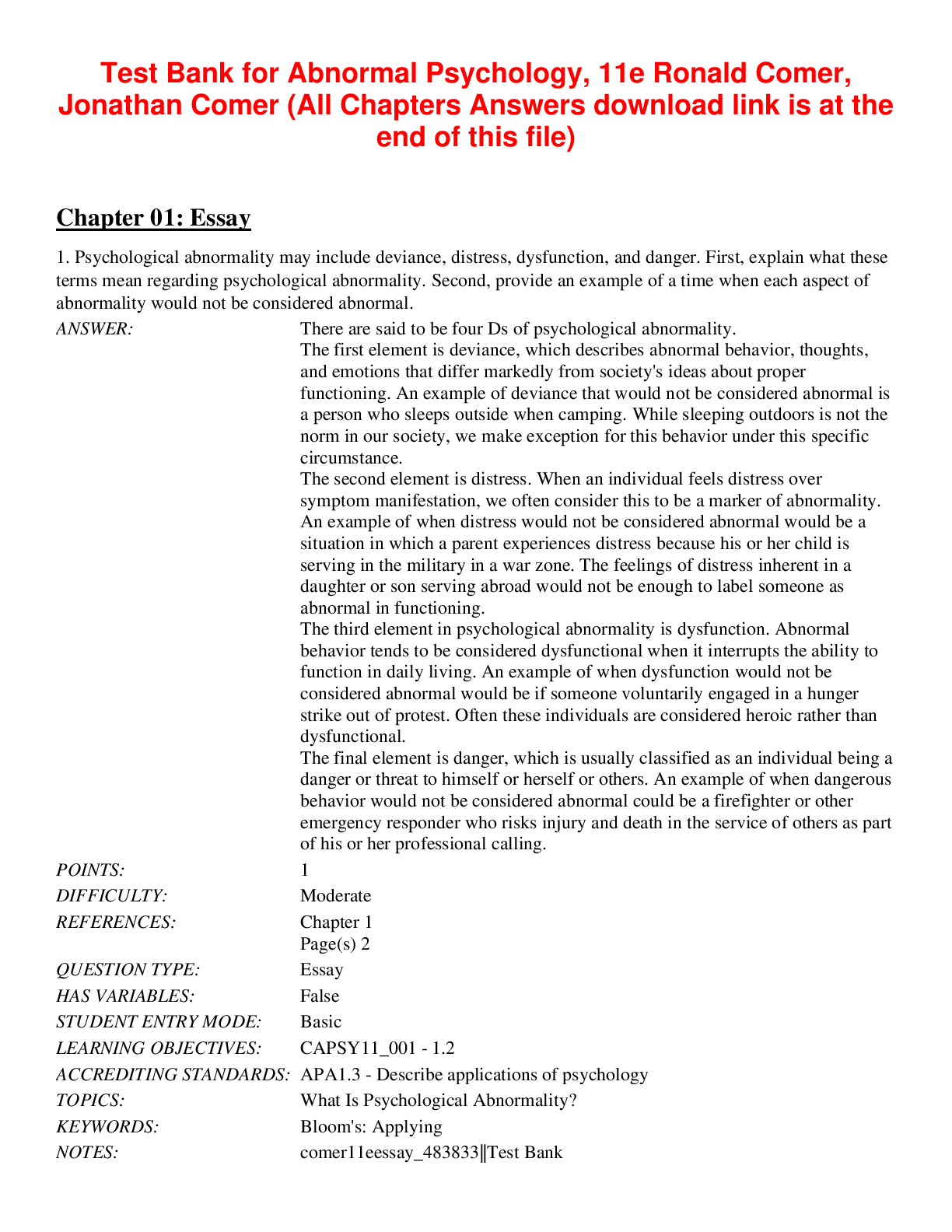
Test Bank for Abnormal Psychology, 11th Edition by Ronald Come...
$20
204 Pages
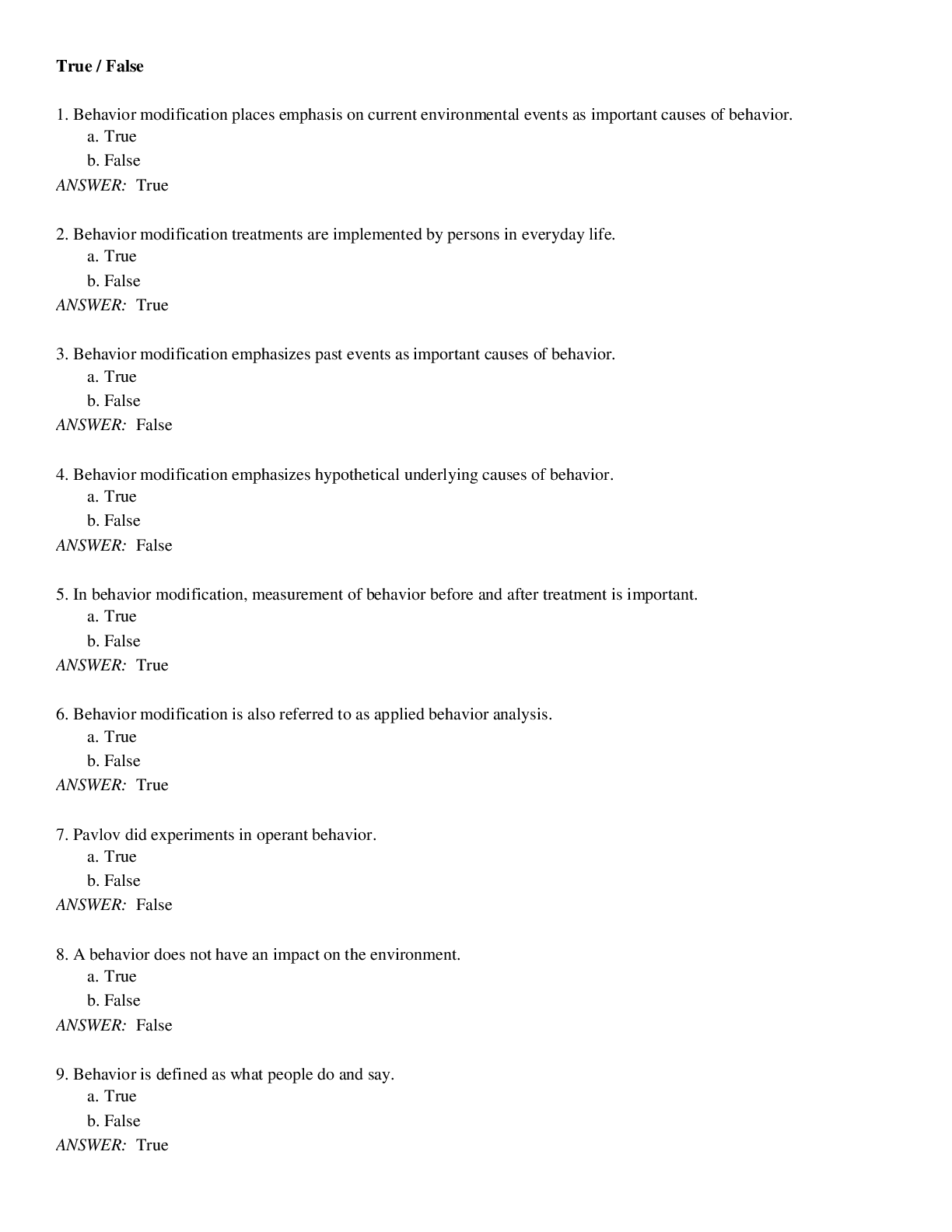
Behavior Modification Principles and Procedures 6th Edition Mi...

$12
334 Pages
TEST BANK. Psychiatric-Mental Health Nursing 8th Edition Videb...
More related documents below



