SQL
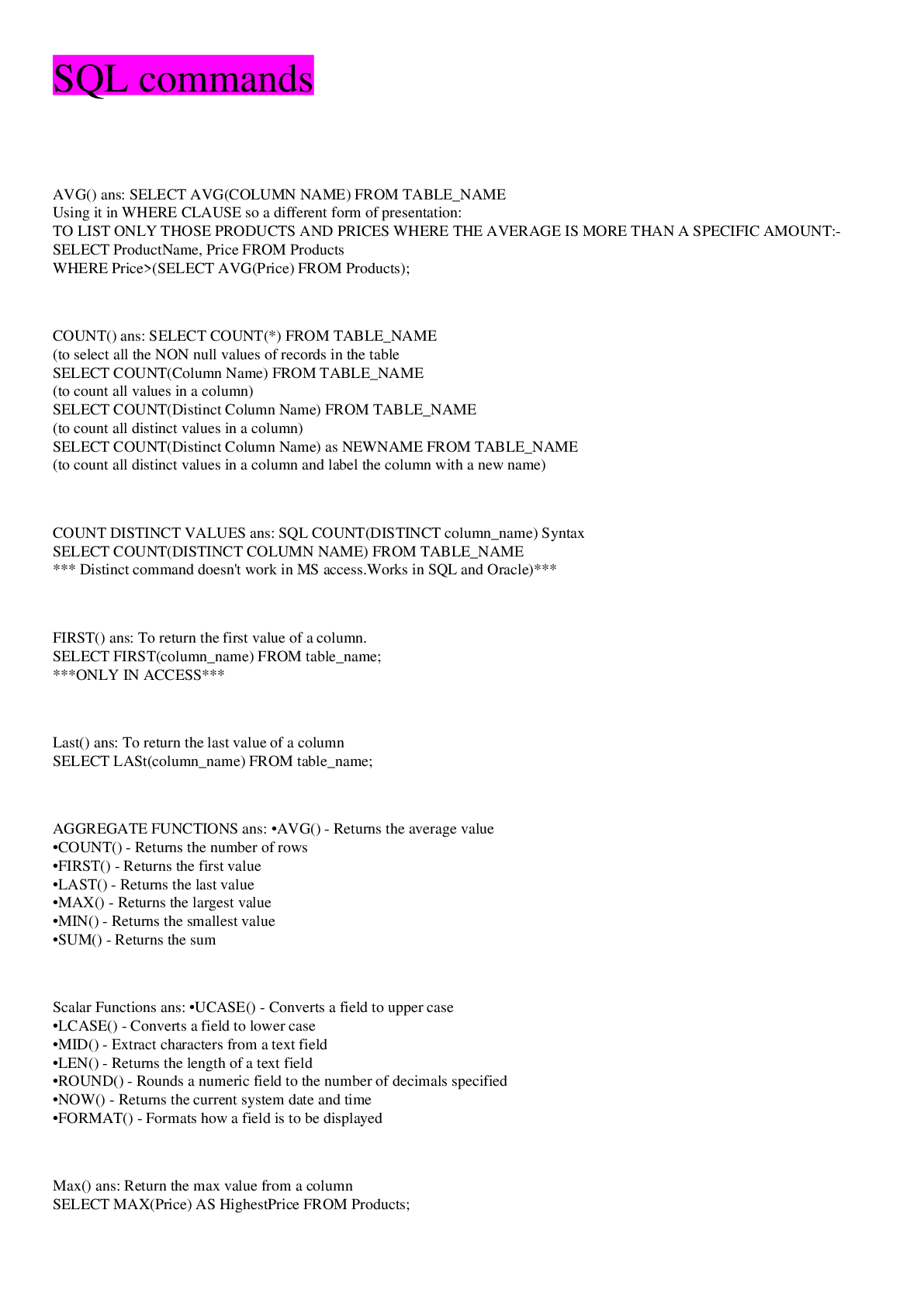
What is SQL? ans: SQL stands for Structured Query Language. SQL lets you access and manipulate databases.
What can SQL do? ans: SQL can execute queries against a database
SQL can retrieve data from a database
...
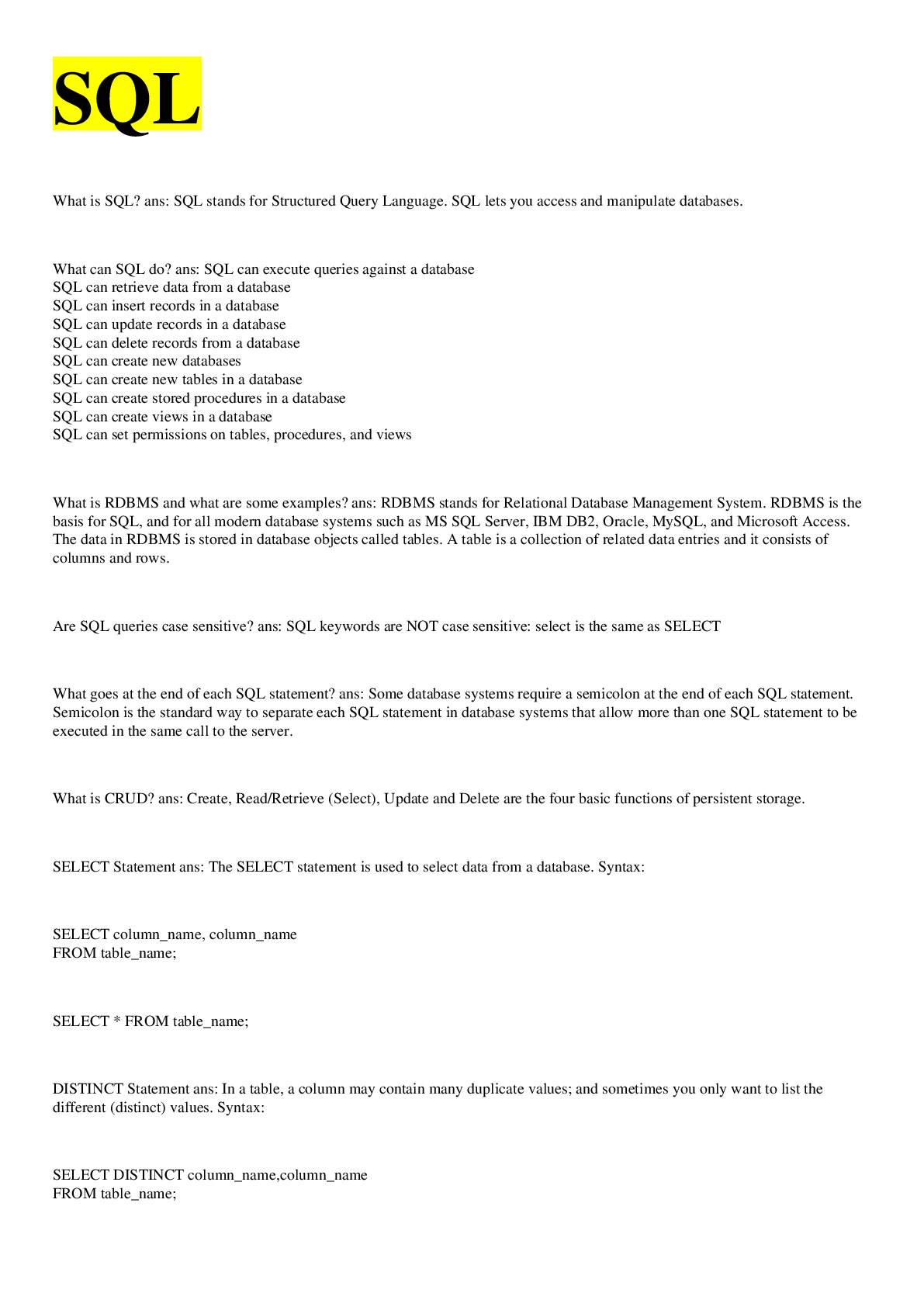
SQL
What is SQL? ans: SQL stands for Structured Query Language. SQL lets you access and manipulate databases.
What can SQL do? ans: SQL can execute queries against a database
SQL can retrieve data from a database
SQL can insert records in a database
SQL can update records in a database
SQL can delete records from a database
SQL can create new databases
SQL can create new tables in a database
SQL can create stored procedures in a database
SQL can create views in a database
SQL can set permissions on tables, procedures, and views
What is RDBMS and what are some examples? ans: RDBMS stands for Relational Database Management System. RDBMS is the basis for SQL, and for all modern database systems such as MS SQL Server, IBM DB2, Oracle, MySQL, and Microsoft Access. The data in RDBMS is stored in database objects called tables. A table is a collection of related data entries and it consists of columns and rows.
Are SQL queries case sensitive? ans: SQL keywords are NOT case sensitive: select is the same as SELECT
What goes at the end of each SQL statement? ans: Some database systems require a semicolon at the end of each SQL statement. Semicolon is the standard way to separate each SQL statement in database systems that allow more than one SQL statement to be executed in the same call to the server.
What is CRUD? ans: Create, Read/Retrieve (Select), Update and Delete are the four basic functions of persistent storage.
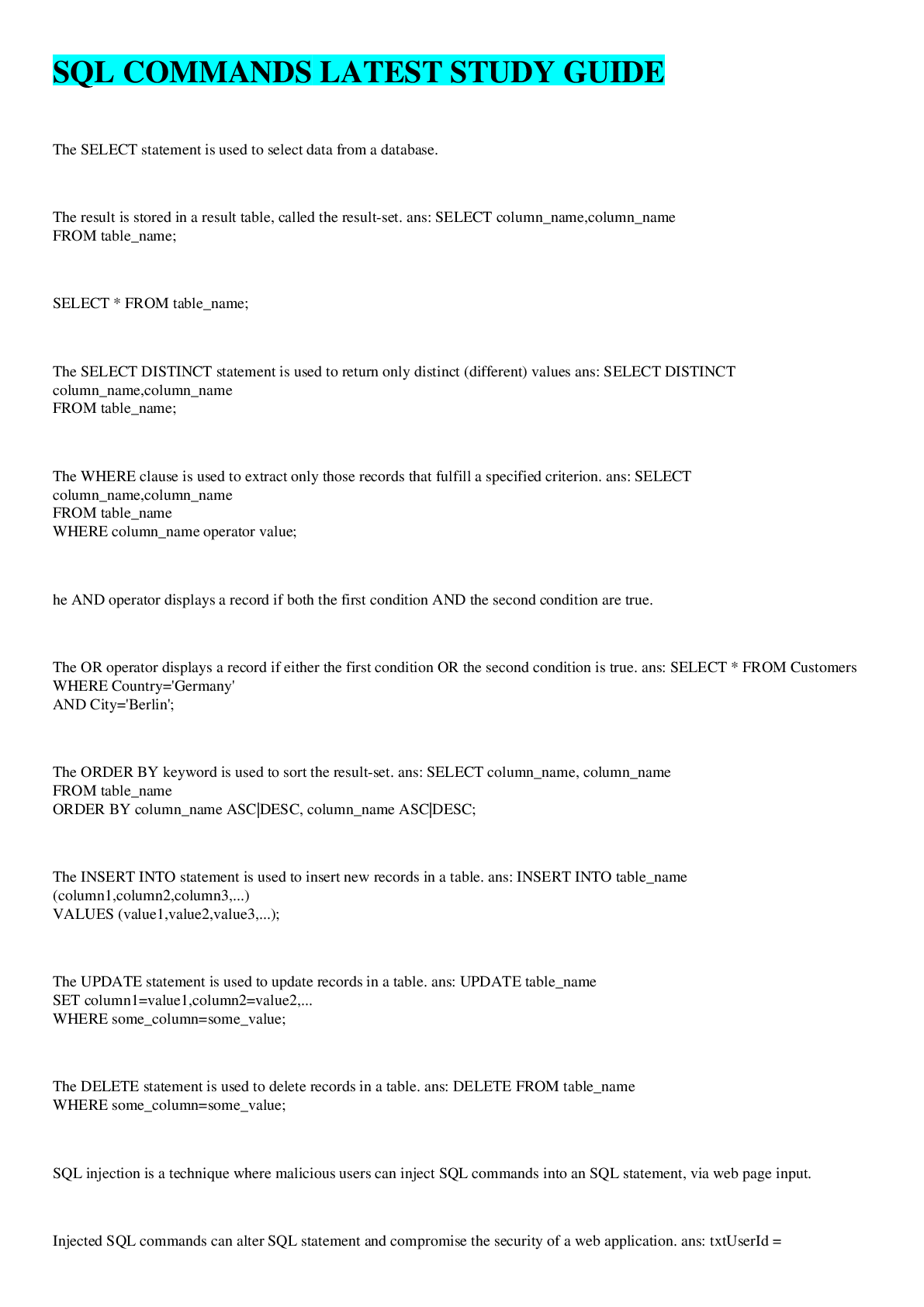
SELECT Statement ans: The SELECT statement is used to select data from a database. Syntax:
SELECT column_name, column_name
FROM table_name;
SELECT * FROM table_name;
DISTINCT Statement ans: In a table, a column may contain many duplicate values; and sometimes you only want to list the different (distinct) values. Syntax:
SELECT DISTINCT column_name,column_name
FROM table_name;
WHERE Clause ans: The WHERE clause is used to extract only those records that fulfill a specified criterion. Syntax:
[Show More]