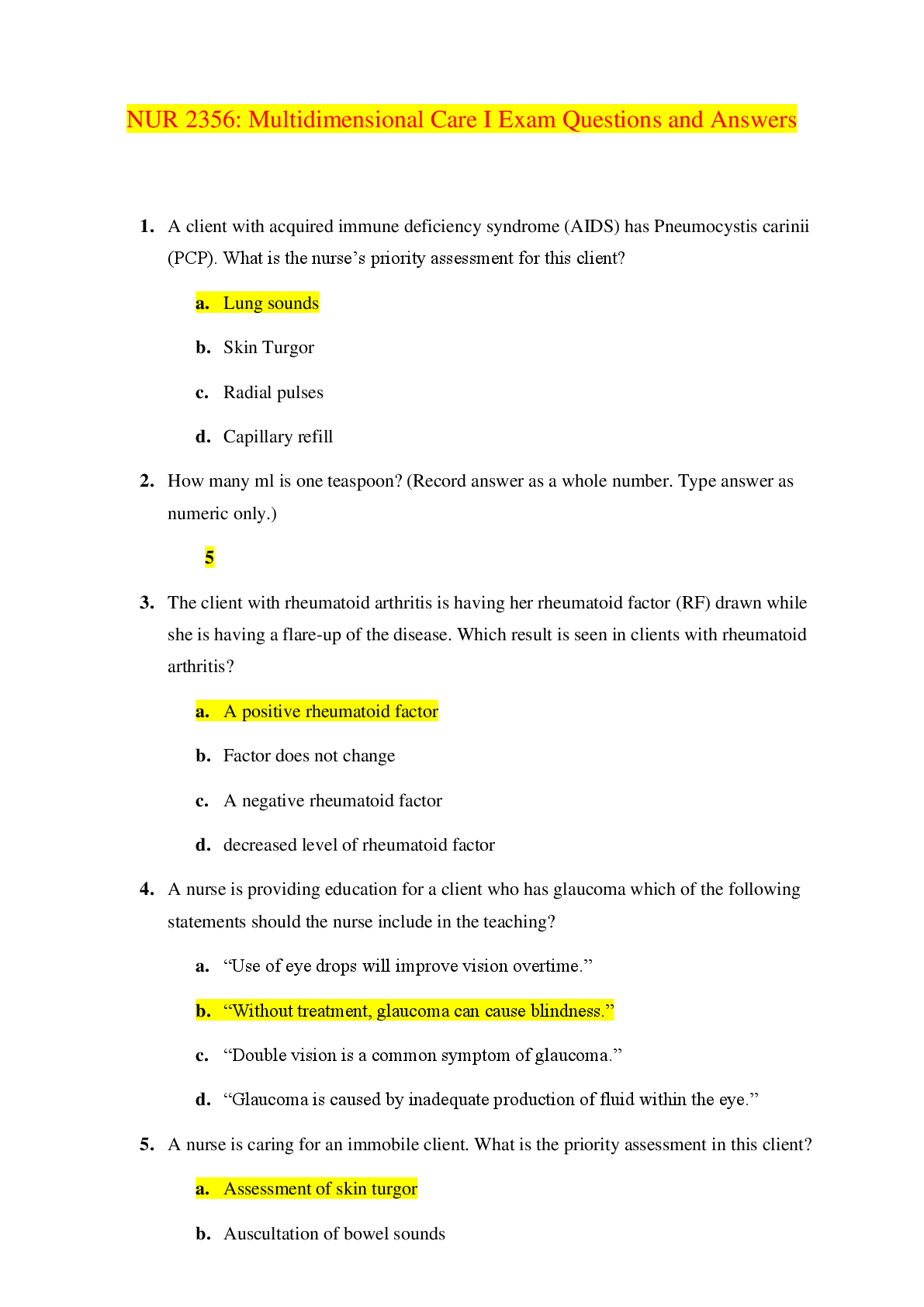
Take Test: Week 6 Midterm Exam
Test Information
Description
Instructions
Timed Test This test has a time limit of 2 hours.You will be notified when
time expires, and you may continue or submit.
Warnings appear when
...
Take Test: Week 6 Midterm Exam
Test Information
Description
Instructions
Timed Test This test has a time limit of 2 hours.You will be notified when
time expires, and you may continue or submit.
Warnings appear when half the time, 5 minutes, 1
minute, and 30 seconds remain.
Multiple
Attempts
Not allowed. This test can only be taken once.
Force
Completion
Once started, this test must be completed in one sitting. Do
not leave the test before clicking Save and Submit.
Remaining Time:
13 minutes, 04 seconds.
Question Completion Status:
QUESTION 1
1. A noncompliant patient states, “Why do you want me to put this poison in my body?”
Identify the best response made by the psychiatric-mental health nurse practitioner
(PMHNP).
A
.
“You have to take your medication to become stable.”
B
.
“ Medications work by increasing the types of neurotransmitters produced by the human brain.”
C
.
“Most medications that work in the brain will result in restoring an imbalance of one or more
neurotransmitters that your body already produces helping to alleviate your symptoms .”
D
.
“Why do you believe that your medication is poison?”
1 points
QUESTION 2
1.
Ms. Hill is currently being treated for schizophrenia but has stopped taking
her medications due to some side effects she claims she was experiencing.
She presents to the clinic today with worsening symptoms. She is
experiencing anhedonia, agitation, attentional impairment, and affective
blunting. Which one of the symptoms mentioned is considered a positive
symptom of schizophrenia?
NURS 6630 WEEK 6 MIDTERM EXAM FINAL
A
.
Anhedonia
B
.
Agitation
C
.
Attentional Impairment
D
.
Affective Blunting
1 points
QUESTION 3
1. Which statement about neurotransmitters and medications is true?
A
.
Endorphins were discovered before morphine which lead to the use of the opioids for pain
control.
B
.
Several psychiatric medications have been developed after discoveries of endogenous
neurotransmitters and defining their function in the brain.
C
.
Medications work by sending messages to neurotransmitters enabling them to work more
effectively.
D
.
An imbalance of serotonin has been directly linked to depression. Following the discovery of this
neurotransmitter, pharmacologists were able to develop a well-known drug- Prozac as the first
medication used to restore the balance of serotonin.
1 points
QUESTION 4
1. When an unstable patient asks why it is necessary to add medications to his current
regimen, the PMHNP’s best response would be:
A
.
"More often than you would think, multiple medications should always be tried together to see
what happens.”
B
.
“Due to this being your first hospitalization after starting medication treatment for the first time
in your life, the only way to effectively manage your symptoms is by adding additional
medications in hopes that it will work for you."
C
.
“Many psychiatric illnesses involve several dys-functioning neurotransmitter systems in the
brain. Often, a single medication may only effect one or two of the dys-functioning systems. The
addition of another medication can work with the current medication in stabilizing multiple
neurotransmitter systems and help to alleviate your symptoms.”
D
.
“I understand your concerns. Often times, it is necessary to switch medications after short
periods of time to better manage your symptoms. We will discontinue your current regimen and
start another single drug agent.”
1 points
QUESTION 5
1. During gene expression, what must occur prior to a gene being expressed?
A
.
Transcription factor must bind to the regulatory region within
the cell’s nucleus.
B
.
RNA must be converted to mRNA.
C
.
The coding region must separate from the regulatory region.
D
.
RNA polymerase must inhibit the process of changing RNA to
mRNA.
1 points
QUESTION 6
1. While genes have potential to modify behavior, behavior can also modify genes. How
do genes impact this process?
A
.
Genes impact neuron functioning directly.
B
.
Changes made to proteins lead to changes in
behavior.
C
.
Neurons are able to impact protein synthesis.
D
.
Genes impact the DNA of a cell, leading to
changes in behavior.
1 points
QUESTION 7
1. Though medications have the ability to target neurotransmitter release into the synapse
by the presynaptic neuron it is not always necessary. The PMHNP understands that this is
because:
A
.
Neurotransmission occurring along the axon is normally at a level to prevent symptoms of
mental illness and rarely require augmentation from medication therapy.
B
.
Neurotransmission is minimally affected by medication therapy when compared to the baseline
neurotransmitter release of a resting neuron.
C
.
Neurotransmitters can spread by diffusion.
D
.
The post synaptic neuron can produce and release its’ own neurotransmitter allowing it to
function properly.
1 points
QUESTION 8
1. Why is the cytochrome P450 enzyme system of significance to the PMHNP?
A
.
The kidneys play a role with excretion of the medication, and if a patient has kidney
damage, the dose must be increased to be effective.
B
.
The bioavailability of the medication after it passes through the stomach and liver
can be altered.
C
.
The medication’s chemical composition changes when it comes in contact with the
acid in the stomach.
D
.
The CYP enzyme system is a steady and predictable process that prescribers must
understand to treat conditions effectively.
1 points
QUESTION 9
1. It is important for the PMHNP to recognize differences in pharmacokinetics to safely
prescribe and monitor medications. Which of the following statements does the competent
PMHNP identify as true?
A
.
About 1 out of 5 Asians requires lower-than-normal doses of some antidepressants
and antipsychotics.
B
.
The term polymorphic refers to the body’s ability to break a medication down several
ways, and this patient may require higher doses of certain antidepressants and
antipsychotics.
C
.
About 1 out of 30 Caucasians requires lower doses of some antidepressants and
antipsychotics.
D
.
Most enzyme pathways do not have interactions between the newer medications.
1 points
QUESTION 10
1. As it relates to G-protein linked receptors, what does the PMHNP understand about
medications that are used in practice?
A
.
Most medications that act on G-protein linked receptors have antagonistic traits.
B
.
The majority of medications used in practice are full agonists and are used to
stimulate the body’s natural neurotransmitters.
C
.
Most medications act as partial agonists because they allow the body to use only
what is needed.
D
.
Medications used in practice may act as inverse agonists if the dosage is too high.
1 points
QUESTION 11
1. The PMHNP is considering prescribing a 49-year-old male clozapine (Clozaril) to treat
his schizophrenia and suicidal ideations. The PMHNP is aware that which factor may impact
the dose needed to effectively treat his condition:
A
.
The patient smokes cigarettes.
B
.
The patient has hypertension.
C
.
The patient has chronic kidney
disease, stage 2.
D The patient drinks a cup of coffee a
. day.
1 points
QUESTION 12
1. A patient is diagnosed with bipolar disorder and is currently taking carbamazepine
(Tegretol), aripiprazole (Abilify), and melatonin. The PMHNP has just written an order to
discontinue the carbamazepine (Tegretol) for drug-induced thrombocytopenia. The PMHNP
is aware that his next best action is to:
A
.
Alert staff to possible seizures
B
.
Write an order for a different mood stabilizer
C
.
Decrease the amount prescribed for aripiprazole
(Abilify)
D
.
Explain to the patient that it will be more difficult to
control his temper
1 points
QUESTION 13
1. A patient recently transferred following a suicide attempt has a history of
schizophrenia, depression, and fibromyalgia. He is currently taking Amitriptyline (Elavil),
Lisinopril, aspirin, and fluoxetine (Prozac). When assessing the psychiatric medications and the
reason for admission, what would be the best course of action for the PMHNP with this client?
A
.
Review Amitriptyline (Elavil) level
B
.
Order a STAT BUN/SCr
C
.
Asses the client for nystagmus
D
.
Order a STAT platelet, D-dimer, and PT/INR
1 points
QUESTION 14
1. A patient with schizophrenia is given an inverse agonist that acts on the receptor 5HT
and neurotransmitter serotonin. What is the rationale for prescribing a medication such as
this?
A
.
To promote the availability of serotonin
B
.
To decrease serotonin
C
.
To indirectly increase the amount of dopamine
in the body
D To help decrease the amount of serotonin and
. dopamine
1 points
QUESTION 15
1. The PMHNP is caring for four patients. Which patient statement indicates that
benzodiazepines would be beneficial?
A
.
“I have trouble staying asleep in the middle of the night.”
B
.
“My spouse told me that I seem to have trouble remembering
things sometimes.”
C
.
“I really want to stop smoking, but the cravings are too strong.”
D
.
“I feel nervous to go outside and be in large crowds.”
1 points
QUESTION 16
1. Ms. Harlow is a 42-year-old patient who is prescribed a drug that acts on ionotropic
receptors. She is curious about the effects of the drug and how it will act on her symptoms.
Which statement made by the PMHNP demonstrates proper understanding of Ms. Harlow’s
prescription?
A
.
“The drug will have an almost immediate
effect.”
B
.
“The drug can take a while to build up in your
system.”
C
.
“The drug is slow to release but lasts for a long
time.”
D
.
“The drug will make a subtle difference in your
symptoms.”
1 points
QUESTION 17
1. A patient is seeking pharmacological treatment for smoking cessation. Which drug
class does the PMHNP prescribe to the patient?
A
.
Benzodiazepine
B
.
Mirtazapine
(Remeron)
C
.
Ketamine
D
.
Varenicline
(Chantix)
1 points
QUESTION 18
1. The PMHNP is caring for a new patient who has been transferred from another office.
When meeting with the new patient, the patient reports, “I feel like I am improving with the
stabilizers.” The PMHNP immediately recognizes that the patient is describing which kind of
drug?
A
.
Full agonists
B
.
Antagonists
C
.
Partial
agonists
D
.
Inverse
agonists
1 points
QUESTION 19
1. A patient presents with frequent episodes of mania. Which statement describes an
appropriate treatment approach for this patient?
A
.
“The patient needs to have an inverse agonist.”
B
.
“The patient could benefit from an anticonvulsant.”
C
.
“The patient’s calcium, sodium, chloride, and potassium levels
must be regulated.”
D
.
“The patient should have a drug that acts on ligand-gated ion
channels.”
1 points
QUESTION 20
1. What characteristics do the nicotinic, cholinergic, serotonin 3, and glycine receptors all have in
common?
A
.
Ligand-gated ion channels with a
pentameric structure
B
.
Ligand-gated ion channels with a
tetrameric structure
C
.
Voltage-sensitive ion channels
D
.
Are G-coupled protein receptors
1 points
QUESTION 21
1. Which statement made by the patient suggests the patient will need to be treated
with antipsychotics that target paranoid psychosis?
A
.
“It’s my fault that all of this is happening. I don’t think I could ever
forgive myself.”
B
.
“I have to talk to the President because I’m the only one who can
help him.”
C
.
“I’m not sure why that lady is wearing a red jacket since it’s the dogs
who need food.”
D
.
“I don’t know that I even want to go to that meeting. It doesn’t seem
worth it anymore.”
1 points
QUESTION 22
1. Mr. McCullin is 64 years old with Parkinson’s disease. The PMHNP caring for Mr.
McCullin wants to start him on a dopamine agonist to help manage and treat his condition.
The PHMNP selects this agent because of which action it has on patients like Mr. McCullin?
A
.
Dopamine is terminated through multiple mechanisms.
B
.
The D2 autoreceptor regulates release of dopamine from the
presynaptic neuron.
C
.
MAO-B presents in the mitochondria within the presynaptic
neuron.
D
.
D2 receptors are the primary binding site for dopamine
agonists.
1 points
QUESTION 23
1. Mrs. Trevor is a 44-year-old patient who does not have a diagnosis of schizophrenia
but occasionally reports symptoms of psychosis, followed by severe fatigue. Mrs. Trevor
inquires about the use of amphetamines to help with her energy levels. Which response
made by the PMHNP is most appropriate?
A
.
“Amphetamines may help you, as they can alleviate psychotic conditions.”
B
.
“Amphetamines can inhibit negative symptoms of schizophrenia, so this might be a
good choice for you.”
C
.
“Amphetamines can cause hallucinations, so I would advise against this type of
prescription.”
D
.
“Amphetamines can lead to a dopamine deficiency, so I will not prescribe this for
you.”
1 points
QUESTION 24
1. The PMHNP is caring for a patient with schizophrenia and is considering a variety of
treatment approaches. The PHMNP selects a viable treatment that is consistent with the
“dopamine hypothesis of schizophrenia.” What action does the PMHNP anticipate this
treatment having on the patient?
A
.
Blocking the release of dopamine facilitates the onset of positive schizophrenia
symptoms.
B
.
Hyperactivity in the mesolimbic dopamine pathway mediates the positive
symptoms of schizophrenia.
C
.
Antipsychotic drugs that open D2 receptor pathways can treat schizophrenia.
D
.
The neuroanatomy of dopamine neuronal pathways can explain symptoms of
schizophrenia.
1 points
QUESTION 25
1. A patient is diagnosed with schizophrenia. What increases the patient’s potential to
mediate the cognitive symptoms of the disease?
A
.
Achieving underactivity of the mesocorticol projections to the prefrontal
cortex
B
.
Achieving overactivity of the mesocorticol projections to the ventromedial
prefrontal cortex
C
.
Achieving underactivity of the mesocortical projections to the
ventromedial prefrontal cortex
D
.
Achieving overactivity of the mesocorticol projections to the prefrontal
cortex
1 points
QUESTION 26
1. What is accurate about the clinical description of psychosis?
A
.
It is simply a separate way to clinically describe the diagnosis of schizophrenia in
a client.
B
.
Psychosis is listed in the DSM as a distinct disorder with unique screening criteria.
C
.
It is a syndrome that can be associated with a number of psychiatric disorders.
D
.
Psychosis is always demonstrated by a paranoia in the client.
1 points
QUESTION 27
1. The PMNHP is assessing a 29-year-old client who takes antipsychotics that
block D2 receptors. This client has begun to develop a common side effect of this
medication. What is this side effect?
A
.
Increased hallucinations and positive symptoms
B
.
Hypersexuality
C
.
Reduction in negative symptoms
D
.
Tardive dyskinesia
1 points
QUESTION 28
1. The PMHNP is caring for a patient who is taking antipsychotics heard the psychiatrist
tell the patient that the patient would be placed on a different antipsychotic agent called an
atypical antipsychotic. What neurotransmitters will this new medication work on?
A
.
dopamine and serotonin
B
.
dopamine and norepinephrine
C
.
dopamine and GABA
D
.
GABA and glutamate
1 points
QUESTION 29
1. Which statement made by the PMHNP exemplifies correct teaching of physiological
effects in the body?
A
.
Muscarinic antagonists are more likely to cause decreased prolactin levels.
B
.
D2 antagonists decrease the likelihood of EPS symptoms.
C
.
D2 antagonism is linked to antidepressant properties.
D
.
D2 partial agonists are associated with increased efficacy in treating positive
symptoms of schizophrenia.
1 points
QUESTION 30
1. Mrs. Schwartzman is a 52-year-old patient with schizophrenia and no established
history of depression. When meeting with the PMHNP, she presents with apathy and
withdrawn social behavior, and she reports a loss of joy from enjoyable activities. What
does the PMHNP infer from this encounter with the patient?
A
.
An underlying depressive disorder
B
.
The recent change of a 2nd generation antipsychotic to a
conventional one
C
.
The recent change of a 1st generation antipsychotic to a 2nd
generation antipsychotic
D
.
All of the above
1 points
QUESTION 31
1. Mrs. Schwartzman is a 52-year-old client with schizophrenia and no established history of
depression. When meeting with the PMHNP, she presents with apathy and withdrawn social behavior,
and she reports a loss of joy from enjoyable activities since starting her new medication. What does the
PMHNP infer from this encounter with the client?
A
.
The client has been misdiagnosed with schizophrenia
B
.
The client is not compliant with this new medication
C
.
The new medication is blocking D2 receptors in the mesolimbic
system
D
.
The dose of this new antipsychotic medication is too low
1 points
QUESTION 32
1. The student inquires about antipsychotic medications. Which response by the PMHNP
describes the factors that contribute to reduced risk of extrapyramidal symptoms (EPS) for
patients who take antipsychotics?
A
.
Those that are potent D2 antagonists
B
.
Those that are potent D2 antagonists with 5HT2A antagonism
properties
C
.
D2 receptors that are blocked in the nigrostriatal pathway
D
.
Potent D2 antagonists that block the muscarinic anti-M1
cholinergic receptors
1 points
QUESTION 33
1. Mr. Gordon is a middle-aged patient who is taking antipsychotics. When meeting with
the PMHNP, he reports positive responses to the medication, stating, “I really feel as
though the effects of my depression are going away.” Which receptor action in
antipsychotic medications is believed to be the most beneficial in producing the effects
described by Mr. Gordon?
A
.
5HT2
antagonism
B
.
D2 antagonism
C
.
Alpha-2
antagonism
D
.
D2 partial
agonist
1 points
QUESTION 34
1. Mr. Gordon is a middle-aged client who was started on antidepressant monotherapy for
depression. After beginning this medication, the PMHNP noticed that this client seemed to swing into a
hypomanic episode. What can the PMHNP infer from this behavior change?
A
.
This client may have Bipolar III disorder
B
.
The antidepressant monotherapy should be
continued
C
.
A second antidepressant agent should be added as dual therapy
D
.
A and C
1 points
QUESTION 35
1. Ms. Ryerson is a 28-year-old patient with a mood disorder. She recently requested to
transfer to a new PMHNP, after not getting along well with her previous provider. The new
PHMNP is reviewing Ms. Ryerson’s medical chart prior to their first appointment. Upon
review, the PMHNP sees that the former provider last documented “patient had rapid poop
out.” What does the PMHNP infer about the patient’s prescription based on this
documentation?
A
.
The patient has an unsustained response to
antidepressants.
B
.
The patient has antidepressant-induced
hypomania.
C
.
The patient has a depletion of monoamine
neurotransmitters.
D
.
The patient has an adverse effect to atypical
antipsychotics.
1 points
QUESTION 36
1. The PMHNP recognizes that which patient would be contraindicated for
antidepressant monotherapy?
A
.
Patient with a bipolar I
designation
B
.
Patient with a bipolar II
designation
C
.
Patient with a bipolar III
designation
D
.
None of the above
1 points
QUESTION 37
1. The PMHNP spends a session with a client and notices behaviors correlating
with a potential manic episode. All of the following are possible manic symptoms the
PMHNP could observe except:
A
.
Pressured speech
B
.
Less time sleeping
C
.
Irritable mood
D
.
A low self esteem
1 points
QUESTION 38
1. The PMHNP is caring for a patient with the s genotype of SERT. What does the PMHNP
understand regarding this patient’s response to selective serotonin reuptake inhibitor
(SSRI)/SNRI treatment?
A
.
The patient has a higher chance of tolerating SSRI/SNRI
treatment.
B
.
The patient will have a positive response to SSRI/SNRI
treatment.
C
.
The patient will develop severe mood cycling in
response to treatment.
D
.
The patient may be less responsive or tolerant to the
treatment.
1 points
QUESTION 39
1. Ms. Boeckh is a 42-year-old patient with major depression. The PMHNP understands
that which action of norepinephrine will affect Ms. Boeckh’s serotonin levels?
A
.
Norepinephrine potentiates 5HT release through a2
postsynaptic receptors.
B
.
Norepinephrine inhibits 5HT release through a2 receptors.
C
.
Norepinephrine inhibits α2 receptors on axon terminals.
D
.
Norepinephrine potentiates 5HT release through a1 and a2
receptors.
1 points
QUESTION 40
1. Ms. Boeckh is a 42-year-old client who is taking an antidepressant therapy. The PMHNP
understands that this medication can have substantial food interactions that can cause Ms. Boeckh to
develop a hypertensive crisis. Which antidepressant class is Ms. Boeckh’s medication in?
A
.
Selective serotonin reuptake inhibitors
B
.
MAO inhibitors
C
.
Tricyclic antidepressants
D
.
Selective norepinephrine reuptake inhibitors
1 points
QUESTION 41
1. The PMHNP is assessing a patient in the psychiatric emergency room. The patient
tells the PMHNP that he does not understand why his depression has not lifted after being
on four different antidepressants over the course of a year. Which of the following
symptoms can be residual symptoms for patients who do not achieve remission with major
depressive disorder?
A
.
Insomnia
B
.
Suicidal ideation
C
.
Problems
concentrating
D
.
A and C
1 points
QUESTION 42
1. Fluoxetine (Prozac) has been prescribed for a patient. Which of the following
statements is true regarding the action of this medication?
A
.
Neuronal firing rates are not dysregulated in depression.
B
.
Blocking the presynaptic SERT will immediately lead to a great deal of serotonin in
many synapses.
C
.
Upon the acute administration of a SSRI, 5HT decreases.
D
.
The action at the somatodendritic end of the serotonin neuron may best explain the
therapeutic action of SSRIs.
1 points
QUESTION 43
1. Fluoxetine (Prozac) has been prescribed for a client with depression. Which of
the following statements is true regarding the action of this medication?
A
.
Fluoxetine causes an immediate resolution of the client’s depression.
B
.
Fluoxetine inhibits the serotonin transporter (SERT).
C
.
Upon the acute administration of fluoxetine, serotonin levels decrease.
D
.
Fluoxetine has a significant binding affinity to cholinergic receptors.
1 points
QUESTION 44
1. The nurse education knows that teaching was effective when one of the students compares
fluvoxamine to sertraline and notes which of the following similarities?
A
.
Both have a sedative-like, calming effect.
B
.
Both inhibit the dopamine transporter which increases the levels of dopamine.
C
.
Both agents are approved for the treatment of depression in the United States
D
.
Both have actions at sigma receptors which contribute to both anxiolytic and antipsychotic effects.
1 points
QUESTION 45
1. A 45 year old female client with allergic rhinitis and normal blood pressure has
had no reduction in depressive symptoms after trying bupropion, paroxetine, and
venlafaxine. What precautions are needed when considering phenelzine in treating her
depression?
A
.
The client should be counseled to avoid all antihistamines for allergic rhinitis while taking an
MAOI
B
.
The client will need to minimize dietary intake of foods that are high in tyramine.
C
.
The client must avoid dental work that require an anesthetic while on an MAOI.
D
.
All non-opioids and opioid analgesics must be avoided when taking an MAOI.
1 points
QUESTION 46
1. A 51-year-old female patient presents with symptoms of depression, including lack of
motivation and difficulty sleeping. What risk factors would increase her vulnerability for a
diagnosis of depression?
A
.
First onset in puberty or early
adulthood
B
.
Late onset of menses
C
.
Premenstrual syndrome
D
.
A and C
1 points
QUESTION 47
1. A nurse overhears that a patient has failed single therapy with an SSRI and SNRI. She
also learns that the patient has been on dual SSRI/SNRI therapy without adequate
symptom control. She approaches the PMHNP and asks what the next treatment option
could be in this seemingly treatment-resistant patient. The PMHNP tells the nurse she will
treat the patient with the following regimen:
A
.
MAOI plus SNRI
B
.
SSRI/SNRI plus NDRI
C
.
NDRI/SNRI plus
mirtazapine
D
.
NDRI plus modafinil
1 points
QUESTION 48
1. A nurse overhears that a client has failed monotherapy with an SSRI and an
SNRI. She also learns that the client has failed dual SSRI + SNRI therapy. The nurse
approaches the PMHNP and asks what treatment options should be considered in this
treatment resistant client. The PMHNP tells the nurse that she will treat the client with
the following regimen.
A
.
SSRI + SNRI
B
.
SSRI + NDRI
C
.
SSRI + MAOI
D
.
SSRI + Mood stabilizer
1 points
QUESTION 49
1. A patient is prescribed fluoxetine but is concerned about the side effects. Which
statement demonstrates accurate patient teaching when discussing the side effects
associated with fluoxetine?
A
.
Weight gain can be
problematic.
B
.
Sedation is very
common.
C
.
Induction of mania is
rare.
D
.
Seizures are not unusual.
1 points
QUESTION 50
1. A client is prescribed fluoxetine but is concerned about side effects. Which
statement demonstrates accurate client teaching when discussing the side effects
associated with fluoxetine?
A
.
Weight gain is common
B
.
Sedation is common
C
.
Sedation is unusual
D
.
Seizures occur frequently
1 points
QUESTION 51
1. A 25-year-old female patient is being prescribed milnacipran to treat fibromyalgia,
and expresses concern regarding “how she will feel and look” from taking the medicine.
Which statement correctly describes the side effects as a result of taking this medication?
A
.
It can affect her menstruation.
B
.
Suicidality can be common among
young adults.
C
.
Sedation may be problematic.
D
.
Weight gain is unusual.
1 points
QUESTION 52
1. Mr. Ruby is a 33-year-old single father who is requesting pharmacological intervention
to treat his fibromyalgia. The PMHNP sees in the medical chart that he has a recent
diagnosis of arrhythmia and a BMI of 29. During his assessment, the PMHNP learns that Mr.
Ruby works 40–50 hours a week as a contractor and “manages his stress” by smoking 3–4
cigarettes a day and having 8–10 drinks of alcohol each week. Why would duloxetine be
contraindicated for Mr. Ruby?
A
.
He has
fibromyalgia.
B
.
He has
arrhythmia.
C
.
He uses alcohol.
D
.
He is
overweight.
1 points
QUESTION 53
1. A patient is prescribed sertraline to treat panic disorder. Knowing that sertraline can
initially cause anxiety or insomnia, what should the PMHNP do?
A
.
Prescribe long-acting benzodiazepine for 2 weeks, then
increase the dose.
B
.
Prescribe short-acting benzodiazepine for 2 weeks, then
discontinue.
C
.
Prescribe long-acting benzodiazepine for 2 weeks, then
discontinue.
D
.
Prescribe short-acting benzodiazepine for 2 weeks, then
increase the dose.
1 points
QUESTION 54
1. A patient is prescribed 50 mg of desvenlafaxine to take every other day for major
depressive disorder. What does the PMHNP understand about this patient?
A
.
The patient has hepatic
impairment.
B
.
The patient has moderate renal
impairment.
C
.
The patient has severe renal
impairment.
D
.
The patient has cardiac
impairment.
1 points
QUESTION 55
1. The PMHNP understands that which mechanism contributes to a worse tolerability
profile for patients taking tricyclic antidepressants (TCAs)?
A
.
Histamine H1 receptor blockade can cause
insomnia.
B
.
Muscarinic M1 receptor blockade causes
blurred vision.
C
.
Alpha 1 adrenergic receptor blockade causes
weight gain.
D
.
Muscarinic M3 receptor blockade causes
sedation.
1 points
QUESTION 56
1. A patient who was prescribed an MAO inhibitor is learning about dietary
modifications. Which statement made by the PMHNP demonstrates proper teaching of the
food-drug interactions for MAO inhibitors?
A
.
“You must avoid soy products, such as
tofu.”
B
.
“You should not consume processed
meats.”
C
.
“You may consume fermented foods, like
sauerkraut.”
D
.
“You may continue to drink beers on tap.”
1 points
QUESTION 57
1. A patient who is prescribed MAO inhibitors asks about whether he can continue
taking pseudoephedrine to relieve his congestion. Which response by the PMHNP indicates
proper understanding of drug-drug interactions?
A
.
“Decongestants are fine to continue taking with MAO
inhibitors.”
B
.
“Decongestants are okay to take with MAO inhibitors in
moderation.”
C
.
“Decongestants should be avoided due to risk of
serotonin syndrome.”
D
.
“Decongestants should be avoided due to risk of
hypertensive crisis.”
1 points
QUESTION 58
1. Ms. Skidmore presents for a follow-up appointment after being prescribed phenelzine
(Nardil), and reports “I take my 45 mg pill, three times a day, just like I’m supposed to.”
What does the PMHNP understand about this patient?
A
.
Ms. Skidmore is taking the correct dose of phenelzine (Nardil).
B
.
Ms. Skidmore is not taking enough of the phenelzine (Nardil); she should be taking
three times that amount.
C
.
Ms. Skidmore is taking too much of the phenelzine (Nardil); she should be taking the
45 mg in three doses.
D
.
Ms. Skidmore is taking too much of the phenelzine (Nardil); she is supposed to take
45 mg every 24 hours.
1 points
QUESTION 59
1. The PMHNP is caring for several patients who present with various symptoms and
health issues. For which patient does the PMHNP prescribe pregabalin (Lyrica)?
A
.
Patient with PTSD
B
.
Patient with partial seizures
C
.
Patient with galactose
intolerance
D
.
Patient with Lapp lactase
deficiency
1 points
QUESTION 60
1. Mr. Gutier is 72 years old with anxiety and depressive symptoms. His PMHNP is
prescribing lorazepam (Ativan). What does the PMHNP understand regarding this
prescription?
A
.
The PMHNP will prescribe less than 2-6 mg for Mr. Gutier to take
daily.
B
.
The PMHNP will require Mr. Gutier to take 2-4 doses of lorazepam
(Ativan) per day.
C
.
The PMHNP will prescribe more than 2-6 mg for Mr. Gutier to take
daily.
D
.
The PMHNP will have Mr. Gutier take 6 mg of lorazepam (Ativan) as
a PRN.
1 points
QUESTION 61
1. A patient is being prescribed a sedating antidepressant, but is concerned about
weight gain. Which medication is most likely to be prescribed to addresses the patient’s
concerns?
A
.
mirtazapine
(Remeron)
B
.
doxepin (Silenor)
C
.
alprazolam
(Xanax)
D
.
trazadone
(Oleptro)
1 points
QUESTION 62
1. A patient who was diagnosed with bipolar disorder without mania, asks the PMHNP
why he is being prescribed a mood stabilizer. What is the appropriate response?
A
.
Mood stabilizers are only prescribed to treat manic phases of bipolar depression
B
.
Mood stabilizers can consistently treat both mania and bipolar depression
C
.
Mood stabilizers can target mania and mania relapse and also reduce symptoms of
bipolar depression and relapse of bipolar depression symptoms but no drug has been
proven to target all four therapeutic actions
D
.
Certain mood stabilizers, such as lithium, are able to consistently target mania and
bipolar depression
1 points
QUESTION 63
1. A client who was diagnosed with bipolar disorder without mania, asks
the PMHNP why he is being prescribed a mood stabilizer. What is the
appropriate response?
A
.
Mood stabilizers only treat manic phases of bipolar disorder.
B
.
Mood stabilizers only treat the depressive phases of bipolar disorder.
C
.
Mood stabilizers can treat either manic phases or depressive phases of bipolar disorder.
D
.
Mood stabilizer monotherapy is effective in treating bipolar disorder without mania.
1 points
QUESTION 64
1. The PMHNP is assessing a client in the emergency room. The client shares that
he has been on lithium for many years. What blood test does the PMHNP order?
A
.
Thyroid Stimulating Hormone
B
.
Erythrocyte Sedimentation Rate
C
.
Platelet Count
D
.
Phosphate
1 points
QUESTION 65
1. A nursing student is seeking clarification on the use of anticonvulsants to treat
depression and is unclear about most effective outcomes. Which of the following agents
does the PMHNP convey as having uncertain outcomes?
A
.
Carbamazepine
(Tegretol)
B
.
Gabapentin
(Neurontin)
C
.
Valporoic Acid
(Depakene)
D
.
All of the above
1 points
QUESTION 66
1. A nursing student is seeking clarification on the use of anticonvulsants to treat
bipolar depression and is unclear about which anticonvulsants have the most effective
outcomes in treating bipolar depression. Which of the following anticonvulsants is NOT
used for treating bipolar depression?
A
.
Carbamazepine (Tegretol)
B
.
Gabapentin (Neurontin)
C
.
Lamotrigine (Lamictal)
D
.
Valproic Acid (Depakene)
1 points
QUESTION 67
1. The PMHNP is meeting with a new mother who would like to begin taking medication
again to treat her bipolar depression; she is breastfeeding her 2-month old daughter. The
PMHNP recognizes that which of the following medications is contraindicated for this
patient?
A
.
Valporic Acid
(Depakene)
B
.
Carbamazepine
(Tegretol)
C
.
Lithium (Lithobid)
D
.
Lamotrigine
(Lamictal)
1 points
QUESTION 68
1. The PMHNP is meeting with a new mother who would like to begin taking
medication again to treat her bipolar depression; she is breastfeeding her 2-month old
daughter. The PMHNP recognizes that which of the following medications is
contraindicated for this client?
A
.
Valproic Acid (Depakene)
B
.
Carbamazepine (Tegretol)
C
.
Lithium (Lithobid)
D
.
Lamotrigine (Lamictal)
1 points
QUESTION 69
1. A patient was diagnosed with GAD 4 weeks ago and was placed on Clonazepam
(klonopin) twice a day and citalopram (citalopram (celexa)) once daily. When he asks the
PMHNP why it is necessary to wean him off of the Clonazepam (klonopin) the best response
is:
A
.
Clonazepam (klonopin) may interfere with citalopram (celexa)s targeted areas in the
brain
B
.
Clonazepam (klonopin) is not recommended for long term use due to possible
sedation
C
.
Clonazepam (klonopin) was used as an aid to treat your condition while you were
adjusting to citalopram (celexa)
D
.
Clonazepam (klonopin) and citalopram (celexa) target the same area in the brain and
after long-term use they will begin to compete making one more or less effective
than the other
1 points
QUESTION 70
1. During assessment a patient states “Why are you asking me about my heart, I am
here for my head”, the PMHNP’s best response is:
A
.
“Some medications can cause heart issues so it is necessary to rule those out before
you begin medication.”
B
.
“This is a part of our routine admission and it is important that you give me truthful
answers.”
C
.
“Chronic conditions such as Lupus can cause an area in your brain to malfunction,
specifically your hippocampus.”
D
.
“Anxiety can cause cortisol levels to increase and when this happens frequently it
puts you at risk for comorbidities such as type 2 diabetes.”
1 points
QUESTION 71
1. There are a number of endocrine reactions that accompany fear. A quick boost of cortisol may
enhance survival when encountering a real but short-term threat. However, chronic elevations in cortisol
can lead to increased medical comorbidities. Which of the following medical conditions may be related
to these persistent cortisol elevations?
A
.
Increased rates of coronary artery disease
B
.
Increased rates of type 2 diabetes
C
.
Increased rates of stroke
D
.
All of the above
1 points
QUESTION 72
1. The PMHNP understands that the potential of alcohol abuse in the
anxious client is higher for the following reasons:
a
.
Alcohol exerts an effect on GABAA receptors.
b
.
Alcohol increases serotonin levels
c
.
Alcohol exerts an effect on the cannabinoid receptors
d
.
Alcohol has an immediate action by altering G Protein Coupled Receptors
1 points
QUESTION 73
1. After ordering flumazenil (Rumazicon) the PMHNP cautions the staff to monitor
for which possible effect?
A
.
Agitation
B
.
Seizures
C
.
Sweating and Nausea
D
.
All of the above
1 points
QUESTION 74
1. The PMHNP evaluates the patient for “fear conditioning” when he asks:
A
.
Have you ever experienced any type of trauma?
B
.
What do you do when you feel fear?
C
.
Does your mother or father have a history of fear
and/or worrying?
D
.
What makes your fear better?
1 points
QUESTION 75
1. A patient diagnosed with PTSD is prescribed propranolol (Inderal) and the PMHNP
understands that he was prescribed this medication for what purpose:
A
.
He has uncontrolled high blood pressure and this must be treated before
focusing on his PTSD.
B
.
Beta blockers are linked to reconsolidation.
C
.
This medication will allow the patient to sleep throughout the night.
D
.
This medication is linked to the increase of serotonin in the brain.
1 points
QUESTION 76
1. When completing this exam, did you comply with Walden University’s Code of
Conduct including the expectations for academic integrity?
Yes
No
Question 1
1 out of 1 points
A noncompliant patient states, “Why do you want me to put this poison in my body?”
Identify the best response made by the psychiatric-mental health nurse practitioner
(PMHNP).
Selected
Answer:
C.
“Most medications that work in the brain will result in restoring an imbalance of one
or more neurotransmitters that your body already produces helping to alleviate your
symptoms .”
Question 2
1 out of 1 points
Ms. Hill is currently being treated for schizophrenia but has stopped taking
her medications due to some side effects she claims she was
experiencing. She presents to the clinic today with worsening symptoms.
She is experiencing anhedonia, agitation, attentional impairment, and
affective blunting. Which one of the symptoms mentioned is considered a
positive symptom of schizophrenia?
Selected
Answer:
B.
Agitation
Question 3
1 out of 1 points
Which statement about neurotransmitters and medications is true?
Selected
Answer:
B.
Several psychiatric medications have been developed after discoveries of
endogenous neurotransmitters and defining their function in the brain.
Question 4
1 out of 1 points
When an unstable patient asks why it is necessary to add medications to his current
regimen, the PMHNP’s best response would be:
Selecte
d
Answer:
C.
“Many psychiatric illnesses involve several dys-functioning neurotransmitter systems in
the brain. Often, a single medication may only effect one or two of the dys-functioning
systems. The addition of another medication can work with the current medication in
stabilizing multiple neurotransmitter systems and help to alleviate your symptoms.”
Question 5
1 out of 1 points
During gene expression, what must occur prior to a gene being expressed?
Selected
Answers:
A.
Transcription factor must bind to the regulatory region within
the cell’s nucleus.
Question 6
1 out of 1 points
While genes have potential to modify behavior, behavior can also modify genes. How do
genes impact this process?
Selected
Answer:
B.
Changes made to proteins lead to changes
in behavior.
Question 7
1 out of 1 points
Though medications have the ability to target neurotransmitter release into the synapse by the
presynaptic neuron it is not always necessary. The PMHNP understands that this is because:
Selected
Answer:
C.
Neurotransmitters can spread by
diffusion.
Question 8
1 out of 1 points
Why is the cytochrome P450 enzyme system of significance to the PMHNP?
Selected
Answer:
B.
The bioavailability of the medication after it passes through the
stomach and liver can be altered.
Question 9
1 out of 1 points
It is important for the PMHNP to recognize differences in pharmacokinetics to safely
prescribe and monitor medications. Which of the following statements does the
competent PMHNP identify as true?
Selected
Answer:
A.
About 1 out of 5 Asians requires lower-than-normal doses of some
antidepressants and antipsychotics.
Question 10
1 out of 1 points
As it relates to G-protein linked receptors, what does the PMHNP understand about
medications that are used in practice?
Selected
Answer:
A.
Most medications that act on G-protein linked receptors have
antagonistic traits.
Question 11
1 out of 1 points
The PMHNP is considering prescribing a 49-year-old male clozapine (Clozaril) to treat his
schizophrenia and suicidal ideations. The PMHNP is aware that which factor may impact
the dose needed to effectively treat his condition:
Selected
Answer:
A.
The patient smokes
cigarettes.
Question 12
0 out of 1 points
A patient is diagnosed with bipolar disorder and is currently taking carbamazepine
(Tegretol), aripiprazole (Abilify), and melatonin. The PMHNP has just written an order to
discontinue the carbamazepine (Tegretol) for drug-induced thrombocytopenia. The
PMHNP is aware that his next best action is to:
Selected
Answer:
B.
Write an order for a different mood
stabilizer
Question 13
1 out of 1 points
A patient recently transferred following a suicide attempt has a history of schizophrenia,
depression, and fibromyalgia. He is currently taking Amitriptyline (Elavil), Lisinopril,
aspirin, and fluoxetine (Prozac). When assessing the psychiatric medications and the reason for
admission, what would be the best course of action for the PMHNP with this client?
Selected
Answer:
A.
Review Amitriptyline (Elavil)
level
Question 14
0 out of 1 points
A patient with schizophrenia is given an inverse agonist that acts on the receptor 5HT
and neurotransmitter serotonin. What is the rationale for prescribing a medication such
as this?
Selected
Answer:
D.
To help decrease the amount of serotonin
and dopamine
Question 15
1 out of 1 points
The PMHNP is caring for four patients. Which patient statement indicates that
benzodiazepines would be beneficial?
Selected
Answer:
D.
“I feel nervous to go outside and be in
large crowds.”
Question 16
1 out of 1 points
Ms. Harlow is a 42-year-old patient who is prescribed a drug that acts on ionotropic
receptors. She is curious about the effects of the drug and how it will act on her
symptoms. Which statement made by the PMHNP demonstrates proper understanding of
Ms. Harlow’s prescription?
Selected
Answer:
A.
“The drug will have an almost
immediate effect.”
Question 17
1 out of 1 points
A patient is seeking pharmacological treatment for smoking cessation. Which drug class
does the PMHNP prescribe to the patient?
Selected
Answer:
D.
Varenicline
(Chantix)
Question 18
1 out of 1 points
The PMHNP is caring for a new patient who has been transferred from another office.
When meeting with the new patient, the patient reports, “I feel like I am improving with
the stabilizers.” The PMHNP immediately recognizes that the patient is describing which
kind of drug?
Selected
Answer:
C.
Partial
agonists
Question 19
1 out of 1 points
A patient presents with frequent episodes of mania. Which statement describes an
appropriate treatment approach for this patient?
Selected
Answer:
B.
“The patient could benefit from an
anticonvulsant.”
Question 20
1 out of 1 points
What characteristics do the nicotinic, cholinergic, serotonin 3, and glycine receptors all have in
common?
Selected
Answer:
A.
Ligand-gated ion channels with a
pentameric structure
Question 21
0 out of 1 points
Which statement made by the patient suggests the patient will need to be treated with
antipsychotics that target paranoid psychosis?
Selected
Answer:
C.
“I’m not sure why that lady is wearing a red jacket since it’s the
dogs who need food.”
Question 22
1 out of 1 points
Mr. McCullin is 64 years old with Parkinson’s disease. The PMHNP caring for Mr. McCullin
wants to start him on a dopamine agonist to help manage and treat his condition. The
PHMNP selects this agent because of which action it has on patients like Mr. McCullin?
Selected
Answer:
D.
D2 receptors are the primary binding site for
dopamine agonists.
Question 23
1 out of 1 points
Mrs. Trevor is a 44-year-old patient who does not have a diagnosis of schizophrenia but
occasionally reports symptoms of psychosis, followed by severe fatigue. Mrs. Trevor
inquires about the use of amphetamines to help with her energy levels. Which response
made by the PMHNP is most appropriate?
Selected
Answer:
C.
“Amphetamines can cause hallucinations, so I would advise against
this type of prescription.”
Question 24
1 out of 1 points
The PMHNP is caring for a patient with schizophrenia and is considering a variety of
treatment approaches. The PHMNP selects a viable treatment that is consistent with the
“dopamine hypothesis of schizophrenia.” What action does the PMHNP anticipate this
treatment having on the patient?
Selected
Answer:
B.
Hyperactivity in the mesolimbic dopamine pathway mediates the
positive symptoms of schizophrenia.
Question 25
1 out of 1 points
A patient is diagnosed with schizophrenia. What increases the patient’s potential to
mediate the cognitive symptoms of the disease?
Selected
Answer:
A.
Achieving underactivity of the mesocorticol projections to the
prefrontal cortex
Question 26
1 out of 1 points
What is accurate about the clinical description of psychosis?
Selected
Answer:
C.
It is a syndrome that can be associated with a number of
psychiatric disorders.
Question 27
1 out of 1 points
The PMNHP is assessing a 29-year-old client who takes antipsychotics that block D2
receptors. This client has begun to develop a common side effect of this medication.
What is this side effect?
Selected
Answer:
D.
Tardive dyskinesia
Question 28
1 out of 1 points
The PMHNP is caring for a patient who is taking antipsychotics heard the psychiatrist tell
the patient that the patient would be placed on a different antipsychotic agent called an
atypical antipsychotic. What neurotransmitters will this new medication work on?
Selected
Answer:
A.
dopamine and serotonin
Question 29
1 out of 1 points
Which statement made by the PMHNP exemplifies correct teaching of physiological
effects in the body?
Selected
Answer:
D.
D2 partial agonists are associated with increased efficacy in treating
positive symptoms of schizophrenia.
Question 30
1 out of 1 points
Mrs. Schwartzman is a 52-year-old patient with schizophrenia and no established history
of depression. When meeting with the PMHNP, she presents with apathy and withdrawn
social behavior, and she reports a loss of joy from enjoyable activities. What does the
PMHNP infer from this encounter with the patient?
Selected
Answer:
B.
The recent change of a 2nd generation antipsychotic to a
conventional one
Question 31
1 out of 1 points
Mrs. Schwartzman is a 52-year-old client with schizophrenia and no established history of depression.
When meeting with the PMHNP, she presents with apathy and withdrawn social behavior, and she
reports a loss of joy from enjoyable activities since starting her new medication. What does the
PMHNP infer from this encounter with the client?
Selected
Answer:
C.
The new medication is blocking D2 receptors in the mesolimbic
system
Question 32
1 out of 1 points
The student inquires about antipsychotic medications. Which response by the PMHNP
describes the factors that contribute to reduced risk of extrapyramidal symptoms (EPS)
for patients who take antipsychotics?
Selected
Answer:
B.
Those that are potent D2 antagonists with 5HT2A
antagonism properties
Question 33
0 out of 1 points
Mr. Gordon is a middle-aged patient who is taking antipsychotics. When meeting with the
PMHNP, he reports positive responses to the medication, stating, “I really feel as though
the effects of my depression are going away.” Which receptor action in antipsychotic
medications is believed to be the most beneficial in producing the effects described by
Mr. Gordon?
Selected
Answer:
D.
D2 partial
agonist
Question 34
1 out of 1 points
Mr. Gordon is a middle-aged client who was started on antidepressant monotherapy for
depression. After beginning this medication, the PMHNP noticed that this client seemed to swing into
a hypomanic episode. What can the PMHNP infer from this behavior change?
Selected
Answer:
A.
This client may have Bipolar III disorder
Question 35
1 out of 1 points
Ms. Ryerson is a 28-year-old patient with a mood disorder. She recently requested to
transfer to a new PMHNP, after not getting along well with her previous provider. The new
PHMNP is reviewing Ms. Ryerson’s medical chart prior to their first appointment. Upon
review, the PMHNP sees that the former provider last documented “patient had rapid
poop out.” What does the PMHNP infer about the patient’s prescription based on this
documentation?
Selected
Answer:
A.
The patient has an unsustained response to
antidepressants.
Question 36
0 out of 1 points
The PMHNP recognizes that which patient would be contraindicated for antidepressant
monotherapy?
Selected
Answer:
D.
None of the
above
Question 37
1 out of 1 points
The PMHNP spends a session with a client and notices behaviors correlating with a
potential manic episode. All of the following are possible manic symptoms the
PMHNP could observe except:
Selected
Answer:
D.
A low self esteem
Question 38
1 out of 1 points
The PMHNP is caring for a patient with the s genotype of SERT. What does the PMHNP
understand regarding this patient’s response to selective serotonin reuptake inhibitor
(SSRI)/SNRI treatment?
Selected
Answer:
D.
The patient may be less responsive or tolerant to
the treatment.
Question 39
1 out of 1 points
Ms. Boeckh is a 42-year-old patient with major depression. The PMHNP understands that
which action of norepinephrine will affect Ms. Boeckh’s serotonin levels?
Selected
Answer:
B.
Norepinephrine inhibits 5HT release through
a2 receptors.
Question 40
1 out of 1 points
Ms. Boeckh is a 42-year-old client who is taking an antidepressant therapy. The PMHNP understands
that this medication can have substantial food interactions that can cause Ms. Boeckh to develop a
hypertensive crisis. Which antidepressant class is Ms. Boeckh’s medication in?
Selected
Answer:
B.
MAO inhibitors
Question 41
1 out of 1 points
The PMHNP is assessing a patient in the psychiatric emergency room. The patient tells
the PMHNP that he does not understand why his depression has not lifted after being on
four different antidepressants over the course of a year. Which of the following symptoms
can be residual symptoms for patients who do not achieve remission with major
depressive disorder?
Selected
Answer:
D.
A and
C
Question 42
1 out of 1 points
Fluoxetine (Prozac) has been prescribed for a patient. Which of the following statements
is true regarding the action of this medication?
Selected
Answer:
D.
The action at the somatodendritic end of the serotonin neuron may
best explain the therapeutic action of SSRIs.
Question 43
1 out of 1 points
Fluoxetine (Prozac) has been prescribed for a client with depression. Which of the
following statements is true regarding the action of this medication?
Selected
Answer:
B.
Fluoxetine inhibits the serotonin transporter (SERT).
Question 44
0 out of 1 points
The nurse education knows that teaching was effective when one of the students compares
fluvoxamine to sertraline and notes which of the following similarities?
Selected
Answer:
C.
Both agents are approved for the treatment of depression in the United States
Question 45
1 out of 1 points
A 45 year old female client with allergic rhinitis and normal blood pressure has had
no reduction in depressive symptoms after trying bupropion, paroxetine, and
venlafaxine. What precautions are needed when considering phenelzine in treating
her depression?
Selected
Answer:
B.
The client will need to minimize dietary intake of foods that are high
in tyramine.
Question 46
0 out of 1 points
A 51-year-old female patient presents with symptoms of depression, including lack of
motivation and difficulty sleeping. What risk factors would increase her vulnerability for a
diagnosis of depression?
Selected
Answer:
B.
Late onset of
menses
Question 47
1 out of 1 points
A nurse overhears that a patient has failed single therapy with an SSRI and SNRI. She
also learns that the patient has been on dual SSRI/SNRI therapy without adequate
symptom control. She approaches the PMHNP and asks what the next treatment option
could be in this seemingly treatment-resistant patient. The PMHNP tells the nurse she will
treat the patient with the following regimen:
Selected
Answer:
B.
SSRI/SNRI plus
NDRI
Question 48
1 out of 1 points
A nurse overhears that a client has failed monotherapy with an SSRI and an SNRI.
She also learns that the client has failed dual SSRI + SNRI therapy. The nurse
approaches the PMHNP and asks what treatment options should be considered in
this treatment resistant client. The PMHNP tells the nurse that she will treat the client
with the following regimen.
Selected
Answer:
B.
SSRI + NDRI
Question 49
1 out of 1 points
A patient is prescribed fluoxetine but is concerned about the side effects. Which
statement demonstrates accurate patient teaching when discussing the side effects
associated with fluoxetine?
Selected
Answer:
C.
Induction of mania is
rare.
Question 50
0 out of 1 points
A client is prescribed fluoxetine but is concerned about side effects. Which statement
demonstrates accurate client teaching when discussing the side effects associated
with fluoxetine?
Selected
Answer:
C.
Sedation is unusual
Question 51
1 out of 1 points
A 25-year-old female patient is being prescribed milnacipran to treat fibromyalgia, and
expresses concern regarding “how she will feel and look” from taking the medicine.
Which statement correctly describes the side effects as a result of taking this
medication?
Selected
Answer:
D.
Weight gain is
unusual.
Question 52
1 out of 1 points
Mr. Ruby is a 33-year-old single father who is requesting pharmacological intervention to
treat his fibromyalgia. The PMHNP sees in the medical chart that he has a recent
diagnosis of arrhythmia and a BMI of 29. During his assessment, the PMHNP learns that
Mr. Ruby works 40–50 hours a week as a contractor and “manages his stress” by smoking
3–4 cigarettes a day and having 8–10 drinks of alcohol each week. Why would duloxetine
be contraindicated for Mr. Ruby?
Selected
Answer:
C.
He uses
alcohol.
Question 53
1 out of 1 points
A patient is prescribed sertraline to treat panic disorder. Knowing that sertraline can
initially cause anxiety or insomnia, what should the PMHNP do?
Selected
Answer:
B.
Prescribe short-acting benzodiazepine for 2 weeks,
then discontinue.
Question 54
1 out of 1 points
A patient is prescribed 50 mg of desvenlafaxine to take every other day for major
depressive disorder. What does the PMHNP understand about this patient?
Selected
Answer:
C.
The patient has severe renal
impairment.
Question 55
1 out of 1 points
The PMHNP understands that which mechanism contributes to a worse tolerability profile
for patients taking tricyclic antidepressants (TCAs)?
Selected
Answer:
B.
Muscarinic M1 receptor blockade causes
blurred vision.
Question 56
1 out of 1 points
A patient who was prescribed an MAO inhibitor is learning about dietary modifications.
Which statement made by the PMHNP demonstrates proper teaching of the food-drug
interactions for MAO inhibitors?
Selected
Answer:
A.
“You must avoid soy products, such
as tofu.”
Question 57
1 out of 1 points
A patient who is prescribed MAO inhibitors asks about whether he can continue taking
pseudoephedrine to relieve his congestion. Which response by the PMHNP indicates
proper understanding of drug-drug interactions?
Selected
Answer:
D.
“Decongestants should be avoided due to risk of
hypertensive crisis.”
Question 58
1 out of 1 points
Ms. Skidmore presents for a follow-up appointment after being prescribed phenelzine
(Nardil), and reports “I take my 45 mg pill, three times a day, just like I’m supposed to.”
What does the PMHNP understand about this patient?
Selected
Answer:
C.
Ms. Skidmore is taking too much of the phenelzine (Nardil); she should
be taking the 45 mg in three doses.
Question 59
1 out of 1 points
The PMHNP is caring for several patients who present with various symptoms and health
issues. For which patient does the PMHNP prescribe pregabalin (Lyrica)?
Selected
Answer:
B.
Patient with partial
seizures
Question 60
1 out of 1 points
Mr. Gutier is 72 years old with anxiety and depressive symptoms. His PMHNP is
prescribing lorazepam (Ativan). What does the PMHNP understand regarding this
prescription?
Selected
Answer:
A.
The PMHNP will prescribe less than 2-6 mg for Mr. Gutier
to take daily.
Question 61
1 out of 1 points
A patient is being prescribed a sedating antidepressant, but is concerned about weight
gain. Which medication is most likely to be prescribed to addresses the patient’s
concerns?
Selected
Answer:
D.
trazadone
(Oleptro)
Question 62
1 out of 1 points
A patient who was diagnosed with bipolar disorder without mania, asks the PMHNP why
he is being prescribed a mood stabilizer. What is the appropriate response?
Selected
Answer:
C.
Mood stabilizers can target mania and mania relapse and also reduce
symptoms of bipolar depression and relapse of bipolar depression
symptoms but no drug has been proven to target all four therapeutic
actions
Question 63
1 out of 1 points
A client who was diagnosed with bipolar disorder without mania, asks the
PMHNP why he is being prescribed a mood stabilizer. What is the
appropriate response?
Selected
Answer:
C.
Mood stabilizers can treat either manic phases or depressive phases of bipolar
disorder.
Question 64
1 out of 1 points
The PMHNP is assessing a client in the emergency room. The client shares that he
has been on lithium for many years. What blood test does the PMHNP order?
Selected
Answer:
A.
Thyroid Stimulating Hormone
Question 65
1 out of 1 points
A nursing student is seeking clarification on the use of anticonvulsants to treat
depression and is unclear about most effective outcomes. Which of the following agents
does the PMHNP convey as having uncertain outcomes?
Selected
Answer:
B.
Gabapentin
(Neurontin)
Question 66
1 out of 1 points
A nursing student is seeking clarification on the use of anticonvulsants to treat bipolar
depression and is unclear about which anticonvulsants have the most effective
outcomes in treating bipolar depression. Which of the following anticonvulsants is
NOT used for treating bipolar depression?
Selected
Answer:
B.
Gabapentin (Neurontin)
Question 67
0 out of 1 points
The PMHNP is meeting with a new mother who would like to begin taking medication
again to treat her bipolar depression; she is breastfeeding her 2-month old daughter. The
PMHNP recognizes that which of the following medications is contraindicated for this
patient?
Selected
Answer:
C.
Lithium
(Lithobid)
Question 68
1 out of 1 points
The PMHNP is meeting with a new mother who would like to begin taking medication
again to treat her bipolar depression; she is breastfeeding her 2-month old daughter.
The PMHNP recognizes that which of the following medications is contraindicated for
this client?
Selected
Answer:
C.
Lithium (Lithobid)
Question 69
1 out of 1 points
A patient was diagnosed with GAD 4 weeks ago and was placed on Clonazepam
(klonopin) twice a day and citalopram (citalopram (celexa)) once daily. When he asks the
PMHNP why it is necessary to wean him off of the Clonazepam (klonopin) the best
response is:
Selected
Answer:
C.
Clonazepam (klonopin) was used as an aid to treat your condition while
you were adjusting to citalopram (celexa)
Question 70
1 out of 1 points
During assessment a patient states “Why are you asking me about my heart, I am here
for my head”, the PMHNP’s best response is:
Selected
Answer:
D.
“Anxiety can cause cortisol levels to increase and when this happens
frequently it puts you at risk for comorbidities such as type 2 diabetes.”
Question 71
0 out of 1 points
There are a number of endocrine reactions that accompany fear. A quick boost of cortisol may
enhance survival when encountering a real but short-term threat. However, chronic elevations in
cortisol can lead to increased medical comorbidities. Which of the following medical conditions may be
related to these persistent cortisol elevations?
Selected
Answer:
B.
Increased rates of type 2 diabetes
Question 72
1 out of 1 points
The PMHNP understands that the potential of alcohol abuse in the anxious
client is higher for the following reasons:
Selected
Answer:
a.
Alcohol exerts an effect on GABAA receptors.
Question 73
0 out of 1 points
After ordering flumazenil (Rumazicon) the PMHNP cautions the staff to monitor for
which possible effect?
Selected
Answer:
B.
Seizures
Question 74
0 out of 1 points
The PMHNP evaluates the patient for “fear conditioning” when he asks:
Selected
Answer:
B.
What do you do when you
feel fear?
Question 75
1 out of 1 points
A patient diagnosed with PTSD is prescribed propranolol (Inderal) and the PMHNP
understands that he was prescribed this medication for what purpose:
Selected
Answer:
B.
Beta blockers are linked to
reconsolidation.
[Show More]





 (1).png)

.png)
 (1).png)
 (1).png)
.png)






 JN21.png)