CONCEPT MAP WORKSHEET
DESCRIBE DISEASE PROCESS AFFECTING PATIENT (INCLUDE PATHOPHYSIOLOGY OF DISEASE PROCESS)
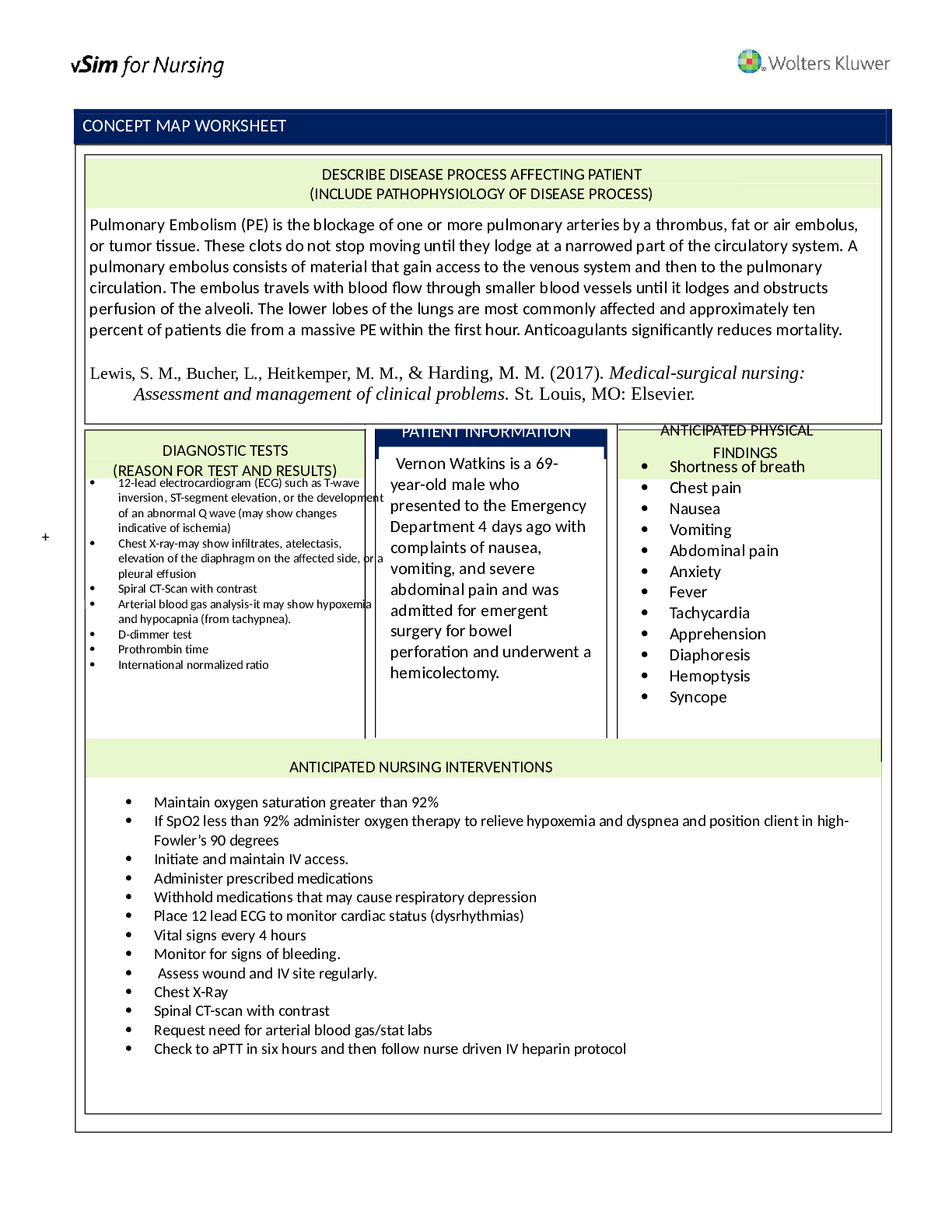
Pulmonary Embolism (PE) is the blockage of one or more pulmonary arteries by a thrombus, fat or air embolu
...
CONCEPT MAP WORKSHEET
DESCRIBE DISEASE PROCESS AFFECTING PATIENT (INCLUDE PATHOPHYSIOLOGY OF DISEASE PROCESS)
Pulmonary Embolism (PE) is the blockage of one or more pulmonary arteries by a thrombus, fat or air embolus, or tumor tissue. These clots do not stop moving until they lodge at a narrowed part of the circulatory system. A pulmonary embolus consists of material that gain access to the venous system and then to the pulmonary circulation. The embolus travels with blood flow through smaller blood vessels until it lodges and obstructs perfusion of the alveoli. The lower lobes of the lungs are most commonly affected and approximately ten percent of patients die from a massive PE within the first hour. Anticoagulants significantly reduces mortality.
Lewis, S. M., Bucher, L., Heitkemper, M. M., & Harding, M. M. (2017). Medical-surgical nursing: Assessment and management of clinical problems. St. Louis, MO: Elsevier.
DIAGNOSTIC TESTS (REASON FOR TEST AND RESULTS)
• 12-lead electrocardiogram (ECG) such as T-wave
inversion, ST-segment elevation, or the development
of an abnormal Q wave (may show changes
PATIENT INFORMATION
Vernon Watkins is a 69- year-old male who
ANTICIPATED PHYSICAL
FINDINGS
• Shortness of breath
• Chest pain
• Nausea
indicative of ischemia)
+ • Chest X-ray-may show infiltrates, atelectasis,
elevation of the diaphragm on the affected side, or a
pleural effusion
• Spiral CT-Scan with contrast
• Arterial blood gas analysis-it may show hypoxemia and hypocapnia (from tachypnea).
• D-dimmer test
• Prothrombin time
• International normalized ratio
Department 4 days ago with
complaints of nausea, vomiting, and severe abdominal pain and was admitted for emergent surgery for bowel perforation and underwent a hemicolectomy.
• Vomiting
• Abdominal pain
• Anxiety
• Fever
• Tachycardia
• Apprehension
• Diaphoresis
• Hemoptysis
• Syncope
ANTICIPATED NURSING INTERVENTIONS
• Maintain oxygen saturation greater than 92%
• If SpO2 less than 92% administer oxygen therapy to relieve hypoxemia and dyspnea and position client in high- Fowler’s 90 degrees
• Initiate and maintain IV access.
• Administer prescribed medications
• Withhold medications that may cause respiratory depression
• Place 12 lead ECG to monitor cardiac status (dysrhythmias)
• Vital signs every 4 hours
• Monitor for signs of bleeding.
• Assess wound and IV site regularly.
• Chest X-Ray
• Spinal CT-scan with contrast
• Request need for arterial blood gas/stat labs
• Check to aPTT in six hours and then follow nurse driven IV heparin protocol
vSim ISBAR ACTIVITY STUDENT WORKSHEET
INTRODUCTION Aurora Vera primary nurse at the medical surgical unit
Your name, position (RN), unit you are working on
SITUATION Vernon Watkins is a 69-year-old male who presented to the Emergency Department 4 days ago with complaints of nausea, vomiting, and severe abdominal pain and was admitted for emergent surgery for bowel perforation and underwent a hemicolectomy.
.............................................................................continued..................................................................................
[Show More]