1. Teaching-AGN- diet instructions:
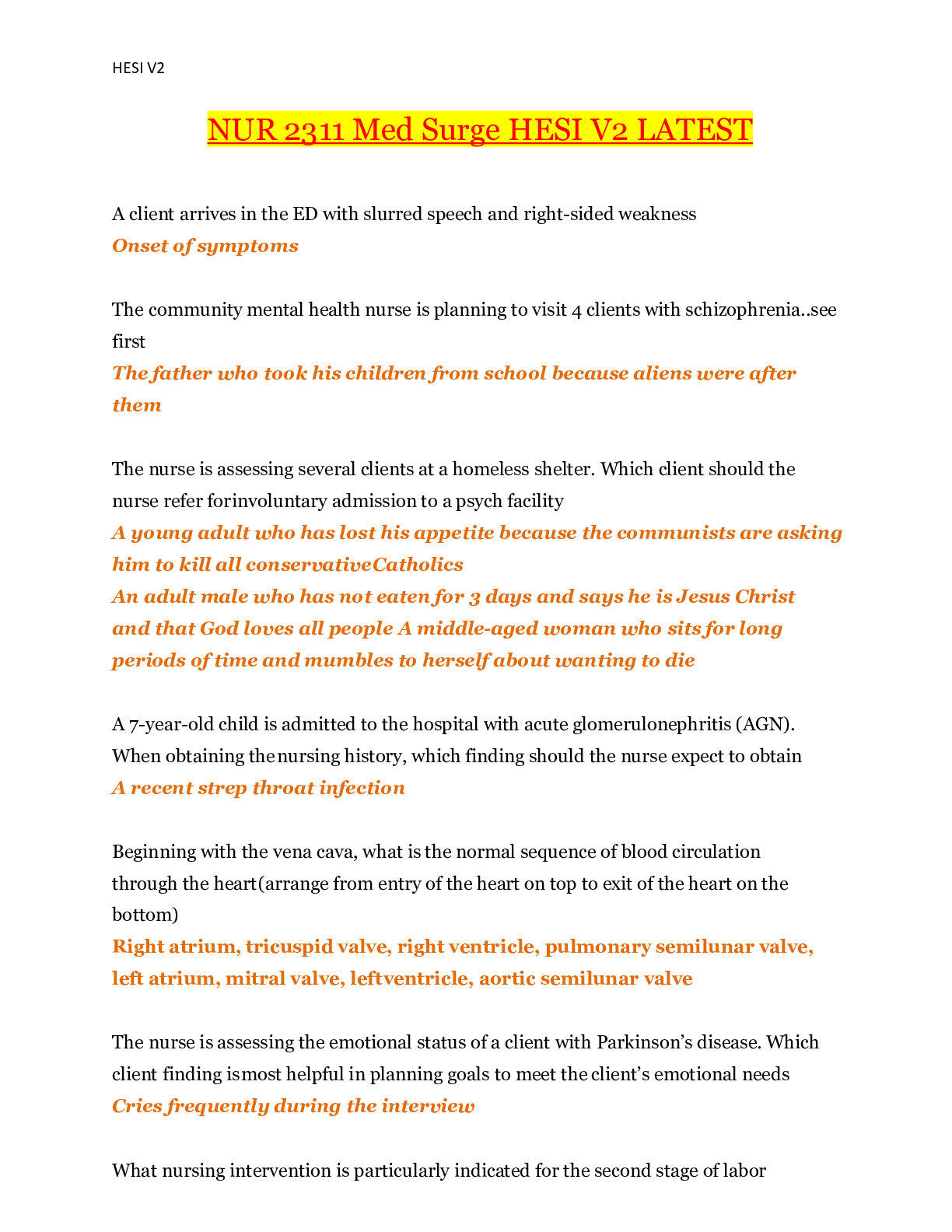
a. Acute Glomerulonephritis: Inflammatory injury in the glomerulus caused by
immunological reaction.
b. Cause by streptococcal infection
c. Complications: kidney failure, pulmonary
...
1. Teaching-AGN- diet instructions:
a. Acute Glomerulonephritis: Inflammatory injury in the glomerulus caused by
immunological reaction.
b. Cause by streptococcal infection
c. Complications: kidney failure, pulmonary edema, HF
d. Assessment: periorbital and facial edema, decrease urinary output, hematuria,
hypertension, proteinuria (excessive foam in urine), increased BUN and creatinine
e. Risk for fluid volume overload- measuring daily weight and assessing for changes is the
most useful and effective measure for determining fluid balance
f. DIET RESTRICTIONS: restrict sodium intake potassium may be restricted during periods
of oliguria
g. Diuretics are usually administered with edema, antihypertension for hypertension and
antibiotics for infection.
2. NP-Diabetes-Hypoglycemic shock:& altered LOC
a. Hypoglycemic shock signs and symptoms: headache, nausea, sweating, tremors,
lethargy, hunger, confusion, slurred speech, tingling around mouth, anxiety, nightmares,
altered LOC
b. Nursing Action: life threatening, check glucose- may seize if <40. Treat immediately with
complex carbohydrates (CHO): Tube of glucose, Fruit juice, Cola, Hard candy
c. Emergency kit of glucagon for patients with DM should be taught to use only when
notice signs of severe hypoglycemia
d. Check glucose levels, A1c levels if necessary
e. POLYURIA: THINK SHOCK
f. POLYURIA Oliguria Anuria (too much too little can’t produce urine)
3. Teaching-CVA-Visual perception:
a. Cerebral Vascular Accident (CVA): also known as a stroke/Brain attack. Sudden loss of
brain function resulting from a disruption in the blood supply to a part of the brain;
classified as thrombotic or hemorrhagic.
b. CNS involvement related to cause of stroke:
i. Hemorrhagic: caused by a slow or fast hemorrhage into the brain tissue; HTN
ii. Embolic: caused by a clot that has broken away from a vessel and has lodged in
one of the arteries of the brain, blocking the blood supply. It is often related to
atherosclerosis (may occur again)
iii. TROPONIN is the diagnostic test that is most sensitive to MI
c. Risk factors: HTN; pervious ischemic attacks; smoking; diabetes; cardiac disease
d. Findings: Jugular vein distention, Palpable cervical lymph node, Carotid bruit, Nuchal
rigidity, decreased BP, crackles in lungs
e. Expressive aphasia: communicate with picture boards (visual perception)
f. Be consistent in using the same words each time a question is asked
4. Leadership-Rheumatoid Arthritis-pain diagnosis:
a. Rheumatoid Arthritis: Chronic systematic progressive deterioration of the connective
tissue (SYNOVIUM) of the joints, characterized by inflammation
b. Assessment: fatigue, weakness, weight loss, anorexia, morning stiffness, joint pain
c. Confirmed Lab results: confirmed by Elevated ESR, ASO; positive rheumatoid factor,
presence of antinuclear antibody; abnormal synovial fluid; C-reactive protein
d. Diagnosis: Impaired peripheral mobility relate to join pain
[Show More]