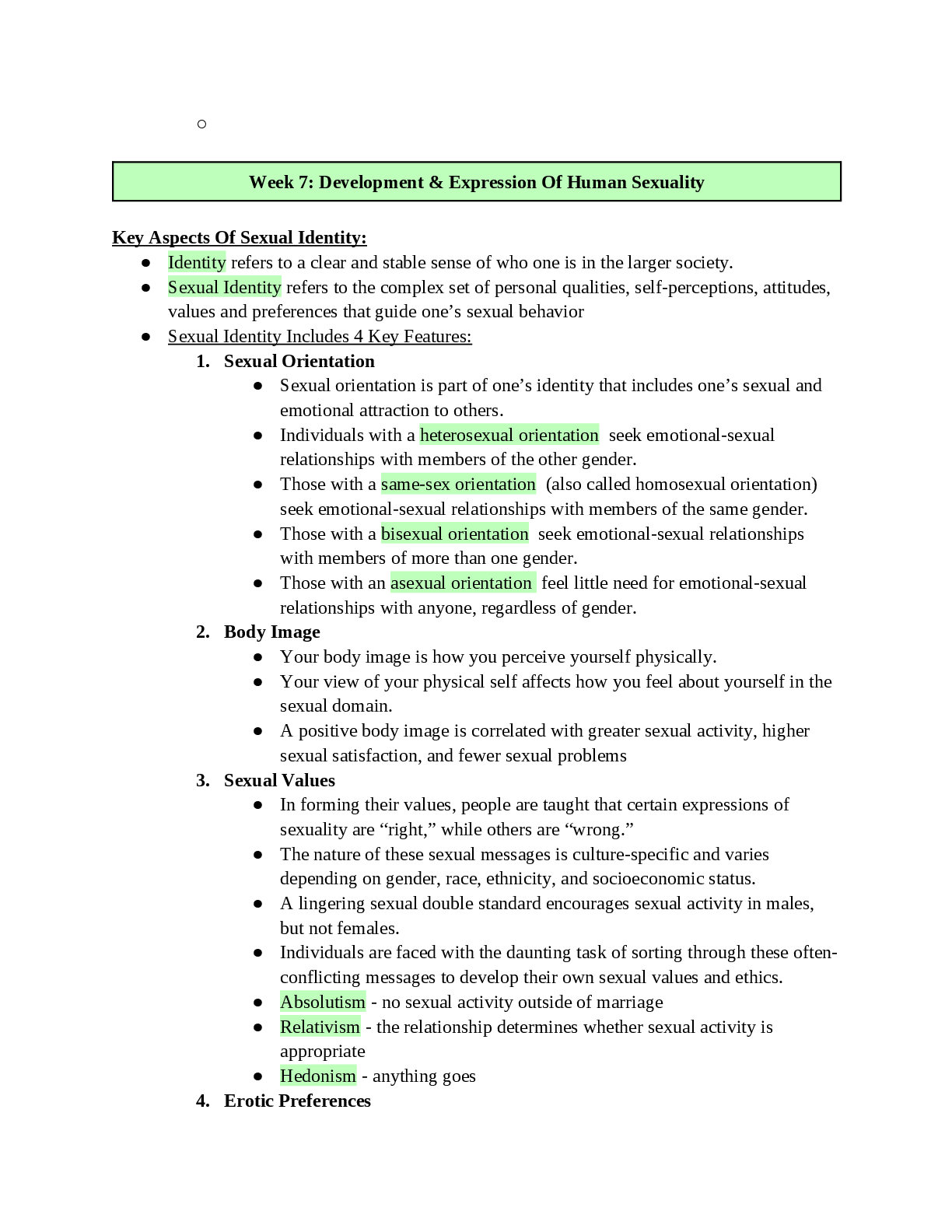
EXAM 1 STUDY GUIDE
INTRO TO PEDIATRICS/FAMILY/CHRONIC ILLNESSES:
● Describe atraumatic care
o Eliminating or minimizing the pain and/or psychological stress of receiving care
▪ 3 Principles:
● Prevent or minimize ch
...
EXAM 1 STUDY GUIDE
INTRO TO PEDIATRICS/FAMILY/CHRONIC ILLNESSES:
● Describe atraumatic care
o Eliminating or minimizing the pain and/or psychological stress of receiving care
▪ 3 Principles:
● Prevent or minimize child’s separation from family
o Allowing parents present during a code; performing an assessment while child is in parent’s arms
● Promote a sense of control
o Give them choices, choices we can live with; meds before or after bath, before or after meals; how they take meds—
syringe or PO; where and how to do an intervention, not if an intervention should be done
● Prevent or minimize bodily injury and pain
o Do labs now or in morning, combining sticks
● Identify the essential elements of the transition to parenting
o Parental age
▪ 18-35 “ideal” age
● 30-44 yrs is on the increase
● 20-29 yrs is on the decrease
o Father involvement
▪ Or another involved adult; another man; non-biological father; same-sex relationships
o Parenting education
▪ How prepared were the parents? Baby classes? Books?
▪ Education level? High school or college education?
o Support systems
▪ Internal resources
● Internal ability to adapt to change easily. Can they cope well to a chaotic environment?
● Experience with other children?
● Stress level before the child was there?
● Kiddos temperament? High needs child?
● Marriage or relationship quality?
▪ Coping strategies
● Coping mechanisms
● Antidepressant drugs
o Other factors
● Describe the role that effective discipline plays in a child’s development
o Discipline needs to be developmentally appropriate not necessarily ‘age’ appropriate
o TIMING
o COMMITMENT
o PLANNING
o Children want/need limits set for them even in hospital setting
o Children need encouragement and modeled appropriate behavior whether child is ill or not
o Need CONSISTENCY between caregivers
o Before child reaches 4,5 and 6 years of age when a child may experience embarrassment—child should be disciplined in
PRIVATE
o FLEXIBILITY/PLANNING—need a plan but plan may not be right for particular incidence; plan may not be right for every
child
o BEHAVIOR ORIENTATION—behavior is bad, not the child
o TERMINATION—when the crime has been done and the punishment paid, DO NOT continue to bring it up. It’s over and
done with
● Stages of divorce
o Acute Phase
▪ Make the decision
▪ Legal steps
o Transitional Phase
▪ Unfamiliar roles and relationships
▪ Many changes
● Living arrangements
● Decreased standard of living
o Stabilizing Phase
▪ Reestablish a functioning family unit
1
● Effects of divorce—listen to podcast again
o Infancy: change in sleeping and eating patterns, irritable
o Early preschool (2-3): frightened, confused, fear of abandonment, aggressive behaviors
o Later preschool (3-5): blames themselves, fear of abandonment, aggressive towards others
o Early school age (5-6): depression, loss of appetite, increase anxiety
o Middle school age (6-8): strong sense of panic, angry at one or both of parents
o Later school age (9-12): have a better understanding of what is happening, embarrassed, intense angry or revenge
against one parent
o Adolescents (12-18): recognize what’s going on, made be pleased,
● Discuss major stressors of hospitalized children
o Diagnosis
▪ Parental adjustments
● Denial/Shock
● Anger
● Bargaining
● Depression
● Acceptance
o Developmental milestones—parents may return to any of the stages
at any time
▪ When a ill child turns 1 but isn’t walking; or when a child turns 8 and is
only ever going to have a cognitive level of the age of 4; when a child
should be starting school and has to attend a special school;
adolescents—a child should be gaining more indep
[Show More]
.png)