▪ Gastritis
Gastritis – inflammation of the stomach lining
Acute Gastritis – (just acquired) ingestion of toxins, alcohol, aspirin or other irritating substances
Chronic- 2 months to become chronic
Triggers of Gastri
...
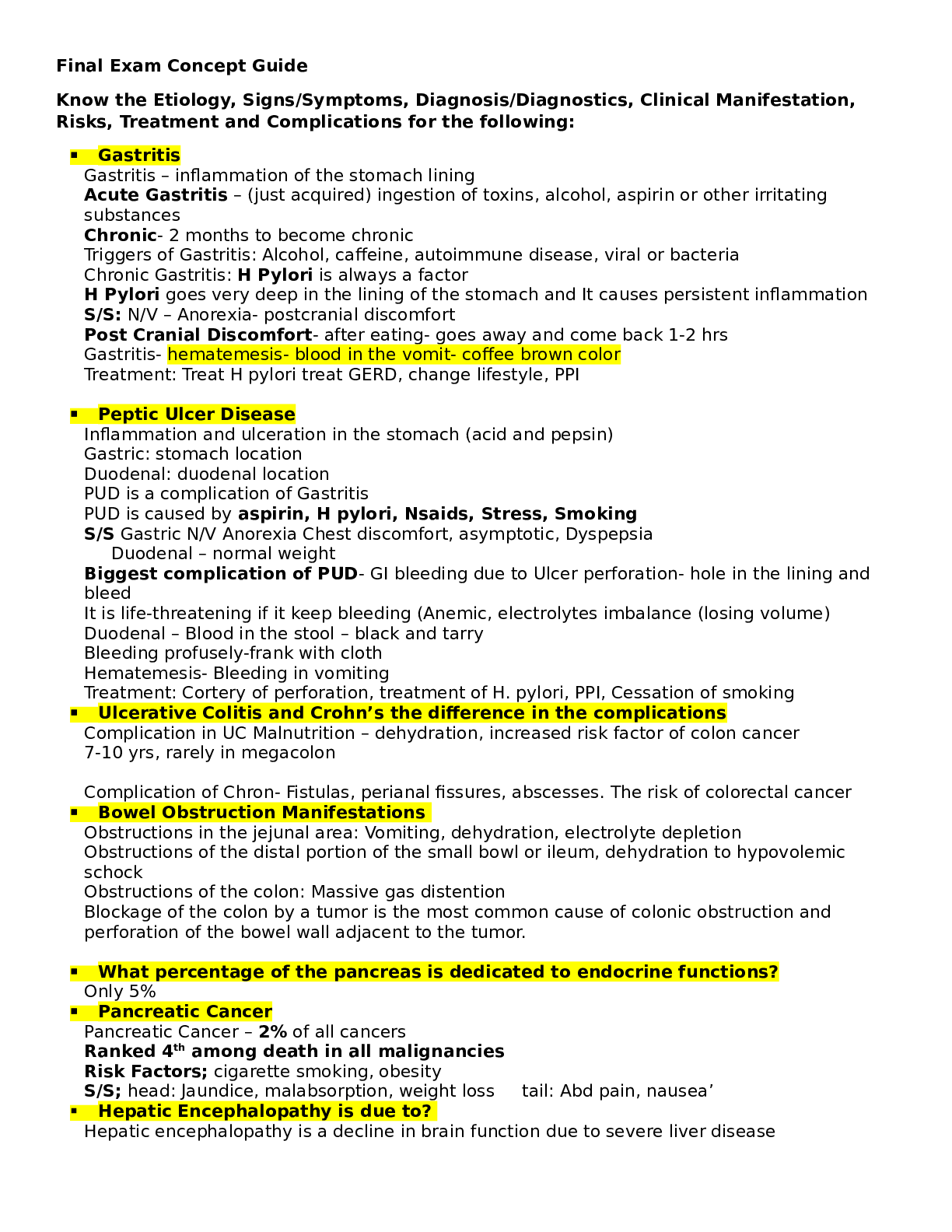
▪ Gastritis
Gastritis – inflammation of the stomach lining
Acute Gastritis – (just acquired) ingestion of toxins, alcohol, aspirin or other irritating substances
Chronic- 2 months to become chronic
Triggers of Gastritis: Alcohol, caffeine, autoimmune disease, viral or bacteria Chronic Gastritis: H Pylori is always a factor
H Pylori goes very deep in the lining of the stomach and It causes persistent inflammation
S/S: N/V – Anorexia- postcranial discomfort
Post Cranial Discomfort- after eating- goes away and come back 1-2 hrs Gastritis- hematemesis- blood in the vomit- coffee brown color
Treatment: Treat H pylori treat GERD, change lifestyle, PPI
▪ Peptic Ulcer Disease
Inflammation and ulceration in the stomach (acid and pepsin) Gastric: stomach location
Duodenal: duodenal location PUD is a complication of Gastritis
PUD is caused by aspirin, H pylori, Nsaids, Stress, Smoking S/S Gastric N/V Anorexia Chest discomfort, asymptotic, Dyspepsia
Duodenal – normal weight
Biggest complication of PUD- GI bleeding due to Ulcer perforation- hole in the lining and bleed
It is life-threatening if it keep bleeding (Anemic, electrolytes imbalance (losing volume) Duodenal – Blood in the stool – black and tarry
Bleeding profusely-frank with cloth Hematemesis- Bleeding in vomiting
Treatment: Cortery of perforation, treatment of H. pylori, PPI, Cessation of smoking
▪ Ulcerative Colitis and Crohn’s the difference in the complications Complication in UC Malnutrition – dehydration, increased risk factor of colon cancer 7-10 yrs, rarely in megacolon
Complication of Chron- Fistulas, perianal fissures, abscesses. The risk of colorectal cancer
▪ Bowel Obstruction Manifestations
Obstructions in the jejunal area: Vomiting, dehydration, electrolyte depletion Obstructions of the distal portion of the small bowl or ileum, dehydration to hypovolemic schock
Obstructions of the colon: Massive gas distention
Blockage of the colon by a tumor is the most common cause of colonic obstruction and perforation of the bowel wall adjacent to the tumor.
▪ What percentage of the pancreas is dedicated to endocrine functions?
Only 5%
▪ Pancreatic Cancer
Pancreatic Cancer – 2% of all cancers
Ranked 4th among death in all malignancies Risk Factors; cigarette smoking, obesity
S/S; head: Jaundice, malabsorption, weight loss tail: Abd pain, nausea’
▪ Hepatic Encephalopathy is due to?
Hepatic encephalopathy is a decline in brain function due to severe liver disease
Hepatic encephalopathy is usually precipitated by certain well-defined clinical developments, including hypokalemia, hyponatremia, alkalosis, hypoxia, hypercarbia, infection, use of sedatives, GI hemorrhage, protein meal gorging, renal failure, and constipation. In some patients, progressive liver failure leads to chronic encephalopathy without other exacerbating factors.
Hepatic encephalopathy is graded 1 to 4:
• Grade 1: Confusion, subtle behavioral changes, no flap
• Grade 2: Drowsy, clear behavioral changes, flap present
• Grade 3: Stuporous but can follow commands, marked confusion, slurred speech, flap present
• Grade 4: Coma, no flap
........................................................................CONTINUED...........................................
[Show More]

x.png)

![Preview of NUR2488 / NUR 2488 Exam 2 Study Guide [In Class Review] : Mental Health Nursing - Rasmuss](https://www.scholarfriends.com/storage/Mental Health Exam 2 Study Guide [In class review] MY21.png)




.png)


