Peds Version 2 (Peds-II-Trans)
Document Content and Description Below
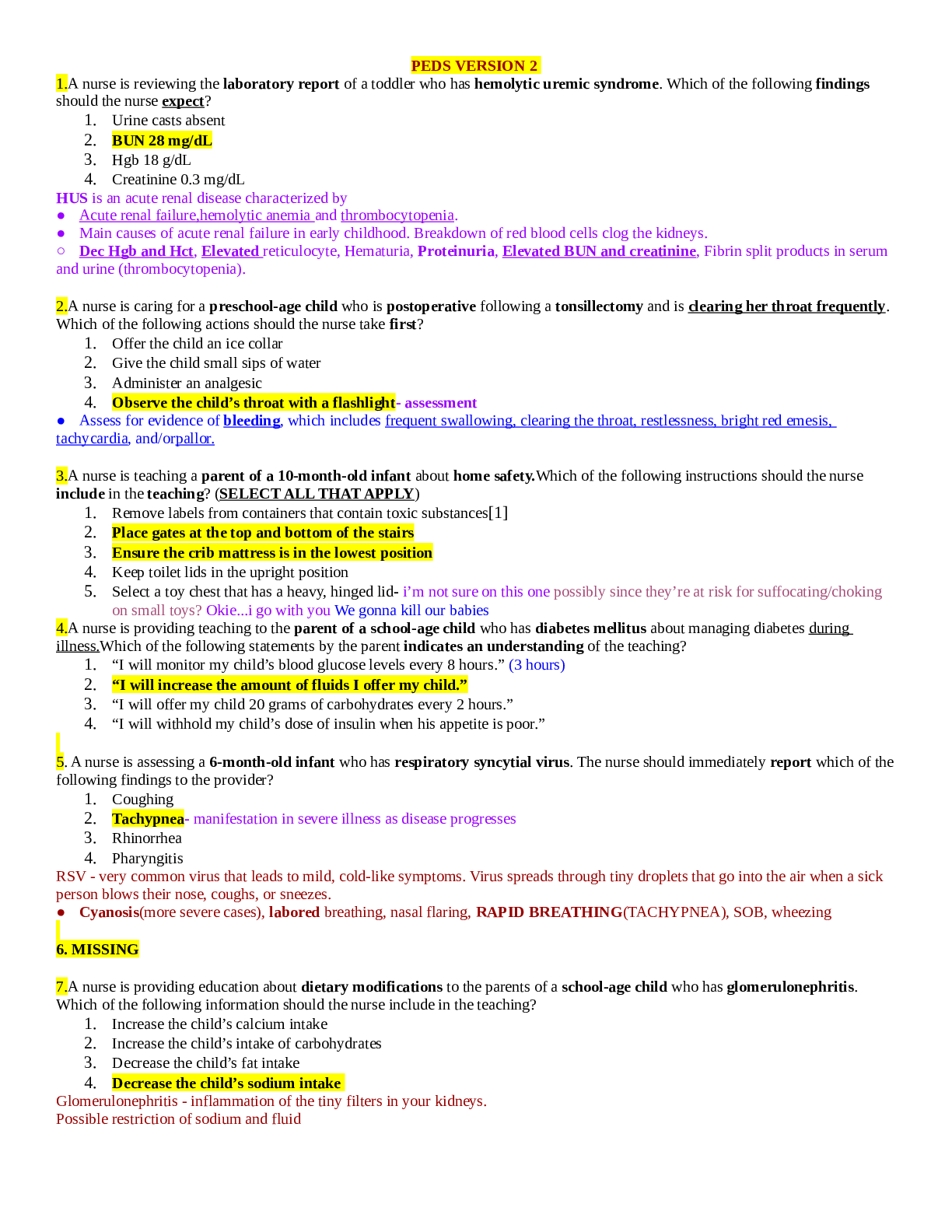
PEDS VERSION 2
1.A nurse is reviewing the laboratory report of a toddler who has hemolytic uremic syndrome. Which of the following findings should the nurse expect?
1. Urine casts absent
2. BUN 28
...
mg/dL
3. Hgb 18 g/dL
4. Creatinine 0.3 mg/dL
HUS is an acute renal disease characterized by
● Acute renal failure,hemolytic anemia and thrombocytopenia.
● Main causes of acute renal failure in early childhood. Breakdown of red blood cells clog the kidneys.
○ Dec Hgb and Hct, Elevated reticulocyte, Hematuria, Proteinuria, Elevated BUN and creatinine, Fibrin split products in serum and urine (thrombocytopenia).
2.A nurse is caring for a preschool-age child who is postoperative following a tonsillectomy and is clearing her throat frequently. Which of the following actions should the nurse take first?
1. Offer the child an ice collar
2. Give the child small sips of water
3. Administer an analgesic
4. Observe the child’s throat with a flashlight- assessment
● Assess for evidence of bleeding, which includes frequent swallowing, clearing the throat, restlessness, bright red emesis, tachycardia, and/orpallor.
3.A nurse is teaching a parent of a 10-month-old infant about home safety.Which of the following instructions should the nurse include in the teaching? (SELECT ALL THAT APPLY)
1. Remove labels from containers that contain toxic substances[1]
2. Place gates at the top and bottom of the stairs
3. Ensure the crib mattress is in the lowest position
4. Keep toilet lids in the upright position
5. Select a toy chest that has a heavy, hinged lid- i’m not sure on this one possibly since they’re at risk for suffocating/choking on small toys? Okie...i go with you We gonna kill our babies
4.A nurse is providing teaching to the parent of a school-age child who has diabetes mellitus about managing diabetes during illness.Which of the following statements by the parent indicates an understanding of the teaching?
1. “I will monitor my child’s blood glucose levels every 8 hours.” (3 hours)
2. “I will increase the amount of fluids I offer my child.”
3. “I will offer my child 20 grams of carbohydrates every 2 hours.”
4. “I will withhold my child’s dose of insulin when his appetite is poor.”
5. A nurse is assessing a 6-month-old infant who has respiratory syncytial virus. The nurse should immediately report which of the following findings to the provider?
1. Coughing
2. Tachypnea- manifestation in severe illness as disease progresses
3. Rhinorrhea
4. Pharyngitis
RSV - very common virus that leads to mild, cold-like symptoms. Virus spreads through tiny droplets that go into the air when a sick person blows their nose, coughs, or sneezes.
● Cyanosis(more severe cases), labored breathing, nasal flaring, RAPID BREATHING(TACHYPNEA), SOB, wheezing
[Show More]
Last updated: 3 years ago
Preview 1 out of 11 pages





.png)


.png)