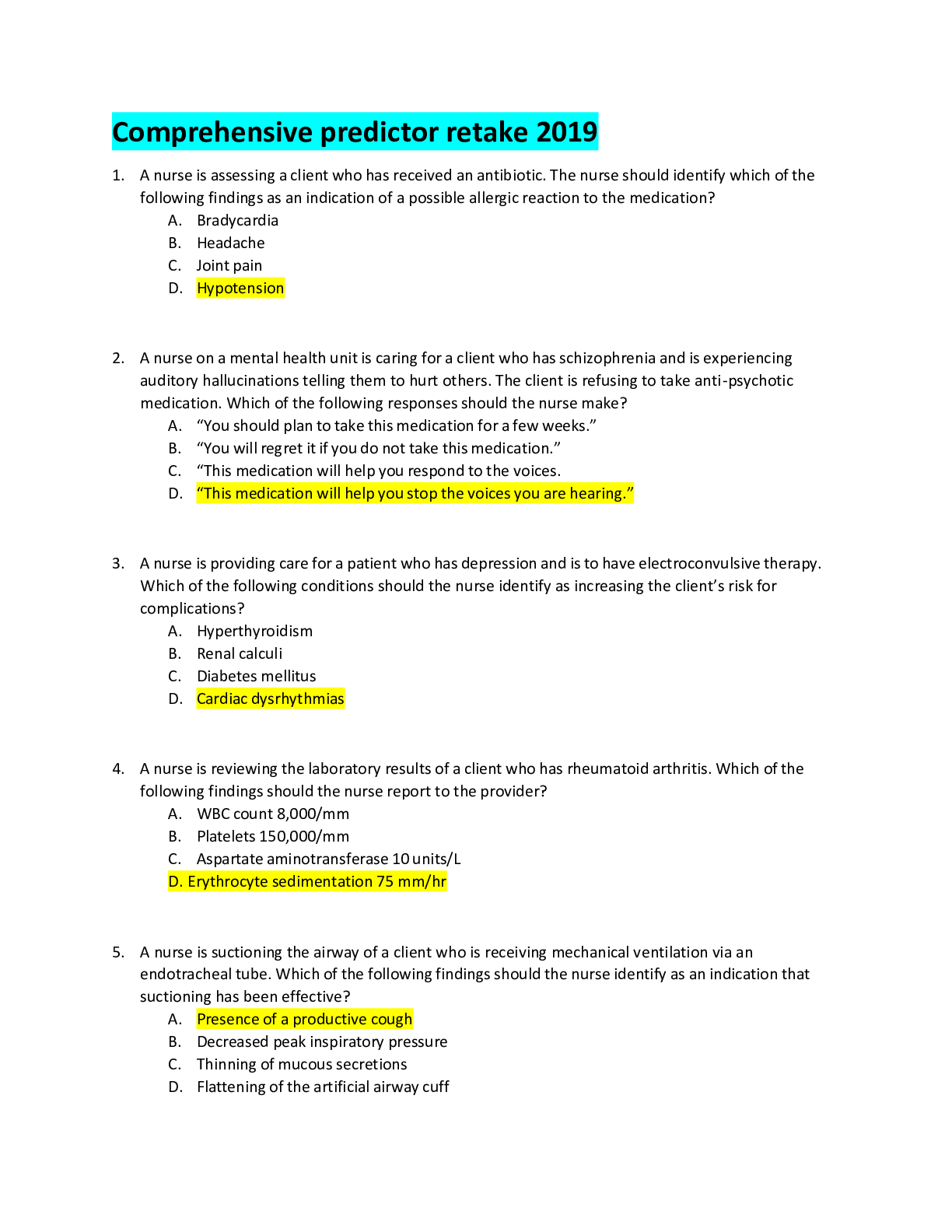
. A nurse is assessing a client who has received an antibiotic. The nurse should identify which of the
following findings as an indication of a possible allergic reaction to the medication?
A. Bradycardia
B. Headache
...
. A nurse is assessing a client who has received an antibiotic. The nurse should identify which of the
following findings as an indication of a possible allergic reaction to the medication?
A. Bradycardia
B. Headache
C. Joint pain
D. Hypotension
2. A nurse on a mental health unit is caring for a client who has schizophrenia and is experiencing
auditory hallucinations telling them to hurt others. The client is refusing to take anti-psychotic
medication. Which of the following responses should the nurse make?
A. “You should plan to take this medication for a few weeks.”
B. “You will regret it if you do not take this medication.”
C. “This medication will help you respond to the voices.
D. “This medication will help you stop the voices you are hearing.”
3. A nurse is providing care for a patient who has depression and isto have electroconvulsive therapy.
Which of the following conditions should the nurse identify as increasing the client’s risk for
complications?
A. Hyperthyroidism
B. Renal calculi
C. Diabetes mellitus
D. Cardiac dysrhythmias. A nurse is assessing a client who has received an antibiotic. The nurse should identify which of the
following findings as an indication of a possible allergic reaction to the medication?
A. Bradycardia
B. Headache
C. Joint pain
D. Hypotension
2. A nurse on a mental health unit is caring for a client who has schizophrenia and is experiencing
auditory hallucinations telling them to hurt others. The client is refusing to take anti-psychotic
medication. Which of the following responses should the nurse make?
A. “You should plan to take this medication for a few weeks.”
B. “You will regret it if you do not take this medication.”
C. “This medication will help you respond to the voices.
D. “This medication will help you stop the voices you are hearing.”
3. A nurse is providing care for a patient who has depression and isto have electroconvulsive therapy.
Which of the following conditions should the nurse identify as increasing the client’s risk for
complications?
A. Hyperthyroidism
B. Renal calculi
C. Diabetes mellitus
D. Cardiac dysrhythmias
[Show More]