NURSING > CASE STUDY > Case Study 76 Systemic Lupus Erythematosus (All)
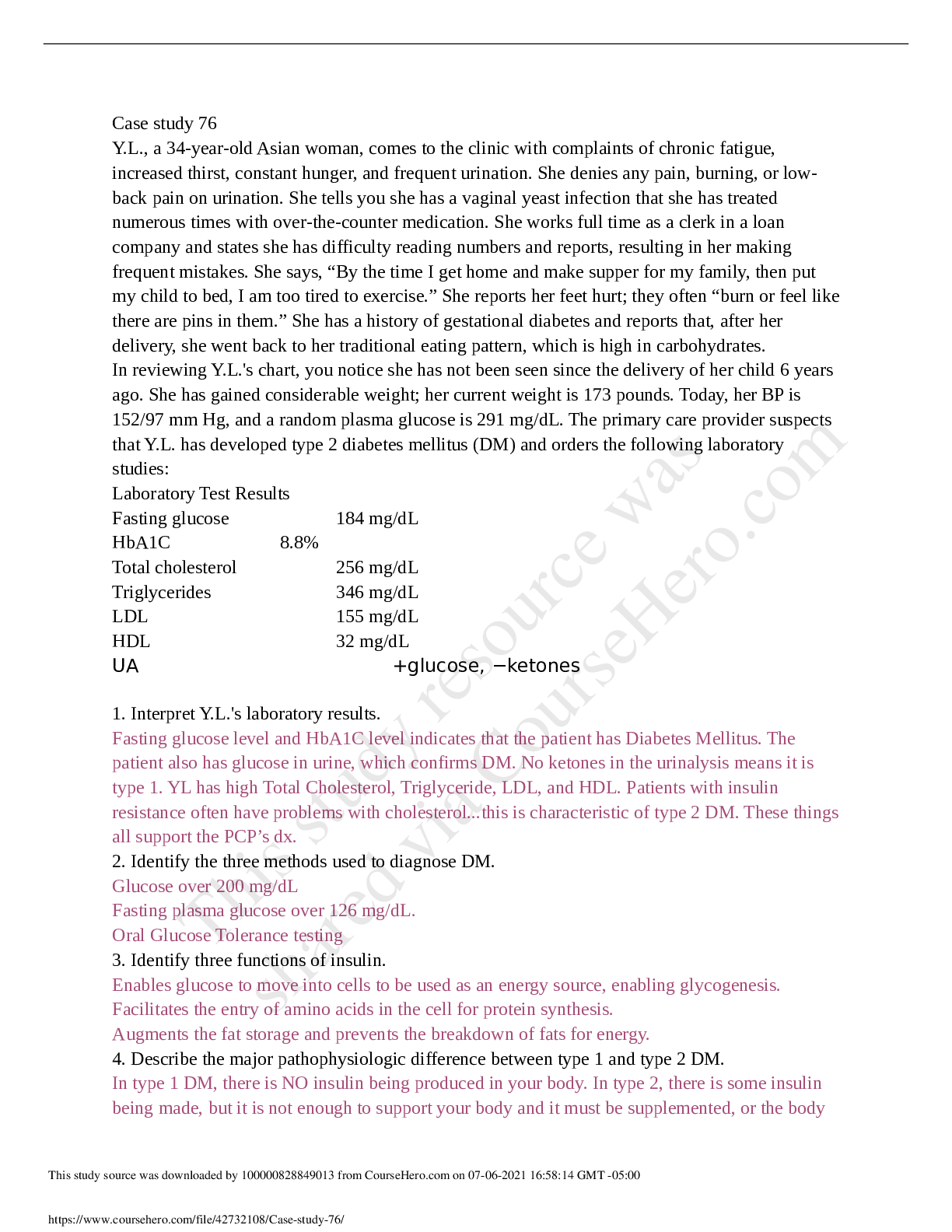
Case Study 76 Systemic Lupus Erythematosus
Document Content and Description Below
Last updated: 3 years ago
Preview 1 out of 4 pages
Instant download

Buy this document to get the full access instantly
Instant Download Access after purchase
Reviews( 0 )
Document information
Connected school, study & course
About the document
Uploaded On
Jul 05, 2021
Number of pages
4
Written in
All

Additional information
This document has been written for:
Uploaded
Jul 05, 2021
Downloads
0
Views
243
Document Keyword Tags
Recommended For You
Get more on CASE STUDY »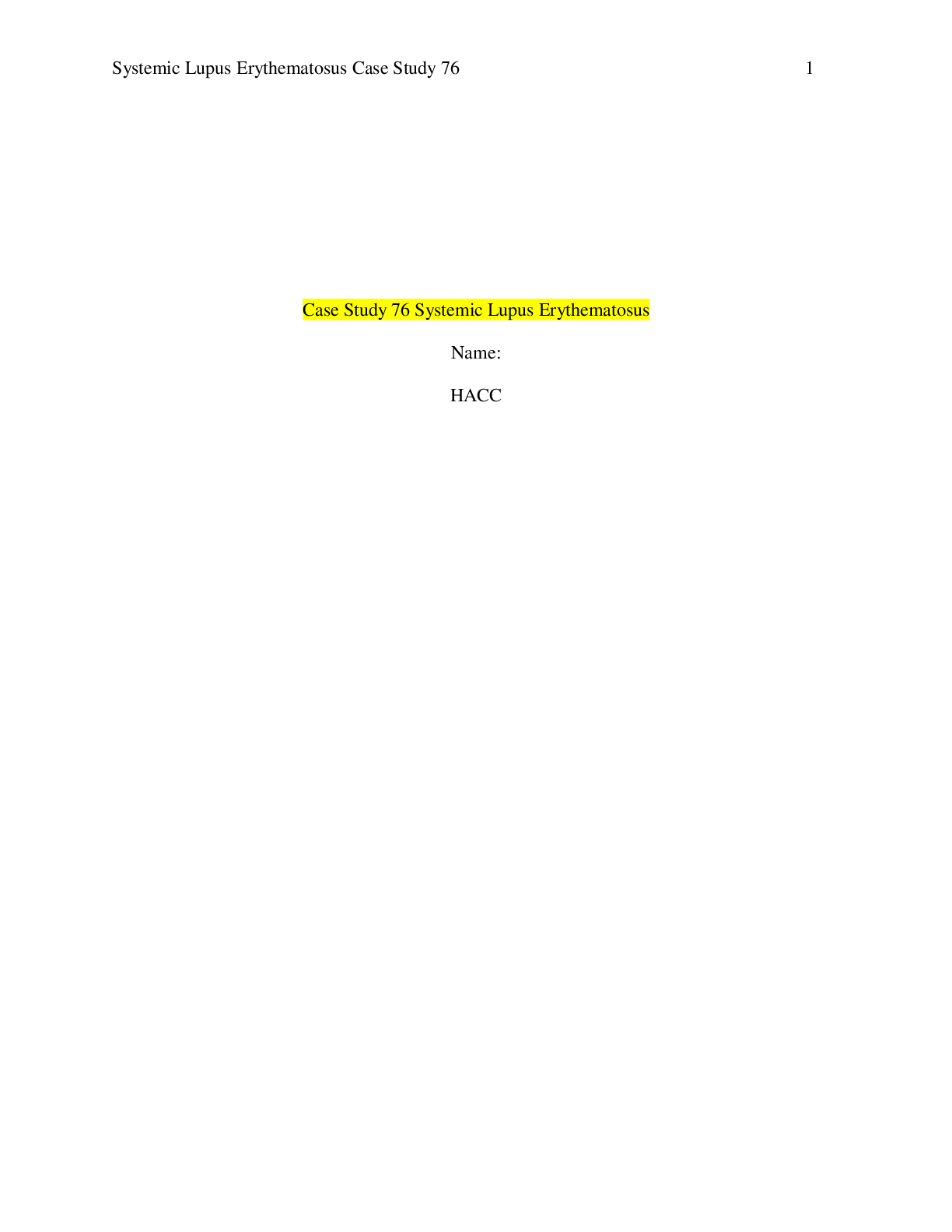

Case Study 76 Systemic Lupus Erythematosus | Case Study 76 SLE
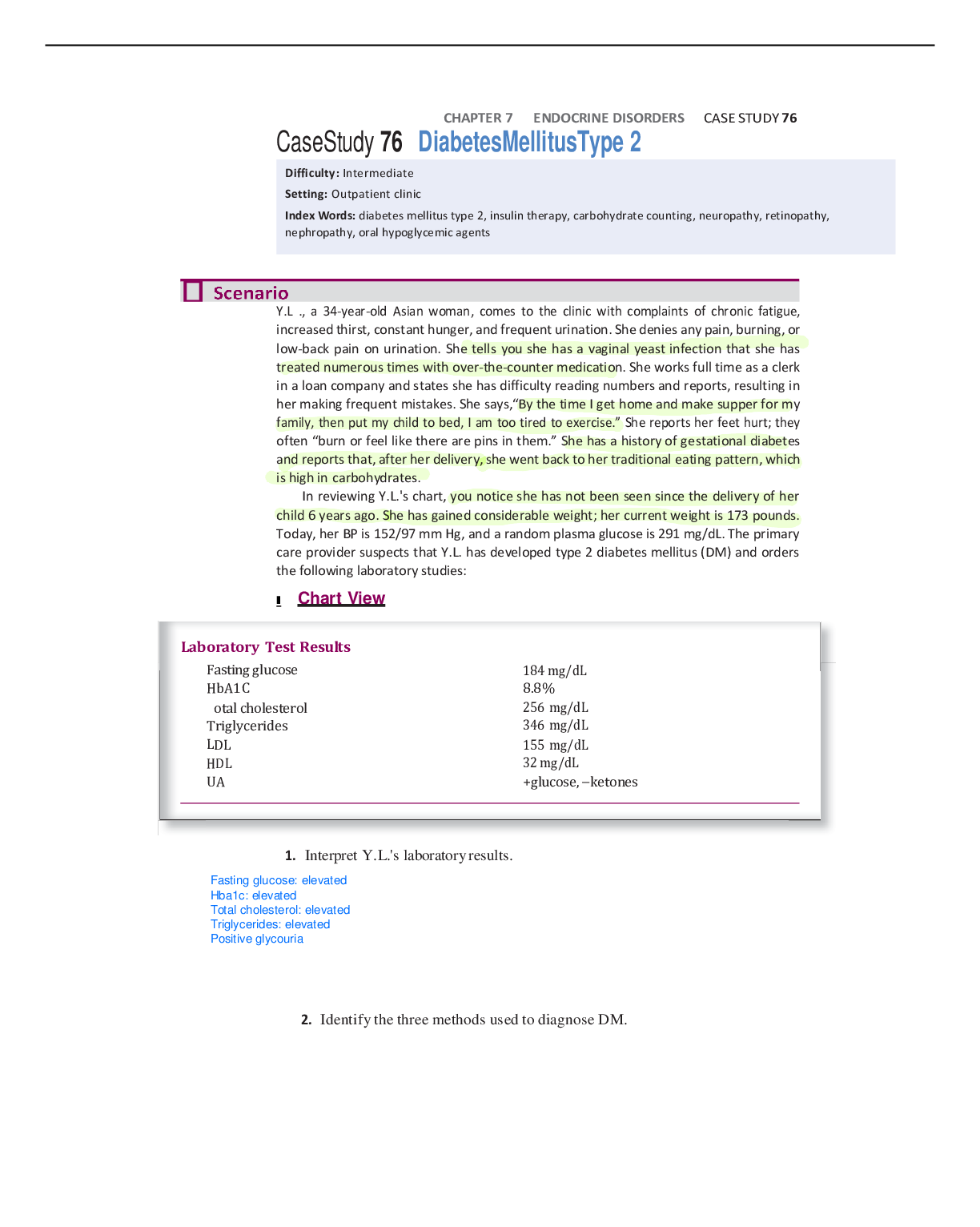
CaseStudy 76 DiabetesMellitusType 2/ Download to Score A+
 (1).png)
NU341 Unit 4 Assignment Worksheet Winningham’s Critical Thinki...
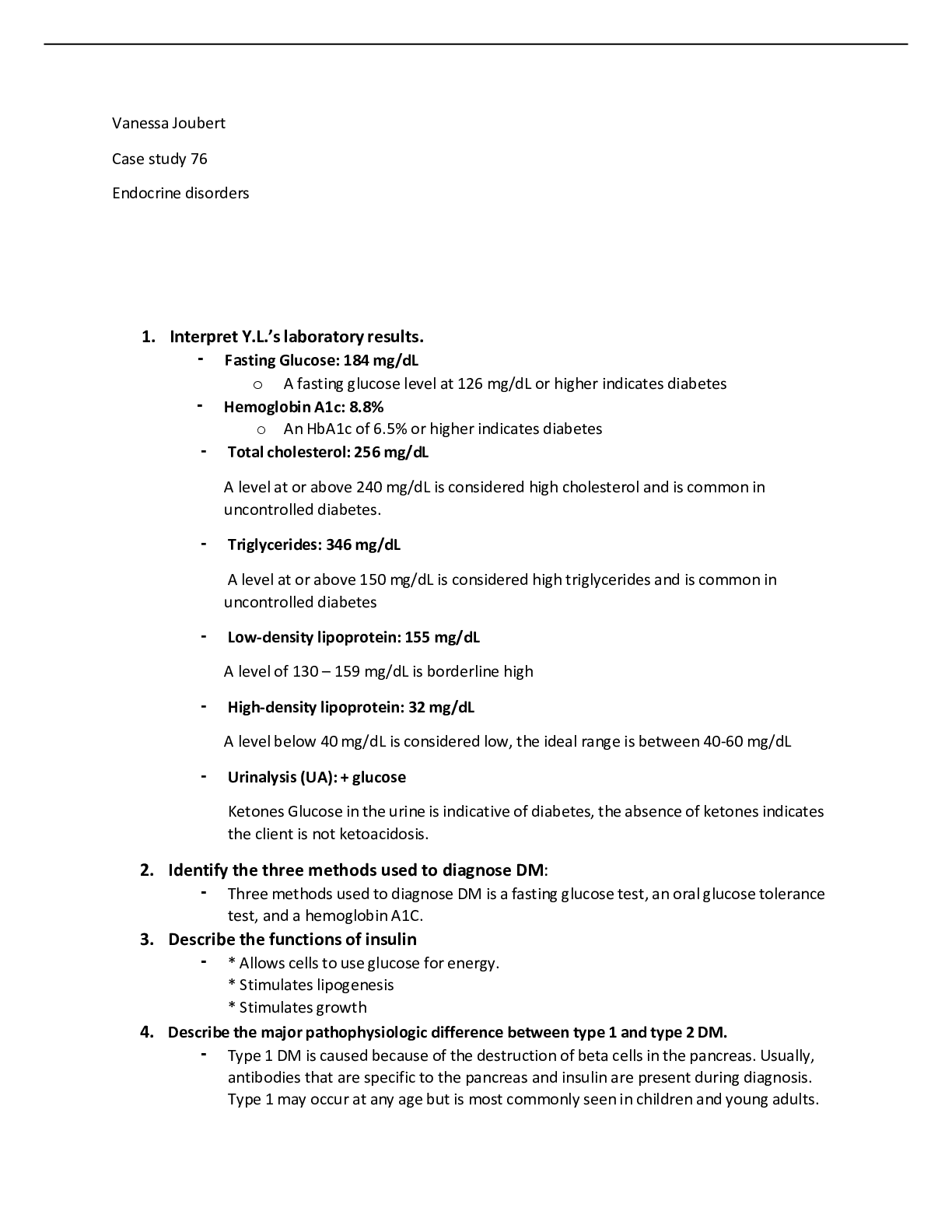
case study 76./;Vanessa Joubert _ Endocrine disorders_RATED A

TEST BANK for Davis Advantage for Psychiatric Mental Health Nu...


Test Bank For Fundamentals of Nursing 11th Edition Potter Perr...

TEST BANK for Essentials of Psychiatric Mental Health Nursing:...

Essentials of Psychiatric Nursing 2nd Edition Boyd TEST BANK

TEST BANK for Essentials of Psychiatric Nursing 2nd Edition by...


![Preview of [u07a1] GLO-BUS Decision for Year 11 Team F](https://www.scholarfriends.com/storage/docx (41).png)
![Preview of GLO-BUS – Decisions for Year 11 [ BUS4993 Business Capstone Project]](https://www.scholarfriends.com/storage/BUS4993_Unit_7_Assignment_1.png)
![Preview of [BUS4993] U07A01 – GLO-BUS – Decision for Year 11](https://www.scholarfriends.com/storage/u07a1_Bettina_Nottingham.png)
![Preview of GLO-BUS DECISION YEAR 11 [BUS4993: Business Capstone Project] Unit 7 Assignment 1](https://www.scholarfriends.com/storage/BUS4993_Business_Capstone_Project_Unit_7_Assignment_1_GloBus_Decision_for_Year_11.png)
![Preview of U07A1 – GLO-BUS Decision for Year 11 [BUS4993 – Business Capstone Project]](https://www.scholarfriends.com/storage/GLOBUSDecisionYR11U07A1OMULLINGS.png)
![Preview of [u08a1] GLO-BUS Decision for Year 12 Team F](https://www.scholarfriends.com/storage/docx (42).png)
![Preview of [u06a1] GLO-BUS Decision for Year 10 Team F](https://www.scholarfriends.com/storage/docx (43).png)

