NURSING > EXAM REVIEW > NR601 FINAL (All)
NR601 FINAL
Document Content and Description Below
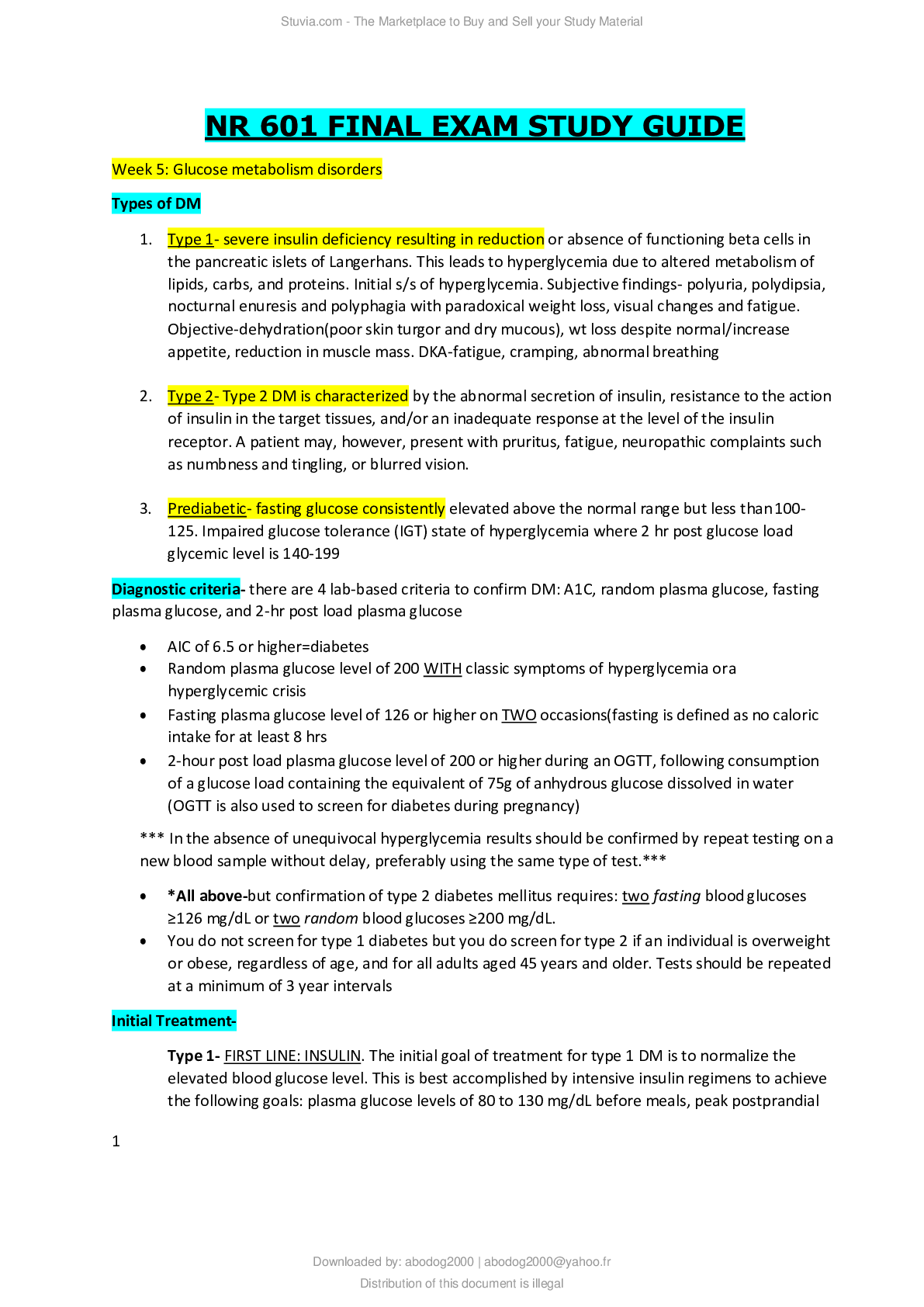
NR601 FINAL EXAM STUDY GUIDE
Week 5: Glucose metabolism disorders
Types of DM
1. Type 1- severe insulin deficiency resulting in reduction or absence of functioning beta cells in
the pancreatic islets of Langerhans. T
...
[Show More]
Last updated: 3 years ago
Preview 1 out of 30 pages
Instant download

Buy this document to get the full access instantly
Instant Download Access after purchase
Reviews( 0 )
Document information
Connected school, study & course
About the document
Uploaded On
Jun 20, 2021
Number of pages
30
Written in
All

Additional information
This document has been written for:
Uploaded
Jun 20, 2021
Downloads
0
Views
259
Document Keyword Tags
Recommended For You
Get more on EXAM REVIEW »
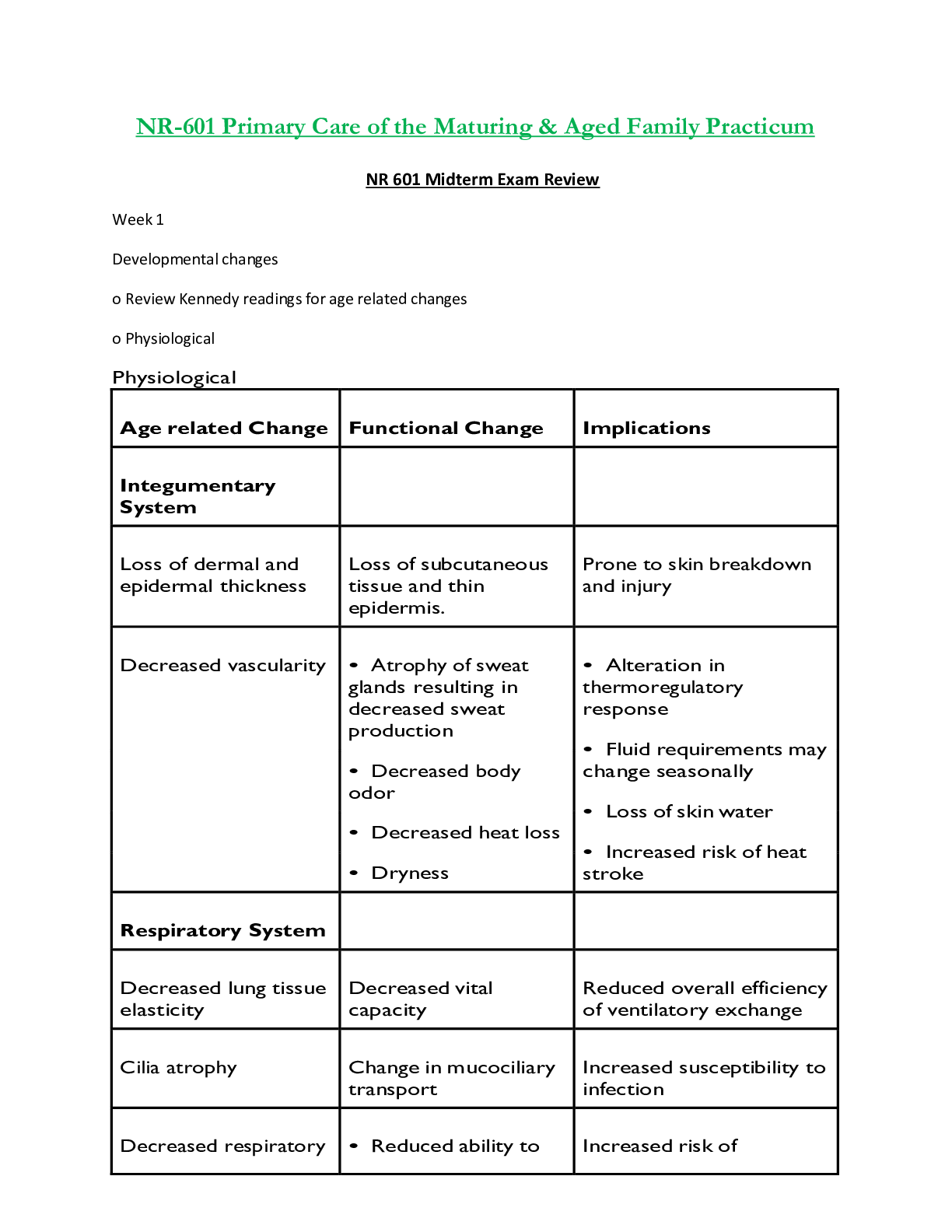
$7
36 Pages
NR601 / NR-601 Midterm Exam Review (Latest): Primary Care of t...
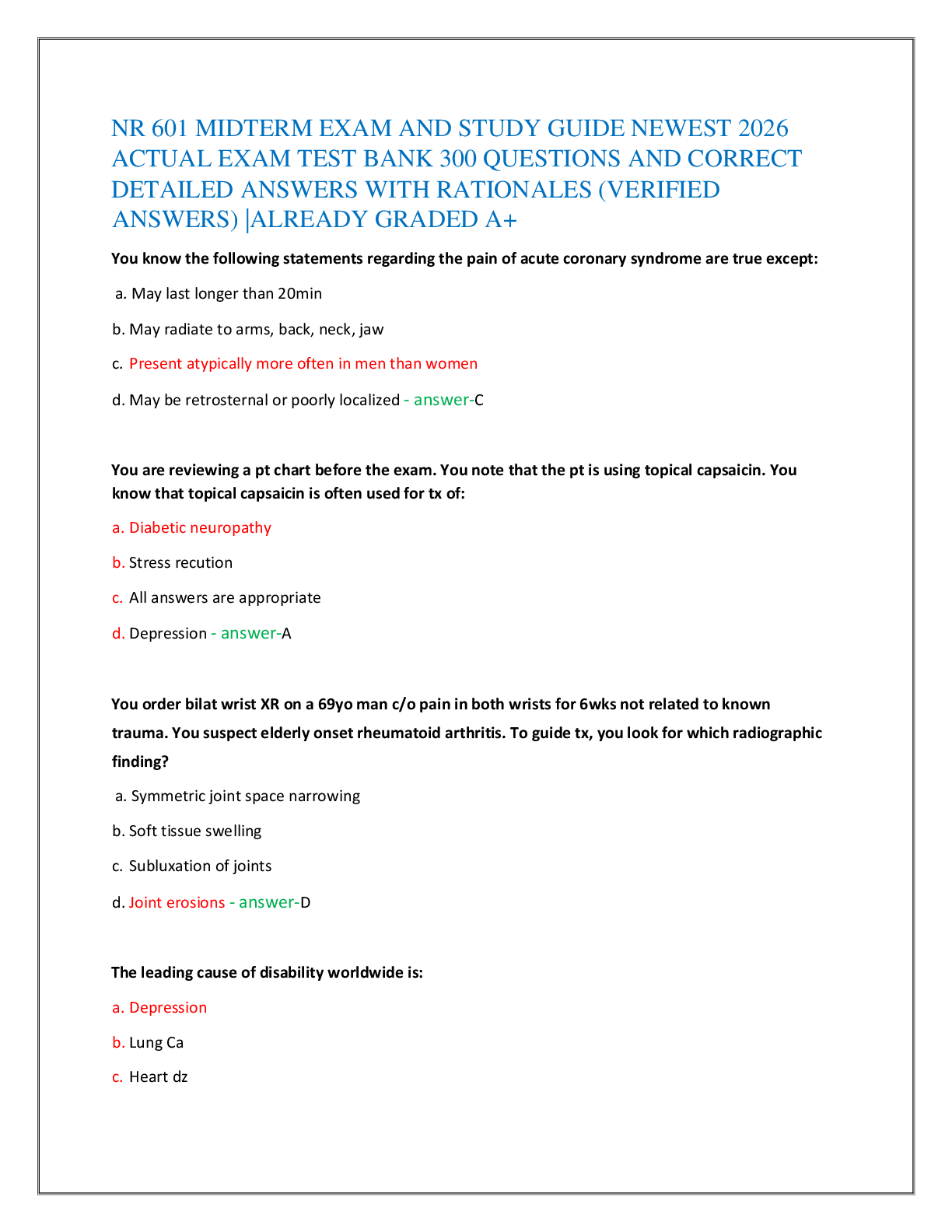
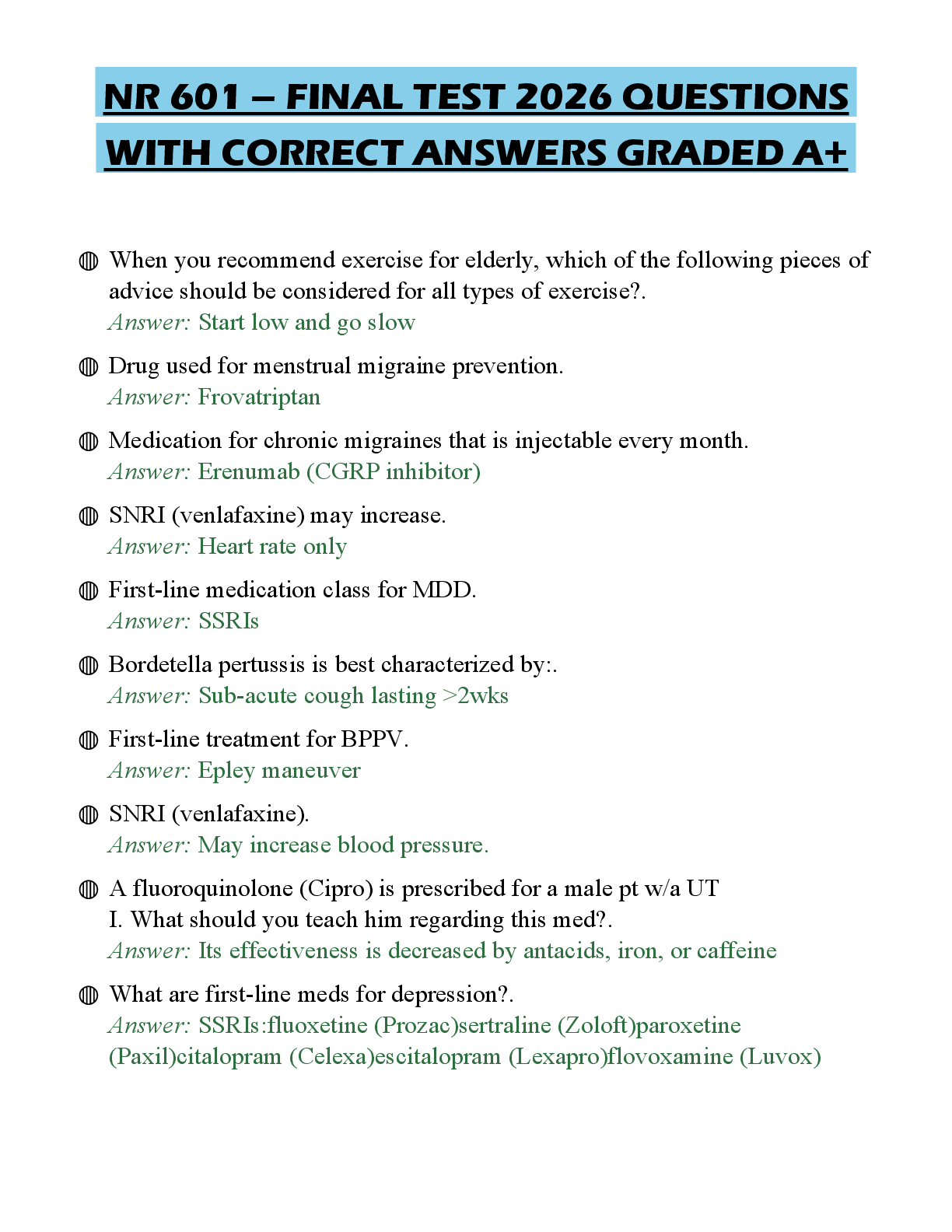
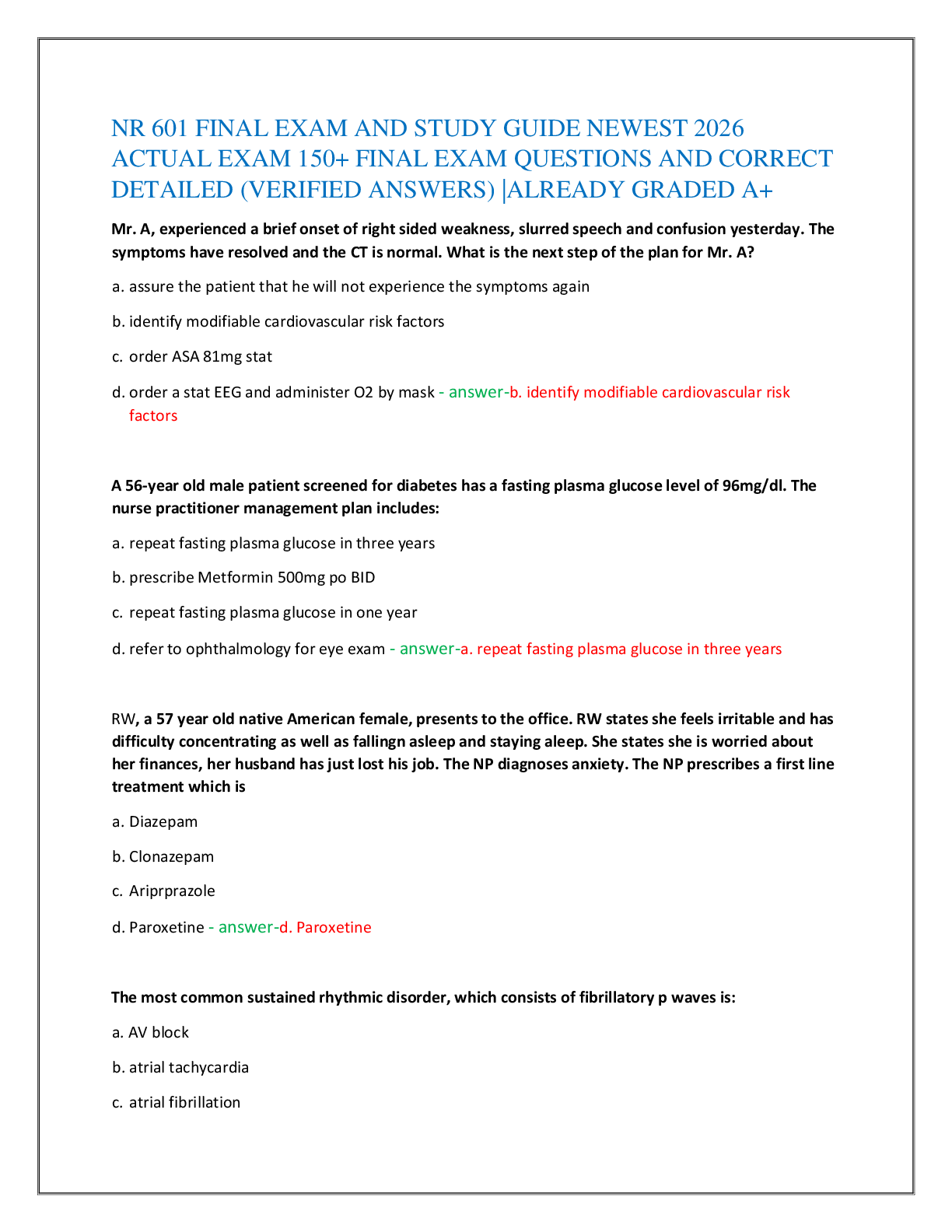
$16
30 Pages
NR 601 Final Exam Study Guide (Version-2) / NR601 Final Exam S...
 GRADE A SOLUTION.png)
$14.5
22 Pages
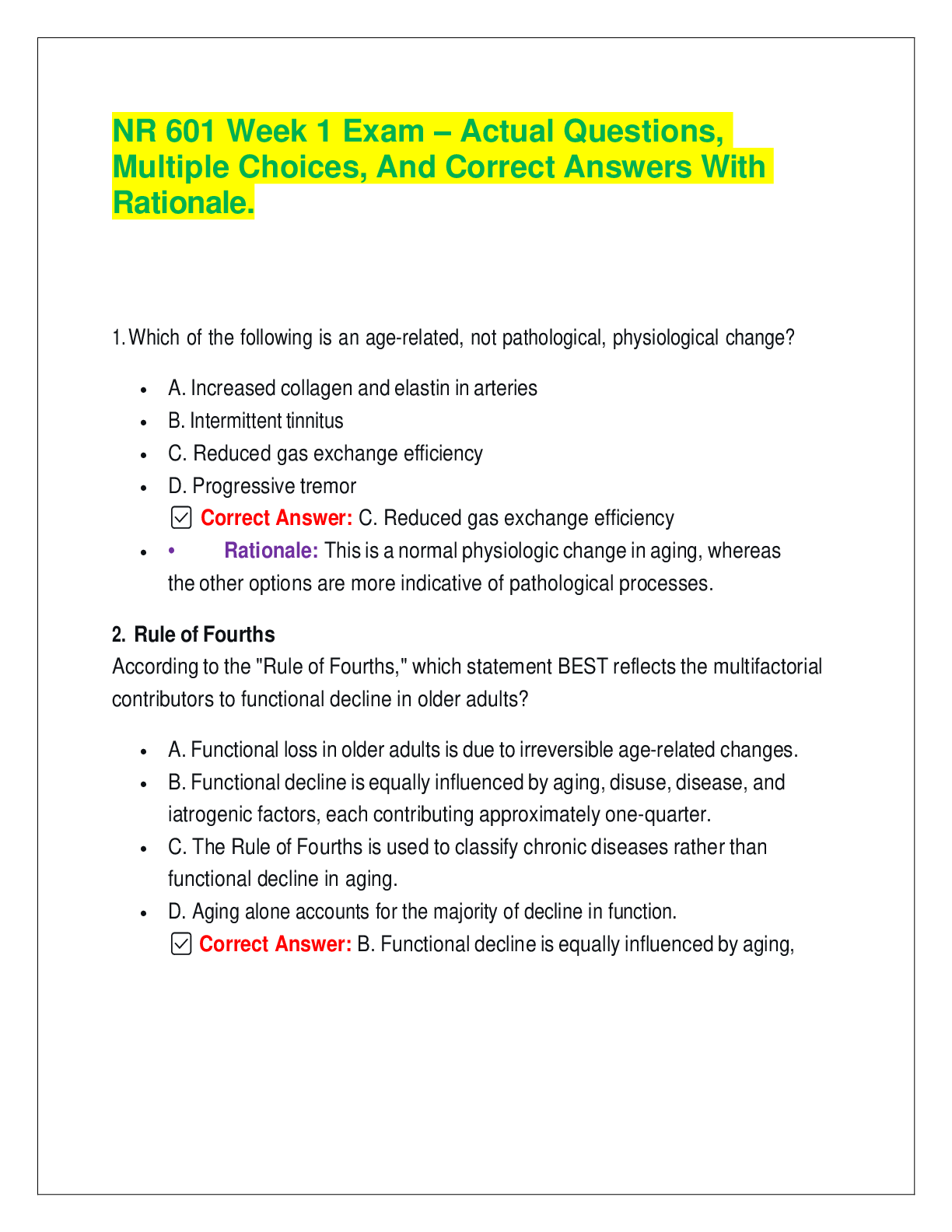
NR 601 MIDTERM EXAM 1 QUESTIONS WITH (LATEST) GRADE A+ SOLUTIO...

$12
8 Pages
NR 601 Week 2 COPD Case Study Part 1 (Initial post, faculty an...
x.png)
$10.5
21 Pages
NURS6521 / NURS 6521 Exam Study Guide (Latest): Advanced Pharm...
$9
14 Pages
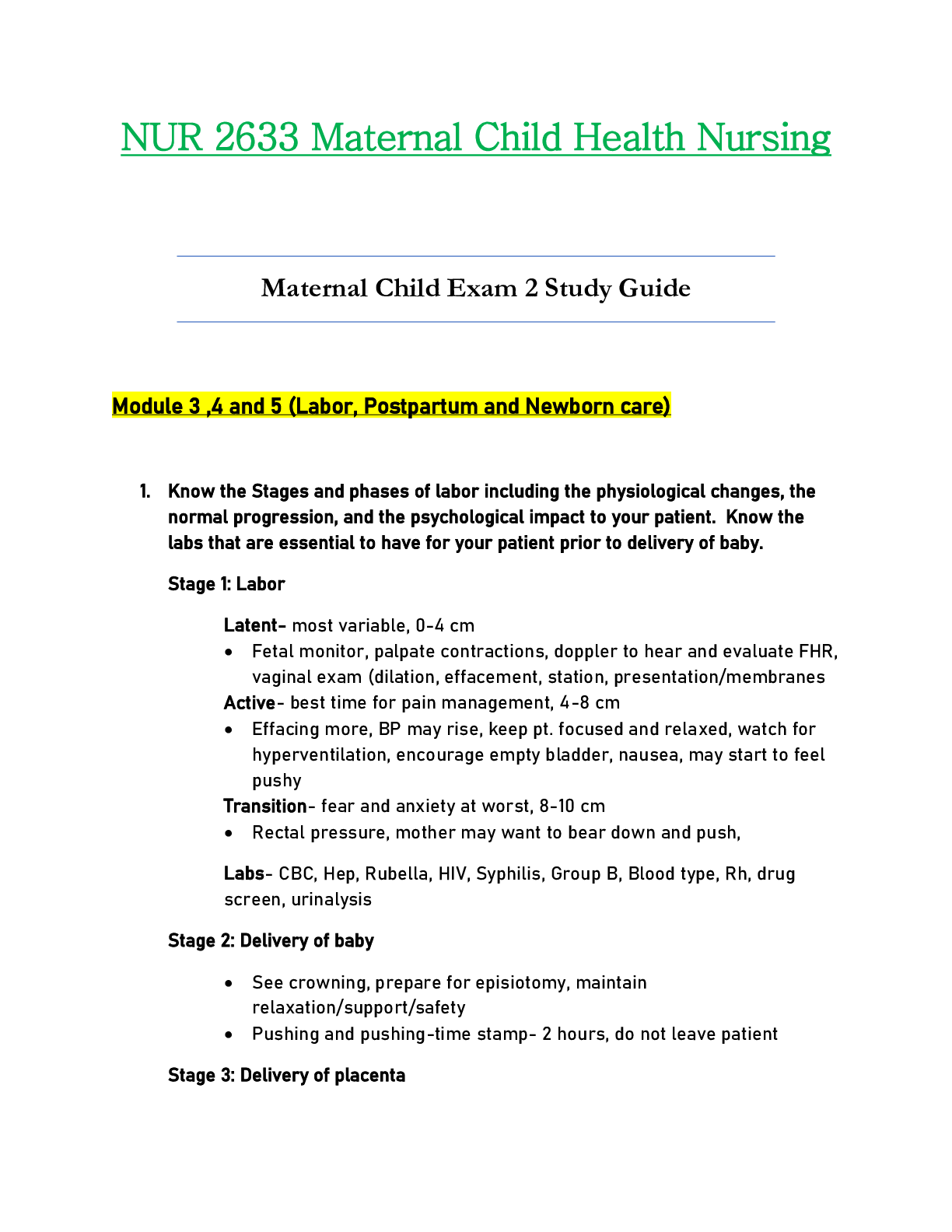
NUR 2633 / NUR2633 Exam 2 Study Guide Updated: Maternal Child...


More related documents below