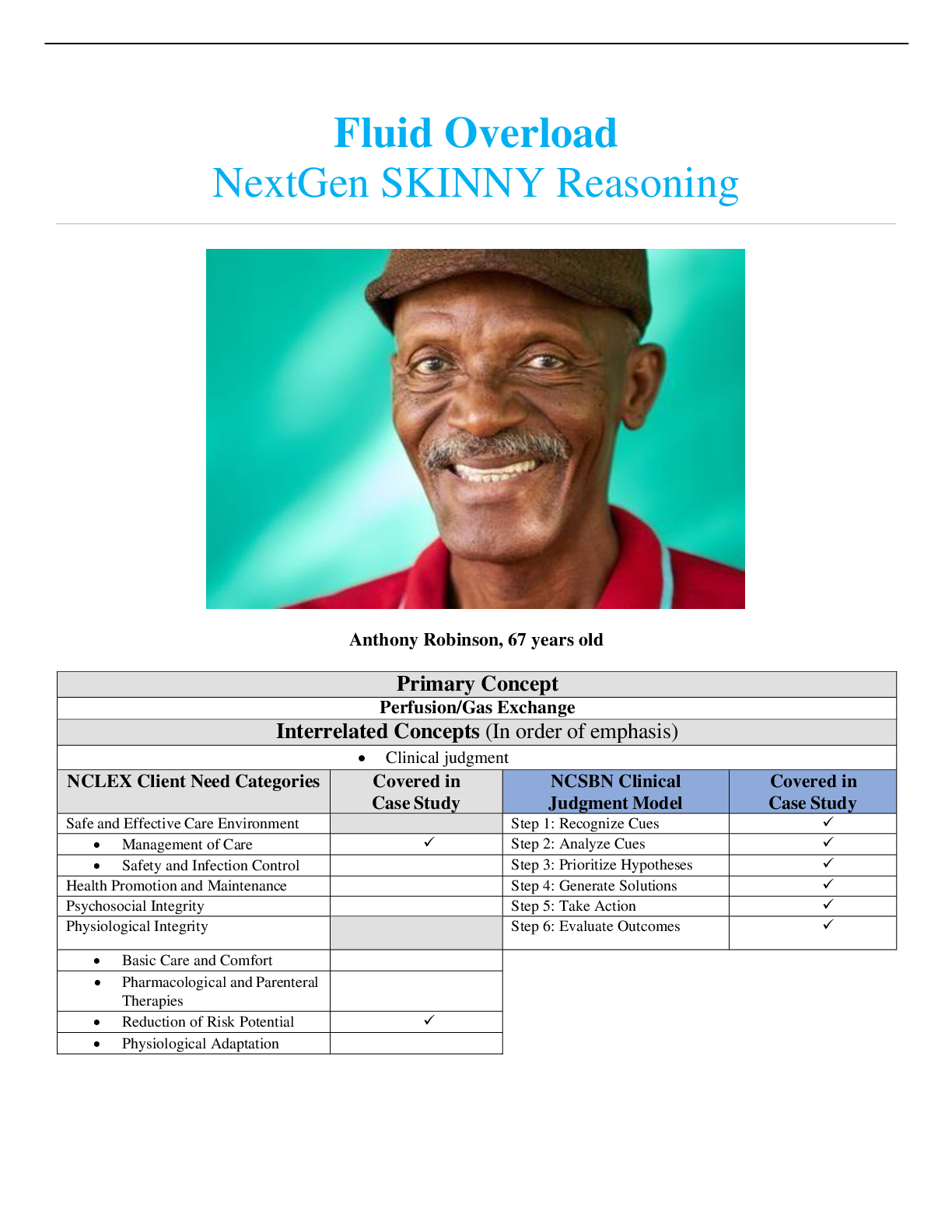
Fluid Overload NextGen SKINNY Reasoning
Document Content and Description Below
Present Problem:
You are the nurse caring for Anthony Robinson, a 67-year-old African American male patient with a history of heart
failure and iron deficiency anemia who was admitted to the medical floor from the emer
...
[Show More]
Last updated: 3 years ago
Preview 1 out of 5 pages
Instant download
Buy this Document to get the Full Access Instantly
Provided by Students Who Aced it
We Verify Document Content to Gurantee Accuracy
Reviews( 0 )
Document information
Connected school, study & course
About the document
Uploaded On
May 06, 2021
Number of pages
5
Written in
All

Additional information
This document has been written for:
Uploaded
May 06, 2021
Downloads
0
Views
270
Document Keyword Tags
Recommended For You
Get more on NCLEX »
$7
10 Pages
Anthony Robinson, 67 years old Fluid Overload, NextGen SKINNY...
$10
5 Pages
(answered) Fluid Overload NextGen SKINNY Reasoning_ Anthony Ro...
$10
5 Pages
Case Study Fluid Overload, NextGen SKINNY Reasoning, Anthony R...
$15
10 Pages
Case Study Fluid Overload, NextGen SKINNY Reasoning, Anthony R...
$4
5 Pages
(answered) Fluid Overload NextGen SKINNY Reasoning_ Anthony Ro...
$20.5
841 Pages
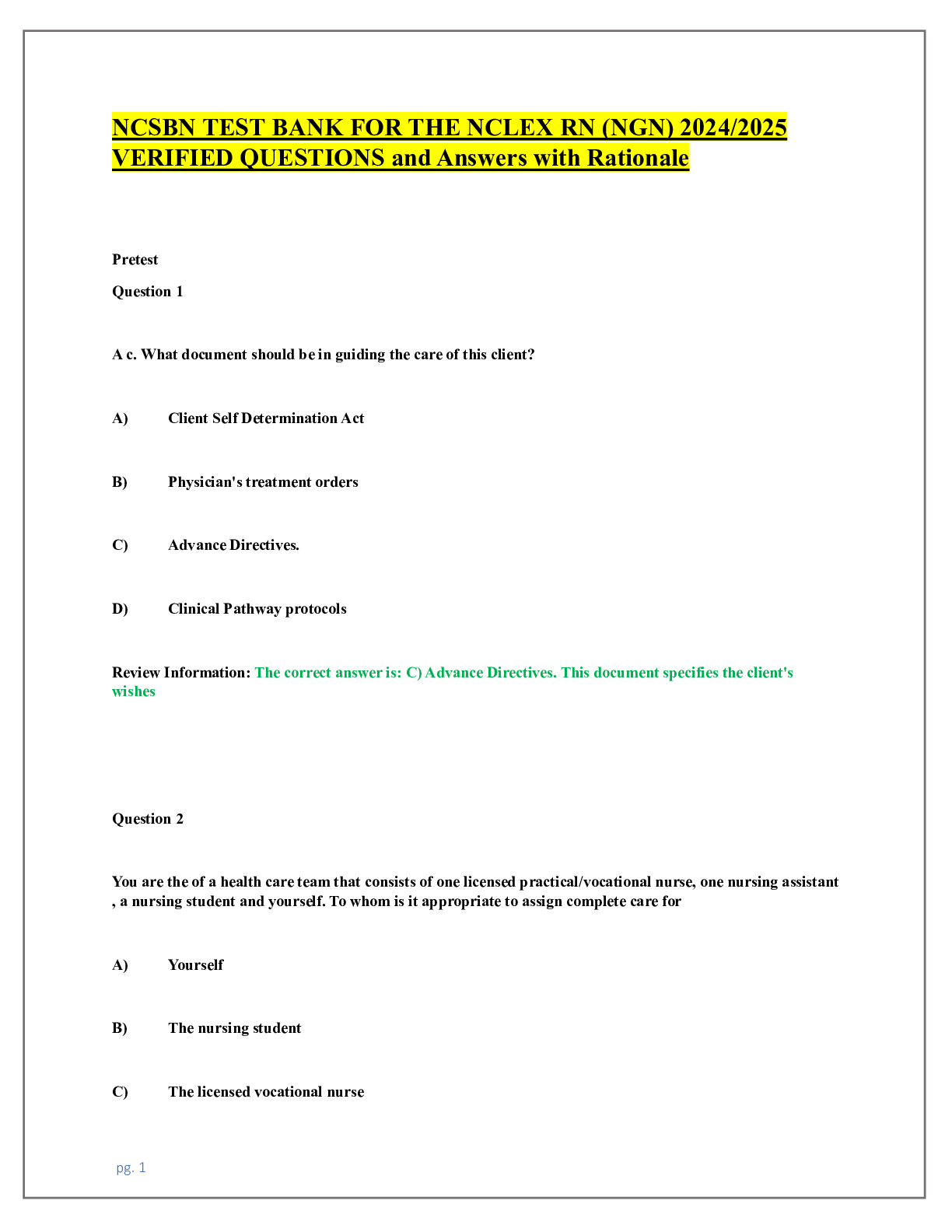
NCSBN TEST BANK FOR THE NCLEX RN (NGN) 2024/2025 VERIFIED QUES...

$30.5
1219 Pages
NCSBN TEST BANK for the NCLEX-RN & NCLEX-PN UPDATED Question...

$25
277 Pages
SAUNDERS COMPREHENSIVE REVIEW FOR NCLEX TEST BANK latest 2022/...

$11
10 Pages
Fluid Overload, NextGen SKINNY Reasoning, Anthony Robinson, 67...

.png)
$53.5
46 Pages
NCLEX RN QUESTIONS IPASS FOR EXAM-QUESTIONS ANSWERS & RATIONA...
More related documents below