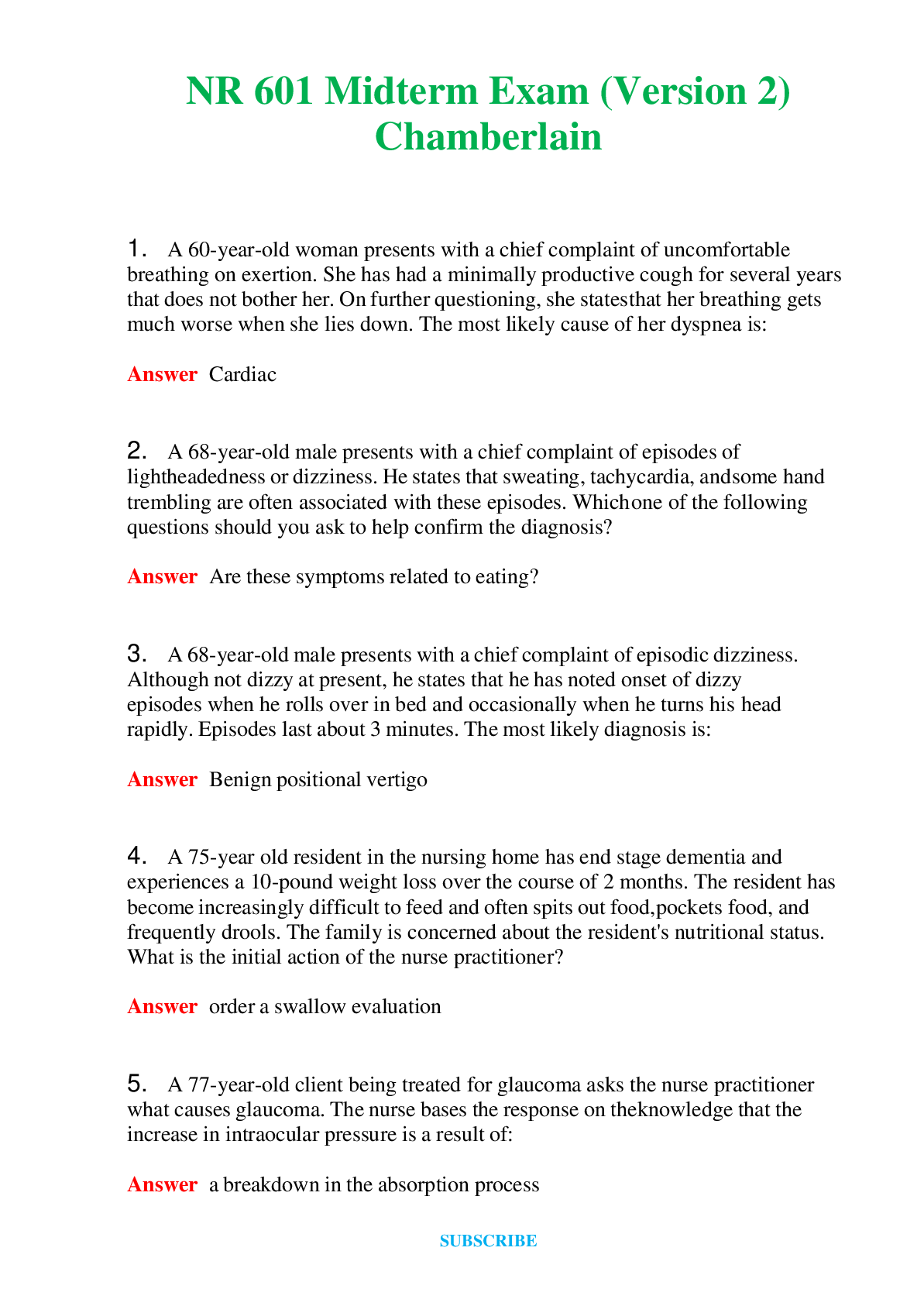
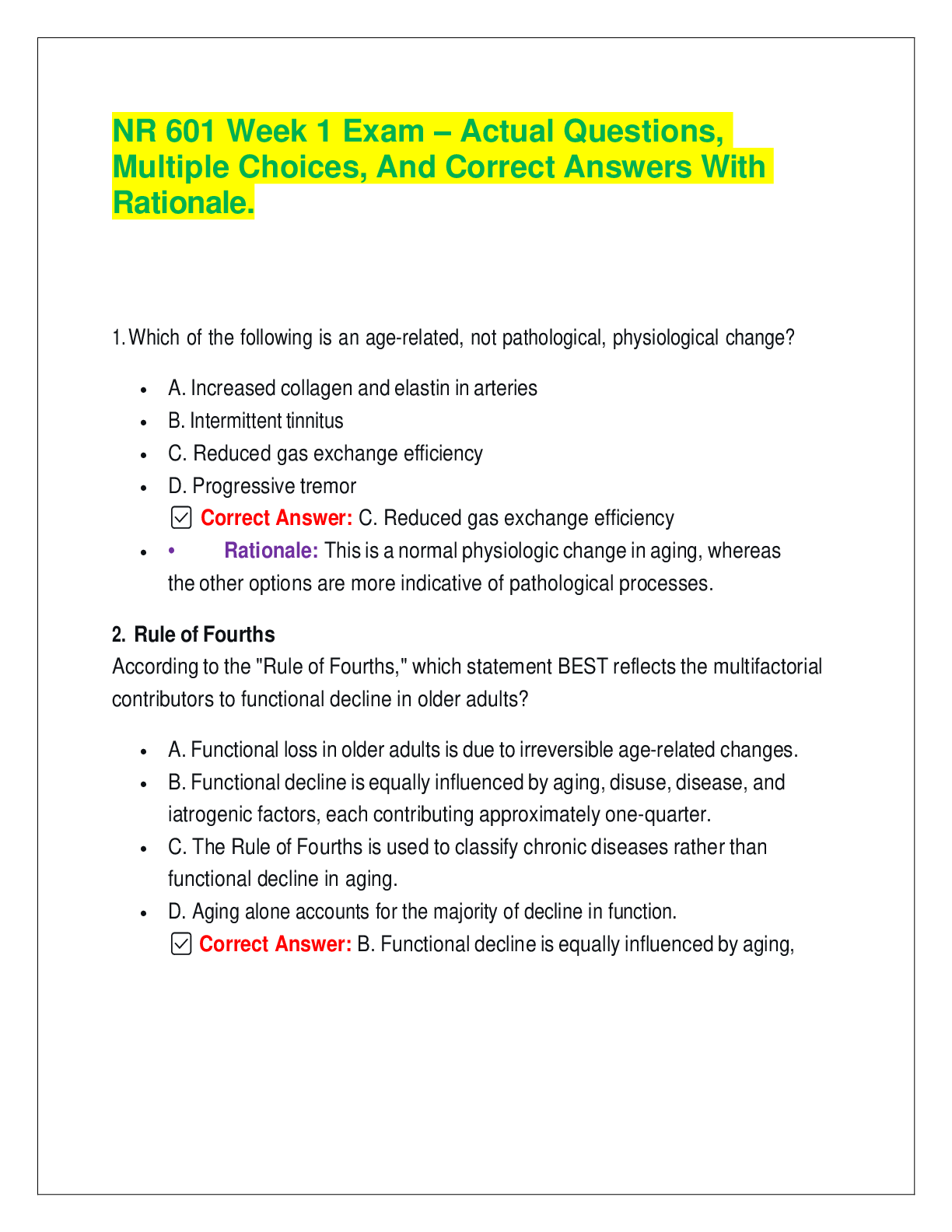
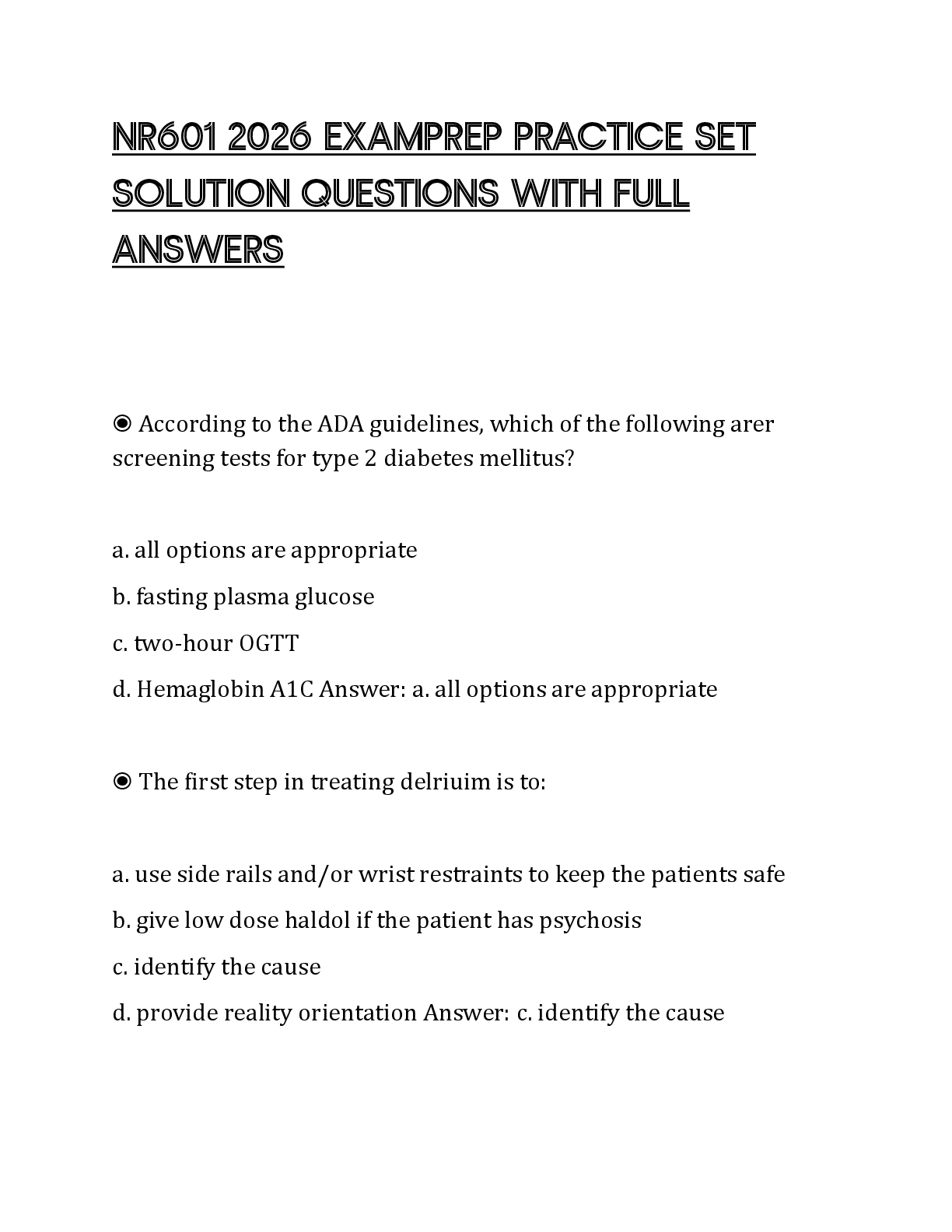
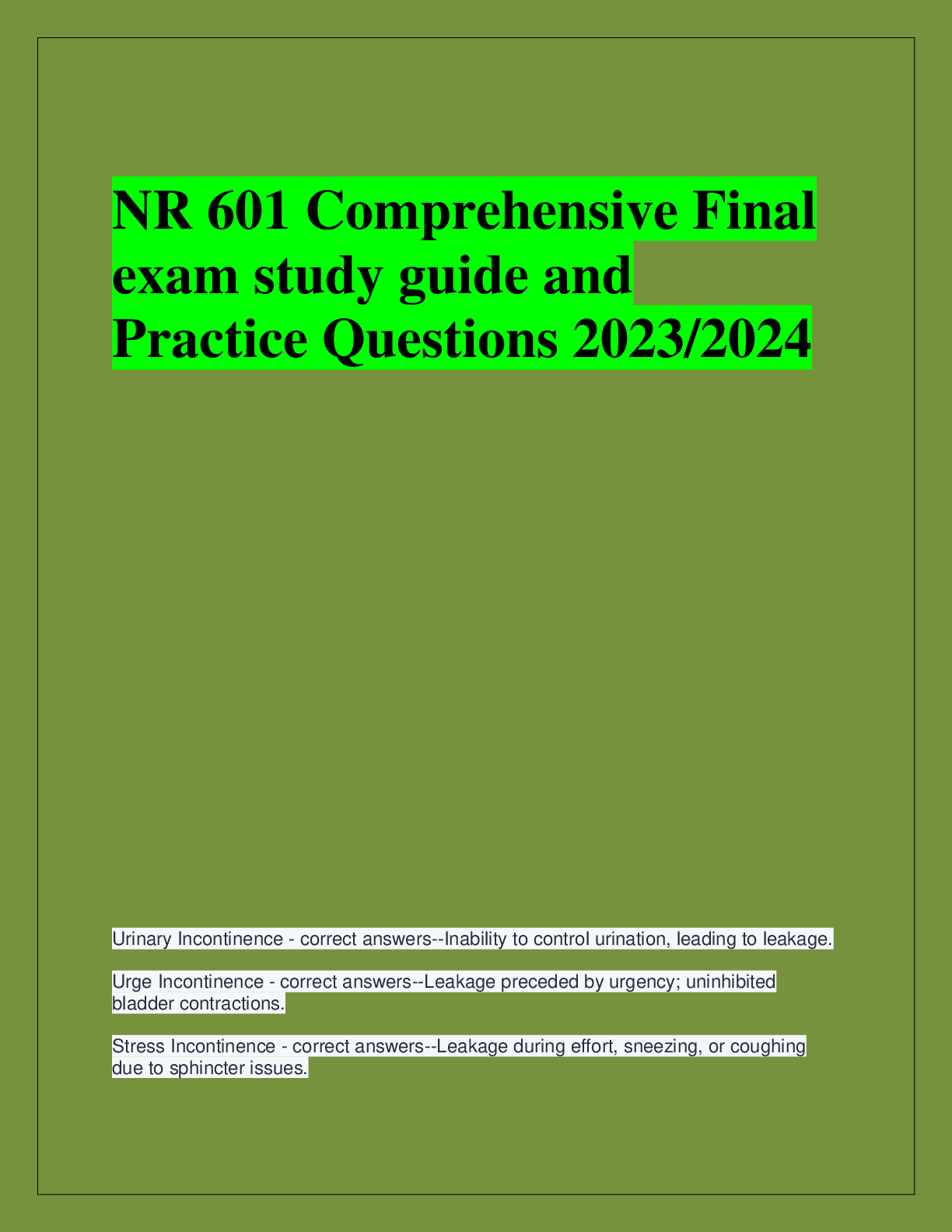
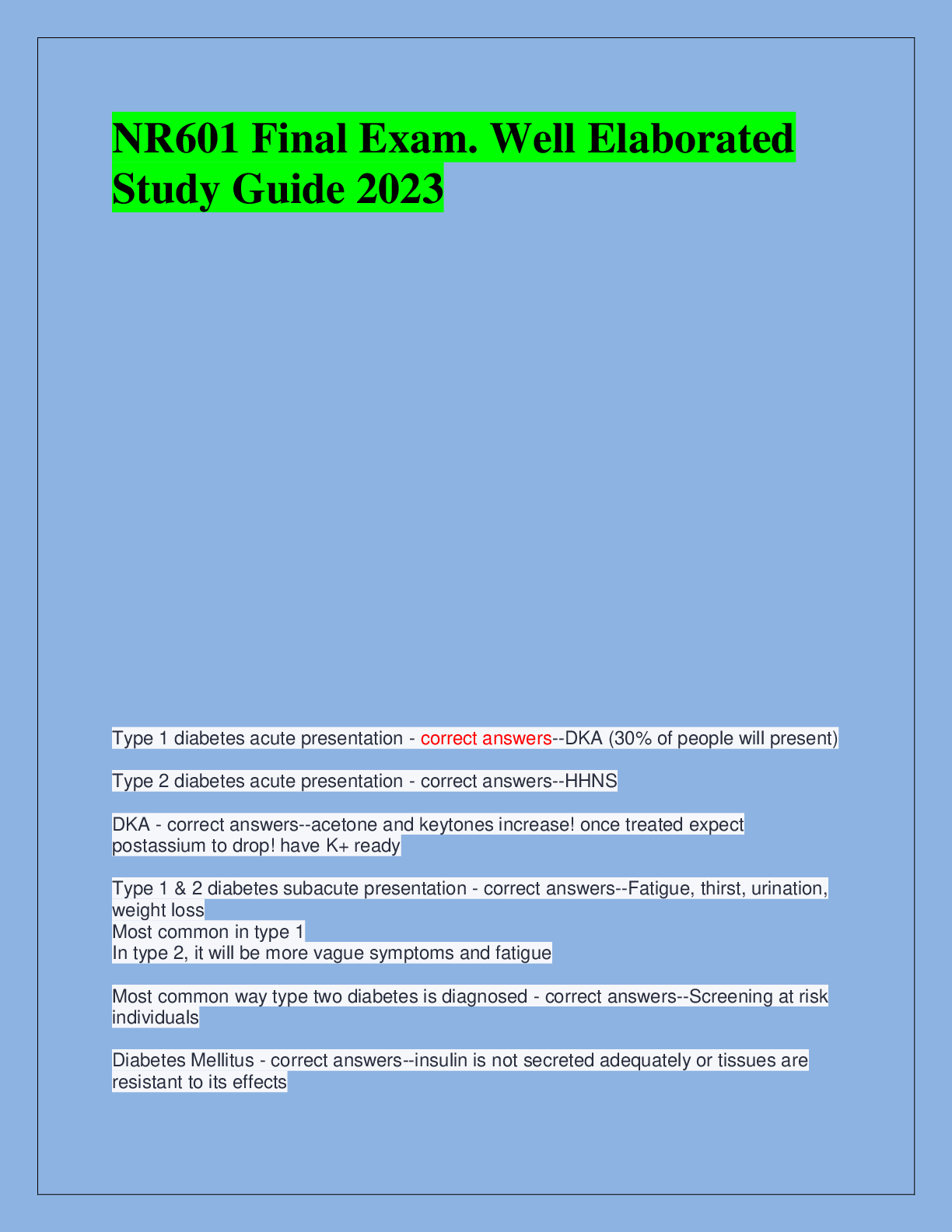
*NURSING > STUDY GUIDE > NR 601 Midterm Exam Study Guide Latest (All)
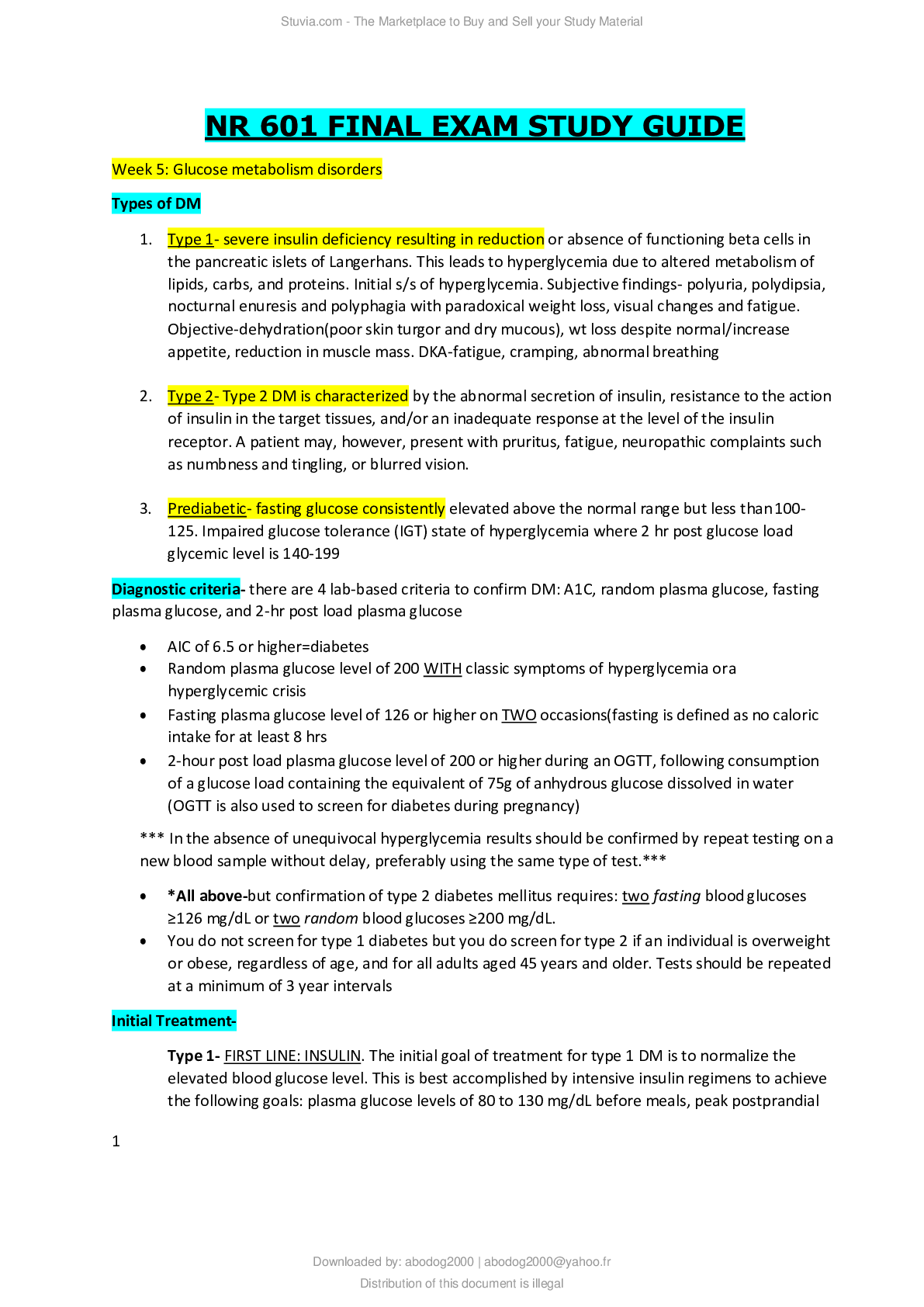
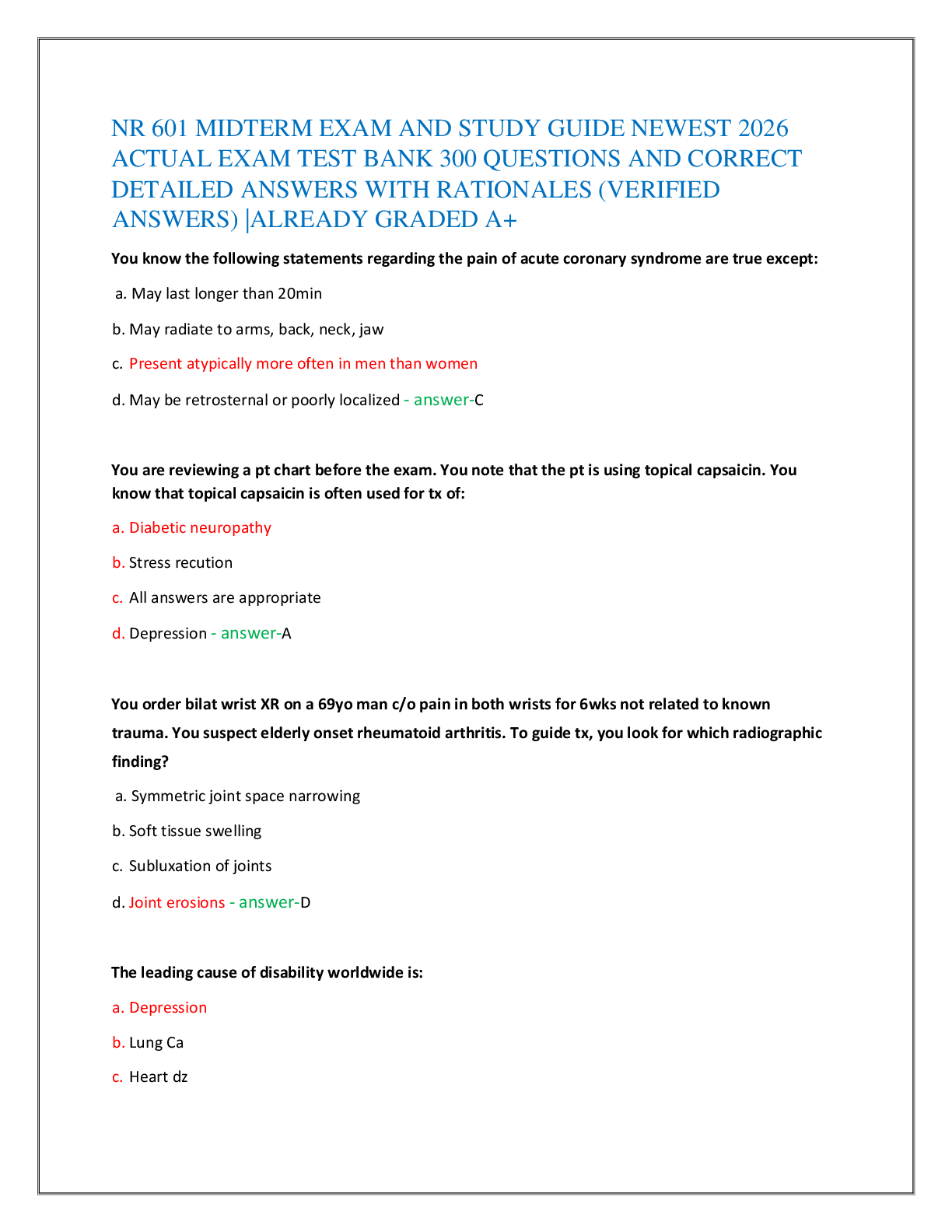
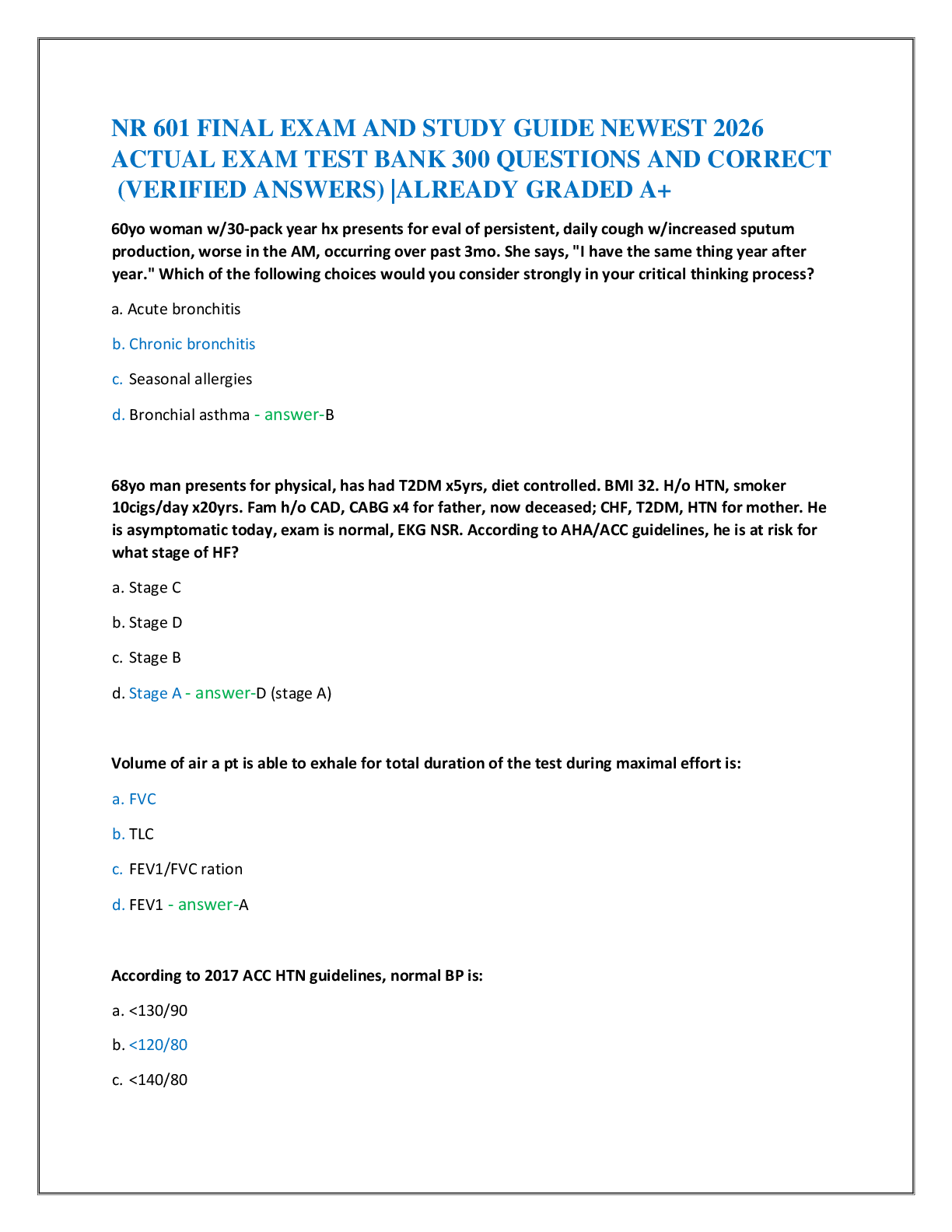
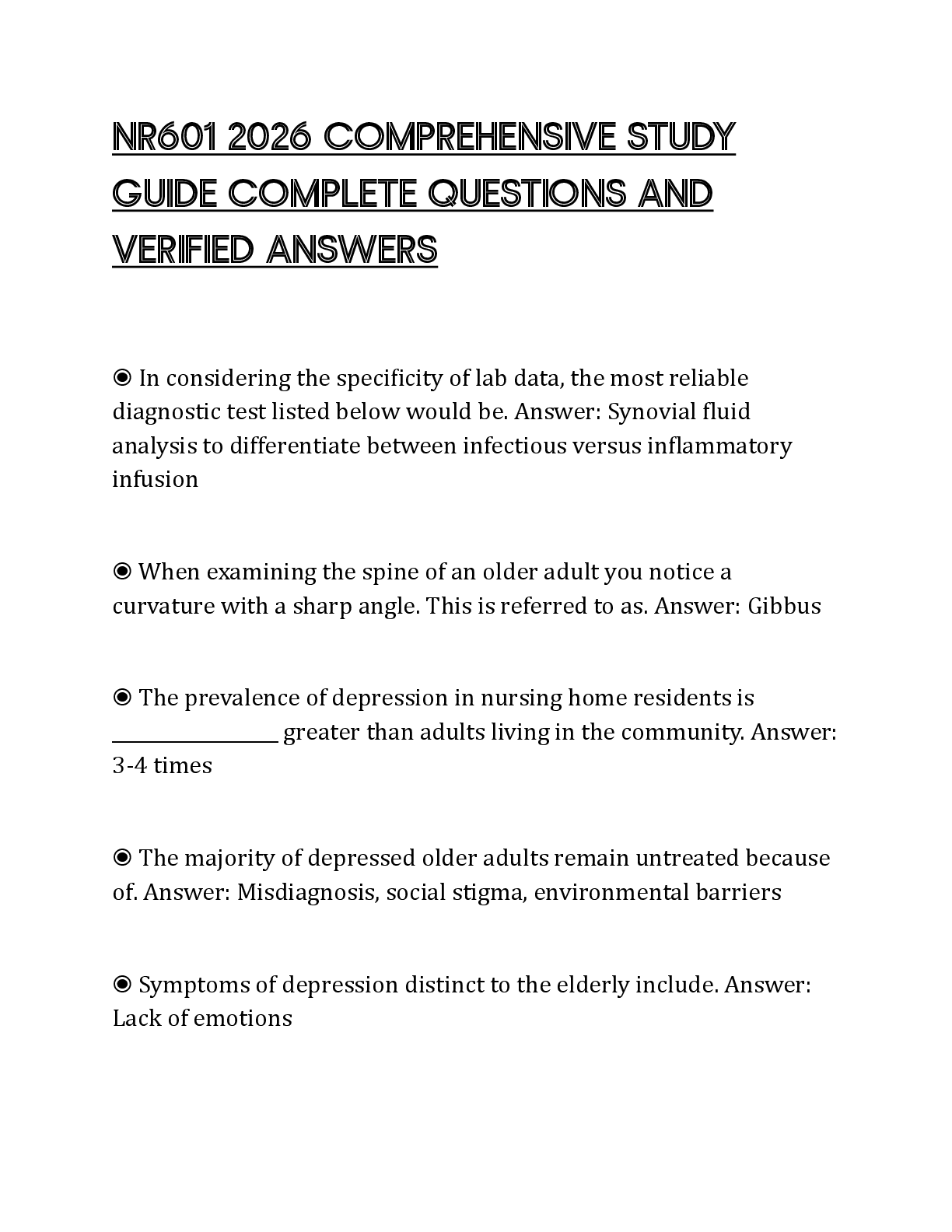
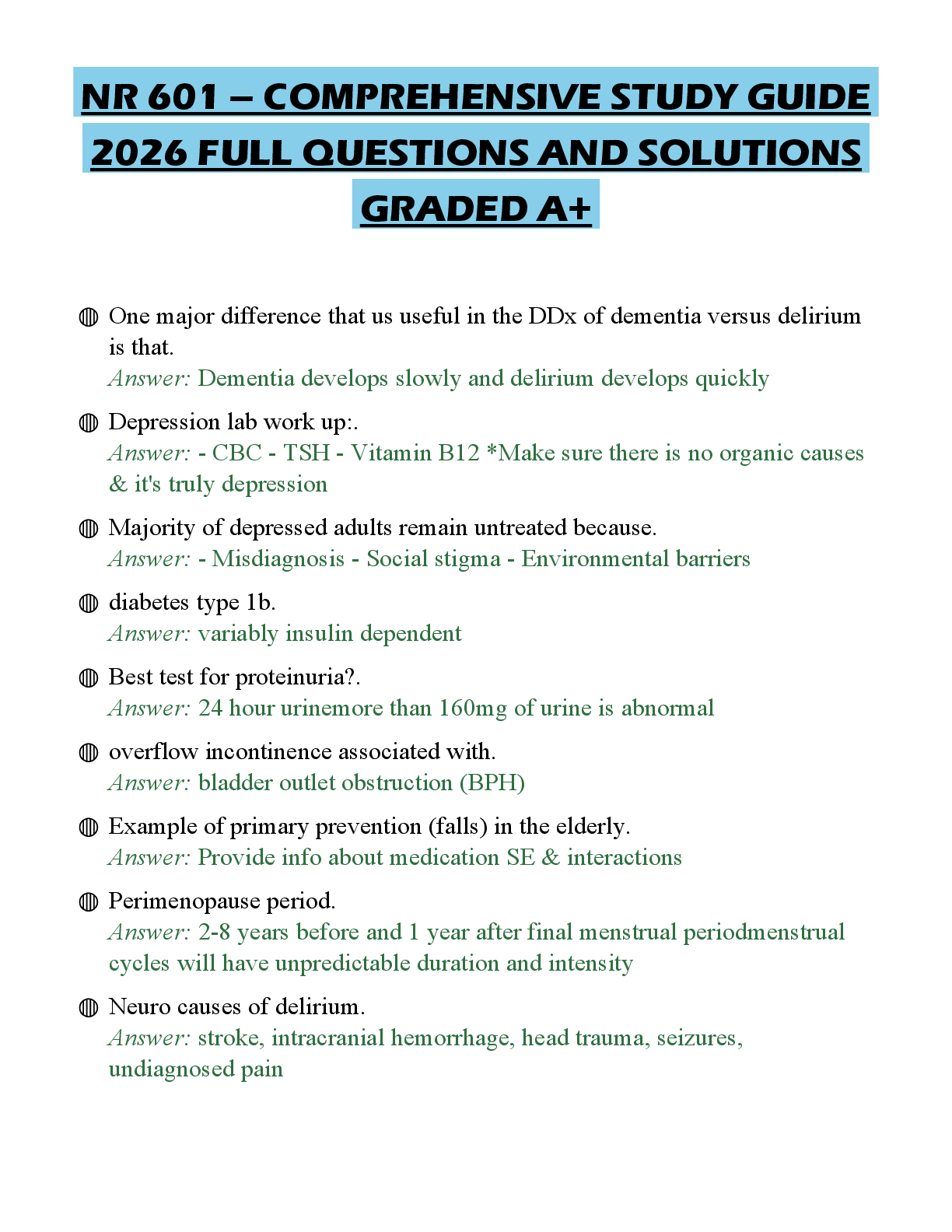
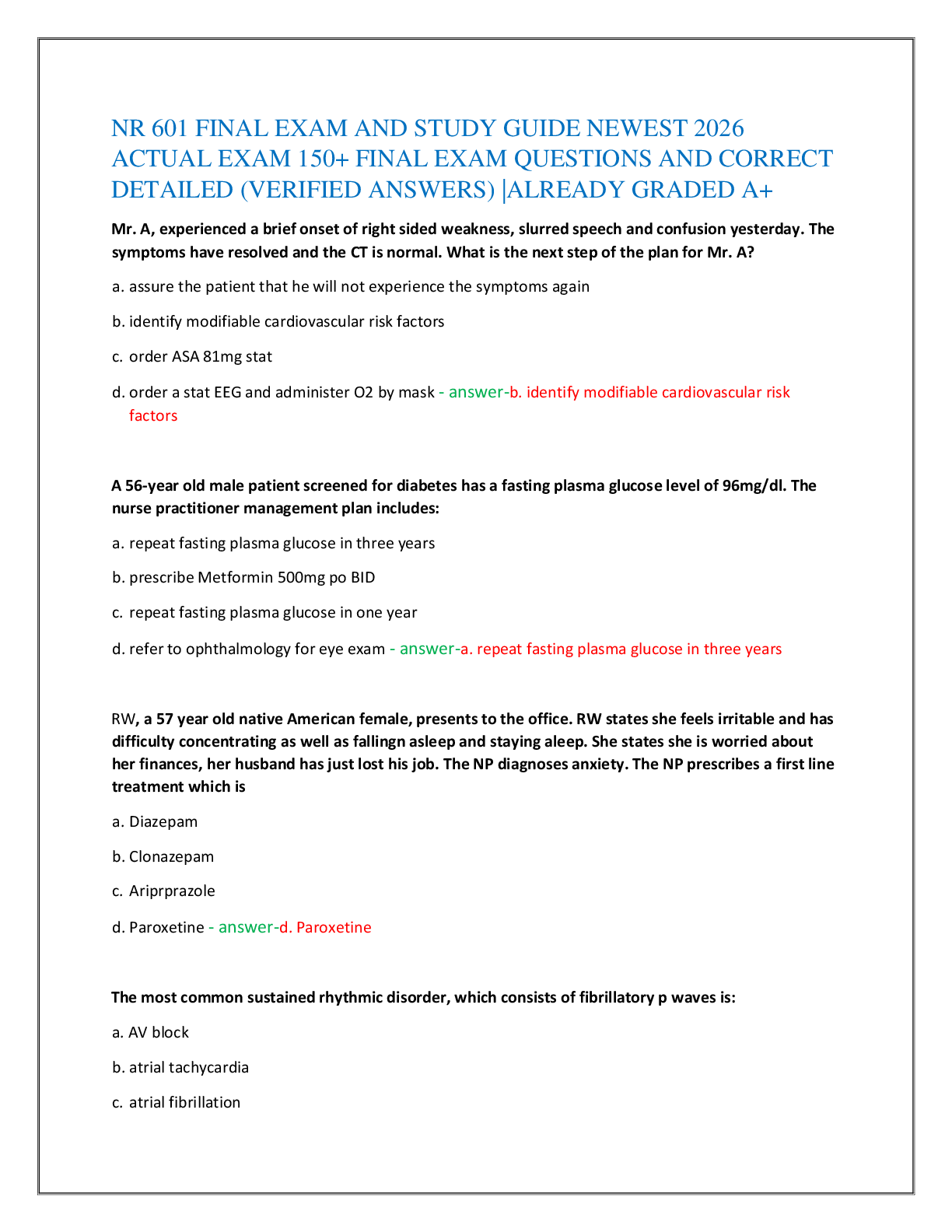
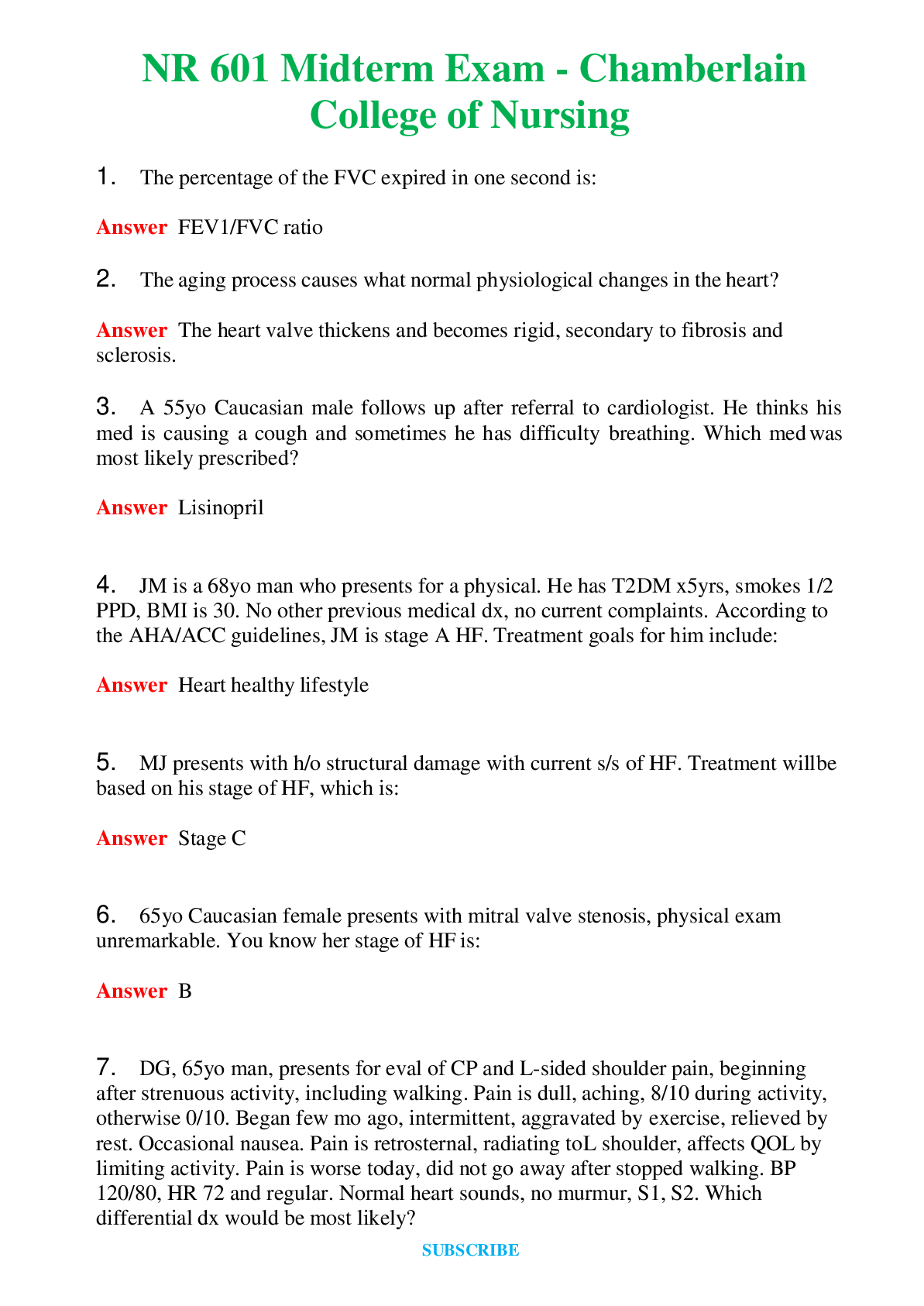
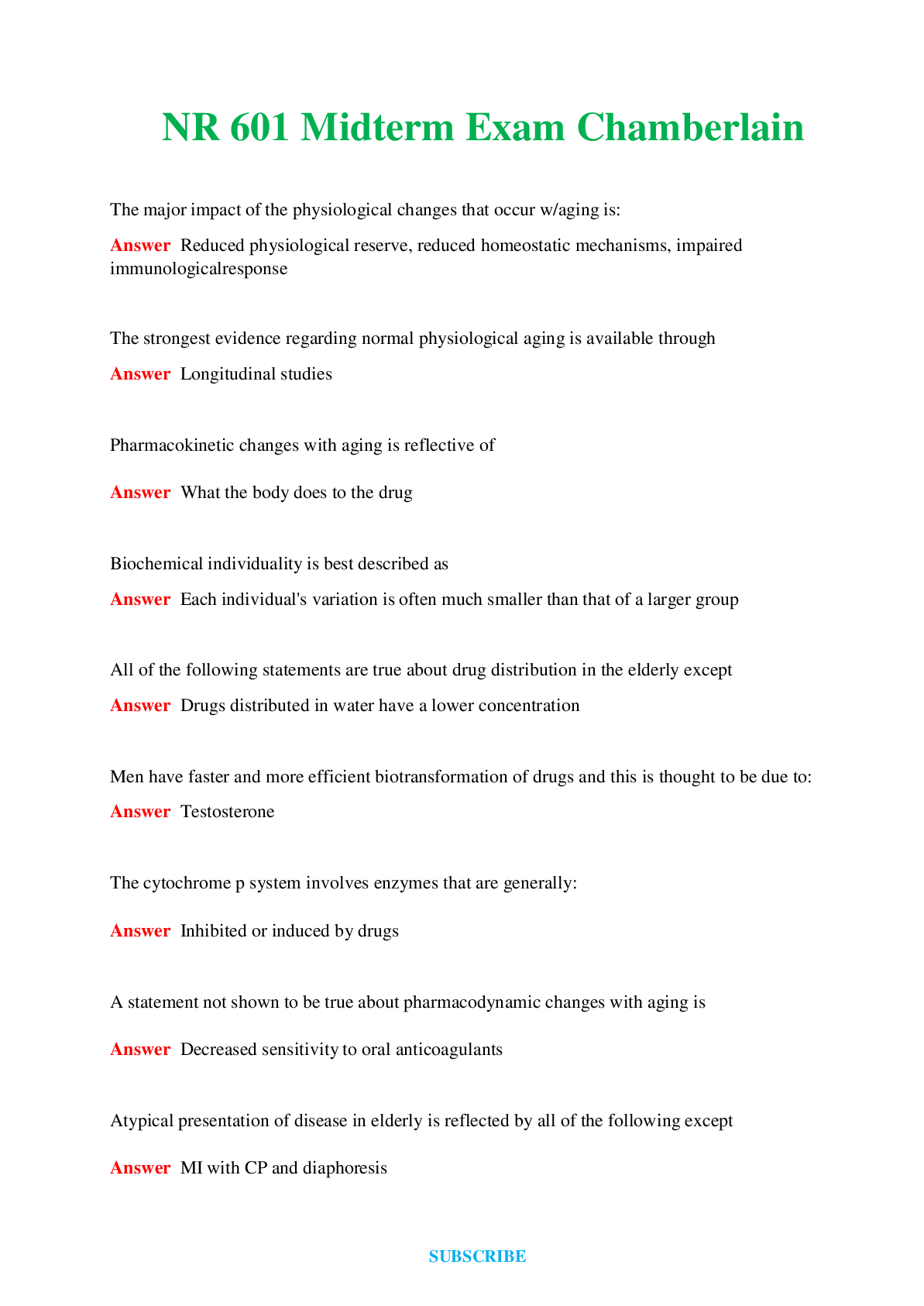
NR 601 Midterm Exam Study Guide Chapter 1: Changes with Aging – Notes Fundamental Considerations Physiological Changes with Aging Laboratory Values in Older Adults Pharmacokinetic & Pharmacodynamic ... Changes Absorption Distribution Metabolism Elimination Pharmacodynamics Presenting Features of Illness & Disease In The Elderly Chronic Illness & Functional Capacity Chapter 1: Changes with Aging – Review Questions Reference ranges or values are those intervals in which 95 % of the values fall within a specific population. All of the following statements are true about renal function in the elderly except: serum creatinine is a sensitive indicator of renal impairment. Of all the pharmacokinetic changes associated with aging, which is the most significant? Esophageal erosions can be caused by drugs when: Biotransformation of drugs primarily occurs in: Changes in renal function associated with aging are most likely to result in: All of the following drugs are known to be nephrotoxic except: Under reporting of symptoms occurs generally when the elderly: The most prevalent chronic disease in the elderly is: Chapter 3: Exercise in Older Adults – Notes Americans more than 65 years now represent the most rapidly growing segment of the US population. These numbers will increase exponentially. Anticipate skyrocketing of medical costs for chronic health conditions. Lifestyle interventions at any age can mitigate the effects of chronic illness. There has been an increase in obesity in older adults, from 22% in 1994 to 38% in 2009-2010. Available Resources Barriers and Facilitators to Exercise for Older Adults Patient Barriers Patient Facilitators Medical contraindications for Exercise Therapy Plan for Incorporating Exercise into Patient Encounter Key Guidelines for Safe Physical Activity (Physical Activity Guidelines Advisory Committee, 3008) Examples of common Health Conditions in Older Adults with Exercise Recommendations Chapter 3: Exercise in Older Adults – Questions Strategies to promote increased physical activity: Additional data: National guidelines to consider? Screening tools? POC Chapter 8: Chest Disorders – Notes Chapter 8: Chest Disorders – Questions Additional subjective information you will ask? Additional objective information you will examine? DDx: Radiological examinations or additional diagnostic studies? Treatment and prescription: Potential complications from treatment: Additional laboratory tests to consider? Looking for a consult? Chapter 5: Symptoms & Syndromes – CP – Notes Etiology: Occurrence:One of the most common causes of ER visits – 5 million/year. Age:Risk increases with age due to CAD, HTN, lung cancer, cardiac arrhythmias, DM, recent immobilization. Gender:Atypical presentation common in females. Ethnicity: Contributing factors: Signs and symptoms: Diagnostic tests: DDx: Treatment: Follow Up: Sequelae:A Prevention & prophylaxis: Referral: Education: Chapter 5: Signs & Symptoms – Questions Additional information from history? Potential contributors to constipation? What physical exam is indicated? Diagnostic testing? Non pharmacological treatments to consider? Chapter 2: Health Promotion – Questions Risk factors for cardiovascular disease: Problem list: Included in primary care visit: Tests & Screenings: Recommended interventions [Show More]
Last updated: 3 years ago
Preview 1 out of 13 pages
Buy this document to get the full access instantly
Instant Download Access after purchase
Buy NowInstant download
We Accept:
NR 601 STUDY PACKAGE (Discussions, Assignments, Quizzes, Midterm and Final Exams)
By PROF 4 years ago
$150.5
48
Can't find what you want? Try our AI powered Search
Connected school, study & course
About the document
Uploaded On
Apr 05, 2021
Number of pages
13
Written in
All

This document has been written for:
Uploaded
Apr 05, 2021
Downloads
0
Views
111
Scholarfriends.com Online Platform by Browsegrades Inc. 651N South Broad St, Middletown DE. United States.
We're available through e-mail, Twitter, Facebook, and live chat.
FAQ
Questions? Leave a message!
Copyright © Scholarfriends · High quality services·