1. Define energy balance. What would be the result of positive energy balance? Negative
energy balance? What does the body use for energy during a state of negative energy
balance?
a. Energy balance: energy consumed i
...
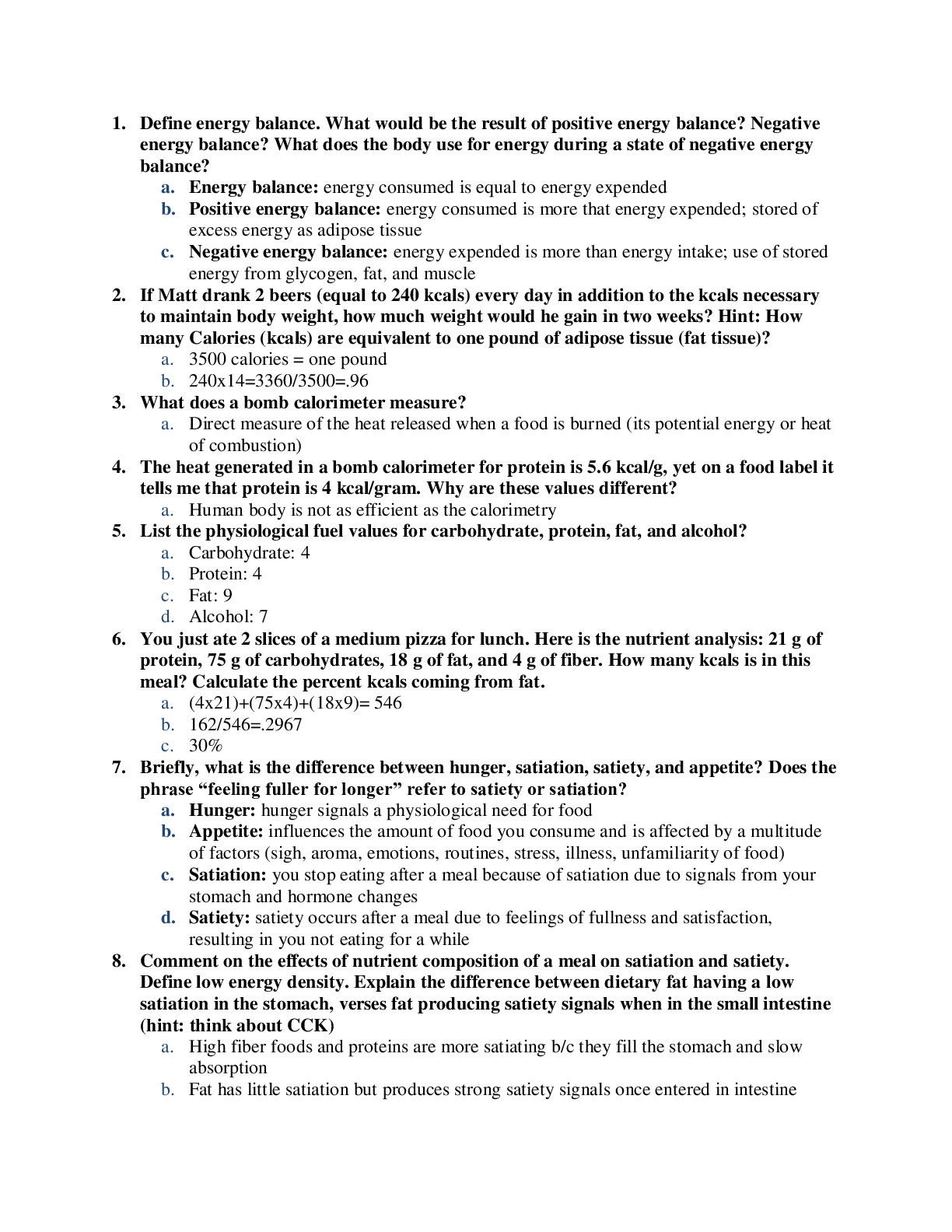
1. Define energy balance. What would be the result of positive energy balance? Negative
energy balance? What does the body use for energy during a state of negative energy
balance?
a. Energy balance: energy consumed is equal to energy expended
b. Positive energy balance: energy consumed is more that energy expended; stored of
excess energy as adipose tissue
c. Negative energy balance: energy expended is more than energy intake; use of stored
energy from glycogen, fat, and muscle
2. If Matt drank 2 beers (equal to 240 kcals) every day in addition to the kcals necessary
to maintain body weight, how much weight would he gain in two weeks? Hint: How
many Calories (kcals) are equivalent to one pound of adipose tissue (fat tissue)?
a. 3500 calories = one pound
b. 240x14=3360/3500=.96
3. What does a bomb calorimeter measure?
a. Direct measure of the heat released when a food is burned (its potential energy or heat
of combustion)
4. The heat generated in a bomb calorimeter for protein is 5.6 kcal/g, yet on a food label it
tells me that protein is 4 kcal/gram. Why are these values different?
a. Human body is not as efficient as the calorimetry
5. List the physiological fuel values for carbohydrate, protein, fat, and alcohol?
a. Carbohydrate: 4
b. Protein: 4
c. Fat: 9
d. Alcohol: 7
6. You just ate 2 slices of a medium pizza for lunch. Here is the nutrient analysis: 21 g of
protein, 75 g of carbohydrates, 18 g of fat, and 4 g of fiber. How many kcals is in this
meal? Calculate the percent kcals coming from fat.
a. (4x21)+(75x4)+(18x9)= 546
b. 162/546=.2967
c. 30%
7. Briefly, what is the difference between hunger, satiation, satiety, and appetite? Does the
phrase “feeling fuller for longer” refer to satiety or satiation?
a. Hunger: hunger signals a physiological need for food
b. Appetite: influences the amount of food you consume and is affected by a multitude
of factors (sigh, aroma, emotions, routines, stress, illness, unfamiliarity of food)
c. Satiation: you stop eating after a meal because of satiation due to signals from your
stomach and hormone changes
d. Satiety: satiety occurs after a meal due to feelings of fullness and satisfaction,
resulting in you not eating for a while
8. Comment on the effects of nutrient composition of a meal on satiation and satiety.
Define low energy density. Explain the difference between dietary fat having a low
satiation in the stomach, verses fat producing satiety signals when in the small intestine
(hint: think about CCK)
a. High fiber foods and proteins are more satiating b/c they fill the stomach and slow
absorption
b. Fat has little satiation but produces strong satiety signals once entered in intestine
c. Higher density foods have higher calories
d. Lower density foods have lower calories
i. When comparing two different foods with the same volumes
[Show More]