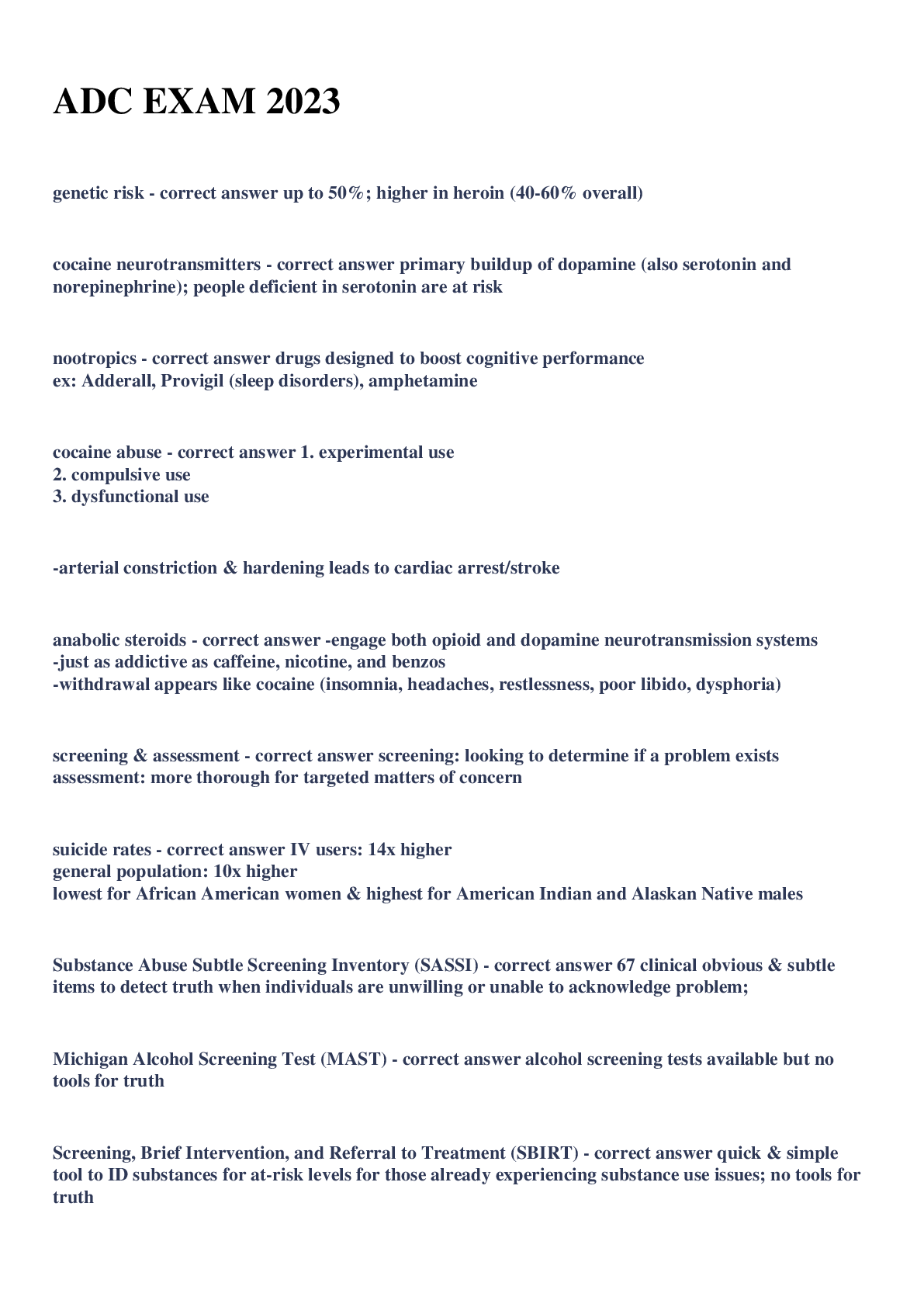
genetic risk
up to 50%; higher in heroin (40-60% overall)
cocaine neurotransmitters
primary buildup of dopamine (also serotonin and norepinephrine); people deficient in serotonin are at risk
nootropics
d
...
genetic risk
up to 50%; higher in heroin (40-60% overall)
cocaine neurotransmitters
primary buildup of dopamine (also serotonin and norepinephrine); people deficient in serotonin are at risk
nootropics
drugs designed to boost cognitive performance
ex: Adderall, Provigil (sleep disorders), amphetamine
cocaine abuse
1. experimental use
2. compulsive use
3. dysfunctional use
-arterial constriction & hardening leads to cardiac arrest/stroke
anabolic steroids
-engage both opioid and dopamine neurotransmission systems
-just as addictive as caffeine, nicotine, and benzos
-withdrawal appears like cocaine (insomnia, headaches, restlessness, poor libido, dysphoria)
screening & assessment
screening: looking to determine if a problem exists
assessment: more thorough for targeted matters of concern
suicide rates
IV users: 14x higher
general population: 10x higher
lowest for African American women & highest for American Indian and Alaskan Native males
Substance Abuse Subtle Screening Inventory (SASSI)
67 clinical obvious & subtle items to detect truth when individuals are unwilling or unable to acknowledge problem; <15 mins to complete
Michigan Alcohol Screening Test (MAST)
alcohol screening tests available but no tools for truth
Screening, Brief Intervention, and Referral to Treatment (SBIRT)
quick & simple tool to ID substances for at-risk levels for those already experiencing substance use issues; no tools for truth
Addiction Severity Index (ASI)
tool for assessment & tx planning (NOT screening)
readiness to change
-clients who perceive the need for help w/ the process of change & when other options are perceived as comparatively less attractive
-NOT always rock bottom; can also be motivated by external pressures
-client and family's level of emotional pain
Chemical Use, Abuse And Dependence (CUAD) Scale
used in ax; derives a DSM dx of substance disorder; brief 5-30 min interview and requires little training. known for mentally ill pop'ns
Symptom Checklist-90-R (SCL-90-R)
ax broad range of psychological problems and pathology as well as client progress/treatment outcomes. 90 items on a 5-point scale to be completed in 12-15 minutes and produces an overview of symptoms
Community Oriented Programs Environment Scale (COPES)
measure actual, preferred, and expected treatment environment or social climate of community treatment programs by drawing on opinions of clients & staff
Treatment Services Review (TSR)
used in conjunction with ASI; ten-minute structured interview to ax nature and frequency of tx services
CHEAP progress notes
Chief complaint
History
Exam
Assessment
Plan
SIGECAPS
full eval of depression symptoms: Sleep, Interests, Guilt, Energy, Concentration, Appetite, Psychomotor Agitation, and Suicidal ideation
CART
progress note format: Client condition, Actions, Response, and Treatment plan
CHART
progress note format: Client condition, Historical significance, Actions, Response, and Treatment plan
episode of treatment
length of stay is not always critical; completion is more important; avoid high drop-out rate in first few weeks
ideal group size
process groups most effective w/ 6-8 members; psychoeducational ones can be larger
co-occurring treatment severity
none- moderate/severity: IOP (i.e. anxiety/mood dx)
severe: dual-diagnosis (psychotic/personality disorders)
Composite International Diagnostic Interview (CIDI)
covers both DSM and ICD criteria for SA disorders; addresses consequences and onset of symptoms; primarily used for epidemiology
MINI scale
screens for major psych disorders based on DSM and ICD criteria; reliable dx in brief time frame
PRISM instrument
Psychiatric Research Interview for Substance Abuse and Mental Disorders; differentiates antisocial and borderline personality dx from SA; 1-3 hours/training required
AASE Scale
Alcohol Abstinence Self-Efficacy Scale; to ax level of client's confidence in being able to abstain from alcohol in 20 situations that include common drinking cues; no training req'd
ASRPT
Alcohol-Specific Role Play Test (ASRPT) uses role-playing scripts to evaluate client situations in taped responses by acting out; 20 mins/requires training
SCQ
Situational Confidence Questionnaire: 29 self-report items that explores self-efficacy in alcohol-related scenarios
CBT
not effective in group counseling
Motivational interviewing (MI)
counselor is coach/consultant, asking key questions for learning. nonjudgmental, collaborative style
Motivational enhancement therapy (MET)
incorporates structured assessments and follow-up sessions as adaptation to MI
[Show More]