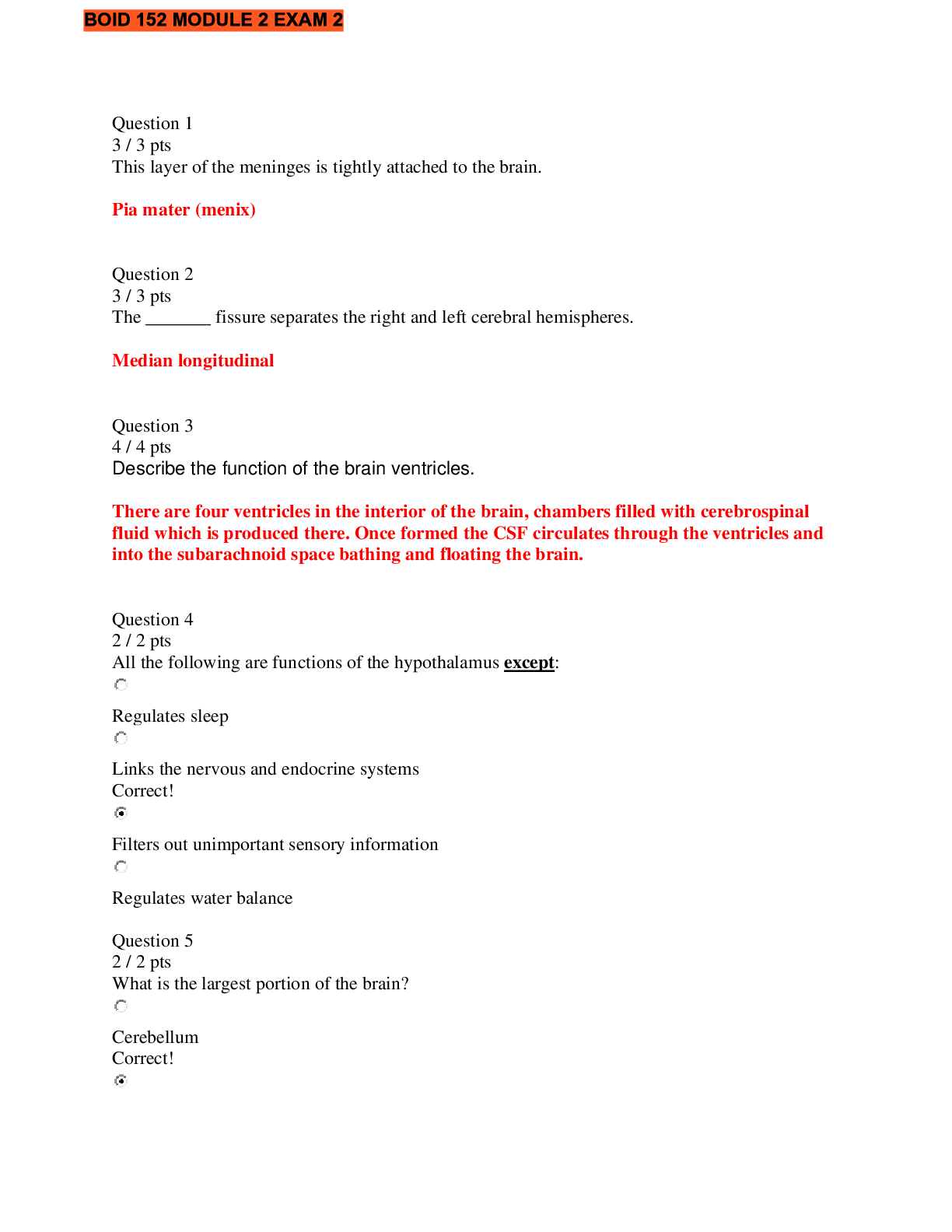
A 64-year-old client scheduled for surgery with a general anesthetic refuses to remove a set of
dentures prior to leaving the unit for the operating room. What would be the most appropriate
intervention by the nurse?
...
A 64-year-old client scheduled for surgery with a general anesthetic refuses to remove a set of
dentures prior to leaving the unit for the operating room. What would be the most appropriate
intervention by the nurse?
a. Explain to the client that the dentures must come out as they may get lost or broken in
the operating room
b. Ask the client if there are second thoughts about having the procedure
c. Notify the anesthesia department and the surgeon of the client's refusal
d. Ask the client if the preference would be to remove the dentures in the operating room
receiving area
2. The nurse has been teaching adult clients about cardiac risks when they visit the hypertension
clinic. Which form of evaluation would best measure learning?
a. Performance on written tests
b. Responses to verbal questions
c. Completion of a mailed survey
d. Reported behavioral changes
3. The nurse is planning care for an 18-month-old child. Which action should be included in the
child's care?
a. Hold and cuddle the child frequently
b. Encourage the child to feed himself finger food
c. Allow the child to walk independently on the nursing unit
d. Engage the child in games with other children
4. A partner is concerned because the client frequently daydreams about moving to Arizona to get
away from the pollution and crowding in southern California. The nurse explains that
a. Such fantasies can gratify unconscious wishes or prepare for anticipated future events
b. Detaching or dissociating in this way postpones painful feelings
c. This conversion or transferring of a mental conflict to a physical symptom can lead to
marital conflict
d. To isolate the feelings in this way reduces conflict within the client and with others
5. An appropriate goal for a client with anxiety would be to
a. Ventilate anxious feelings to the nurse
b. Establish contact with reality
c. Learn self-help techniques
d. Become desensitized to past trauma
6. While the nurse is administering medications to a client, the client states "I do not want to take
that medicine today." Which of the following responses by the nurse would be best?
a. "That's OK, it’s all right to skip your medication now and then."
b. "I will have to call your doctor and report this."
c. "Is there a reason why you don't want to take your medicine?"
d. "Do you understand the consequences of refusing your prescribed treatment?"
7. While caring for a client, the nurse notes a pulsating mass in the client's peri umbilical area.
Which of the following assessments is appropriate for the nurse to perform?
a. Measure the length of the mass
b. Auscultate the mass
c. Percuss the mass
d. Palpate the mass
8. A client is admitted to the hospital with a history of confusion. The client has difficulty
remembering recent events and becomes disoriented when away from home. Which statement
would provide the best reality orientation for this client?
a. "Good morning. Do you remember where you are?"
b. "Hello. My name is Elaine Jones, and I am your nurse for today."
c. "How are you today? Remember, you're in the hospital."
d. "Good morning. You’re in the hospital. I am your nurse, Elaine Jones."
9. The nurse is teaching the parents of a 3-month-old infant about nutrition. What is the main
source of fluids for an infant until about 12 months of age?
a. Formula or breast milk
b. Dilute nonfat dry milk
c. Warmed fruit juice
d. Fluoridated tap water
10. The family of a 6-year-old with a fractured femur asks the nurse if the child's height will be
affected by the injury. Which statement is true concerning long bone fractures in children?
a. Growth problems will occur if the fracture involves the periosteum
b. Epiphyseal fractures often interrupt a child's normal growth pattern
c. Children usually heal very quickly, so growth problems are rare
d. Adequate blood supply to the bone prevents growth delay after fractures
11. The nurse is assessing a client who states her last menstrual period was March 16, and she has
missed one period. She reports episodes of nausea and vomiting. Pregnancy is confirmed by a
urine test. What will the nurse calculate as the estimated date of delivery (EDD)?
a. April 8
b. January 15
c. February 11
d. December 23
12. When screening children for scoliosis, at what time of development would the nurse expect
early signs to appear?
a. Prenatally on ultrasound
b. In early infancy
c. When the child begins to bear weight
d. During the preadolescent growth spurt
13. A client with congestive heart failure is newly admitted to home health care. The nurse discovers
that the client has not been following the prescribed diet. What would be the most appropriate
nursing action?
a. Discharge the client from home health care related to noncompliance
b. Notify the health care provider of the client's failure to follow prescribed diet
c. Discuss diet with the client to learn the reasons for not following the diet
d. Make a referral to Meals-on-Wheels
14. A client states, "People think I’m no good, you know what I mean?" Which of these responses
would be most therapeutic?
a. "Well people often take their own feelings of inadequacy out on others."
b. "I think you’re good. So you see, there’s one person who likes you."
c. "I’m not sure what you mean. Tell me a bit more about that."
d. "Let's discuss this to see the reasons to create this impression on people?"
15. A client being treated for hypertension returns to the community clinic for follow up. The client
says, "I know these pills are important, but I just can't take these water pills anymore. I drive a
truck for a living, and I can't be stopping every 20 minutes to go to the bathroom." Which of
these is the best nursing diagnosis?
a. Noncompliance related to medication side effects
b. Knowledge deficit related to misunderstanding of disease state
c. Defensive coping related to chronic illness
d. Altered health maintenance related to occupation
[Show More]

.png)