Health Care > EXAM > Acute & Complex Care: Exam 2 2022/2023 (All)
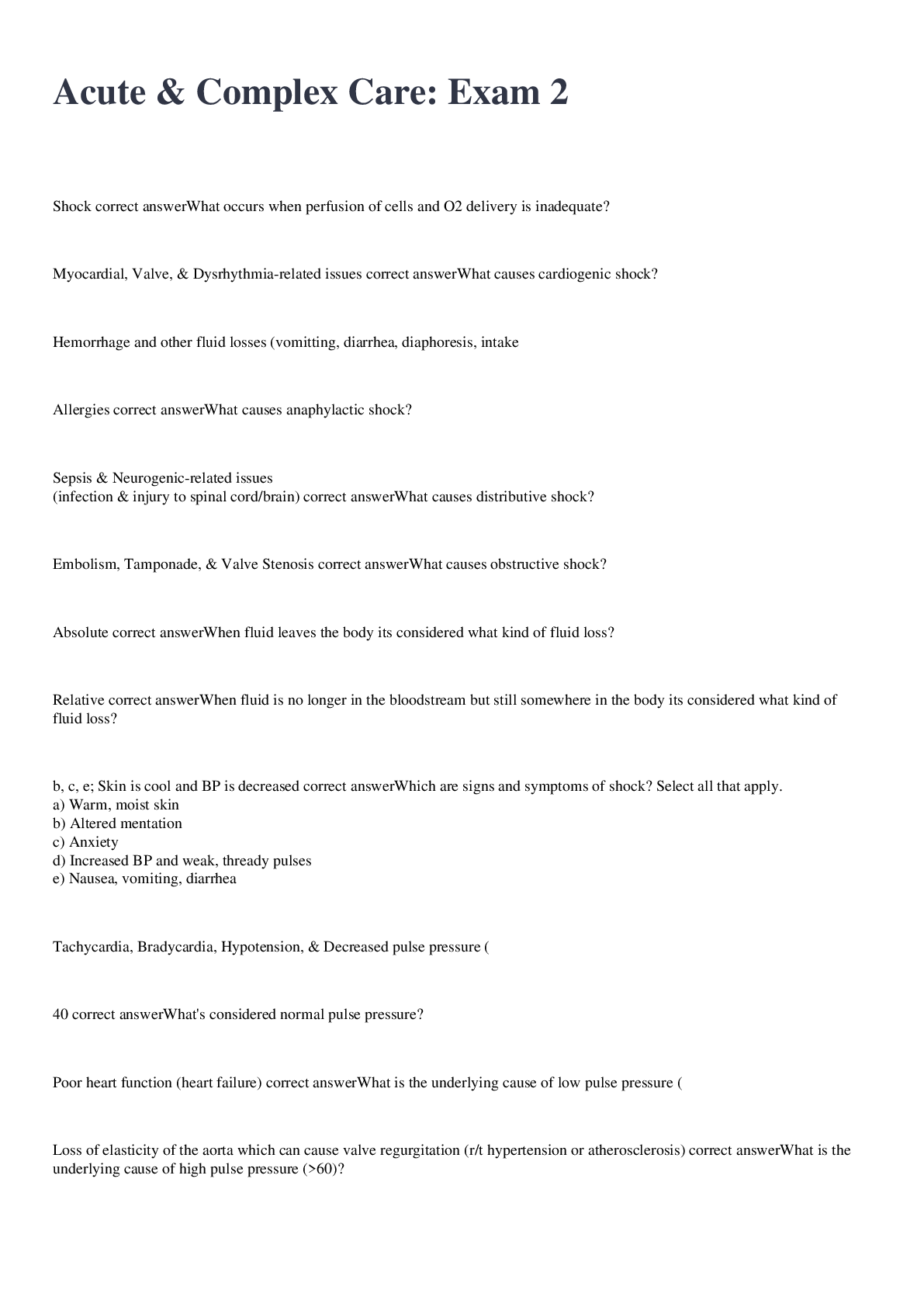
Acute & Complex Care: Exam 2 2022/2023
Document Content and Description Below
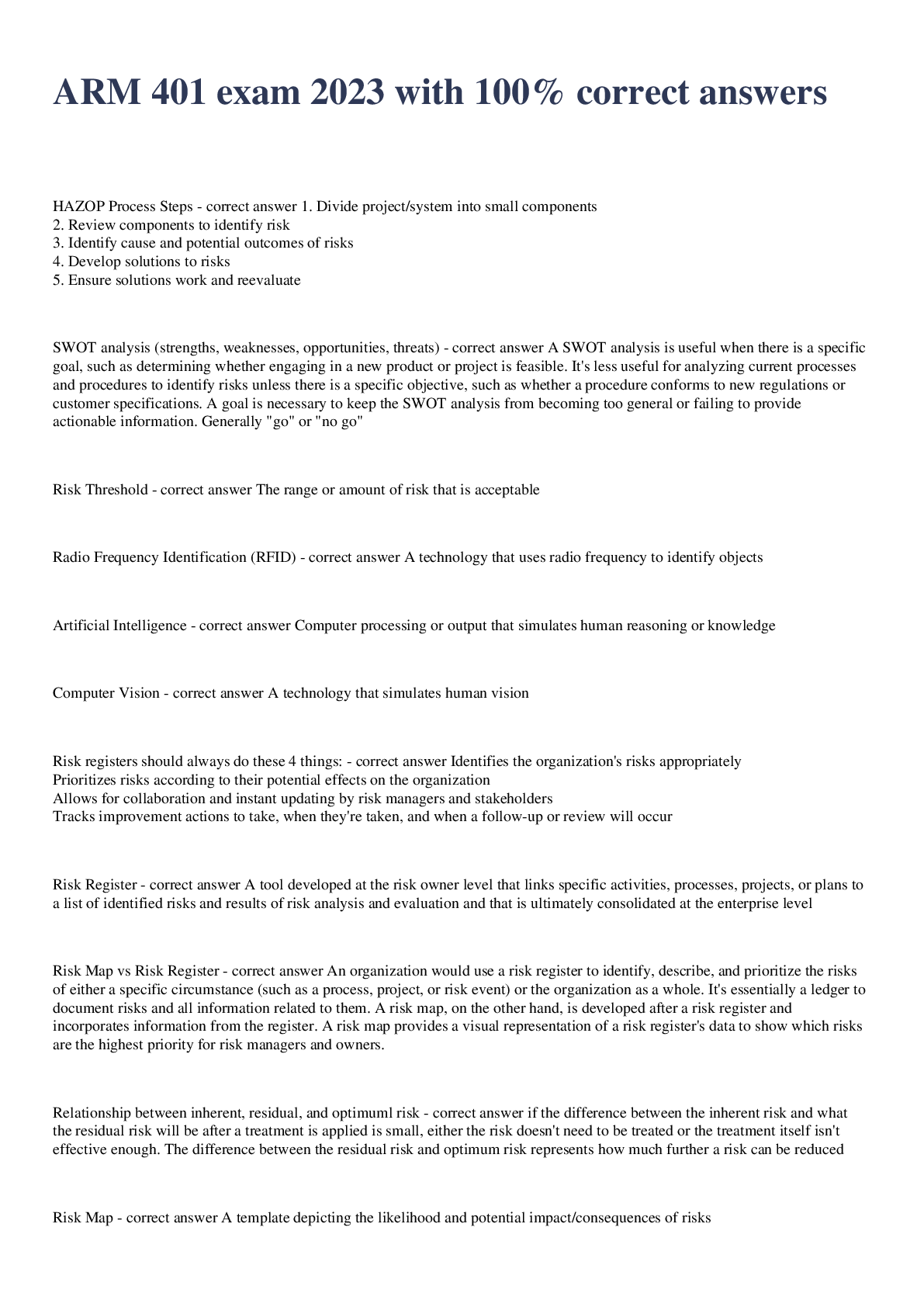
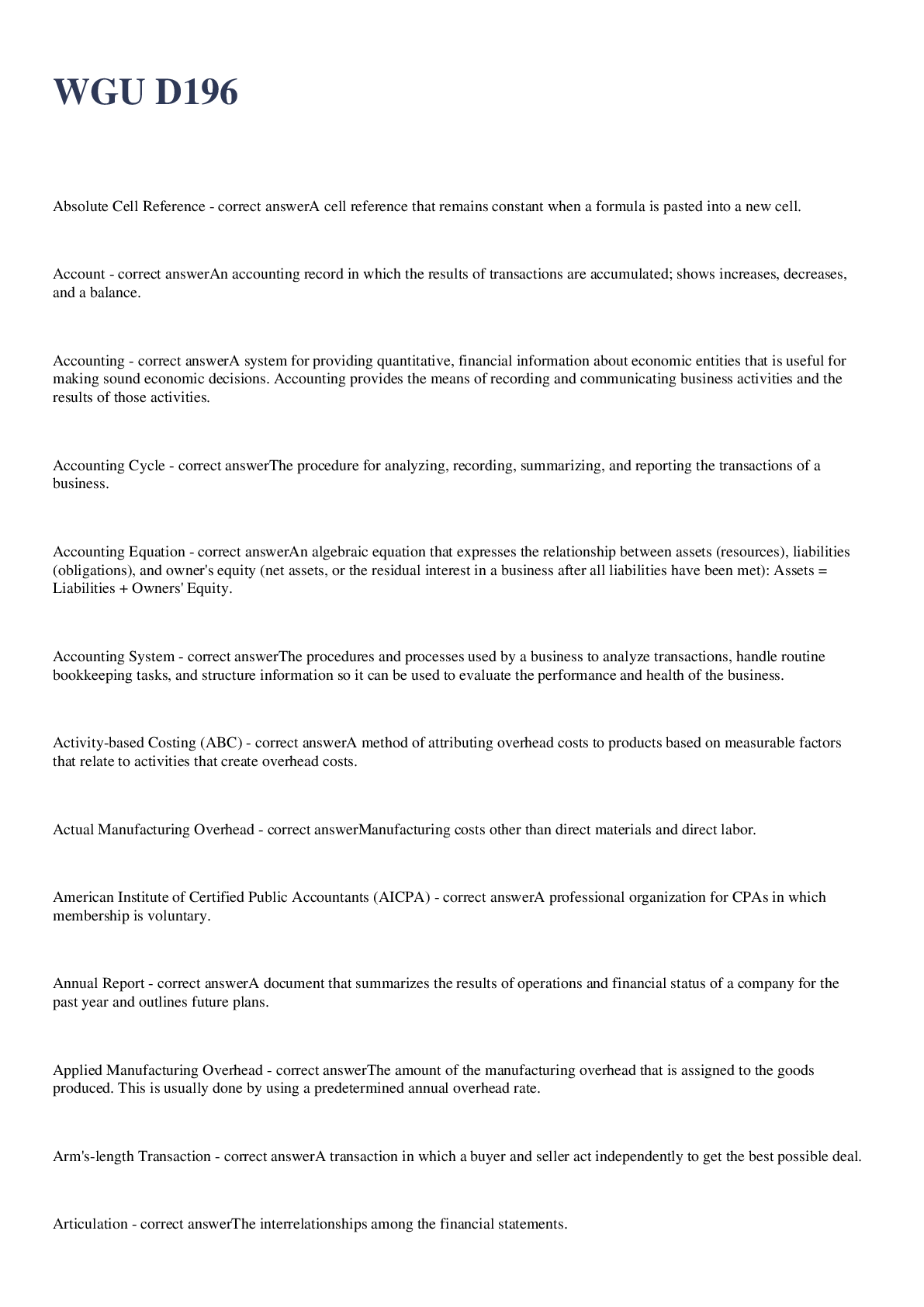
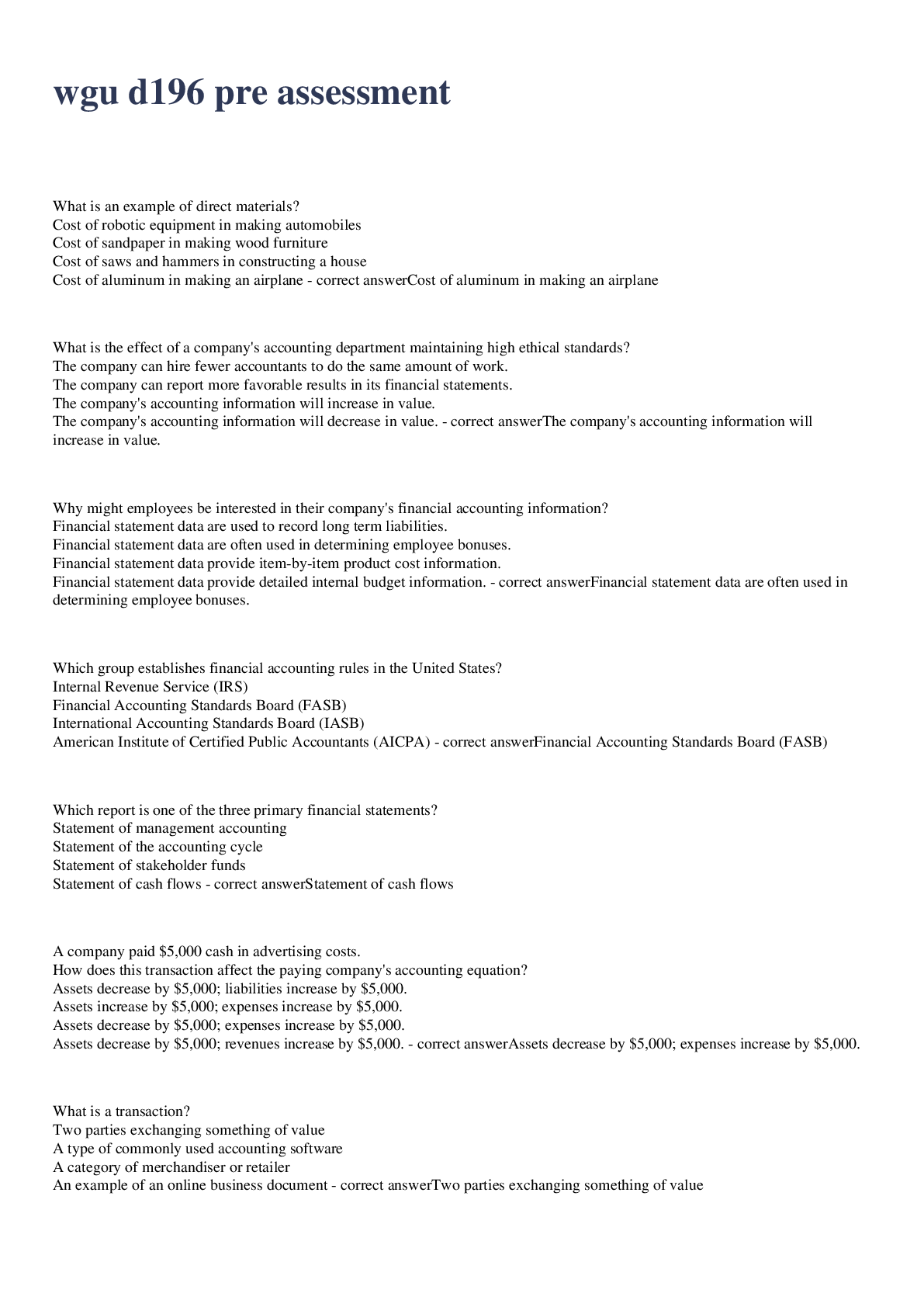
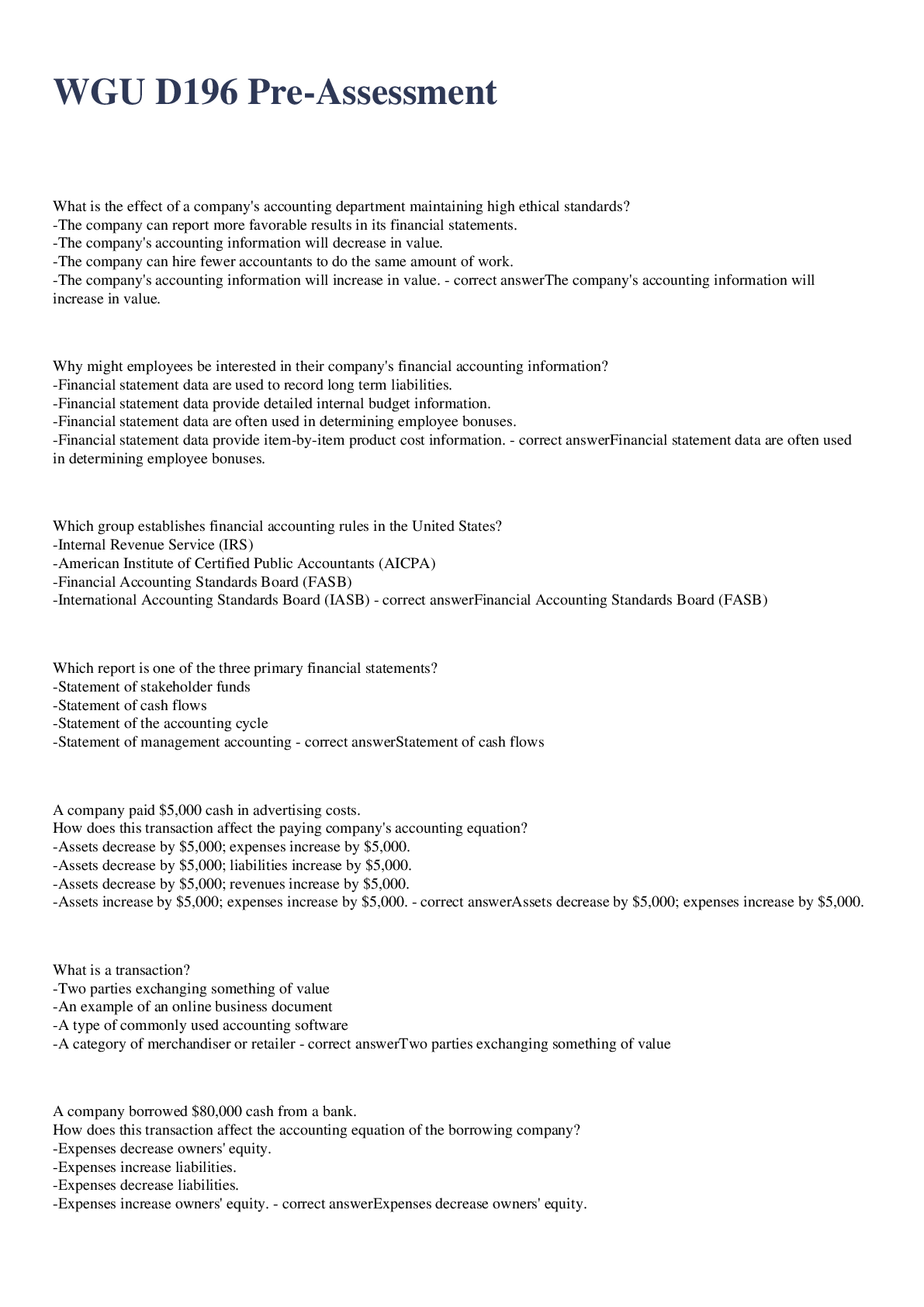
Shock correct answerWhat occurs when perfusion of cells and O2 delivery is inadequate? Myocardial, Valve, & Dysrhythmia-related issues correct answerWhat causes cardiogenic shock? Hemorrhage and ... other fluid losses (vomitting, diarrhea, diaphoresis, intake<output, third spacing) correct answerWhat causes hypovolemic shock? Allergies correct answerWhat causes anaphylactic shock? Sepsis & Neurogenic-related issues (infection & injury to spinal cord/brain) correct answerWhat causes distributive shock? Embolism, Tamponade, & Valve Stenosis correct answerWhat causes obstructive shock? Absolute correct answerWhen fluid leaves the body its considered what kind of fluid loss? Relative correct answerWhen fluid is no longer in the bloodstream but still somewhere in the body its considered what kind of fluid loss? b, c, e; Skin is cool and BP is decreased correct answerWhich are signs and symptoms of shock? Select all that apply. a) Warm, moist skin b) Altered mentation c) Anxiety d) Increased BP and weak, thready pulses e) Nausea, vomiting, diarrhea Tachycardia, Bradycardia, Hypotension, & Decreased pulse pressure (<40) correct answerWhen an individual is in shock, what changes in their vital signs will occur? 40 correct answerWhat's considered normal pulse pressure? Poor heart function (heart failure) correct answerWhat is the underlying cause of low pulse pressure (<40)? Loss of elasticity of the aorta which can cause valve regurgitation (r/t hypertension or atherosclerosis) correct answerWhat is the underlying cause of high pulse pressure (>60)? ABCs: Open airway (A), Check O2 sats for >95% (B), Assess carotid or femoral pulse (C) correct answerHow would you perform shock assessment (ABCs)? Weight change, lung sounds (crackles), I & O's correct answerHow do you assess if shock is related to a "volume problem"? 1) ABC's 2) Find out if related to rate, pump, volume, or vascular resistance 3) Identify and treat underlying cause of shock correct answerHow should you prioritize your actions for an individual with shock? Preload correct answerWhat is the term for the amount of fiber stretch at the end of diastole? Afterload (min. 60 mmHg) correct answerWhat is the term for the pressure the ventricle must generate for contraction and ejection of blood to occur? (*Vascular Resistance*) *Heart rate*, blood volume, atrial kick, and sympathetic stimulation (RA/CVP, PCW, PAD) correct answerWhat influences the preload? True correct answerT/F: The heart rate has the greatest influence on preload. Obstruction to blood flow, elasticity and diameter (SVR & PVR) correct answerWhat influences the afterload? A lab value of the difference between the concentration of serum cations (Na+, K+) and anions (HCO3-, Cl-); A marker for acid-base balance and indicator of perfusion correct answerWhat is "anion gap'? Ketosis, Lactic Acidosis, Metabolic Acidosis correct answerAn increased anion gap (>16 mEg/L) indicates what? Assess if the patient's increased HR is a compensatory mechanism correct answerYour patient is showing signs of shock. Your assessment revealed an increased heart rate, indicating the shock is due to a "rate problem". What should you do next? False; Stress increases glucose level correct answerT/F: All stress hormones cause decreased glucose level. Complete Open Fracture; the bone is showing through the skin correct answerA patient comes into the ER after slipping on ice. A broken bone in his forearm is protruding through his skin. How would you classify this fracture? -Displacement -Blood supply to area -Immobilization -Internal fixation devices -Infection -Poor nutrition -Age -Smoking correct answerWhat are the eight factors that influence fracture healing? -Reduction -Immobilization -Restoration (of normal function) correct answerWhat are the three goals of fracture treatment? False; Closed reduction is nonsurgical correct answerT/F: Closed reduction is a surgical, manual realignment of bone. After correct answerDoes immobilization happen before or after a closed reduction of a fracture? True correct answerT/F: An individual who has open reduction is at risk for infection. Fracture Reduction (a cast is applied afterward) correct answerWhich fracture treatment facilitates early ambulation? Cast correct answerWhich fracture treatment allows pt to perform many ADLs? Sling correct answerWhich fracture treatment is contraindicated with proximal humerus fracture? c) Fixation correct answerWhich fracture treatment utilizes metal pins and rods to compress the fracture fragments? a) Sling b) Cast c) Fixation d) All of the above ↑Protein (1g/kg) ↑Vitamins (B,C,D) ↑Calcium, Phosphor [Show More]
Last updated: 3 years ago
Preview 1 out of 13 pages
Buy this document to get the full access instantly
Instant Download Access after purchase
Buy NowInstant download
We Accept:

Reviews( 0 )
$9.00
Can't find what you want? Try our AI powered Search
Document information
Connected school, study & course
About the document
Uploaded On
Dec 02, 2022
Number of pages
13
Written in
All

Additional information
This document has been written for:
Uploaded
Dec 02, 2022
Downloads
0
Views
41