Pathophysiology  >  STUDY GUIDE  >  6220 ADVANCED PATHO STUDY GUIDE FINAL (All)

6220 ADVANCED PATHO STUDY GUIDE FINAL

Document Content and Description Below

6220 ADVANCED PATHO STUDY GUIDE FINAL SPRING SEMTER 2020 INSTRUCTOR: DR. CHERYL TOULOUSE SESSION 7: INTEGUMENTARY SYSTEM Describe normal skin and its function a. Skin is an organ b. Three layers ... i. Epidermis- composed of keratinocytes and scattered melanocytes 1. Epidermis undergoes keratinization, second most important protective mechanism 2. Epidermal cells produce keratins which are cytoskeletal proteins that are highly resistant to mechanical and chemical injury a. The keratin layer represents the final stage of epidermal cell differentiation b. Varies in thickness on diff anatomic sites c. Most prominent on the palms and soles 3. Keratinized epidermis provides limited protection against sunlight by preventing the penetration of light through the skin a. Keratinocytes are the principal cells of the epidermis i. They are aided by melanocytes, the pigment-producing cells 1. Located in basal layer 2. Produce a brown pigment packed into membrane-bound cytoplasmic 1 bodies(melanosomes) and transferred through the cytoplasmic process into keratinocytes 3. This transfer of pigment is was causes browning of skin when exposed to sunlight b. Keratinocytes with melanin are more resistant to UV light and protect the body against the sunlight more efficiently than non pigmented keratinocytes ii. Dermis-composed of connective tissue, blood vessels, nerves, and hair follicles, and skin adnexal glands, sebaceous glands (oil glandsconnected to hair follicles and secrete sebum made of fatty acids and waxy esters, lubricates skin, softens hair shaft, and is slightly acidic helps deter pathogens), sweat gland, iii. Subcutis/hypodermis- composed of fat tissue *Describe various skin infections* (on Final Study Guide) 1. Bacterial Infections a. Impetigo i. Caused by streptococcus pyogenes or staph. Aureus ii. Most often found on face of small children- the mouth and nose iii. Characterized by superficial pustules that rupture, leaving honey-colored scabs 1. “Pustule”= vesicle filled with pus 2. Yellow-honey looking crusting blisters containing pus 3. Skin lesions are itchy iv. Highly contagious; but responds w [Show More]

Last updated: 3 years ago

Preview 1 out of 127 pages

Buy Now

Instant download

We Accept:

Payment methods accepted on Scholarfriends (We Accept)
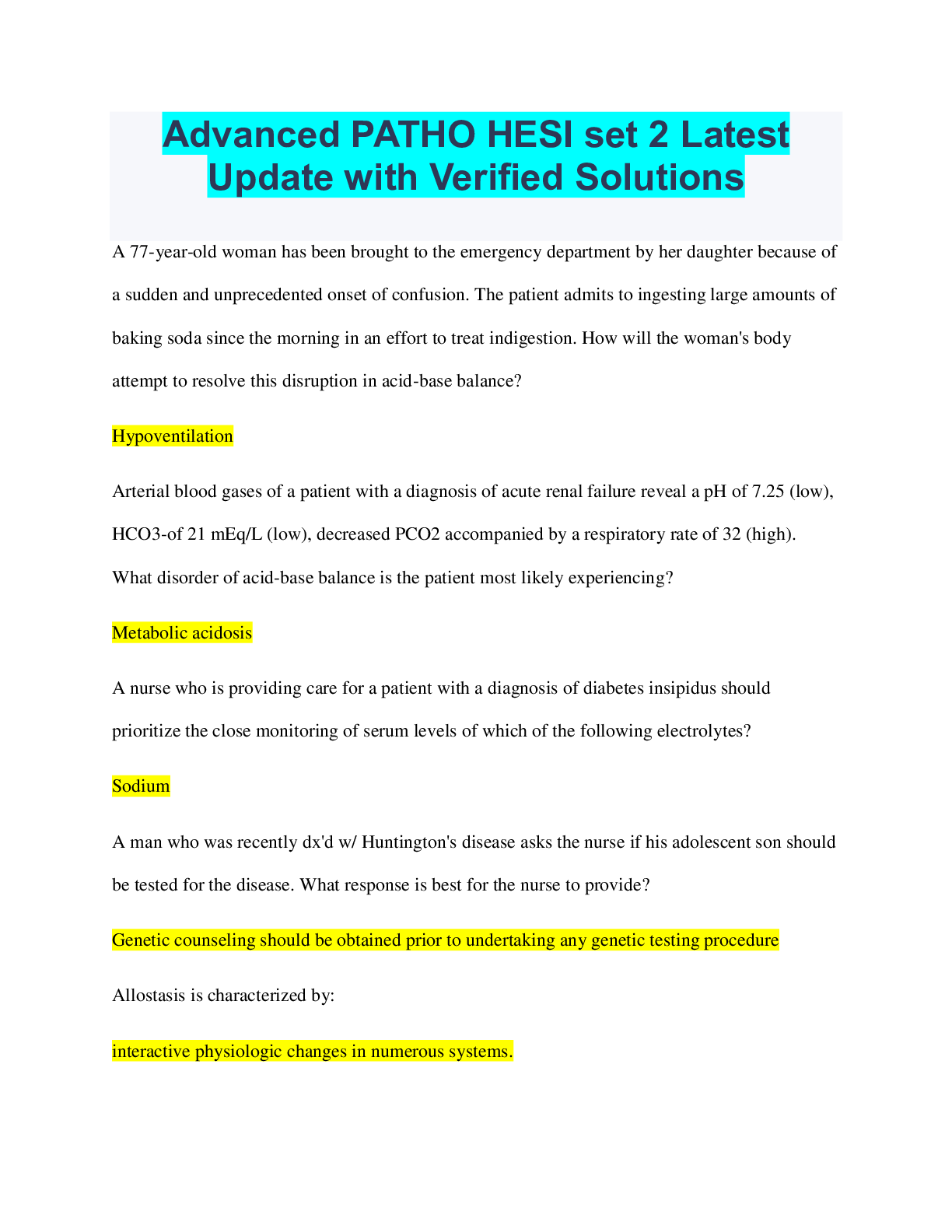
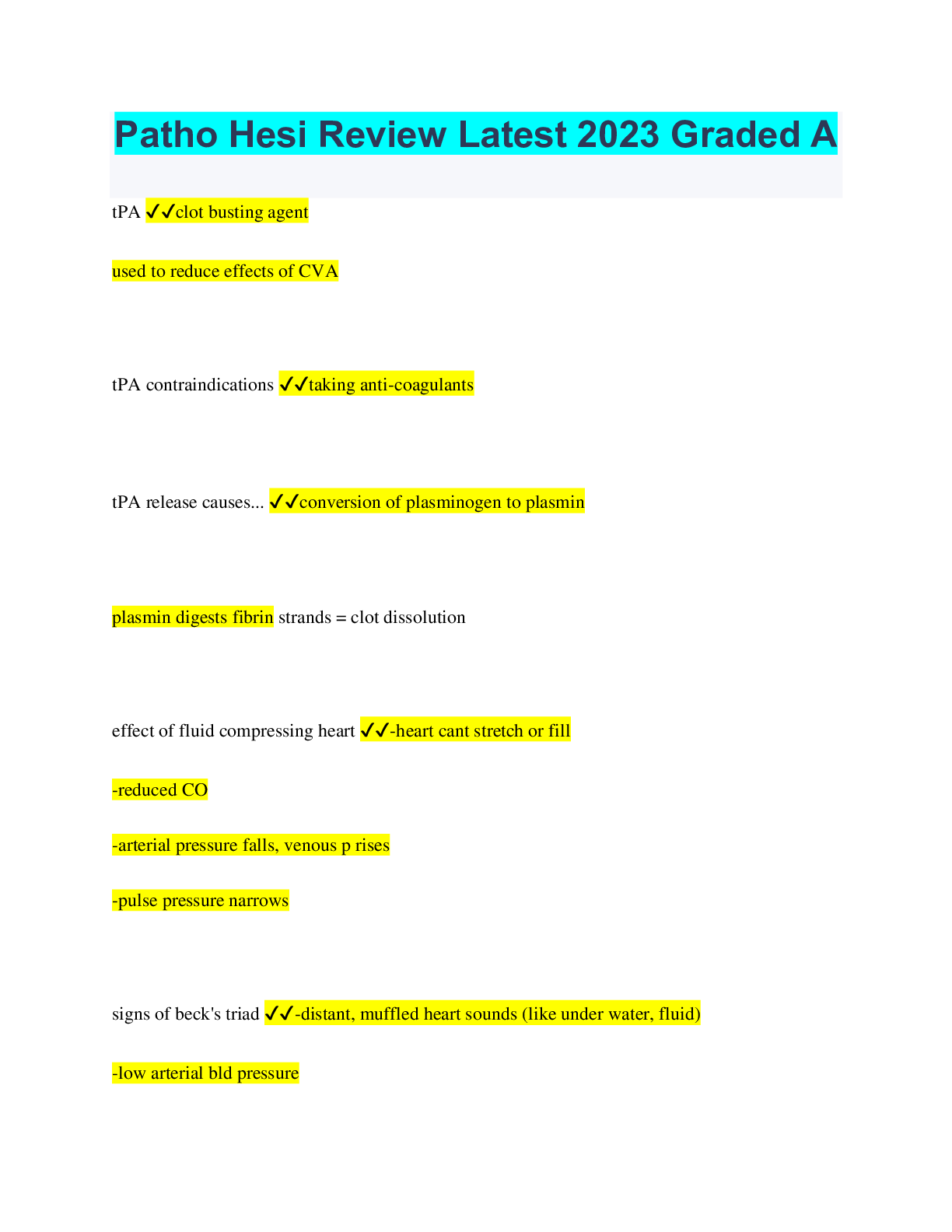
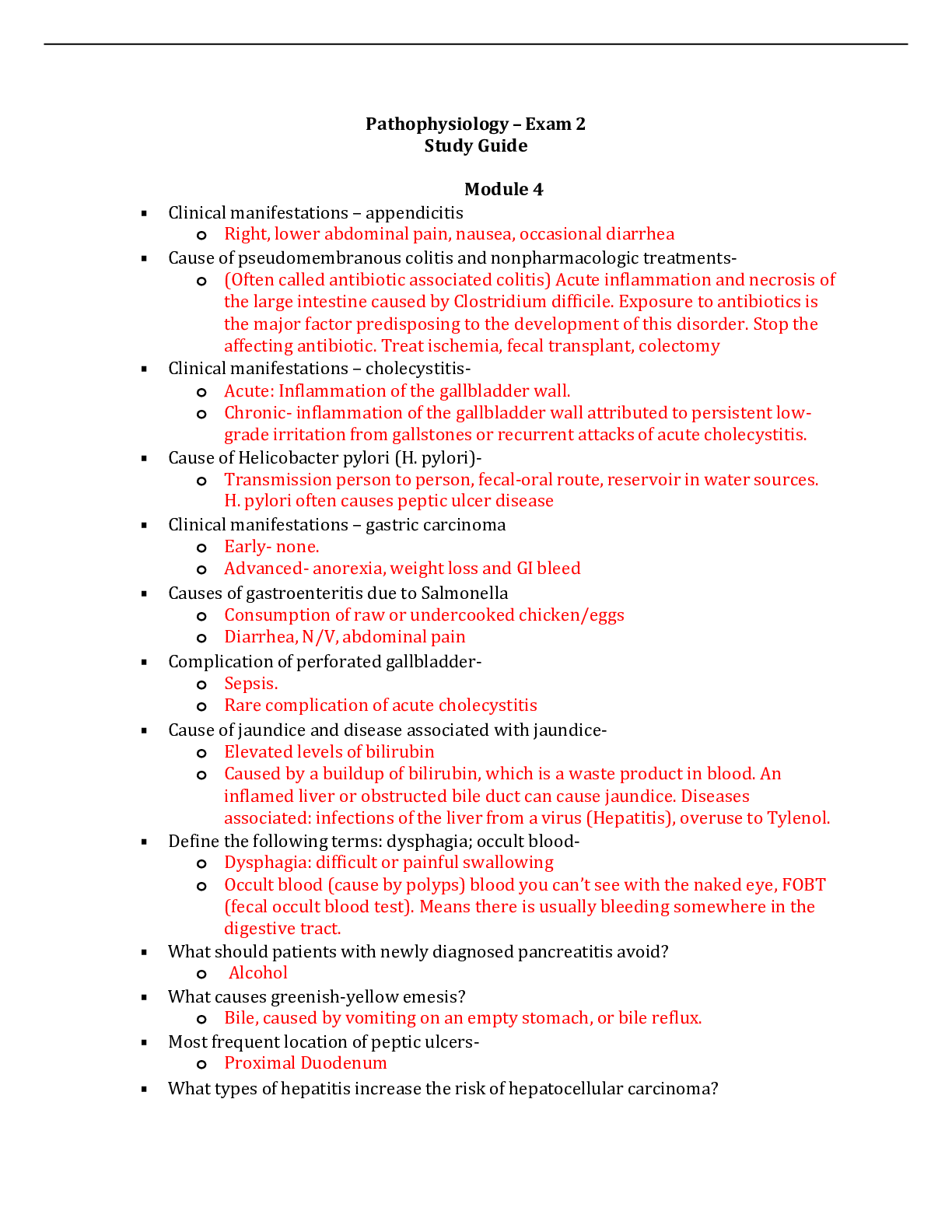
Preview image of 6220 ADVANCED PATHO STUDY GUIDE FINAL document

Buy this document to get the full access instantly

Instant Download Access after purchase

Buy Now

Instant download

We Accept:

Payment methods accepted on Scholarfriends (We Accept)

Reviews( 0 )

$13.50

Buy Now

We Accept:

Payment methods accepted on Scholarfriends (We Accept)

Instant download

Can't find what you want? Try our AI powered Search

175
0

Document information


Connected school, study & course


About the document


Uploaded On

Oct 17, 2022

Number of pages

127

Written in

All

Seller


Profile illustration for High Grade
High Grade

Member since 5 years

1 Documents Sold

Additional information

This document has been written for:

Uploaded

Oct 17, 2022

Downloads

 0

Views

 175

Document Keyword Tags

Recommended For You

Get more on STUDY GUIDE »

$13.50
What is Scholarfriends

Scholarfriends.com Online Platform by Browsegrades Inc. 651N South Broad St, Middletown DE. United States.

We are here to help

We're available through e-mail, Twitter, Facebook, and live chat.
 FAQ
 Questions? Leave a message!

Follow us on
 Twitter

Copyright © Scholarfriends · High quality services·