Mark Klimek Notes NCLEX.pdf
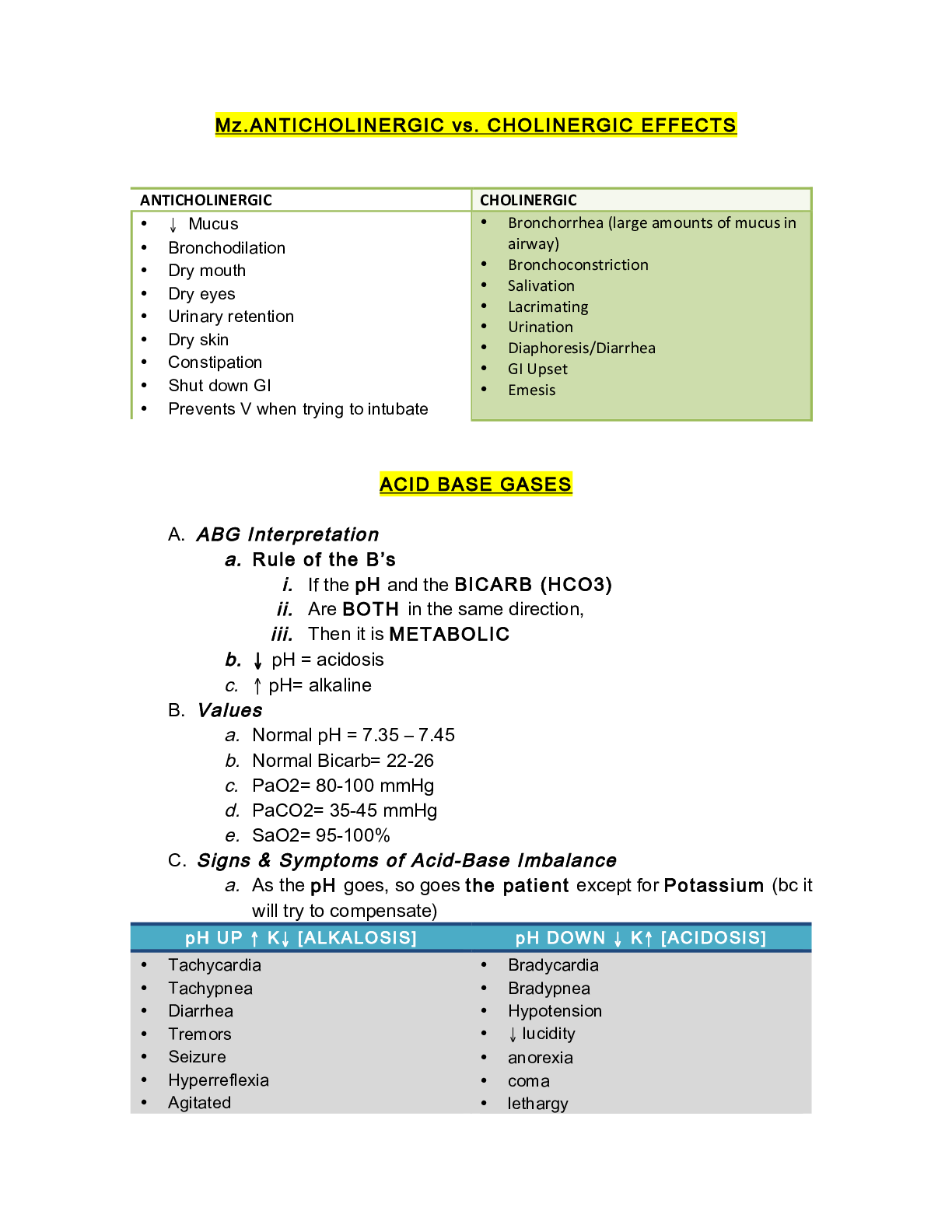
A. ABG Interpretation
a. Rule of the B’s
i. If the pH and the BICARB (HCO3)
ii. Are BOTH in the same direction,
iii. Then it is METABOLIC
b. ↓ pH = acidosis
c. ↑ pH= alkaline
B. Values
...
Mark Klimek Notes NCLEX.pdf
A. ABG Interpretation
a. Rule of the B’s
i. If the pH and the BICARB (HCO3)
ii. Are BOTH in the same direction,
iii. Then it is METABOLIC
b. ↓ pH = acidosis
c. ↑ pH= alkaline
B. Values
a. Normal pH = 7.35 – 7.45
b. Normal Bicarb= 22-26
c. PaO2= 80-100 mmHg
d. PaCO2= 35-45 mmHg
e. SaO2= 95-100%
C. Signs & Symptoms of Acid-Base Imbalance
a. As the pH goes, so goes the patient except for Potassium (bc it
will try to compensate)
pH UP ↑ K↓ [ALKALOSIS] pH DOWN ↓ K↑ [ACIDOSIS]
• Tachycardia
• Tachypnea
• Diarrhea
• Tremors
• Seizure
• Hyperreflexia
• Agitated
• Bradycardia
• Bradypnea
• Hypotension
• ↓ lucidity
• anorexia
• coma
• lethargy
• Borborygmi (↑ bowel sounds)
• Hypertension
• Palpitations
• Tetany
• Anxiety/Panic
• Poly
• cardia arrest
• suppressed, decreased, falling
D. Causes of Acid-Base Imbalance
a. First ask, “Is it Lung?”
i. If YES-! then it is Respiratory
b. Then ask yourself:
i. Are they Overventilating or Underventilating?
1. If Overventilating ! pick Alkalosis
2. If Underventilating ! pick Acidosis
c. If not lung, then it’s Metabolic
i. If the patient has prolonged gastric vomiting or suction,
pick Metabolic Alkalosis
ii. For everything else that isn’t lung, pick Metabolic
Acidosis
1. Also, if you don’t know what to pick choose
Metabolic Acidosis
VENTILATOR ALARMS
1. High Pressure Alarms are triggered by ↑ resistance to air flow and can
be caused by obstructions of three types:
a. Kinked Tube
i. NRS ACTION: Unkink it
b. Water in tubing (caused by condensation)
i. NRS ACTION: Empty it/Remove H2O
c. Mucus in airway
i. NRS ACTION: Turn, C&DB; only use suction if C&DB
fails, as a last resort
2. Low Pressure Alarms are triggered by ↓ resistance to air flow and can
be caused by disconnections of the:
a. Tubing
i. NRS ACTION: Pay attention to where tubing
is…(contamination)
ii. If on floor, change out
iii. If on chest, clean with alcohol then put back on
3. Respiratory Alkalosis (Overventilation) means ventilator settings
may be too HIGH.
4. Respiratory Acidosis (Underventilation) means ventilator settings
may be too LOW.
5. To “Wean” ! To gra
[Show More]