**Read This First** - This Note-Taking Guide is meant to be used as you go through each of the Units in Biochemistry. It
is only effective when used with course materials, including all of the Essential Reading material
...
**Read This First** - This Note-Taking Guide is meant to be used as you go through each of the Units in Biochemistry. It
is only effective when used with course materials, including all of the Essential Reading material in Campbell Biology (�),
the course videos (�) and podcasts (�), the Learning Check questions, and the Unit Quizzes. We highly recommend
that you print out this guide and use it to make your own notes on the course by writing the vocabulary definitions and
answering the questions in your own words. We also recommend that you review your notes every day for all Units to
keep the course material fresh in your mind even as you learn new material in the course.
If there are definitions or questions you are unable to answer on your own, please click here to discover multiple
options for working with a Course Instructor. We would love to help you succeed in Biochemistry! {{click here if
you’d like a PDF version}}
***Unit 2: Amino Acids, Peptide Bonds, and Protein Structure***
Page Section Vocabulary Key Questions - You should be able to answer these upon completion of the
Unit/Section. Please add your own notes as necessary.
12
Amino Acids, Peptide
Bonds, and Protein
Structure
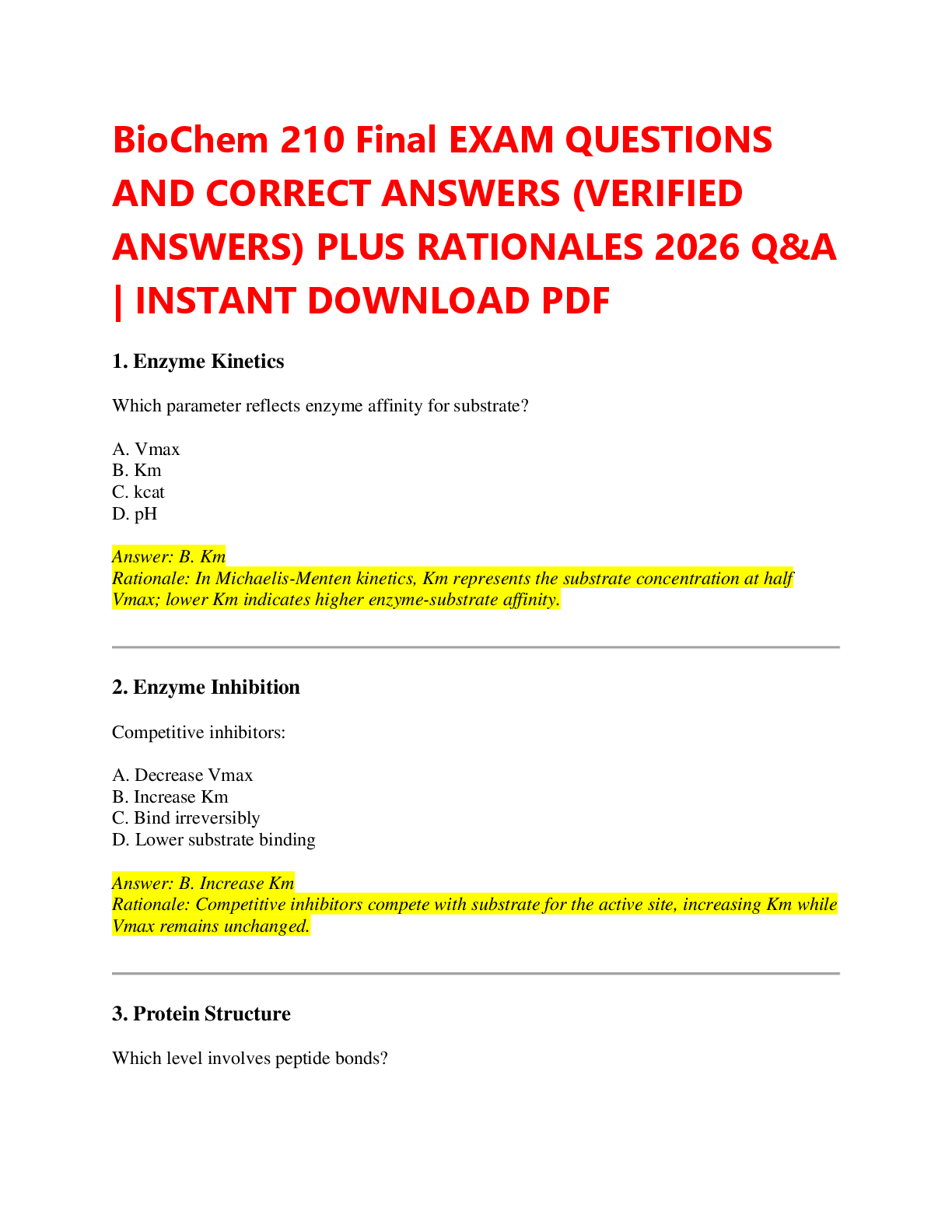
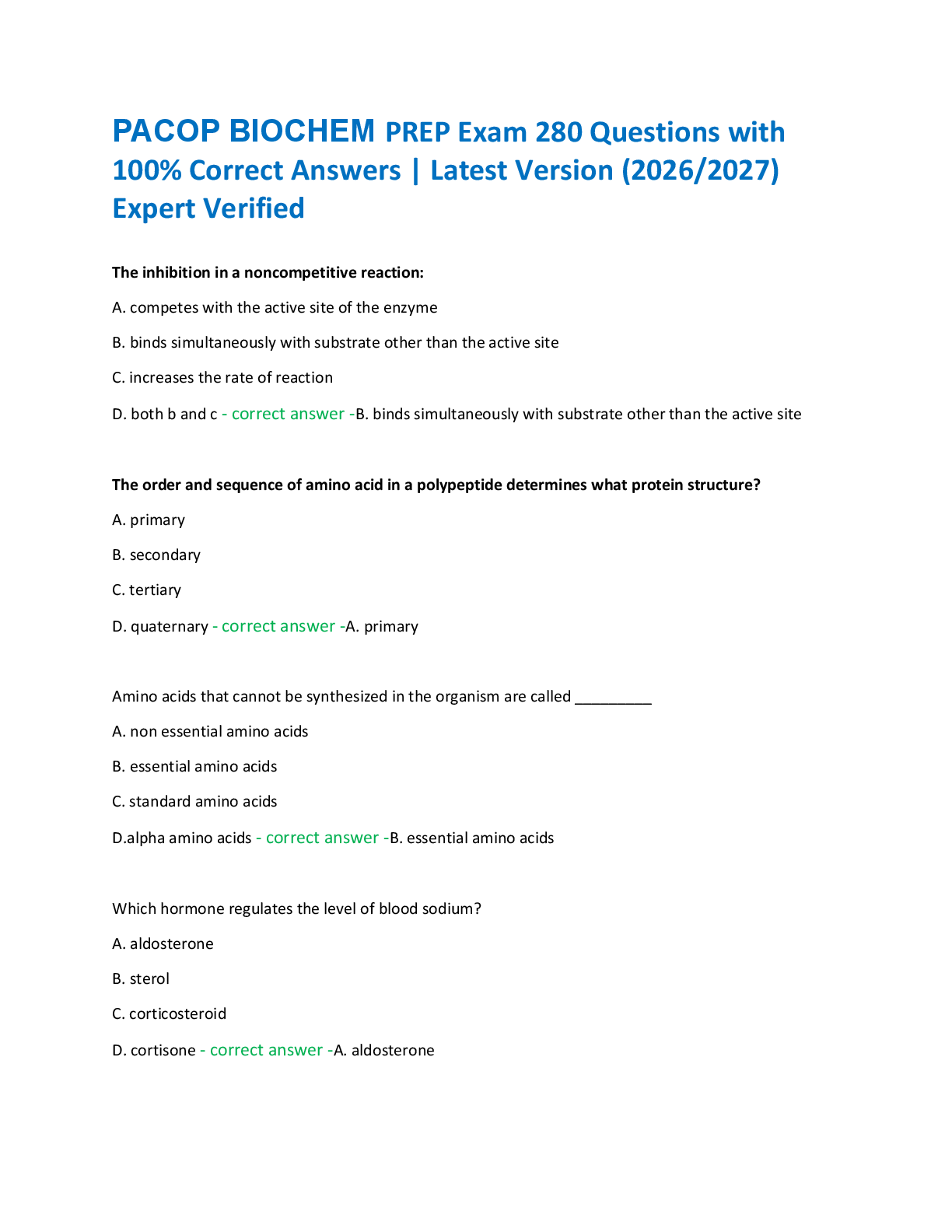
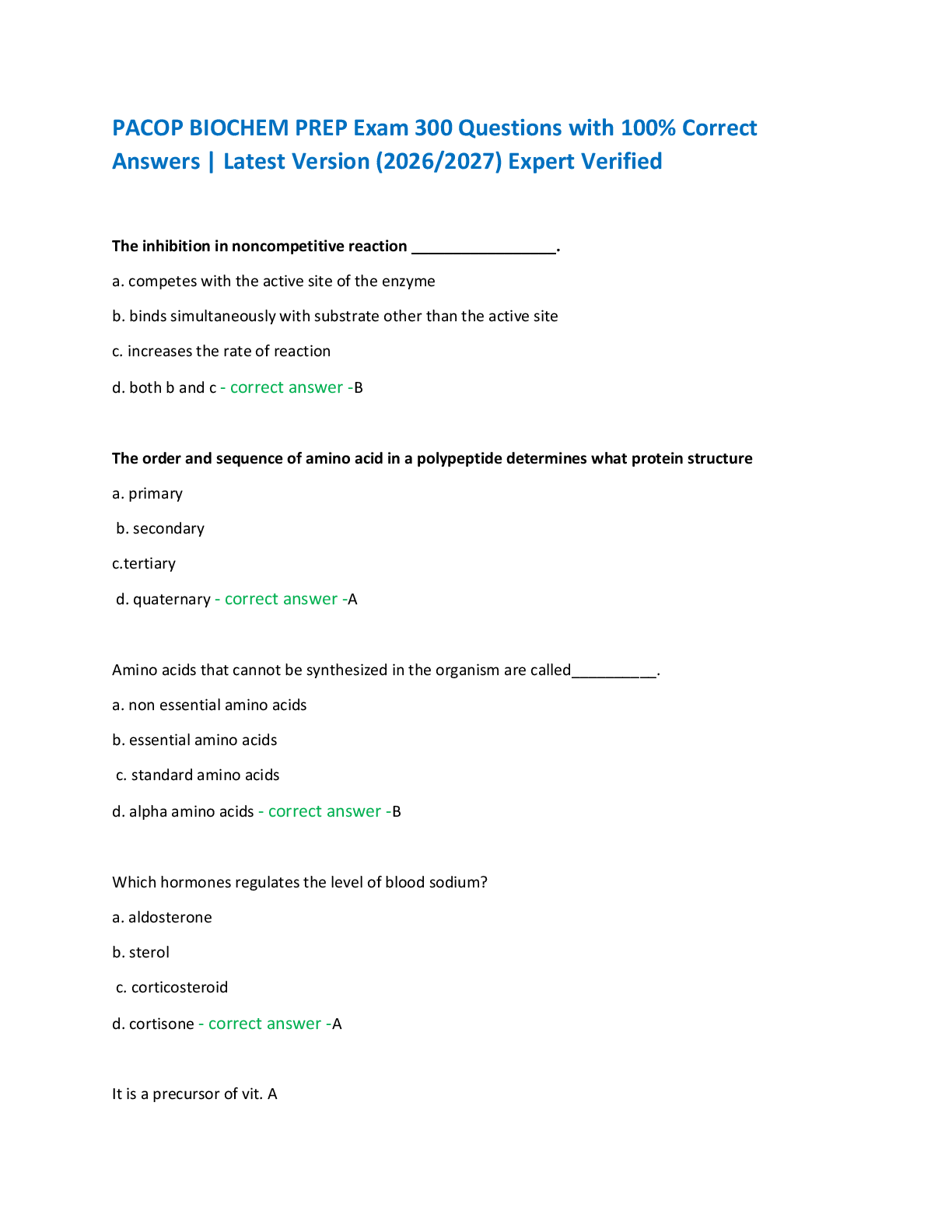
Proteins are all constructed from the same set of 20 amino acids, linked
in unbranched polymers. The bond between amino acids is called
a peptide bond, so a polymer of amino acids is called a polypeptide.
A protein is a biologically functional molecule made up of one or more
polypeptides, each folded and coiled into a specific three-dimensional
structure.
13 2.1 Amino Acids: The
Building Blocks of Proteins
14
�
�
Subtopic: Chemical
Elements, Atoms, and
Bonds—Optional Review
Electrons
Energy
Covalent bonds
Biochemistry Note-Taking Guide
Biochemistry Note-Taking Guide page 2
Ionic bonds
Hydrogen bonds
15
�
�
Subtopic: Amino Acid
Structure and Chemical
Properties
Amino
Carboxyl
Hydrophobic
Hydrophilic
Disulfide bonds
Zwitterions
- What is the basic structure of an amino acid? List the 4 groups and describe what
they look like.
An amino acid is an organic molecule with both an amino group and a carboxyl group.
At the center of the amino acid is an asymmetric carbon atom called the alpha carbon.
The R group, also called the side chain, differs with each amino acid
- How do you identify the 3 different types of side chains: non-polar/hydrophobic, polar,
and charged?
Hydrophobic has C atom and is not charged (found in protein interior)
Polar has S, N, or O atom and is not charged (found in protein exterior)
Charged are positively or negatively charged (found in protein exterior)
- What kind of bonds do each of the 3 different types of side chains make?
Hydrophobic have Hydrophobic bonds (weakest kind of bonds)
Polar have Disulfide (S-strongest kind of bonds) or Hydrogen (N, O) bonds
Charged have Ionic bonds
17 2.2 Levels of Protein
Structure
To become functional proteins, polymers of amino acids (polypeptides) must fold and
take on a particular shape.
Primary – backbone of peptide chain formed by peptide bonds during dehydration
reaction
Secondary – backbone atoms of peptide chain connected by hydrogen bonds forming
Alpha helix or Beta sheets
Tertiary – R group interactions via: hydrophobic interactions (weakest), hydrogen
bonds, ionic bonds or disulfide bonds (strongest)
Quaternary – R group interactions (like above), but with other polypeptide chains
18
�
�
Subtopic: Polypeptides and
Functional Proteins
Polypeptides
Peptide bonds
When two amino acids are positioned so that the carboxyl group of one is adjacent to
the amino group of the other, they can become joined by a dehydration reaction, with
the removal of a water molecule. The resulting covalent bond is called a peptide
Biochemistry Note-Taking Guide page 3
bond. This happens during the formation of primary structure in the peptide chain.
19
�
�
Subtopic: Levels of Protein
Structure
Dehydration
Hydrolysis
Alpha helix
Beta sheet
Denaturation
- Protein Folding: What are the 4 levels of protein structure? List distinguishing features
of each.
- What bonds make up each level of protein structure and how are they formed?
Primary – peptide bonds (a type of strong covalent bond) between monomer amino
acids
Secondary – hydrogen bonds between polypeptide backbone
Tertiary – bonds between R groups (hydrogen/ionic/disulfide bonds, hydrophobic/van
der Wals interactions)
Quaternary – same as tertiary, but between different polypeptide chains
20
�
�
Subtopic: A Protein's
Structure Depends on Its
Environment
Aggregation
- What environmental change breaks each type of bond?
Heat – 2nd,3rd,4th protein structure and its bonds
pH – hydrogen and ionic bonds (2nd, 3rd and 4th structure)
chemicals – hydrogen bonds (2nd, 3rd and 4th structure)
enzymes – peptide bonds (1st structure)
- What type of amino acid side chain leads to protein aggregation????
Hydrophobic acids tend to aggregate better then hydrophilic
Proteins that denature, tend to aggregate. These aggregated clumps can’t be broken
down and will continue to accumulate until disease occurs
22
�
�
2.3 Protein Function and
Disease
- How do environmental changes affect protein folding?
Reducing agent – disulfide bonds
pH change – Ionic, hydrogen bonds
Salt – Ionic, hydrogen bonds
Heat – hydrophobic interactions
How do mutations affect protein structure?
[Show More]









.png)
.png)
.png)


.png)
.png)
.png)

