Education > QUESTIONS & ANSWERS > SEJPME 1 Module 11 Test (All)
SEJPME 1 Module 11 Test
Document Content and Description Below
SEJPME 1 Module 11 Test
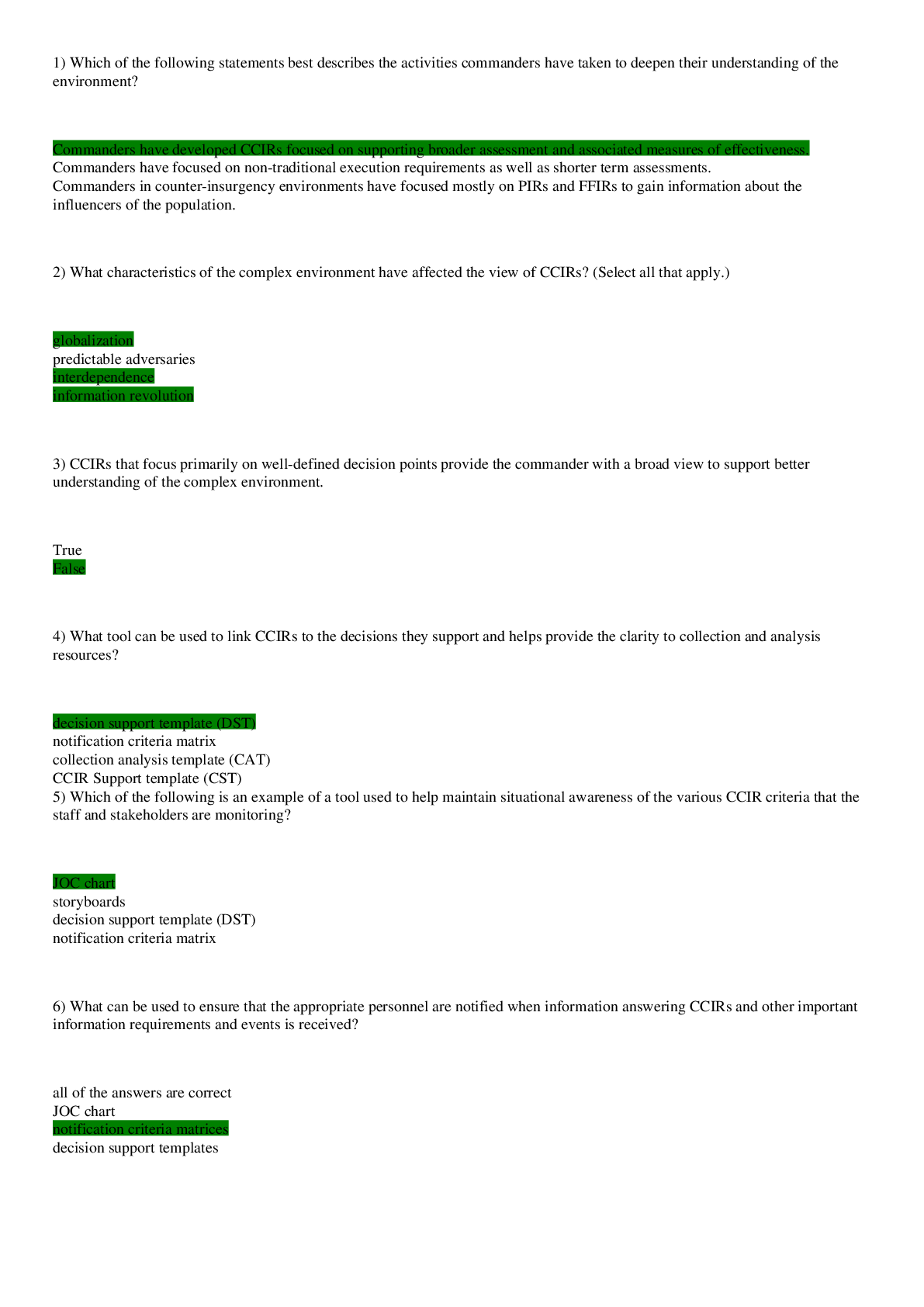
1) In the future, the U.S. military will conduct primarily unilateral operations, without the inclusion of mission partners. [objective192]
...
[Show More]
Last updated: 2 months ago
Preview 1 out of 1 pages
Instant download
Buy this document to get the full access instantly
Instant Download Access after purchase
Reviews( 0 )
$8.00
553
0
Document information
Connected school, study & course
About the document
Uploaded On
Feb 14, 2021
Number of pages
1
Written in
All

Additional information
This document has been written for:
Uploaded
Feb 14, 2021
Downloads
0
Views
553
Document Keyword Tags
Recommended For You
Get more on QUESTIONS & ANSWERS »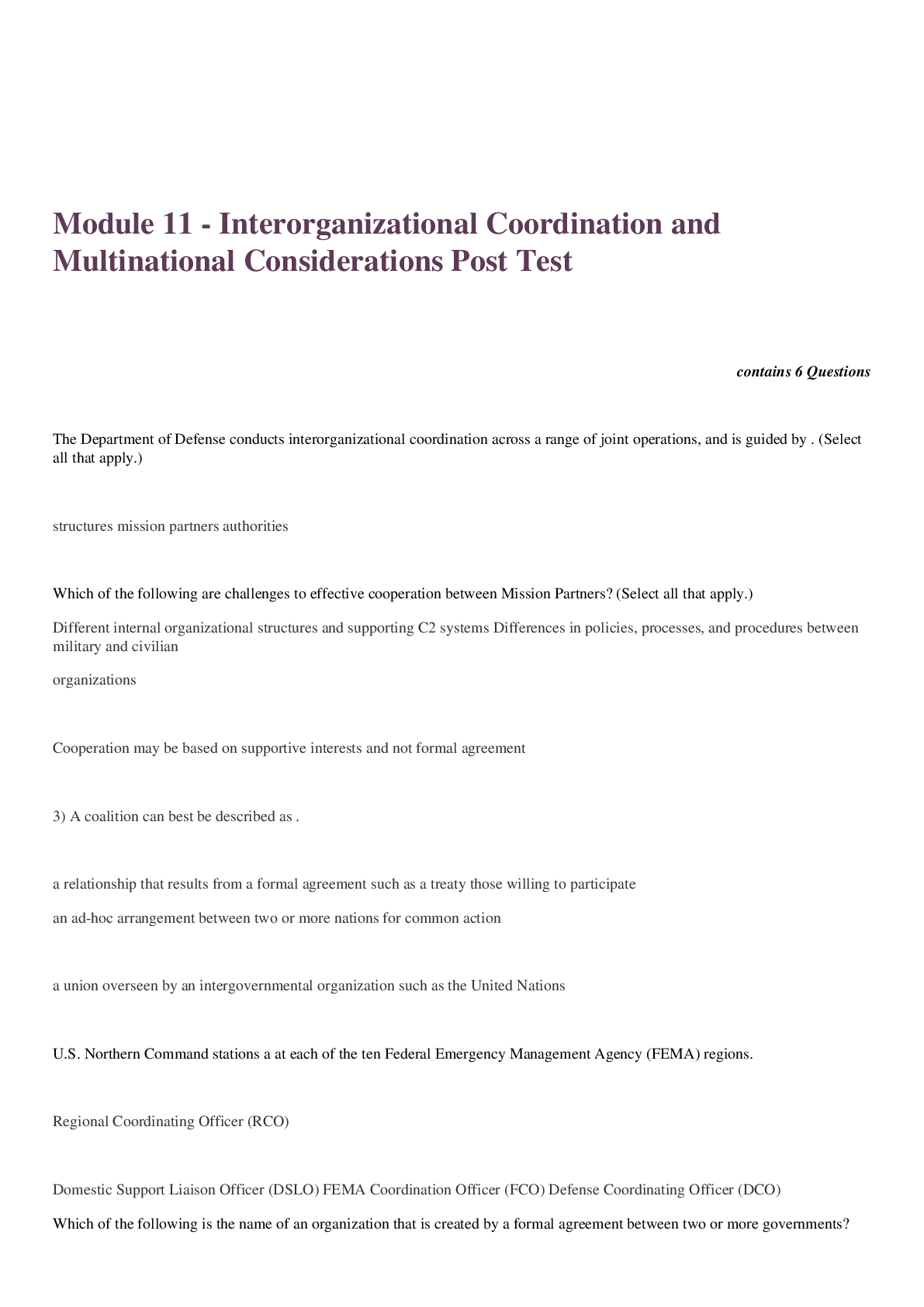
$9
2 Pages
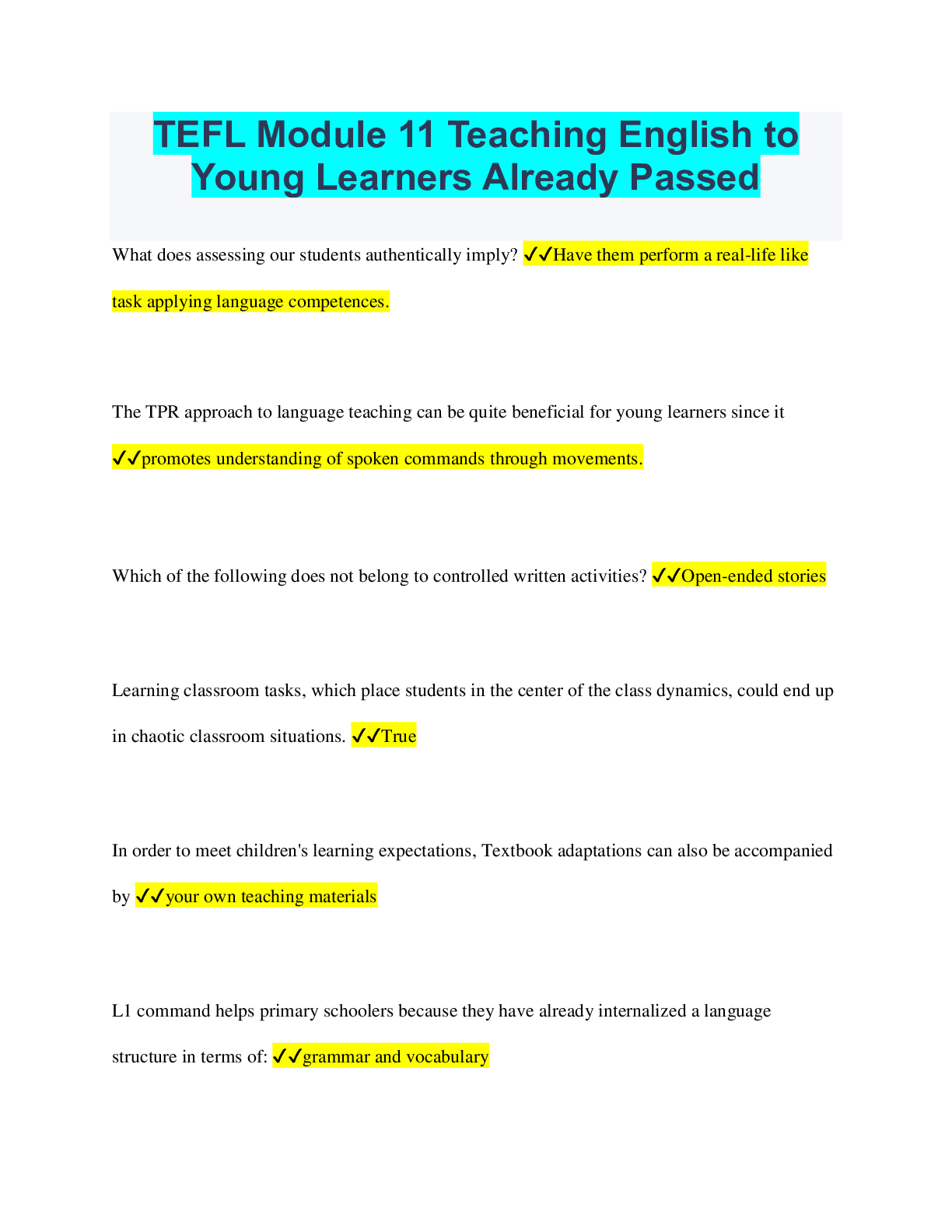
TEFL Module 11 Teaching English to Young Learners Already Pass...
$19
72 Pages
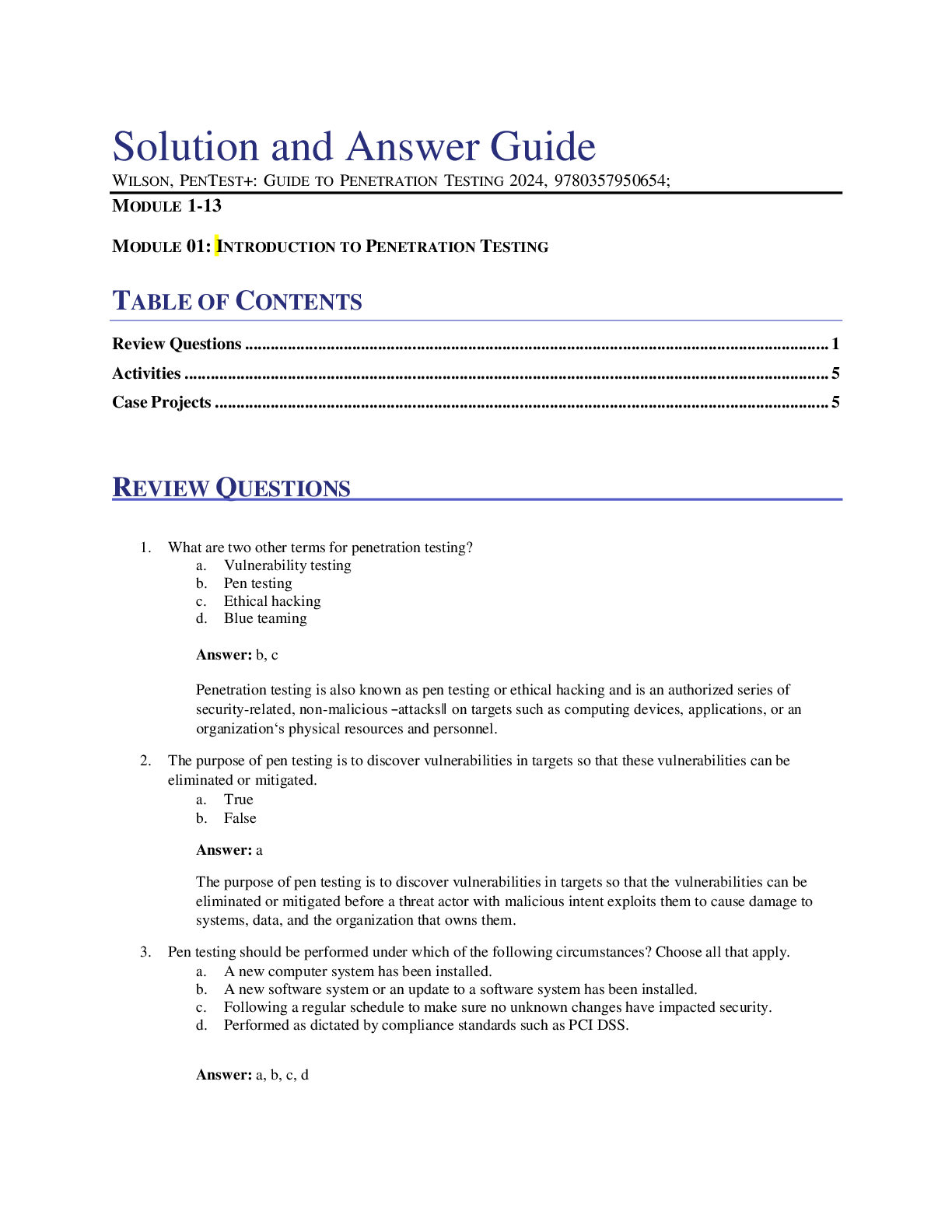
Solution Manual For CompTIA PenTest+ Guide to Penetration Test...

$16
17 Pages
BSC 2087C Module 11 Final Exam Updated | 75 Questions and Answ...

$16
53 Pages
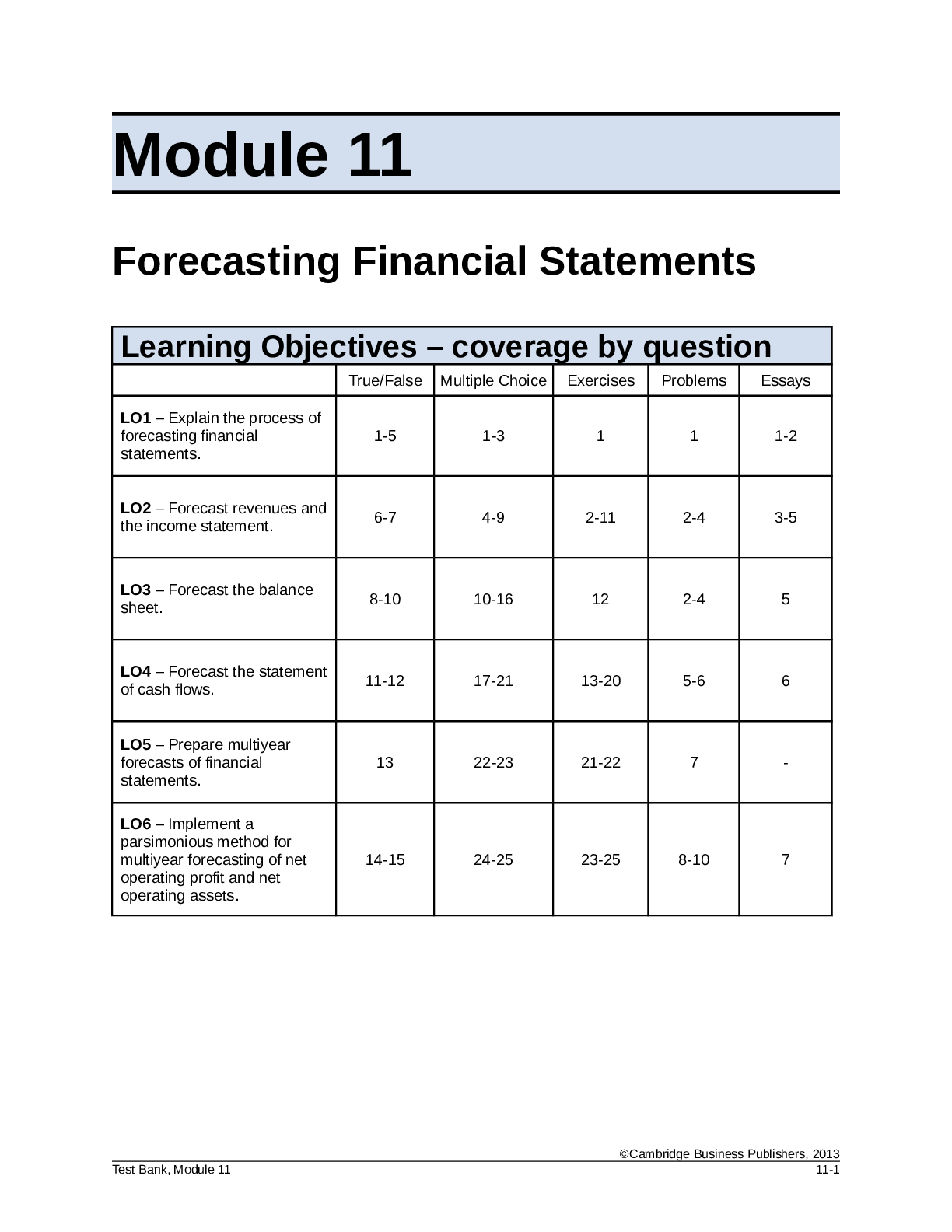
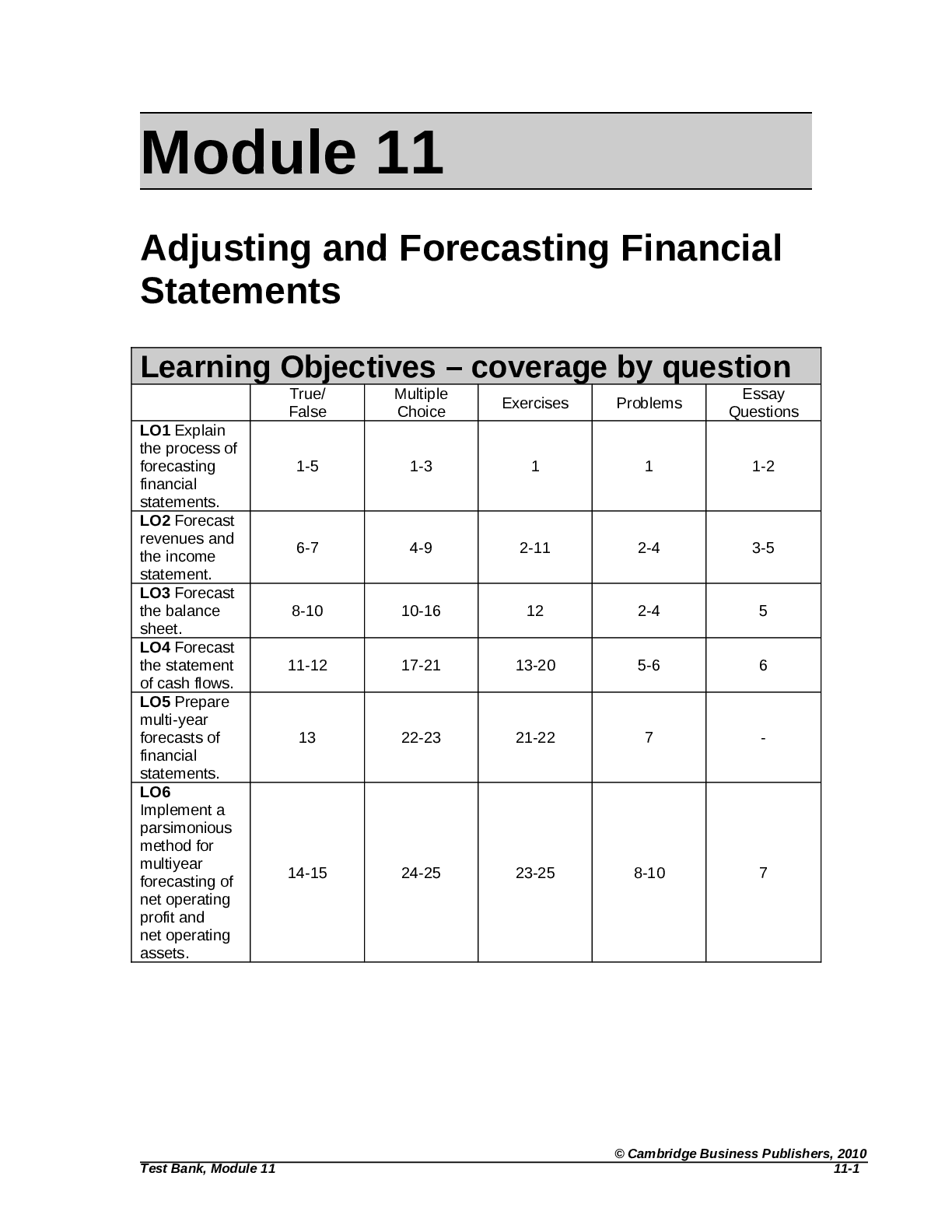
FSA3e Test Bank Mod11_091212. Module 11 Forecasting Financial...
$17
48 Pages
FAMBA4e TestBank Mod11_09 10 09. Module 11. Adjusting and Fore...

$13
10 Pages
BSC 2346 Module 11 Anatomy & Physiology I Final Exam | Questio...

$6
6 Pages
MA279/BSC2347 Section 09 Human Anatomy and Physiology II | Mod...

$7
6 Pages
MA279/BSC2347 Section 09 Human Anatomy and Physiology II | Mo...
.png)
$7.5
6 Pages
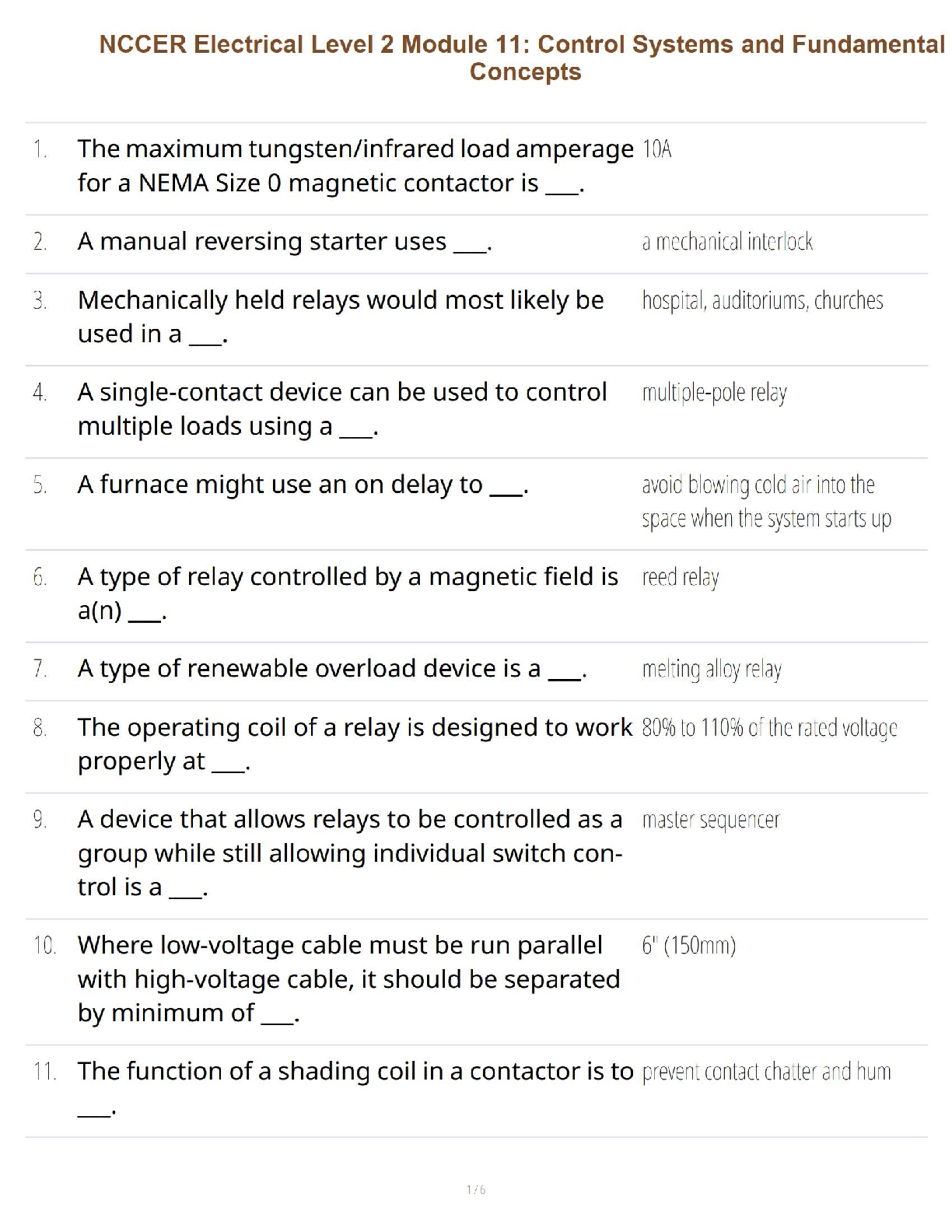
NCCER Electrical Level 2 Module 11: Control Systems and Fundam...
$7.5
3 Pages
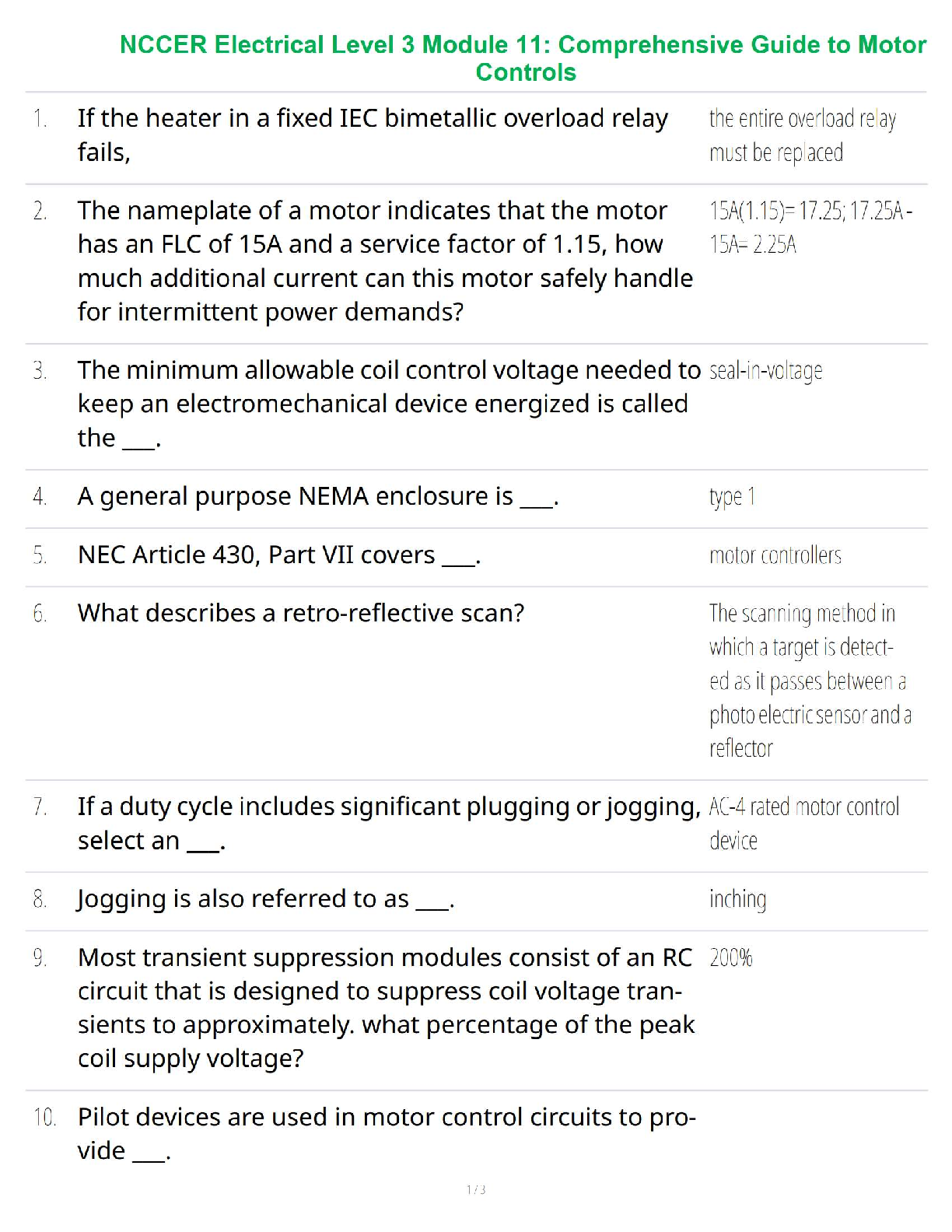
NCCER Electrical Level 3 Module 11: Comprehensive Guide to Mot...



More related documents below