Function of the Respiratory System
Respiratory Function – gas transport for metabolism
Move oxygen from the air – pulmonary blood
Clearance of carbon dioxide
Non-respiratory Function:
Lunges receive 95% of car
...
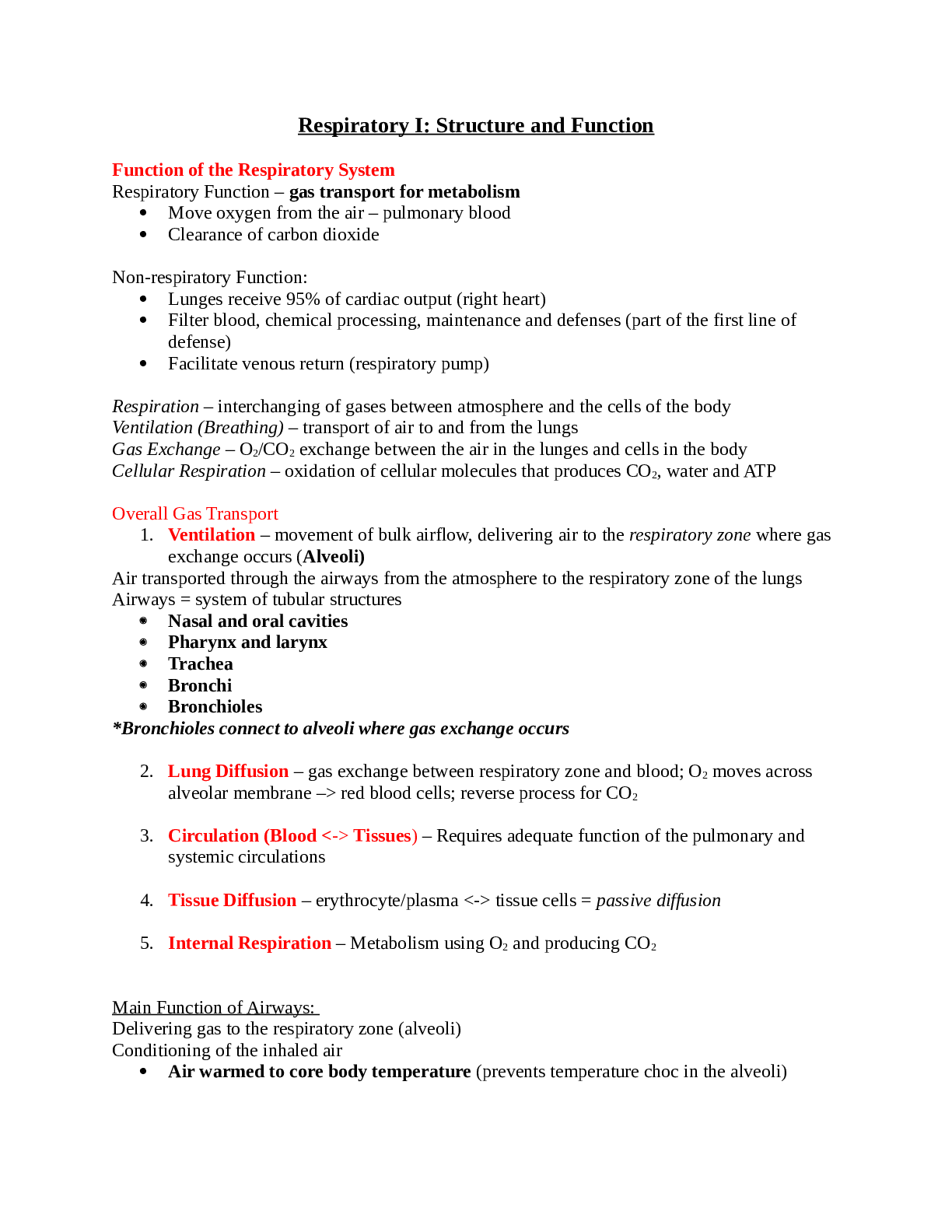
Function of the Respiratory System
Respiratory Function – gas transport for metabolism
Move oxygen from the air – pulmonary blood
Clearance of carbon dioxide
Non-respiratory Function:
Lunges receive 95% of cardiac output (right heart)
Filter blood, chemical processing, maintenance and defenses (part of the first line of
defense)
Facilitate venous return (respiratory pump)
Respiration – interchanging of gases between atmosphere and the cells of the body
Ventilation (Breathing) – transport of air to and from the lungs
Gas Exchange – O2/CO2 exchange between the air in the lunges and cells in the body
Cellular Respiration – oxidation of cellular molecules that produces CO2, water and ATP
Overall Gas Transport
1. Ventilation – movement of bulk airflow, delivering air to the respiratory zone where gas
exchange occurs (Alveoli)
Air transported through the airways from the atmosphere to the respiratory zone of the lungs
Airways = system of tubular structures
Nasal and oral cavities
Pharynx and larynx
Trachea
Bronchi
Bronchioles
*Bronchioles connect to alveoli where gas exchange occurs
2. Lung Diffusion – gas exchange between respiratory zone and blood; O2 moves across
alveolar membrane –> red blood cells; reverse process for CO2
3. Circulation (Blood <-> Tissues) – Requires adequate function of the pulmonary and
systemic circulations
4. Tissue Diffusion – erythrocyte/plasma <-> tissue cells = passive diffusion
5. Internal Respiration – Metabolism using O2 and producing CO2
Main Function of Airways:
Delivering gas to the respiratory zone (alveoli)
Conditioning of the inhaled air
Air warmed to core body temperature (prevents temperature choc in the alveoli)
Gas humidification – saturation with vapour to prevent dehydration of the respiratory
epithelium in alveoli
Filtration cleansing – prevents foreign objects and microorganisms to enter the lunges
(reduces risks of injury and infection)
o Done by:
o Cilia (tiny hair-like projections on cells that sweep foreign bodies out of the
airways)
o Mucus Layer (Goblet Cells; trap pathogens and other particles from entering the
lungs)
o Alveolar Macrophages (type of white blood cell on the surface of alveoli that
protect the alveoli when cilia and mucus layers cannot)
Structure:
Nasal/Oral Cavities
Inner surface = mucous membrane that warms and humidifies air
Hair in nostrils act as first filter
Epithelium contains ciliated cells and mucus cells (goblet) – trap foreign objects and
move mucus towards the pharynx
Pharynx
Connection between nasal/oral cavity and the larynx
Larynx
Connects pharynx and the trachea – glottis and
epiglottis = cartilage that prevents food to enter the
trachea
Contains the vocal cords
Trachea
Flexible tube kept open by cartilage rings
o C-shaped cartilage rings
Inner surface lined with ciliated and mucus cells
Bronchi
Possess cartilage plates to maintain the shape
Starts with 1 tube per lung = primary bronchi
Branches off to narrower tubes with less cartilage
Bronchioles
Lack cartilage – depend upon lung recoil to maintain potency
o Possess smooth muscle
**Bronchi and bronchiole also possess ciliated and mucus producing epithelial cells
In general 20-24 branching from trachea and the terminal alveoli
Airway Cross-Sectional Area:
Increases DRAMATICALLY movie from trachea to respiratory zone
Geometric increase in number of small airways
Reduction in velocity of airflow to ZERO
Movement of gas in respiratory zone by DIFFUSION only
Velocity (cm/sec) = flow (cm3
/sec)/cross-section area (cm2
)
Airway Clearance:
Cilia and goblet cells work to move thin sheet of mucus from lower
parts of the lungs to the throat region
Defensins – airway “Lysol”; destroy bacteria, first line of defense
(2nd line is immune system proper)
**Accumulation of mucus and pus in the trachea associated with inflammation of the lower
[Show More]