Biology > STUDY GUIDE > Bio 1001[A+ GUIDE] ALREADY PASSED (All)
Bio 1001[A+ GUIDE] ALREADY PASSED
Document Content and Description Below
Abstract.
Caenorhabditis elegans is a tiny worm that can use both cross-fertilization and
self-fertilization. We expected to see C. elegans follow the phenotypic ratio of 3:1 in its second
filial generation. I was als
...
[Show More]
Last updated: 3 years ago
Preview 1 out of 7 pages
Instant download
![Preview of Bio 1001[A+ GUIDE] ALREADY PASSED](https://www.scholarfriends.com/storage/pdf (19).png)
Buy this document to get the full access instantly
Instant Download Access after purchase
Reviews( 0 )
Document information
Connected school, study & course
About the document
Uploaded On
Nov 02, 2022
Number of pages
7
Written in
All

Additional information
This document has been written for:
Uploaded
Nov 02, 2022
Downloads
0
Views
129
Document Keyword Tags
Recommended For You
Get more on STUDY GUIDE »
$11
5 Pages
BIO 100/ 1-5 Spontaneous generation was an attractive theory t...
$6
7 Pages
Brooklyn College, CUNY - BIO 1001C. Elegans Lab report, Paper

$29
256 Pages
The Analysis of Biological Data, 3rd Edition by Michael Whitlo...
$20
289 Pages
Forensic Biology 2nd Edition by Richard Li, All Chapters 1-26...
$25
828 Pages
Biology Concepts and Applications without Physiology, 9e Cecie...
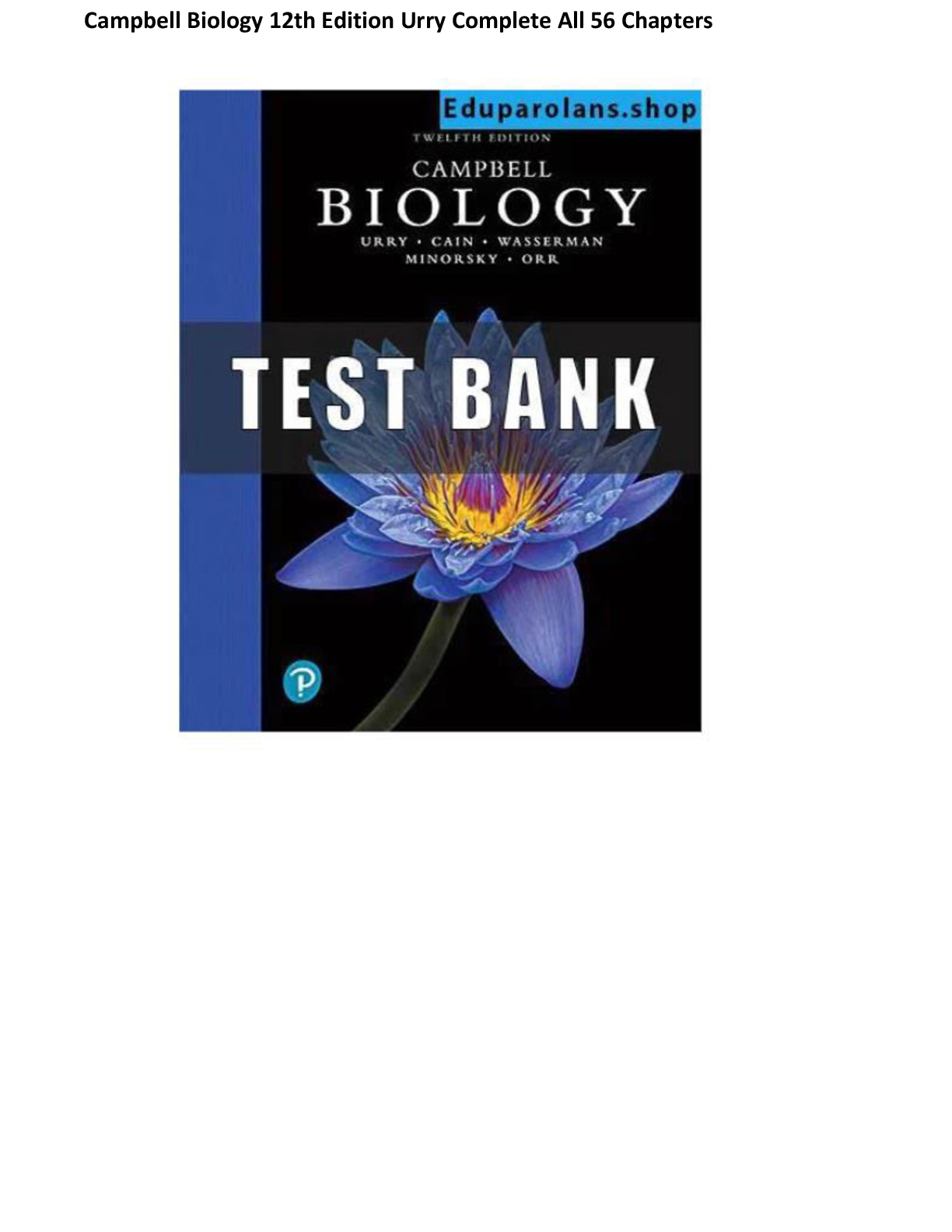
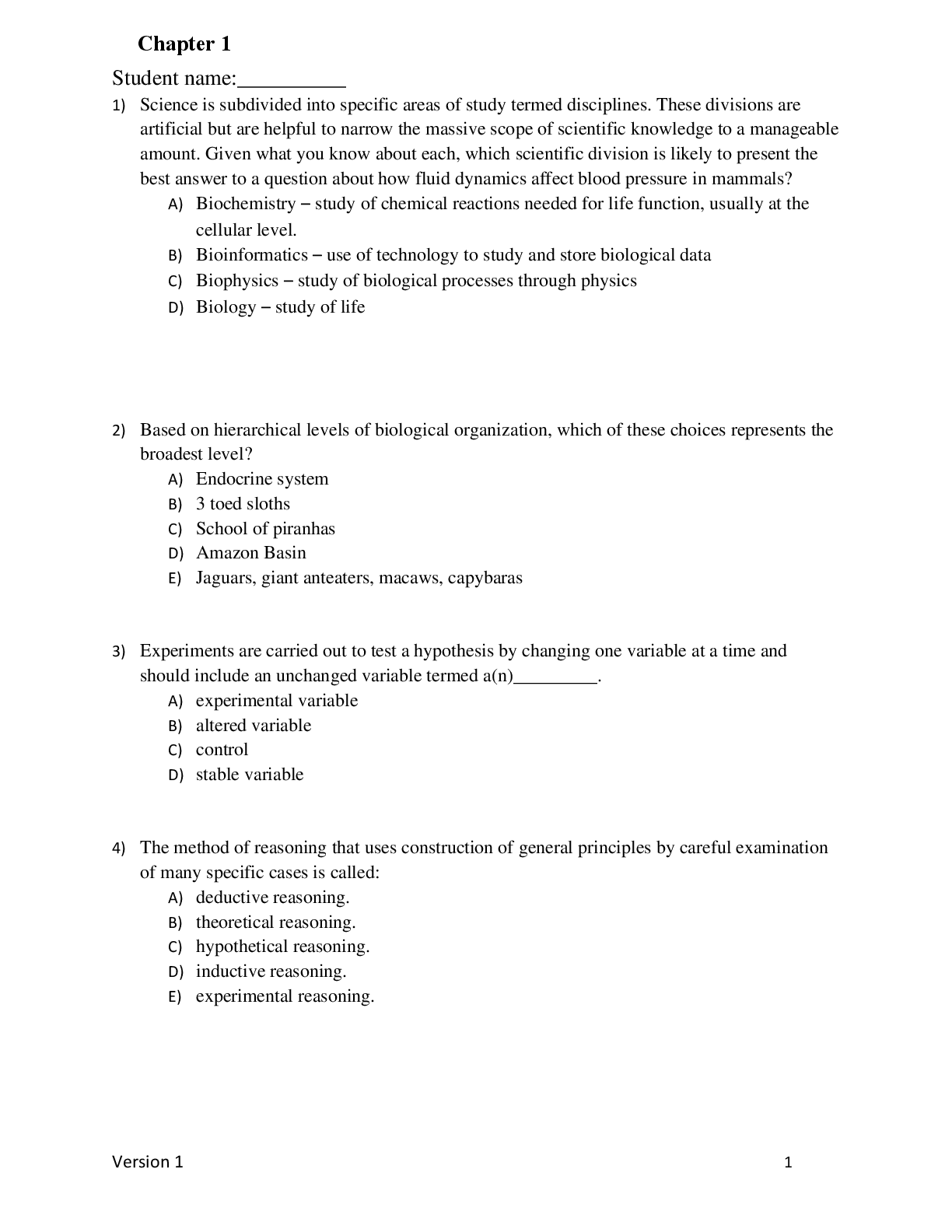
$5
65 Pages
AQA A-LEVEL BIOLOGY Paper 3 Question Paper & Mark Scheme (Mer...
More related documents below
![Preview of softmax_regression.[A+ GUIDE]](https://www.scholarfriends.com/storage/softmax_regression.png)
![Preview of U.S. Government Notebook: M1L2 Origins of American Democracy[A+ GUIDE]](https://www.scholarfriends.com/storage/Copy_of_M1L2_Sinkar.png)