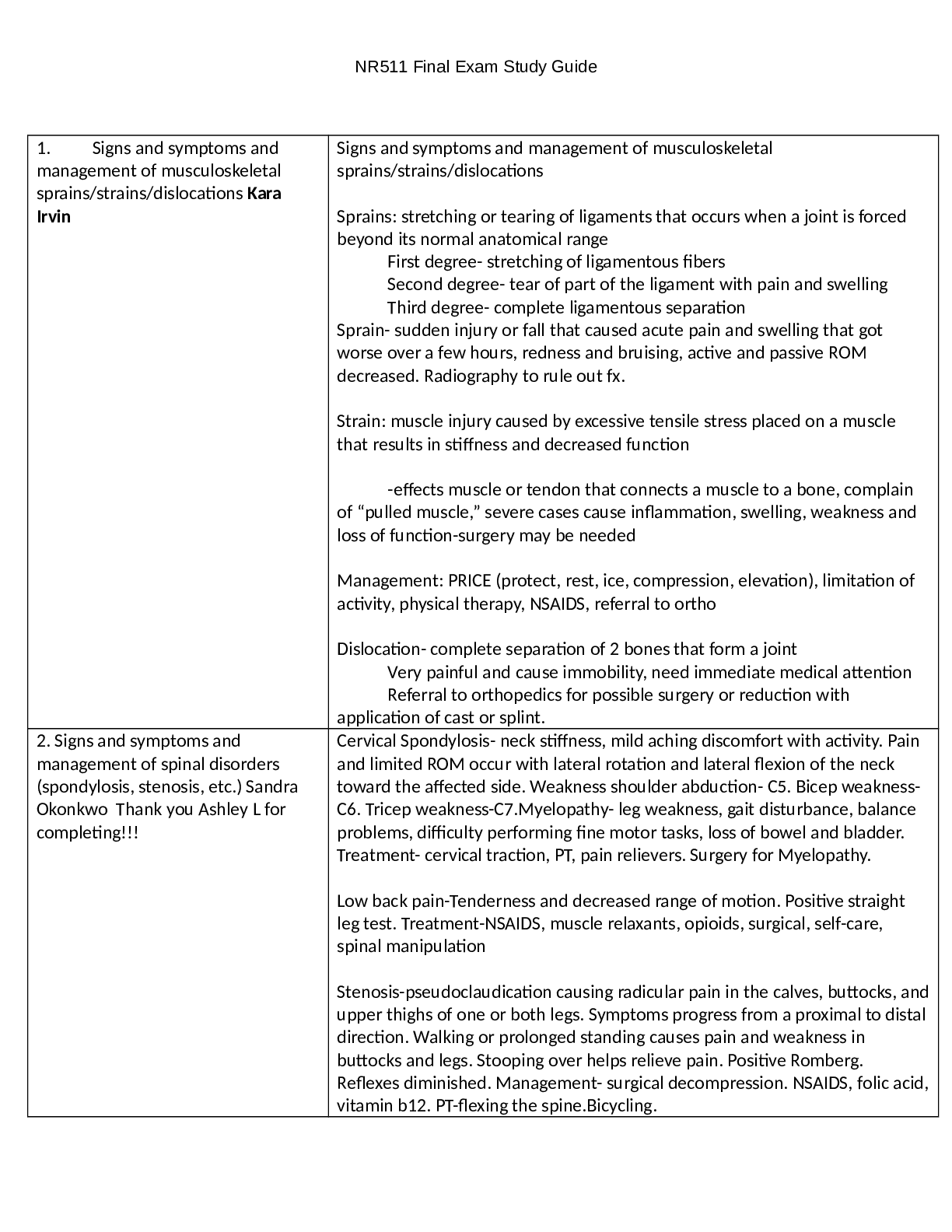
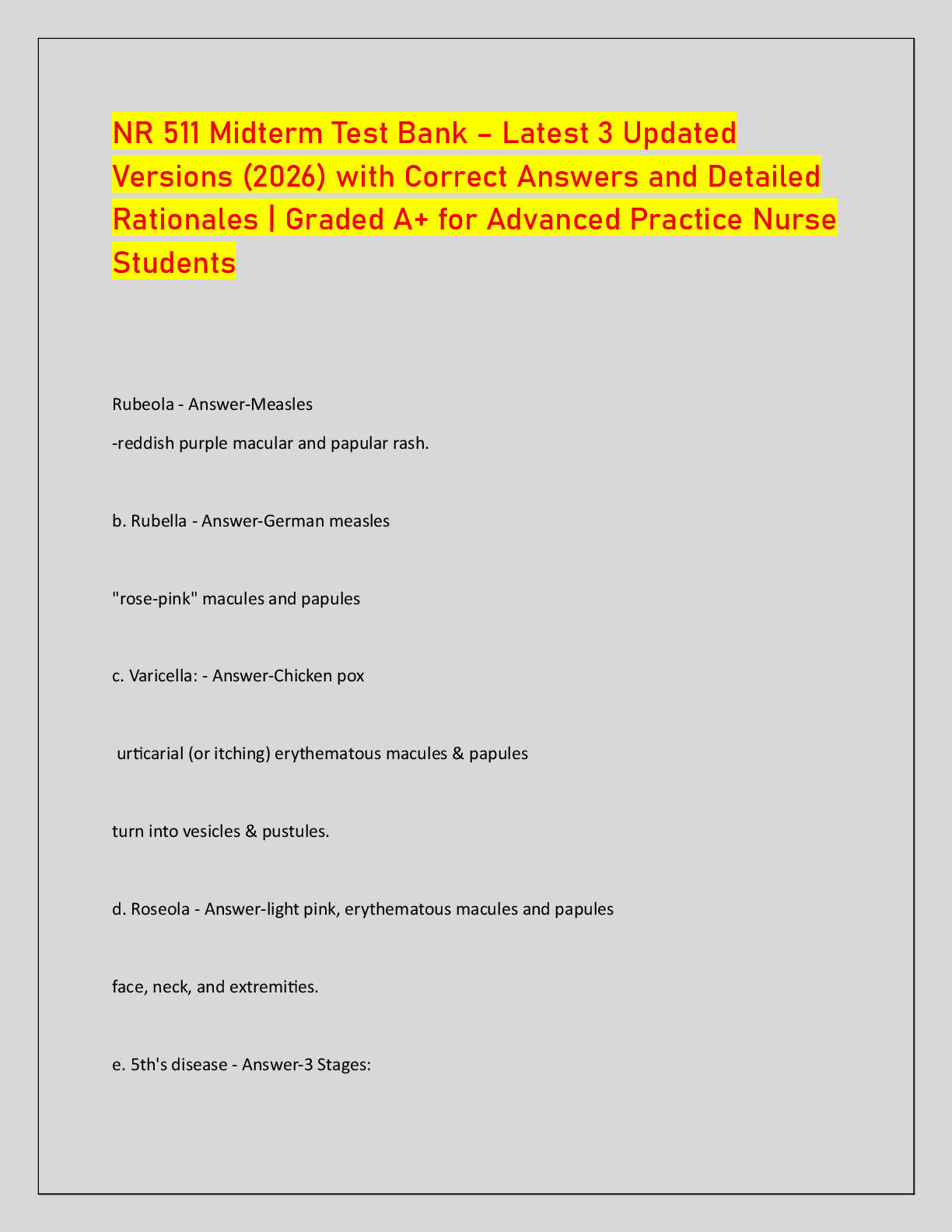
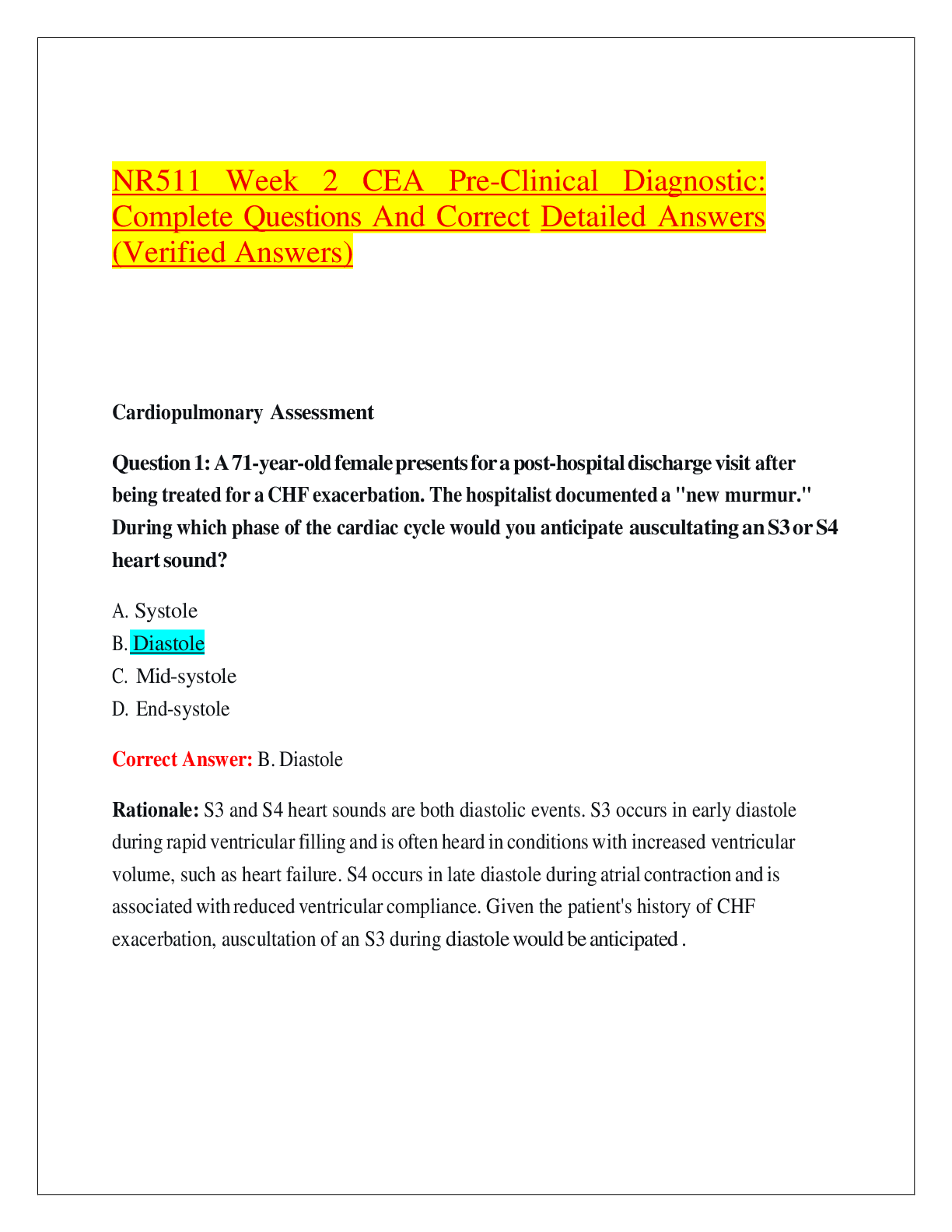
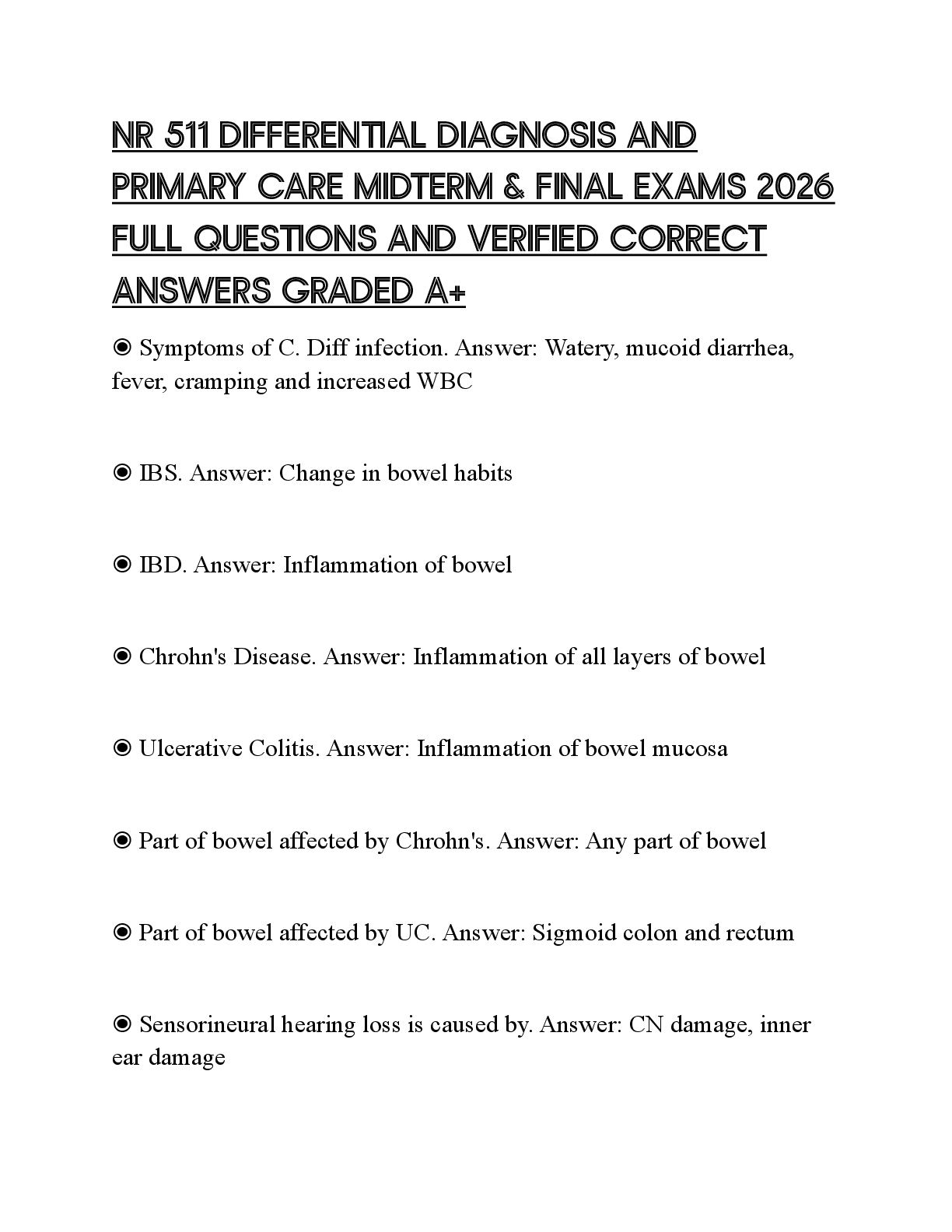
NR511 Final Exam
Study Guide
See Midterm and Week 1 Study Guide for content covering weeks 1, 2 & 3
Common Infections
1. Impetigo
Impetigo is a superficial bacterial infection of the skin. It is classified into prim
...
NR511 Final Exam
Study Guide
See Midterm and Week 1 Study Guide for content covering weeks 1, 2 & 3
Common Infections
1. Impetigo
Impetigo is a superficial bacterial infection of the skin. It is classified into primary
impetigo when there is a direct bacterial invasion of previously normal skin or secondary
impetigo when the infection arises at sites of minor skin trauma. The occurrence of
secondary impetigo is referred to as impetiginization.
Impetigo is most frequently observed in children ages 2–5 years of age, although older
children of any age and adults may also be affected. The infection usually occurs in
warm, humid conditions and is easily spread among individuals in close contact. Risk
factors include poverty, crowding, poor hygiene, and underlying scabies.
Impetigo is primarily caused by S. aureus. Group A Streptococcus (GAS) causes a
minority of cases, either alone or in combination with S. aureus. Occasionally, MRSA is
detected in some cases of impetigo.
Variants of impetigo include nonbullous impetigo, bullous impetigo, and ecthyma.
• Nonbullous impetigo—most common form of impetigo and begins as papules that
progress to vesicles surrounded by erythema. Within a week, the papules
eventually become pustules that enlarge, break down, and form thick, adherent
crusts with a characteristic golden appearance. Lesions usually involve the face
and extremities. Regional lymphadenitis may occur, although systemic symptoms
are usually absent.• Bullous impetigo—Bullous impetigo is seen primarily in young children in which the
vesicles enlarge to form flaccid bullae with clear yellow fluid, which later becomes
darker and ruptures, leaving a thin brown crust. The trunk is more frequently
affected. Bullous impetigo in an adult with appropriate demographic risk factors
should prompt an investigation for previously undiagnosed human
immunodeficiency virus (HIV) infection.
• Ecthyma—This form of impetigo, caused by group A, beta-hemolytic Streptococcus
(Streptococcus pyogenes), consists of an ulcerative form in which the lesions
extend through the epidermis and deep into the dermis. Ecthyma resembles
"punched-out" ulcers covered with yellow crust surrounded by raised violaceous
margins.Poststreptococcal glomerulonephritis is a serious complication of impetigo (ecthyma).
This condition develops within 1–2 weeks following infection. Poststreptococcal
glomerulonephritis manifests with edema, hypertension, fever, and hematuria.
The diagnosis of impetigo often can be made on the basis of clinical manifestations.
A Gram stain and culture of pus or exudate is recommended to identify whether S.
aureus and/or a beta-hemolytic Streptococcus is the cause. However, treatment may be
initiated without these studies in patients with typical clinical presentations.
Bullous and nonbullous impetigo can be treated with either topical or oral therapy.
Topical therapy is used for patients with limited skin involvement whereas oral therapy is
recommended for patients with numerous lesions. Unlike impetigo, ecthyma should
always be treated with oral therapy.
Benefits of topical therapy include fewer side effects and lower risk for contributing to
bacterial resistance compared with oral therapy. Topical choices to treat impetigo include
the following medications for 5 days.
• Mupirocin three times daily
• Retapamulin twice daily
[Show More]