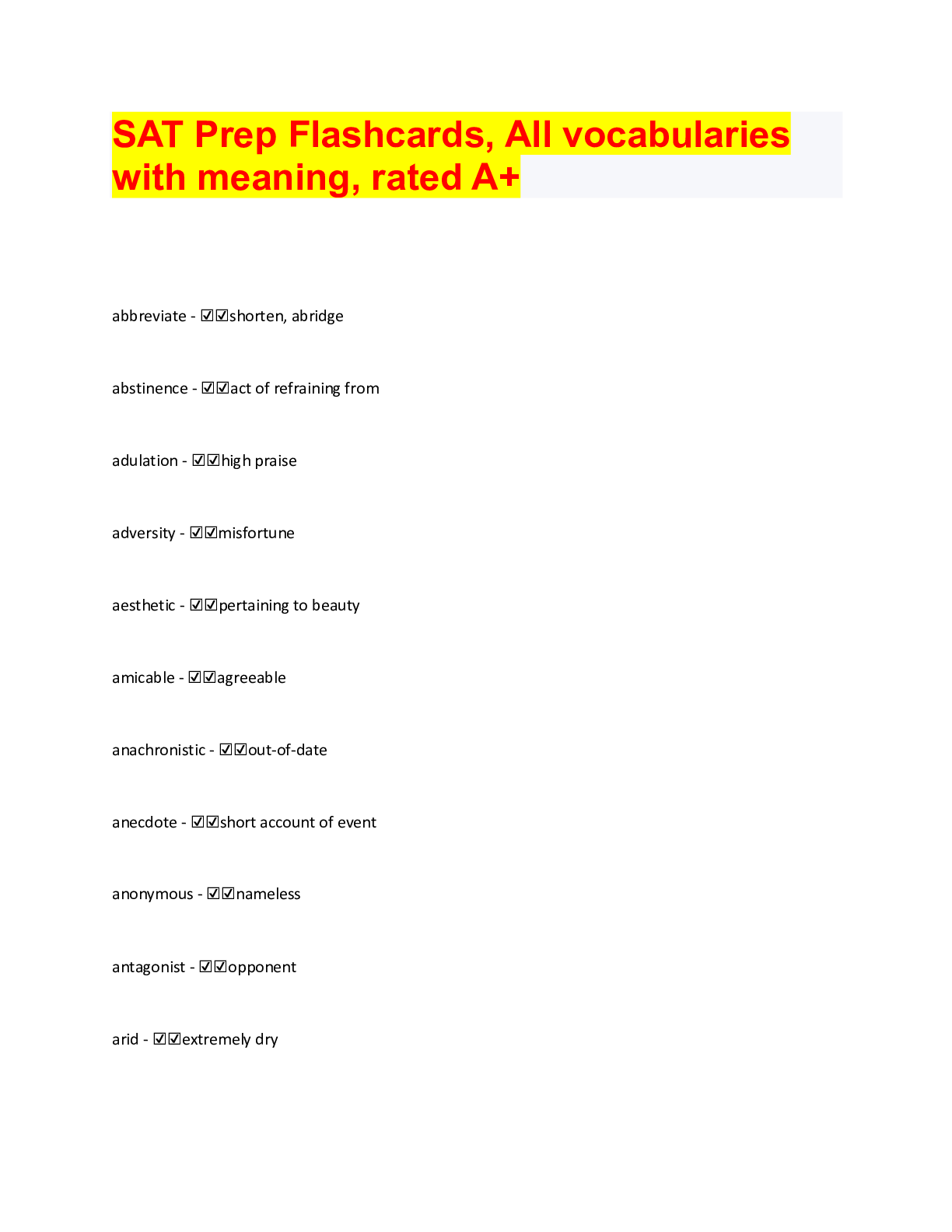
Atomic Structure Knowledge Atoms and Isotopes
Document Content and Description Below
Atoms are very small, having a radius of about 1 × 10⁻¹⁰ metres.
The basic structure of an atom is a positively charged nucleus composed of both protons and neutrons surrounded
by negatively charged electrons.
The rad
...
[Show More]
Last updated: 3 years ago
Preview 1 out of 4 pages
Instant download

Buy this document to get the full access instantly
Instant Download Access after purchase
Reviews( 0 )
Document information
Connected school, study & course
About the document
Uploaded On
Jun 07, 2022
Number of pages
4
Written in
All
Seller

Reviews Received
Additional information
This document has been written for:
Uploaded
Jun 07, 2022
Downloads
0
Views
252
Document Keyword Tags
Recommended For You
Get more on Summary »
$13
4 Pages
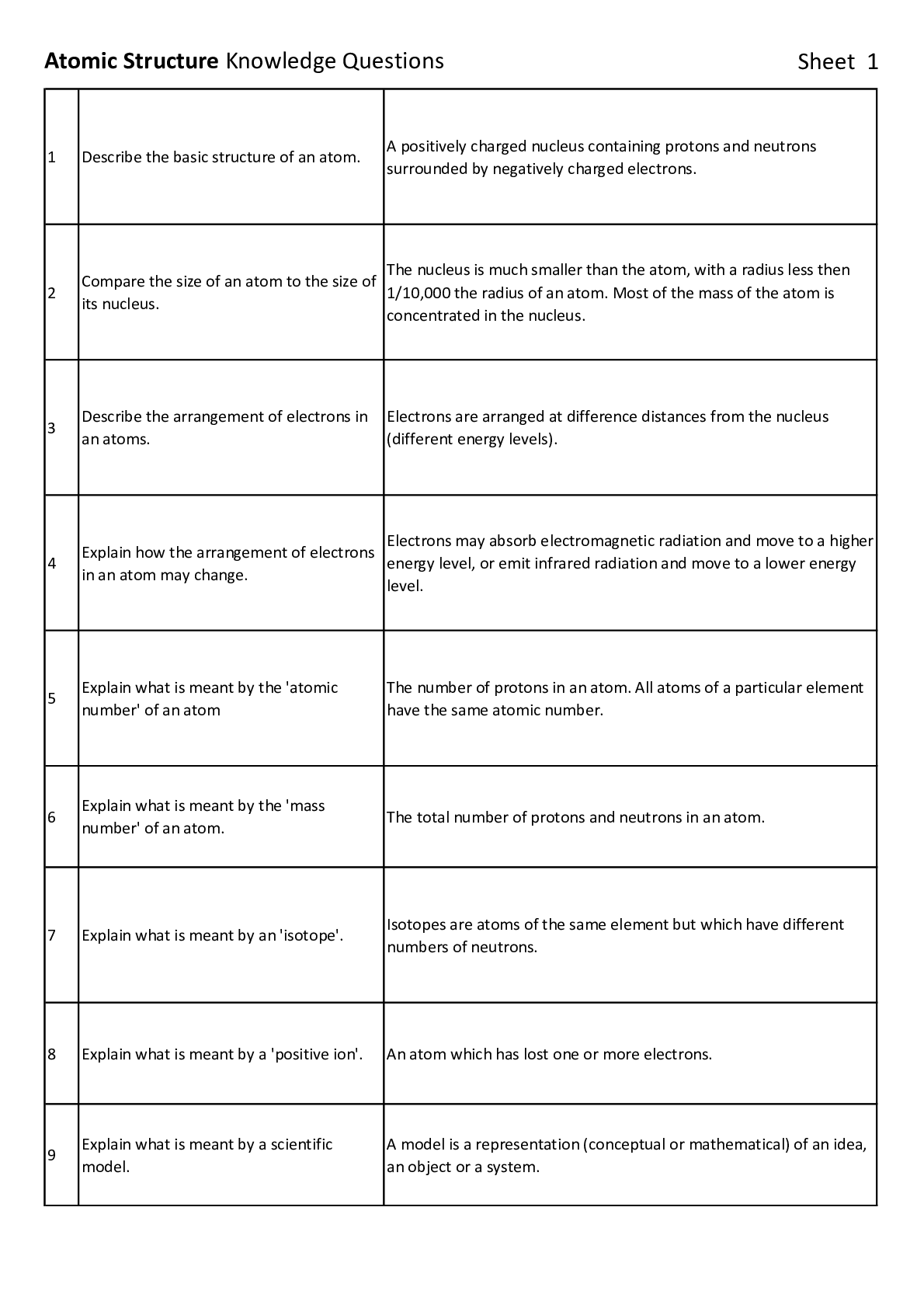
Atomic Structure Knowledge Questions. MARKING SCHEME. GRADED A...
$20
237 Pages
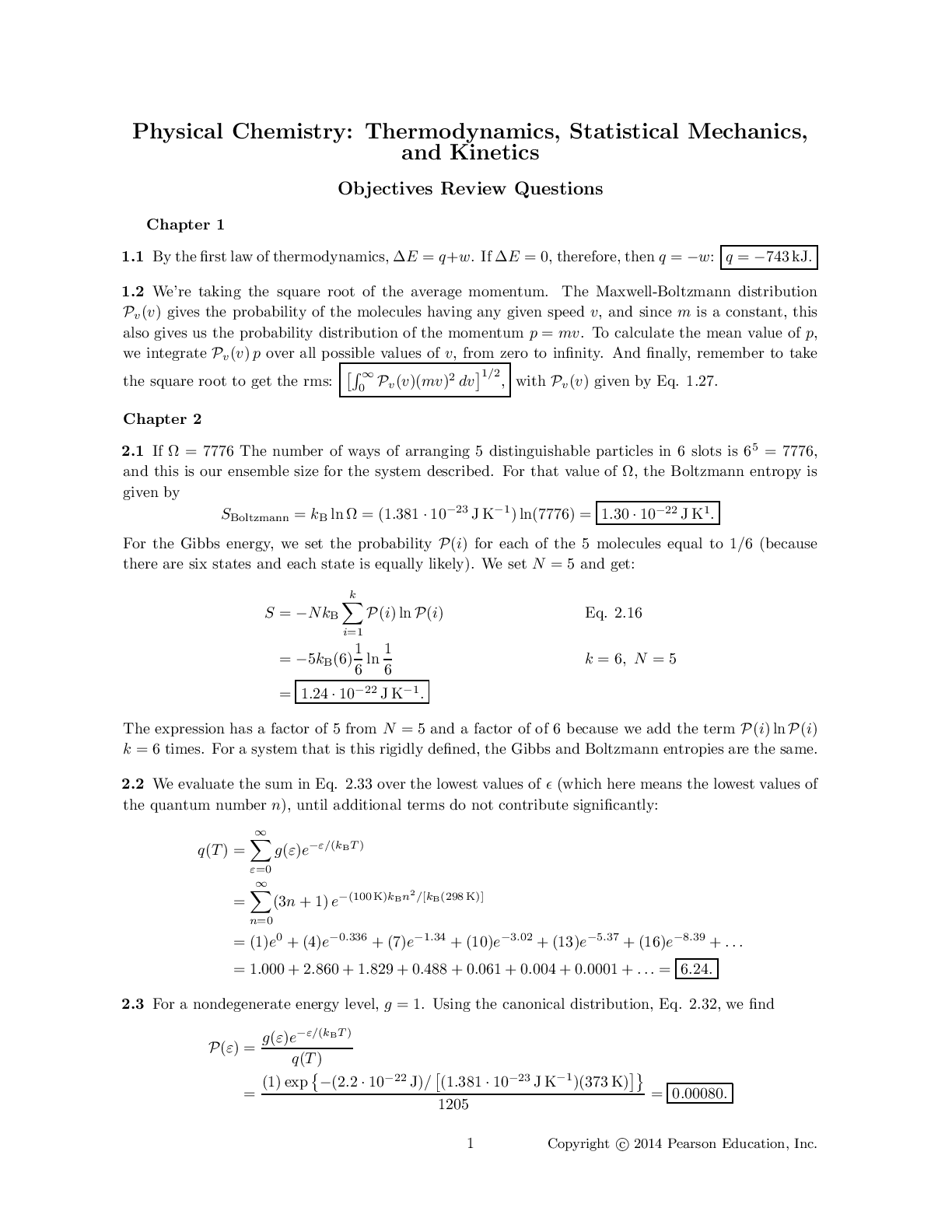
Physical Chemistry Thermodynamics Statistical Mechanics and Ki...
$15
1104 Pages
Solutions Manual for Organic Chemistry Student Study Guide 3rd...
$19
389 Pages
General Organic and Biological Chemistry 1st Edition by Kalyn...
$7
2 Pages
HESI A2 Chemistry (V1) What is true about water - Water is not...

$15
36 Pages
Summary NSG 405 EXAM 1 Completed Study Guide > latest (Spring...

$10
18 Pages
Summary Rasmussen College, Minneapolis - PN 3 PN3 Exam 3 Study...

$5
20 Pages
Summary Med surg ATI (study guide; latest Fall 2020, A+ help
More related documents below