Table of Contents
Chapter 1: Ace Inhibitors
Chapter 2: Alpha Blockers
Chapter 3: Angiotensin II Inhibitors
Chapter 4: Antianginals
Chapter 5: Antidysrhytmics
Chapter 6: Antiemetics
Chapter 7: Antifungals
Chapter
...
Table of Contents
Chapter 1: Ace Inhibitors
Chapter 2: Alpha Blockers
Chapter 3: Angiotensin II Inhibitors
Chapter 4: Antianginals
Chapter 5: Antidysrhytmics
Chapter 6: Antiemetics
Chapter 7: Antifungals
Chapter 8: Antibiotics
Chapter 9: Anticoagulants
Chapter 10: Anti-Depressants
Chapter 11: Antihistamines
Chapter 12: Beta Blockers
Chapter 13: Calcium Channel Blockers
Chapter 14: Antiplatelet
Chapter 15: Benzodiazepines
Chapter 16: Cardiac Glycosides
Chapter 17: Diuretics
Chapter 18: HIV anti agents
Chapter 19: Insulins
Chapter 20: NSAIDS
Chapter 21: Opioid
Chapter 22: Oral Hypoglycemic
Chapter 23: Proton pump inhibitors
Chapter 24: Respiratory
Chapter 25: Statins
Chapter 26: Thrombolytics
Chapter 27: Vasopressors
Chapter 28: Ophthalmic
Chapter 29: OTC Remedies
Chapter 30: Herbal Remedies
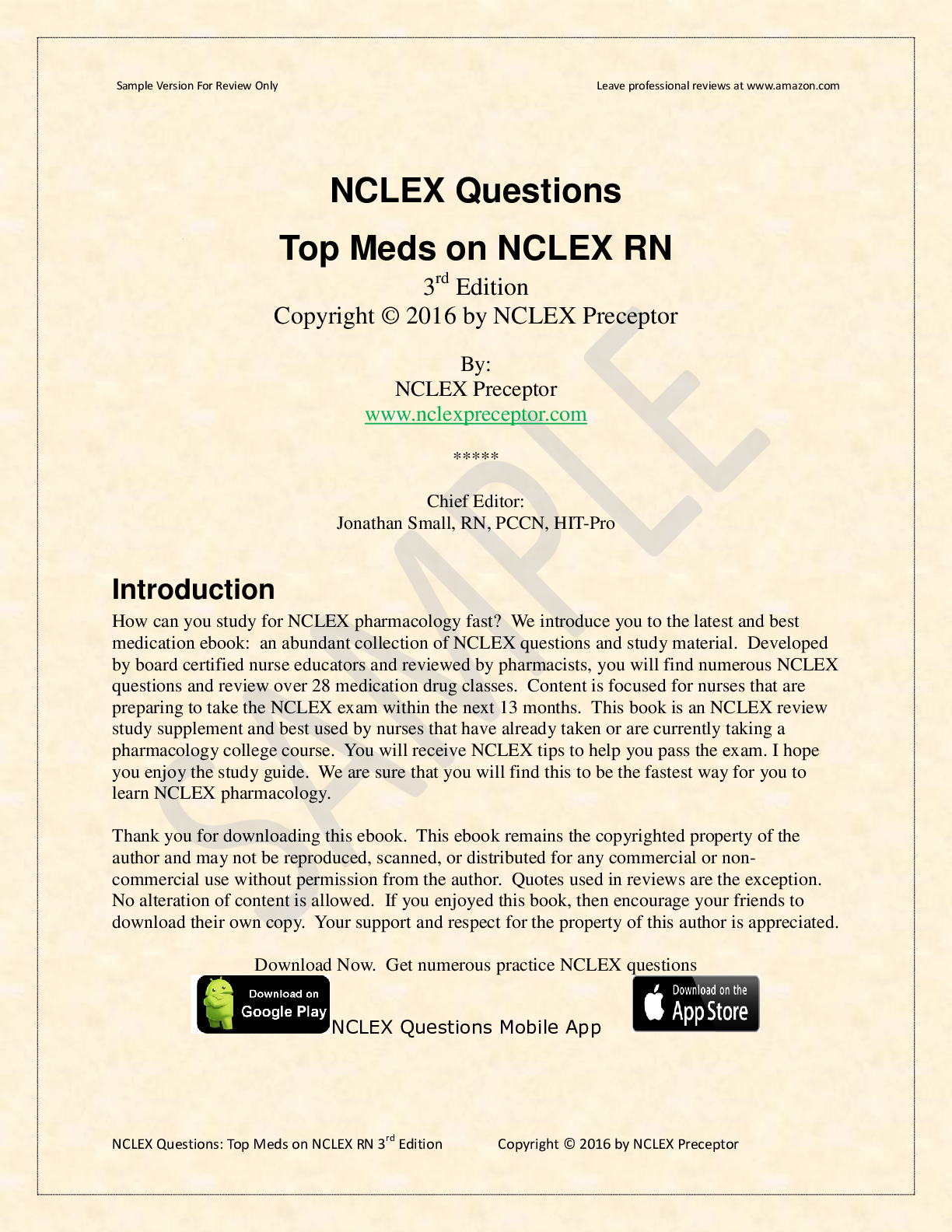
Sample Version For Review Only Leave professional reviews at www.amazon.com
NCLEX Questions: Top Meds on NCLEX RN 3rd Edition Copyright © 2016 by NCLEX Preceptor
Chapter 1
A Quick Review about ACE Inhibitors
What are ACE Inhibitors?
ACE Inhibitors or Angiotensin Converting Enzymes are any of a group of antihypertensive drugs
that relax arteries and promote renal excretion of salt and water by inhibiting the activity of an
angiotensin converting enzyme.
These are enzymes responsible for reducing vasculature resistance without increasing cardiac
output, rate or contractility.
NCLEX Alert! ACE Inhibitors are one of the most frequently tested antihypertensive drugs on
NCLEX.
These are the diseases that ACE Inhibitors treat:
1. Hypertension
2. Congestive heart failure
And, they lower the risk of stroke and heart attack.
You must remember that these inhibitors have side effects in our body, such as:
1. Postural hypotension (commonly known as ‘head rush’ or ‘dizzy spell’)
2. Fatigue
3. Loss of appetite
4. Nausea, vomiting, diarrhea
5. Hyperkalemia
6. Insomnia
7. Could exacerbate non-productive cough
8. Angiodema
Some of the commonly used ACE Inhibitors are Benazepril, Captopril, Enalapril and Fosinopril.
Also included in this classification are Lisinopril, Moexipril or Perindopril.
Now, what should be your nursing considerations in giving medications? As a nurse, you also
have to educate your clients in taking these drugs. Here are some medical considerations:
1. You have to remember that these medications cause retention of potassium. Hence,
monitor the electrolytes.
2. Take note that elderly clients are at highest risk for postural hypotension.
3. Always instruct your clients not to abruptly discontinue medications because rebound
hypertension can occur.
4. Do not forget to monitor the blood pressure frequently.
5. If your client has impaired renal function, you have to be cautious if they will be using
these drugs
6. Finally, notify the client’s physicians if dizziness still persists.
[Show More]