Biology > STUDY GUIDE > BIOL 235 Chapter 1 Complete Study Guide For Exam Preparation (All)
BIOL 235 Chapter 1 Complete Study Guide For Exam Preparation
Document Content and Description Below
Last updated: 3 years ago
Preview 1 out of 12 pages
Instant download
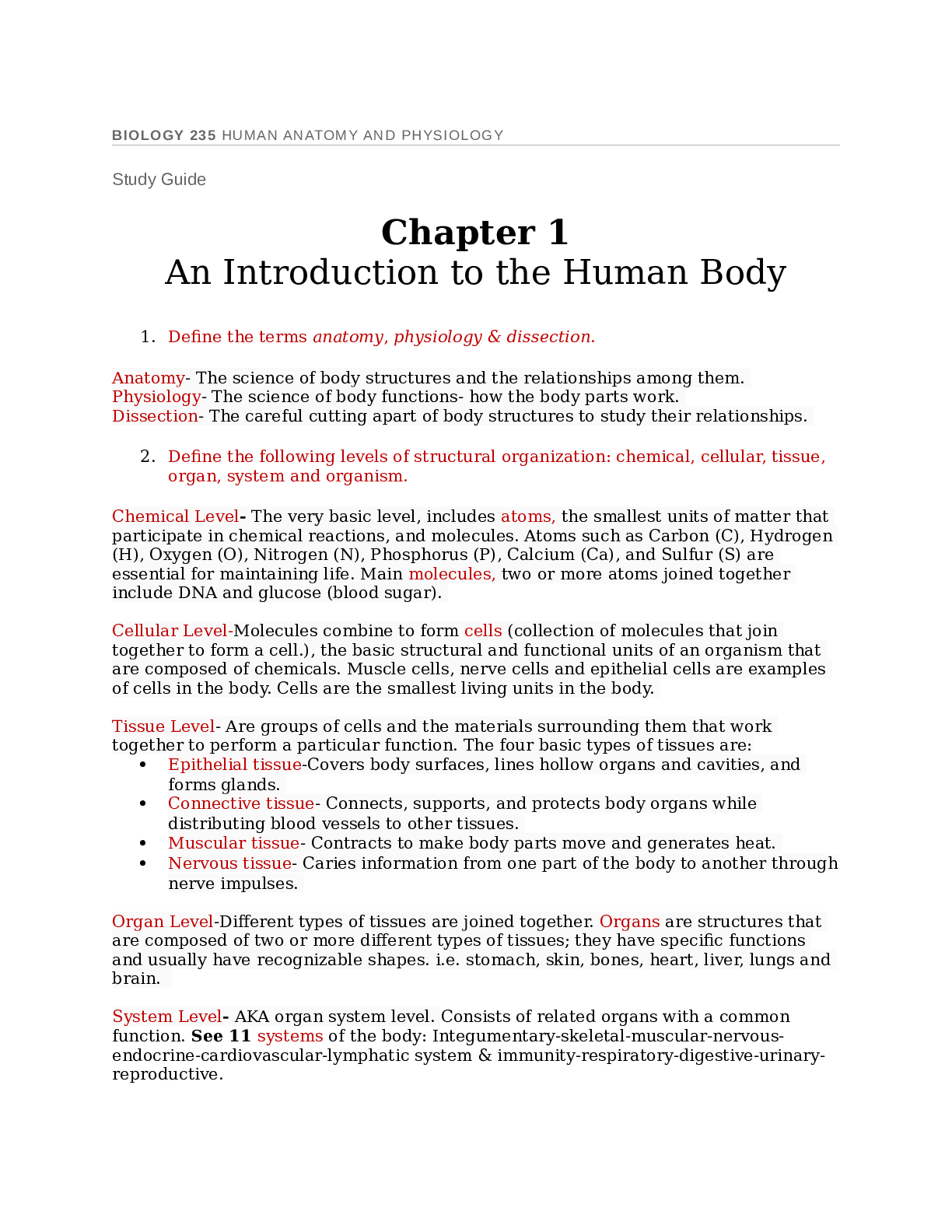
Buy this Document to get the Full Access Instantly
Provided by Students Who Aced it
We Verify Document Content to Gurantee Accuracy
Reviews( 0 )
Document information
Connected school, study & course
About the document
Uploaded On
Oct 01, 2021
Number of pages
12
Written in
All

Additional information
This document has been written for:
Uploaded
Oct 01, 2021
Downloads
0
Views
199
Document Keyword Tags
Recommended For You
Get more on STUDY GUIDE ».png)

BIOL 235 Athabasca University Test bank Essentials of Human An...
TEST BANK BIOL 235 MIDTERM 2 QUESTION S AND ANSWERS BIOLOGY AT...
Test bank BIOL 235 Midterm 2 Biology (GRADED A) practice exam...
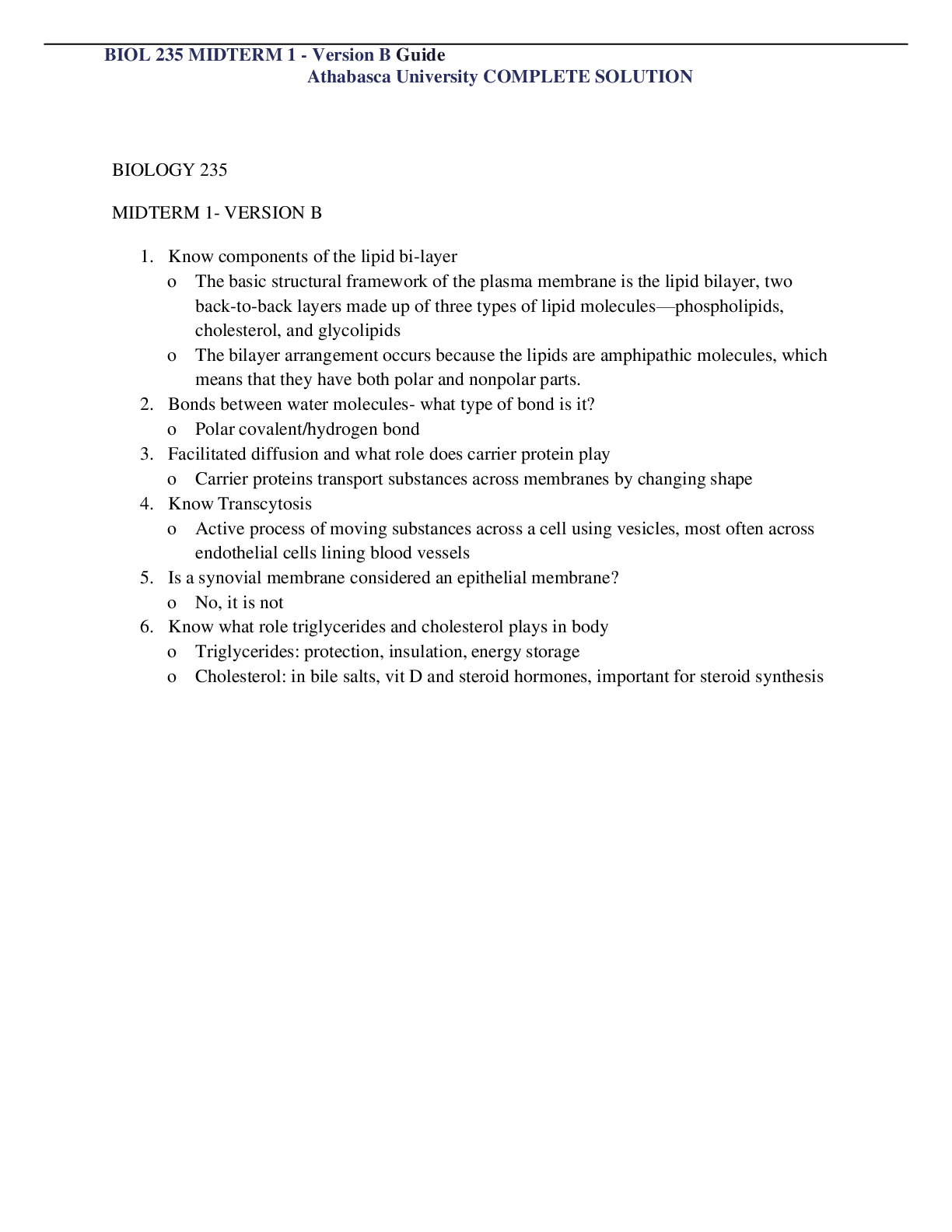
BIOL 235 MIDTERM 1 - Version B Guide Athabasca University COM...
.png)


BIOL 235 Midterm Exam 2 with Complete Solution (100% Verified)
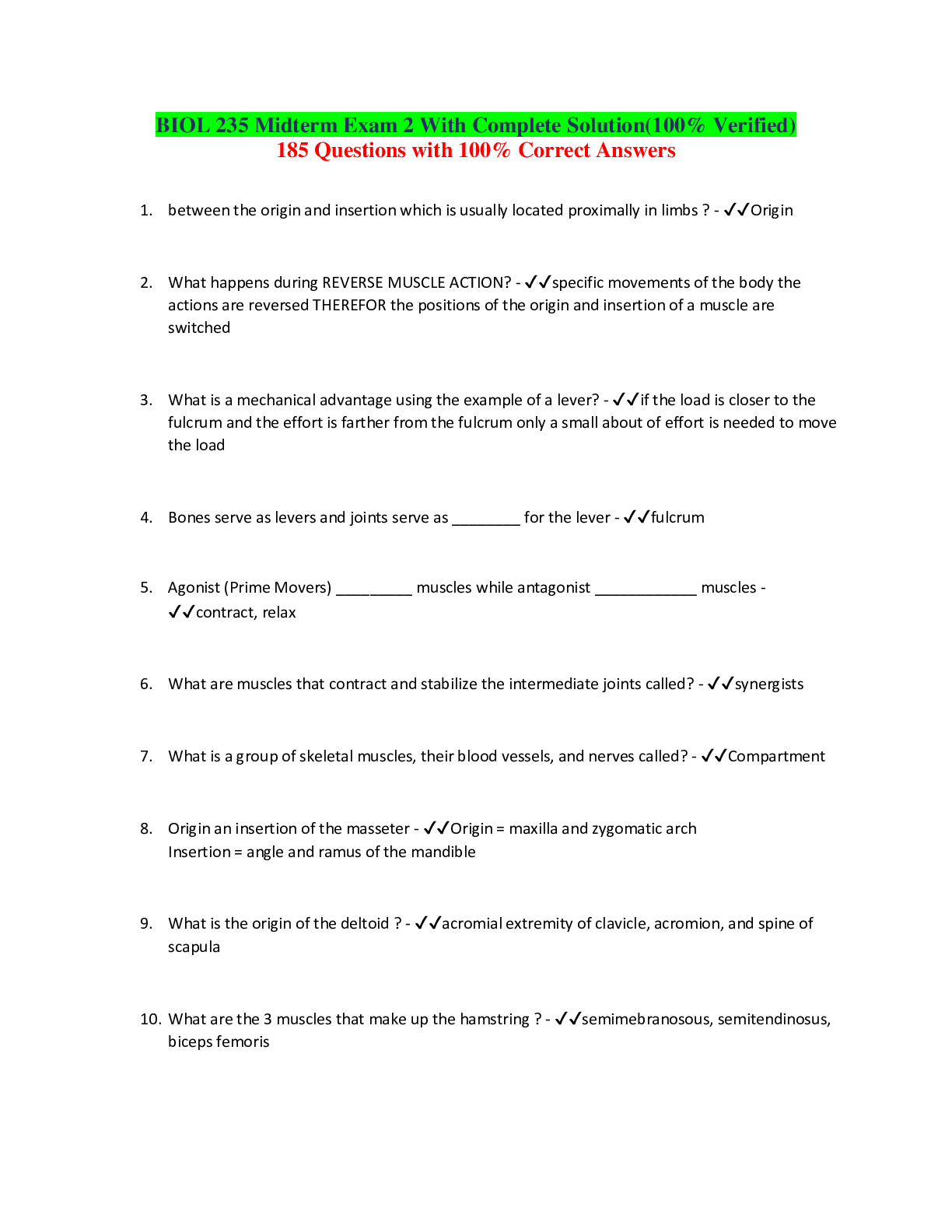
BIOL 235 Midterm Exam 2 With Complete Solution(100% Verified)
BIOL 235 UNIT 3 EXAM QUESTIONS AND ANSWERS,ATHABASCA UNIVERSIT...
ATHABSCA UNIVERSITY BIOL 235 SAMPLE EXAM QUESTIONS ,ANSWERS AN...
BIOL 235 EXAM QUESTIONS AND ANSWERS, ATHABASCA UNIVERSITY
BIOL 235 NOTES FOR ONLINE QUIZ 2 AND MIDTERM 2 PREPARATION (CH...

BIOL 235 FINAL - Version D Athabasca University COMPLETE SOLUT...

Biology (BIOL 235) Assignment 3 Biology 235 Human Anatomy and...
Biology (BIOL 235) BIO Assignment 1 - Unit 1 & 2 (BIO assignem...





.png)



