VATI Maternal Newborn Nursing
Learning points
1. Assessment of fluid and electrolyte status
a. Daily weights are the most accurate assessment of fluid and electrolyte status
b. Fluid balance chart – I/O
c. Serum
...
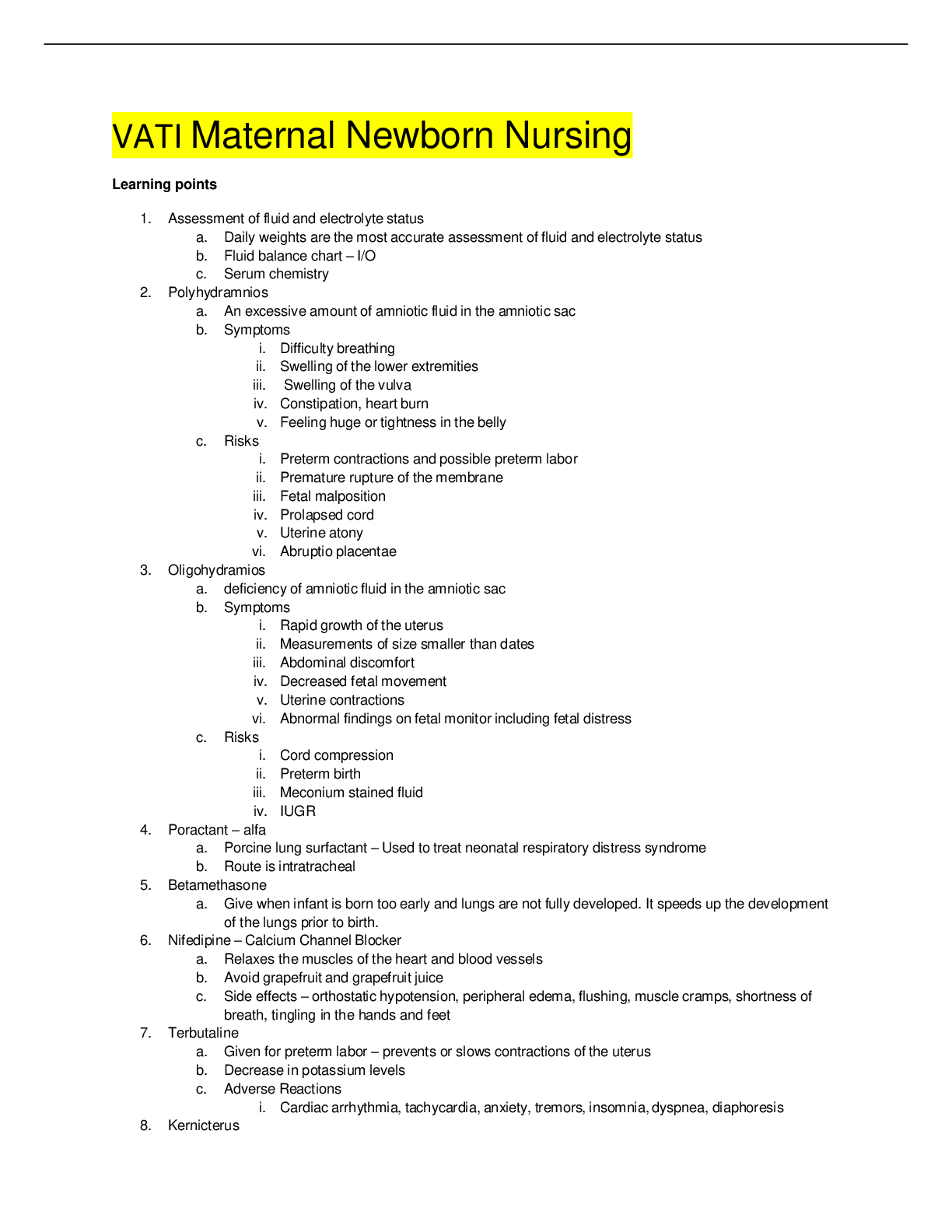
VATI Maternal Newborn Nursing
Learning points
1. Assessment of fluid and electrolyte status
a. Daily weights are the most accurate assessment of fluid and electrolyte status
b. Fluid balance chart – I/O
c. Serum chemistry
2. Polyhydramnios
a. An excessive amount of amniotic fluid in the amniotic sac
b. Symptoms
i. Difficulty breathing
ii. Swelling of the lower extremities
iii. Swelling of the vulva
iv. Constipation, heart burn
v. Feeling huge or tightness in the belly
c. Risks
i. Preterm contractions and possible preterm labor
ii. Premature rupture of the membrane
iii. Fetal malposition
iv. Prolapsed cord
v. Uterine atony
vi. Abruptio placentae
3. Oligohydramios
a. deficiency of amniotic fluid in the amniotic sac
b. Symptoms
i. Rapid growth of the uterus
ii. Measurements of size smaller than dates
iii. Abdominal discomfort
iv. Decreased fetal movement
v. Uterine contractions
vi. Abnormal findings on fetal monitor including fetal distress
c. Risks
i. Cord compression
ii. Preterm birth
iii. Meconium stained fluid
iv. IUGR
4. Poractant – alfa
a. Porcine lung surfactant – Used to treat neonatal respiratory distress syndrome
b. Route is intratracheal
5. Betamethasone
a. Give when infant is born too early and lungs are not fully developed. It speeds up the development of the lungs prior to birth.
6. Nifedipine – Calcium Channel Blocker
a. Relaxes the muscles of the heart and blood vessels
b. Avoid grapefruit and grapefruit juice
c. Side effects – orthostatic hypotension, peripheral edema, flushing, muscle cramps, shortness of breath, tingling in the hands and feet
7. Terbutaline
a. Given for preterm labor – prevents or slows contractions of the uterus
b. Decrease in potassium levels
c. Adverse Reactions
i. Cardiac arrhythmia, tachycardia, anxiety, tremors, insomnia, dyspnea, diaphoresis
8. Kernicterus
a. Occurs due to a build up of bilirubin in the infant’s blood
b. Early signs are jaundice
c. Symptoms may include
i. Drowsiness/lack of energy
ii. Uncontrollable or very high-pitched shrill crying
iii. Fever
iv. Trouble feeding
v. Limpness or stiffness of the whole body
vi. Unusual eye movements, motor development and movement
vii. Muscle spasms or reduced muscle tone
viii. Seizures or convulsions
9. Hydatidiform mole
a. Growth of the chorionic villi gives rise to multiple cysts
b. Symptoms
i. Dark brown to bright read bleeding during the 1st trimester
ii. Severe nausea vomiting
iii. Vaginal passage of grapelike cysts
iv. Pelvic pressure or pain
10. Biophysical profile
a. Fetal tone
b. Reactive fetal heart rate
c. Qualitative amniotic fluid
11. A prominent clitoris and labia minora are signs of premature infant
[Show More]







.png)
.png)