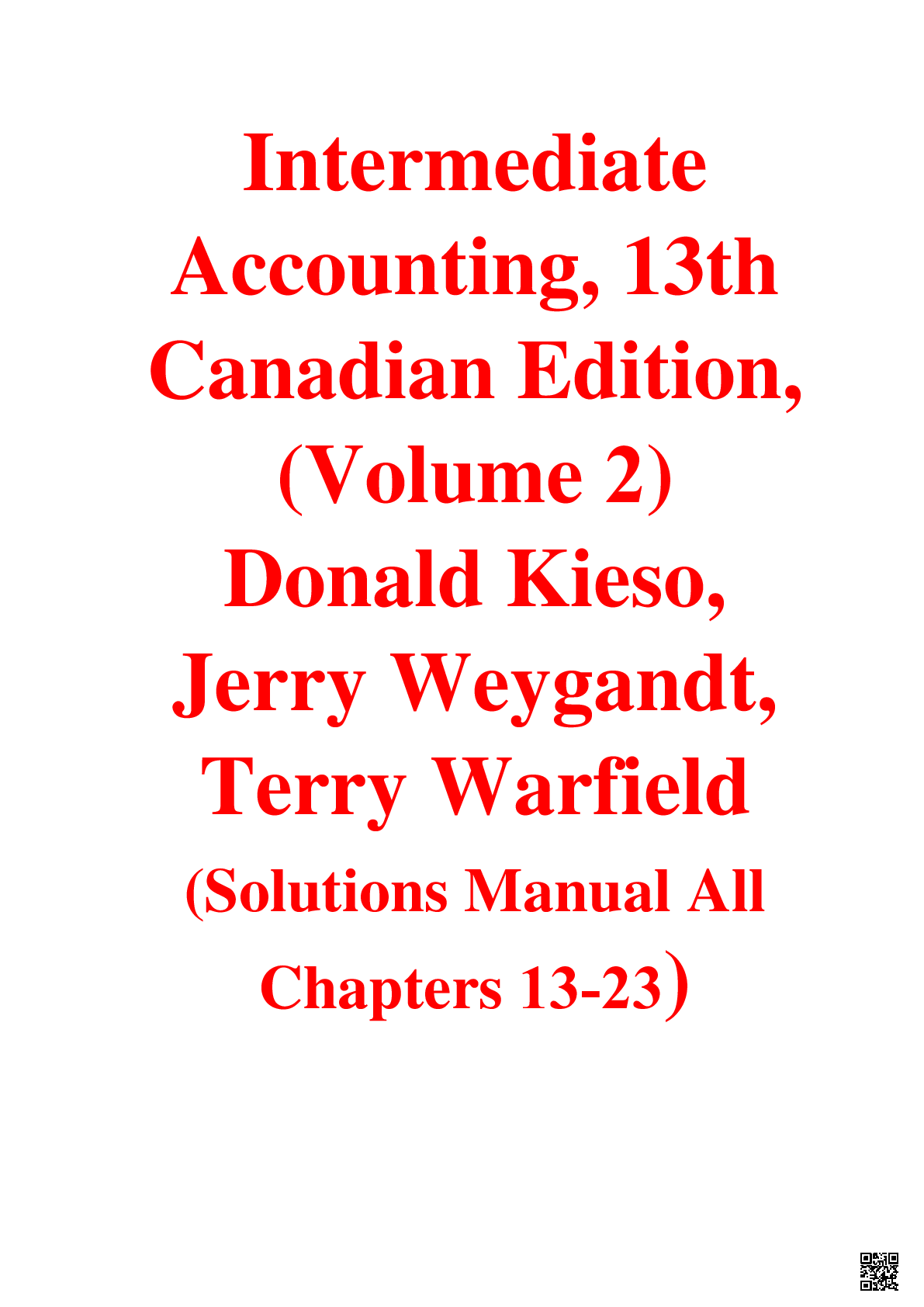
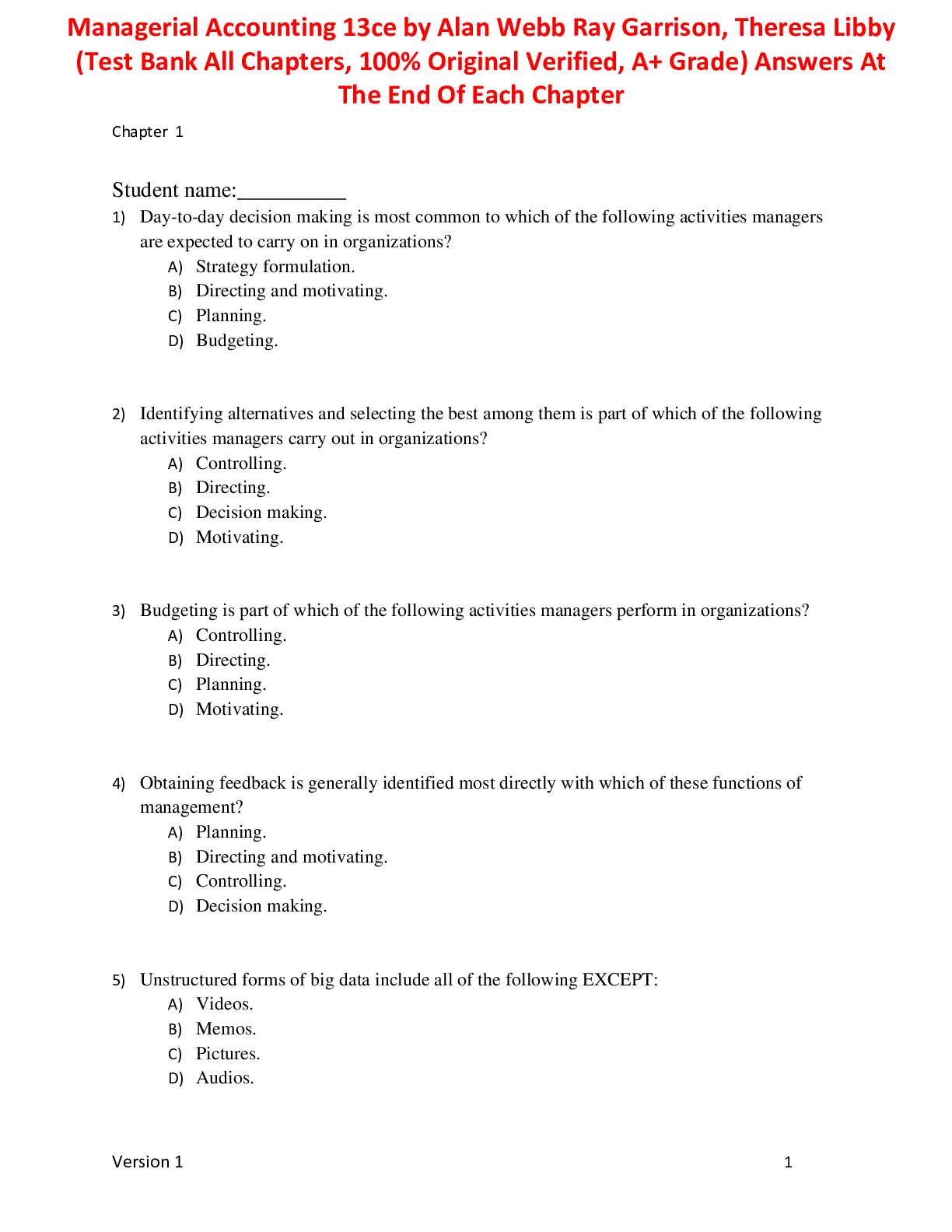
The solution manual for Intermediate Accounting, Volume 2, 13th Canadian Edition by Donald E. Kieso, Jerry J. Weygandt, Terry D. Warfield, Irene M. Wiecek, and Bruce J. McConomy provides step-by-step problem resolutions
...
The solution manual for Intermediate Accounting, Volume 2, 13th Canadian Edition by Donald E. Kieso, Jerry J. Weygandt, Terry D. Warfield, Irene M. Wiecek, and Bruce J. McConomy provides step-by-step problem resolutions covering Chapters 13 through 23. It primarily focuses on the liabilities, equities, and advanced disclosure sections of the balance sheet under Canadian accounting frameworks (IFRS and ASPE). [1, 2, 3, 4, 5]Below is the comprehensive breakdown of the chapters and specific topics covered in this volume's solution manual: [1]🏢 Liability and Equity Structure
- Chapter 13: Non-Financial and Current Liabilities
- Distinguishing financial vs. non-financial liabilities.
- Accounting for short-term debt, trade payables, and employee-related liabilities (salaries, compensated absences).
- Provisions, contingencies, product warranties, customer loyalty programs, and decommissioning/restoration obligations. [1, 2, 3, 4, 5]
- Chapter 14: Long-Term Financial Liabilities
- Bonds payable (issuance, amortization of discount/premium using the effective interest method).
- Long-term notes payable and debt covenants.
- Extinguishment of debt and troubled debt restructurings. [1, 2, 3, 4]
- Chapter 15: Shareholders' Equity
- Issuance, reacquisition, and retirement of common and preferred shares.
- Cash dividends, stock dividends, stock splits, and liquidating dividends.
- Accounting for retained earnings restrictions and comprehensive income. [1, 2, 3]
- Chapter 16: Complex Financial Instruments
- Convertible debt securities and debt issued with stock warrants (allocation of proceeds using components approach).
- Stock compensation plans (stock options and restricted stock units under the fair value method).
- Accounting for derivative instruments. [1, 2]
- Chapter 17: Earnings per Share
- Simple capital structures and calculating Weight-Average Number of Shares (WANS).
- Complex capital structures and calculating Diluted Earnings per Share (EPS) using the treasury stock and if-converted methods. [1, 2]
📊 Advanced Business Operations & Reporting
- Chapter 18: Income Taxes
- Identifying permanent vs. temporary differences between accounting income and taxable income.
- Calculating and recording deferred tax assets (DTAs) and deferred tax liabilities (DTLs).
- Net operating loss carryforwards and carrybacks. [1, 2]
- Chapter 19: Pensions and Other Post-Employment Benefits
- Defined contribution vs. defined benefit pension plans.
- Measuring pension obligation, plan assets, and calculating annual pension expense.
- Accounting for actuarial gains/losses and prior service costs. [1]
- Chapter 20: Leases
- Lessee accounting: Right-of-Use (ROU) assets and lease liabilities.
- Lessor accounting: Operating leases, finance-type leases (sales-type and direct-financing).
- Lease modifications and sale-leaseback transactions. [1]
🔍 Analysis, Adjustments, and Disclosures
- Chapter 21: Accounting Changes and Error Analysis
- Changes in accounting policies (retrospective application).
- Changes in accounting estimates (prospective application).
- Correction of errors (prior-period adjustments and restatements). [1]
- Chapter 22: Statement of Cash Flows
- Preparing operating activities using both the direct and indirect methods.
- Investing and financing activities cash flows.
- Handling complex non-cash transactions and disclosure requirements. [1]
- Chapter 23: Other Measurement and Disclosure Issues
- Segment reporting and subsequent events.
- Related party transactions and financial statement analysis tools.
- Enhanced integration of corporate sustainability reporting cases. [1, 2, 3]
[Show More]
Preview 5 out of 2077 pages