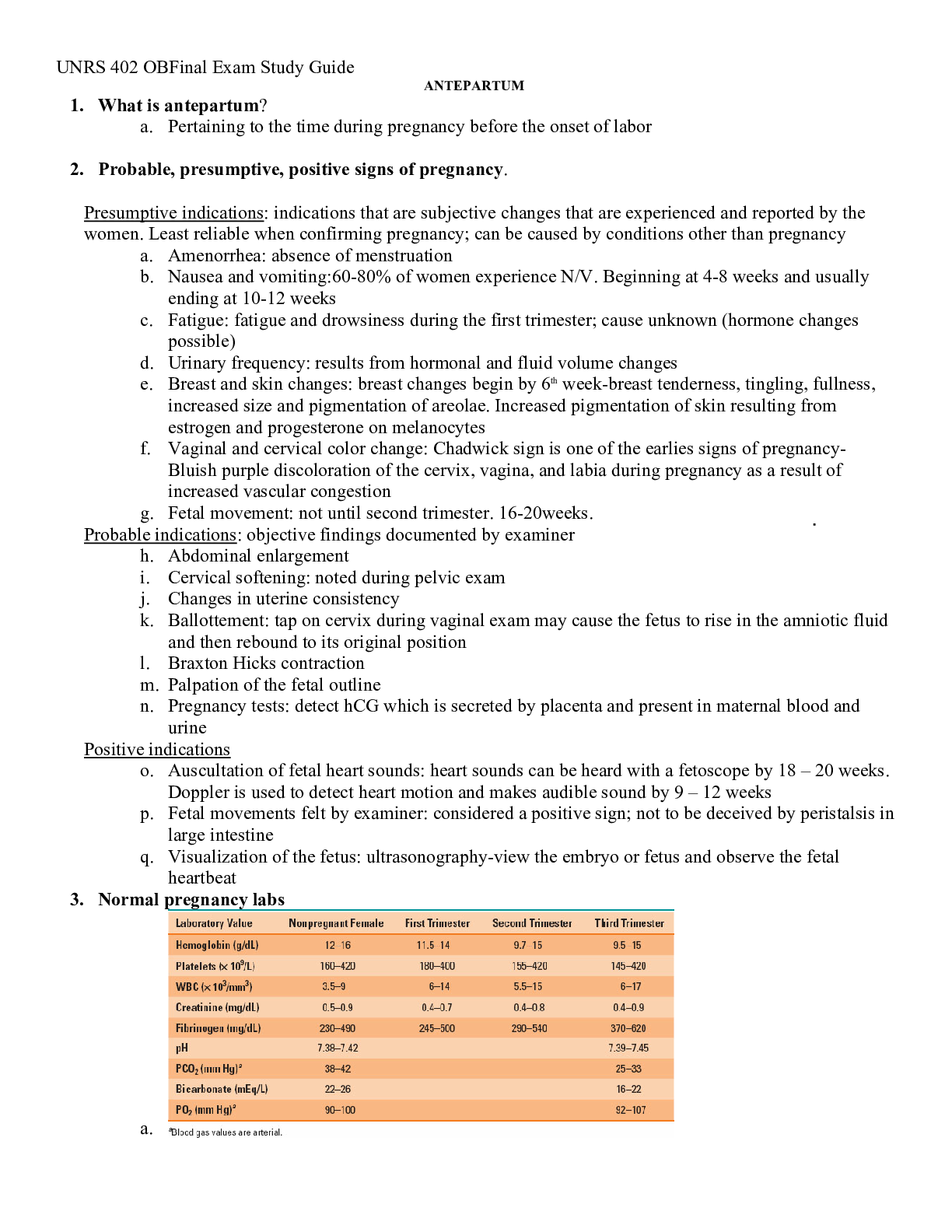
RNP 6645 - Midterm study guide
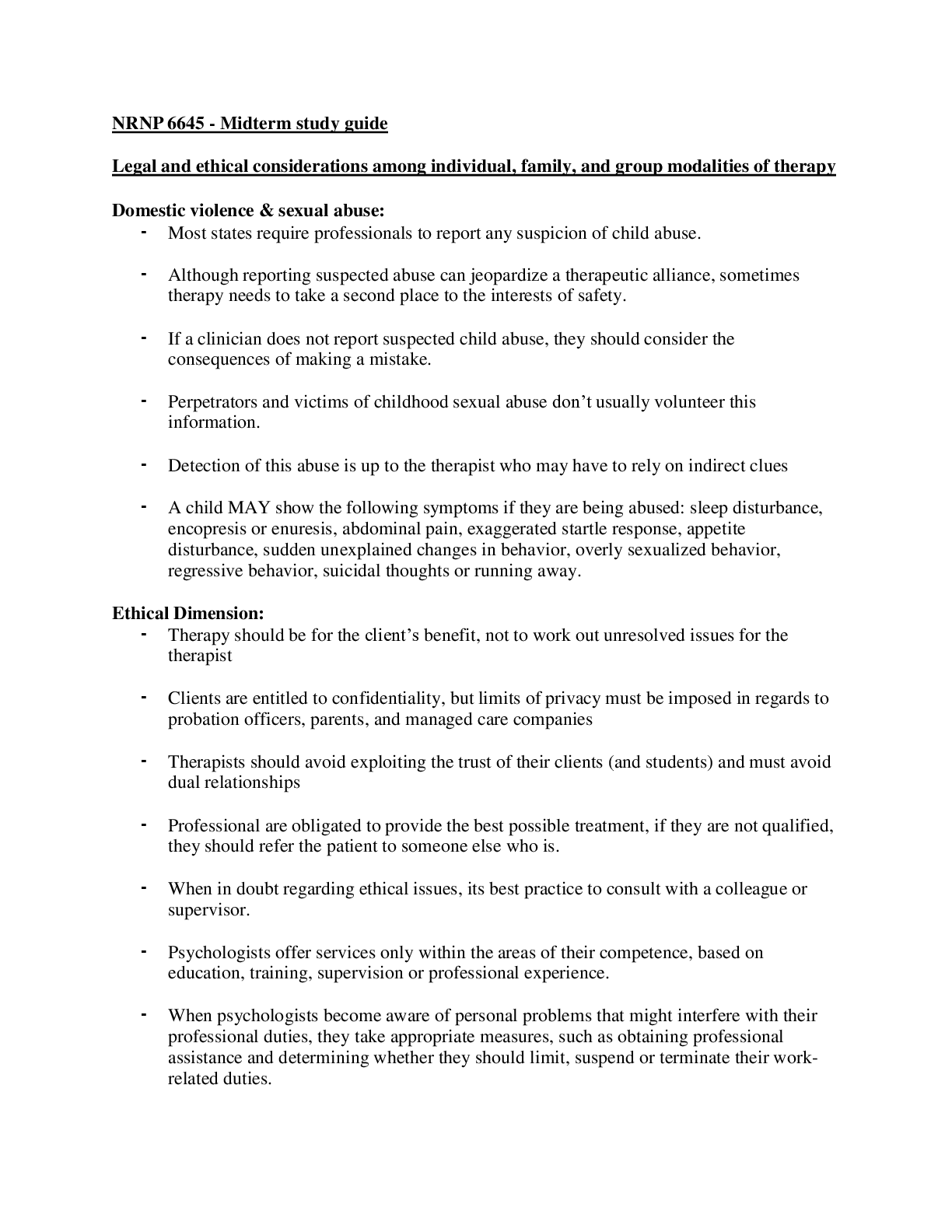
Legal and ethical considerations among individual, family, and group modalities of therapy
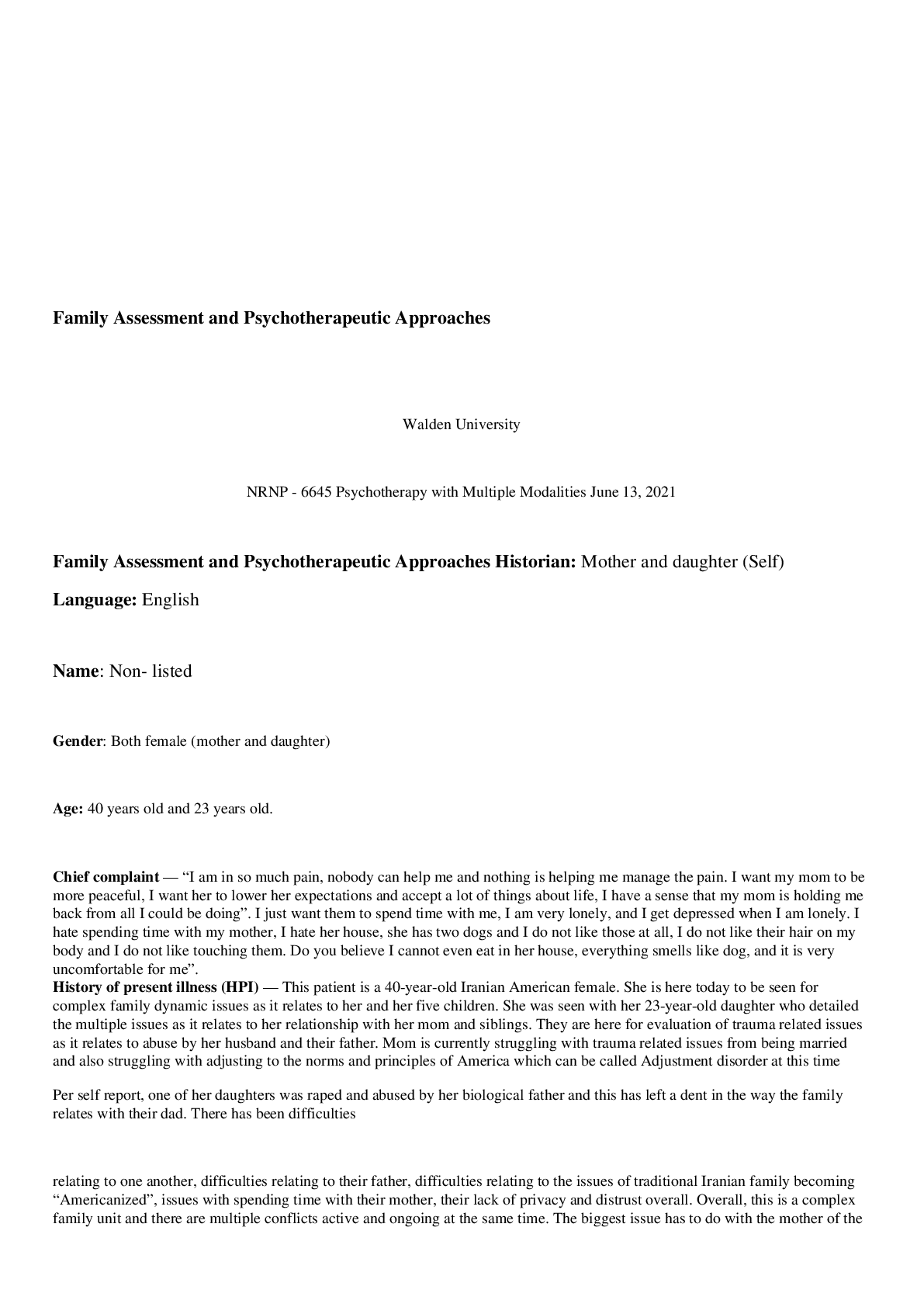
Domestic violence & sexual abuse:
Most states require professionals to report any suspicion o
...
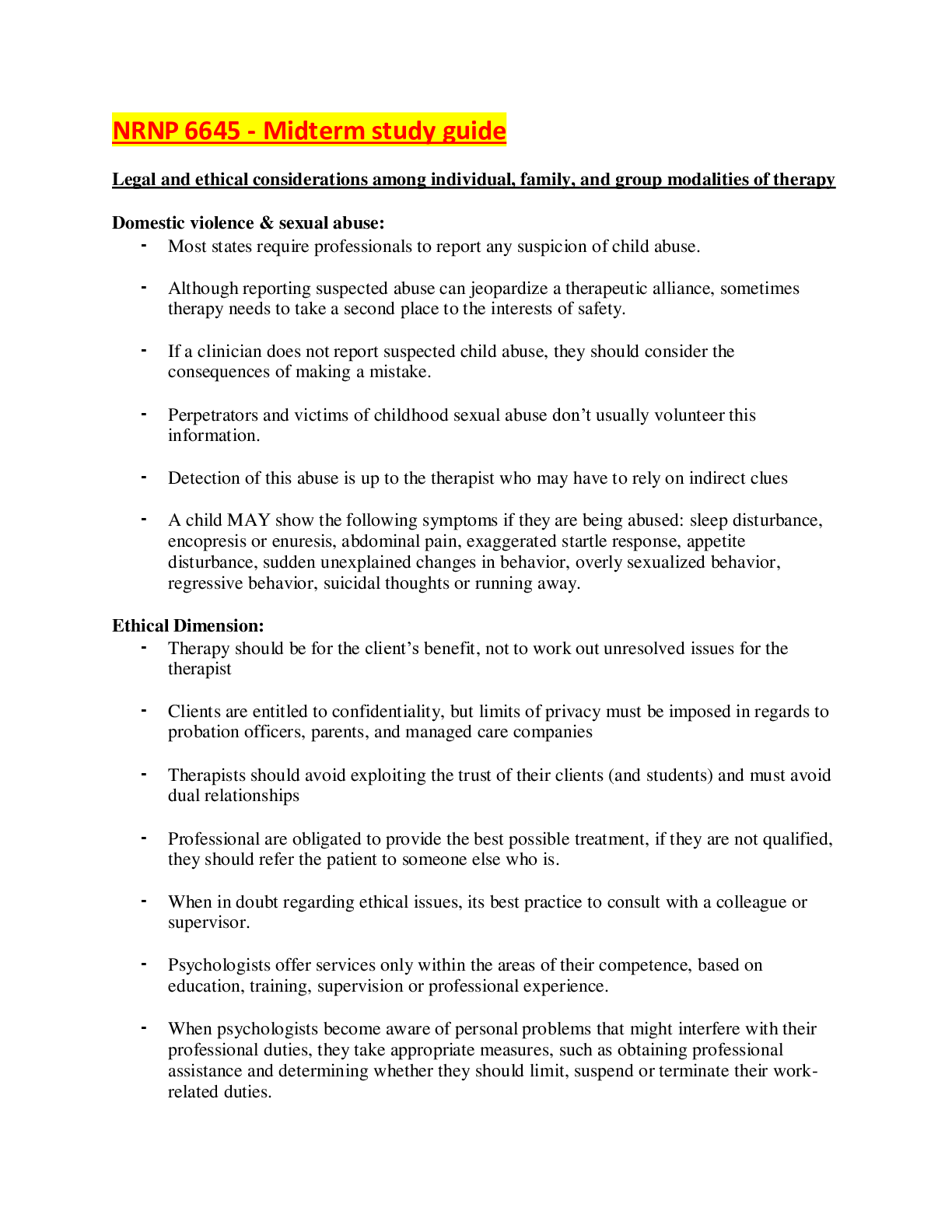
RNP 6645 - Midterm study guide
Legal and ethical considerations among individual, family, and group modalities of therapy
Domestic violence & sexual abuse:
Most states require professionals to report any suspicion of child abuse.
Although reporting suspected abuse can jeopardize a therapeutic alliance, sometimes
therapy needs to take a second place to the interests of safety.
If a clinician does not report suspected child abuse, they should consider the
consequences of making a mistake.
Perpetrators and victims of childhood sexual abuse don’t usually volunteer this
information.
Detection of this abuse is up to the therapist who may have to rely on indirect clues
A child MAY show the following symptoms if they are being abused: sleep disturbance,
encopresis or enuresis, abdominal pain, exaggerated startle response, appetite
disturbance, sudden unexplained changes in behavior, overly sexualized behavior,
regressive behavior, suicidal thoughts or running away.
Ethical Dimension:
Therapy should be for the client’s benefit, not to work out unresolved issues for the
therapist
Clients are entitled to confidentiality, but limits of privacy must be imposed in regards to
probation officers, parents, and managed care companies
Therapists should avoid exploiting the trust of their clients (and students) and must avoid
dual relationships
Professional are obligated to provide the best possible treatment, if they are not qualified,
they should refer the patient to someone else who is.
When in doubt regarding ethical issues, its best practice to consult with a colleague or
supervisor.
Psychologists offer services only within the areas of their competence, based on
education, training, supervision or professional experience.
When psychologists become aware of personal problems that might interfere with their
professional duties, they take appropriate measures, such as obtaining professional
assistance and determining whether they should limit, suspend or terminate their workrelated
duties.
Social workers should not engage in dual relationships with clients or former clients.
Social workers should not solicit private information from clients unless it is essential to
providing services
Social workers should not disclose confidential information to third party payers unless
clients have authorized such disclosure.
Social workers should terminate services to clients when such services are no longer
required.
Counselors are not allowed to maintain a relationship with current clients through social
media
Counselors must wait 5 years after the last clinical contact to have sexual or romantic
relationship with a former client or family member of a client. This applies to both inperson
and electronic interactions.
The APA specifies that when a psychologist provides serves to several people in a
relationship (spouse or parents and children), they must clarify at the start which
individuals are clients and what relationship he or she will have with each one.
Additionally, if the psychologist is called on to perform potentially conflicting roles (such
as family therapist and witness for one party in divorce proceedings), he or she must
attempt to clarify and change or withdraw from the roles as appropriate.
The NASW states that when a social worker provides services to a co ule or family
members, he/she should clarify with all parties what professional obligations he or she
has to the various individuals receiving services.
Also, the social worker should ask all parties to agree to each individual’s right to
confidentiality.
As a therapist one way to resolve ambiguous ethical dilemmas is to use your own best
judgement.
When in doubt, clinicians should ask themselves two questions:
1) What would happen if the client or or important others found out about my
actions?
2) Can you talk to someone you respect about what you’re doing (or
considering)?
The following are “red flags” which should signal potential unethical practices:
1) Specialness - believing that something about the situation is special and that the
ordinary rules don’t apply.
2) Attraction - feeling intense attraction of any kind not only romantic but also being
impressed with the status of the client.
3) Alteration in the therapeutic frame - having longer or more frequent sessions,
engaging in excessive self-disclosure, being unable to say no to the client, and other
things that signal a potential violation of professional boundaries
4) Violating client norms - not referring someone in a trouble marriage for couples
therapy, accepting personal counseling from a supervisor and so on.
5) Professional isolation - not being willing to discuss your decision with professional
colleagues.
[Show More]


.png)