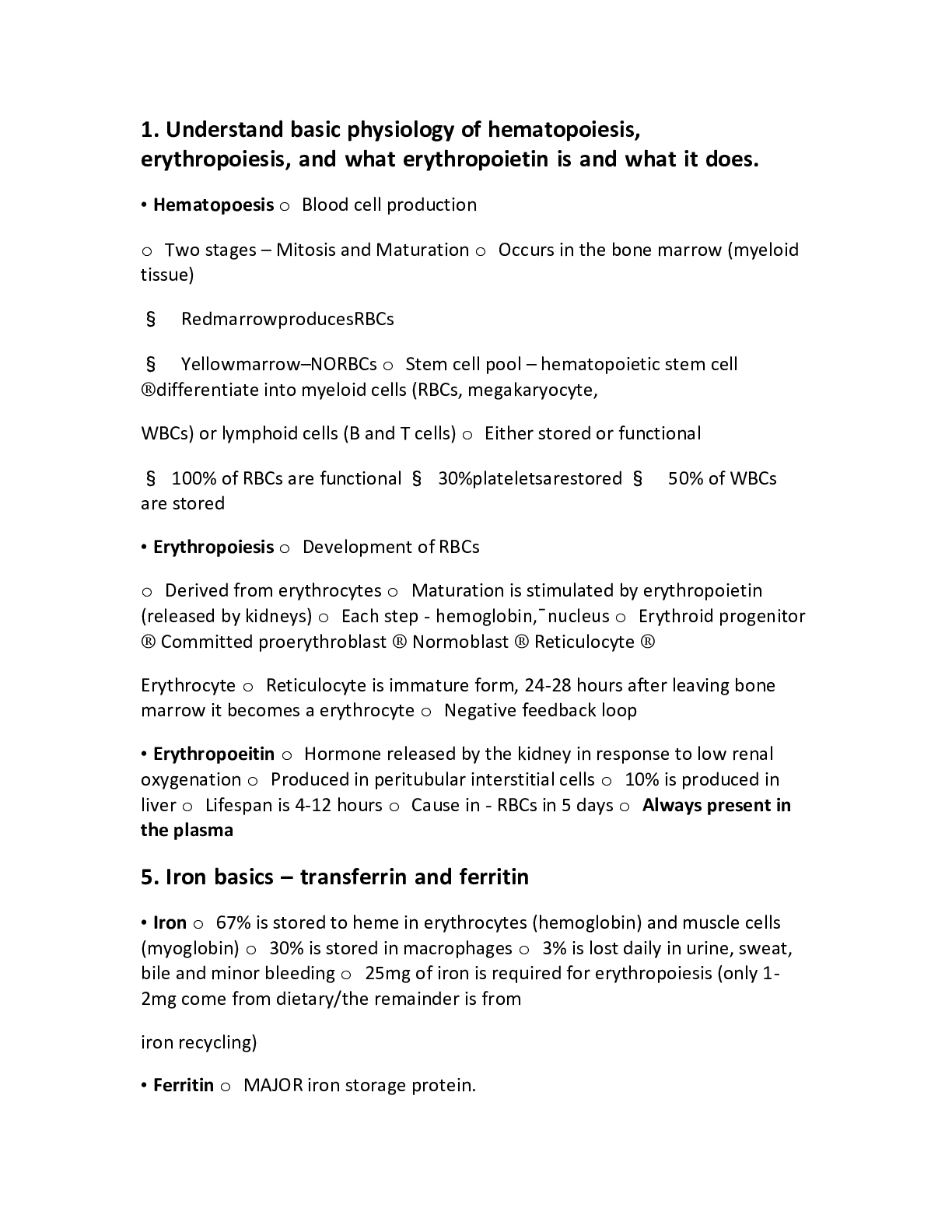
1. Understand basic physiology of hematopoiesis, erythropoiesis, and what erythropoietin is and what it does.
• Hematopoesis o Blood cell production
o Two stages – Mitosis and Maturation o Occurs in the bone marrow (my
...
1. Understand basic physiology of hematopoiesis, erythropoiesis, and what erythropoietin is and what it does.
• Hematopoesis o Blood cell production
o Two stages – Mitosis and Maturation o Occurs in the bone marrow (myeloid tissue)
§ RedmarrowproducesRBCs
§ Yellowmarrow–NORBCs o Stem cell pool – hematopoietic stem cell
®differentiate into myeloid cells (RBCs, megakaryocyte,
WBCs) or lymphoid cells (B and T cells) o Either stored or functional
§ 100% of RBCs are functional § 30%plateletsarestored § 50% of WBCs are stored
• Erythropoiesis o Development of RBCs
o Derived from erythrocytes o Maturation is stimulated by erythropoietin (released by kidneys) o Each step hemoglobin, ̄ nucleus o Erythroid progenitor
® Committed proerythroblast ® Normoblast ® Reticulocyte ®
Erythrocyte o Reticulocyte is immature form, 24-28 hours after leaving bone marrow it becomes a erythrocyte o Negative feedback loop
• Erythropoeitin o Hormone released by the kidney in response to low renal oxygenation o Produced in peritubular interstitial cells o 10% is produced in liver o Lifespan is 4-12 hours o Cause in RBCs in 5 days o Always present in the plasma
5. Iron basics – transferrin and ferritin
• Iron o 67% is stored to heme in erythrocytes (hemoglobin) and muscle cells (myoglobin) o 30% is stored in macrophages o 3% is lost daily in urine, sweat, bile and minor bleeding o 25mg of iron is required for erythropoiesis (only 1- 2mg come from dietary/the remainder is from
iron recycling)
• Ferritin o MAJOR iron storage protein.
o Apoferritin is the precursor to ferritin and does not have attached iron o
Hemosiderin are ferritin micelles
§ normalinsmallamountsinthespleen(iftherearelargeamountsofhemosiderinin lungs or subcutaneous tissue this is a pathological condition).
• Transferrin o iron bound to apotransferrin
o responsible for transferring iron in circulation o Iron for Hgb production is carried by transferrin to the bone marrow o binds to transferrin receptors on erythroblasts. o She said “this transfer to immature erythroblasts is essential for development of red blood
cells to carry O2 to the body itself” • Transferrin-iron complex
o binds to transferrin receptor on erythroblast’s plasma membrane
o complex is moved into the cell by endocytosis. o Once inside the cell, iron is released (dissociated) from transferrin o dissociated transferrin is returned to the bloodstream for reuse/recycling
• Foods that help/enhance iron absorption o meat, poultry, fish. Foods that inhibit iron absorption - carbonates, tannate (tea), oxalate (spinach, rhubarb), phosphates (vegetables), clay
• Iron absorption
o liver secretes apotransferrin
o apotransferrin binds with free iron and becomes transferrin o transferrin binds with receptors in intestinal epithelial cells (duodenum and upper jejunum) o released into blood capillaries as plasma transferrin o Excess iron
goes into liver and bone marrow, → become apoferritin then ferritin (stored form of
iron)
6. Roles of fibrin, thrombin
• Blood clot is a meshwork of protein strands that stabilizes the platelet plug and traps other cells, such as erythrocytes, phagocytes, and microorganisms
• Strands are made up of Fibrin, which is produced by the clotting system.
o Fibrin is critical in the development of the clot since it binds all the components of the clot
together.
• Thrombin is the enzyme that converts fibrinogen to fibrin.
• Sequence of events in the blood clot:
o injury to the blood ve
.....................................................................................continued......................................................................................
[Show More]