NURSING > EXAM > BME 3561 PERIOPERATIVE EXAM QUESTIONS WITH COMPLETE SOLUTION 2026,100%CORRECT (All)
BME 3561 PERIOPERATIVE EXAM QUESTIONS WITH COMPLETE SOLUTION 2026,100%CORRECT
Document Content and Description Below
Last updated: 1 month ago
Preview 5 out of 22 pages
Instant download

Loading document previews ...
Buy this Document to get the Full Access Instantly
Provided by Students Who Aced it
We Verify Document Content to Gurantee Accuracy
Reviews( 0 )
Document information
Connected school, study & course
About the document
Uploaded On
May 13, 2026
Number of pages
22
Written in
All

Additional information
This document has been written for:
Uploaded
May 13, 2026
Downloads
0
Views
20
Document Keyword Tags
Recommended For You
Get more on EXAM »
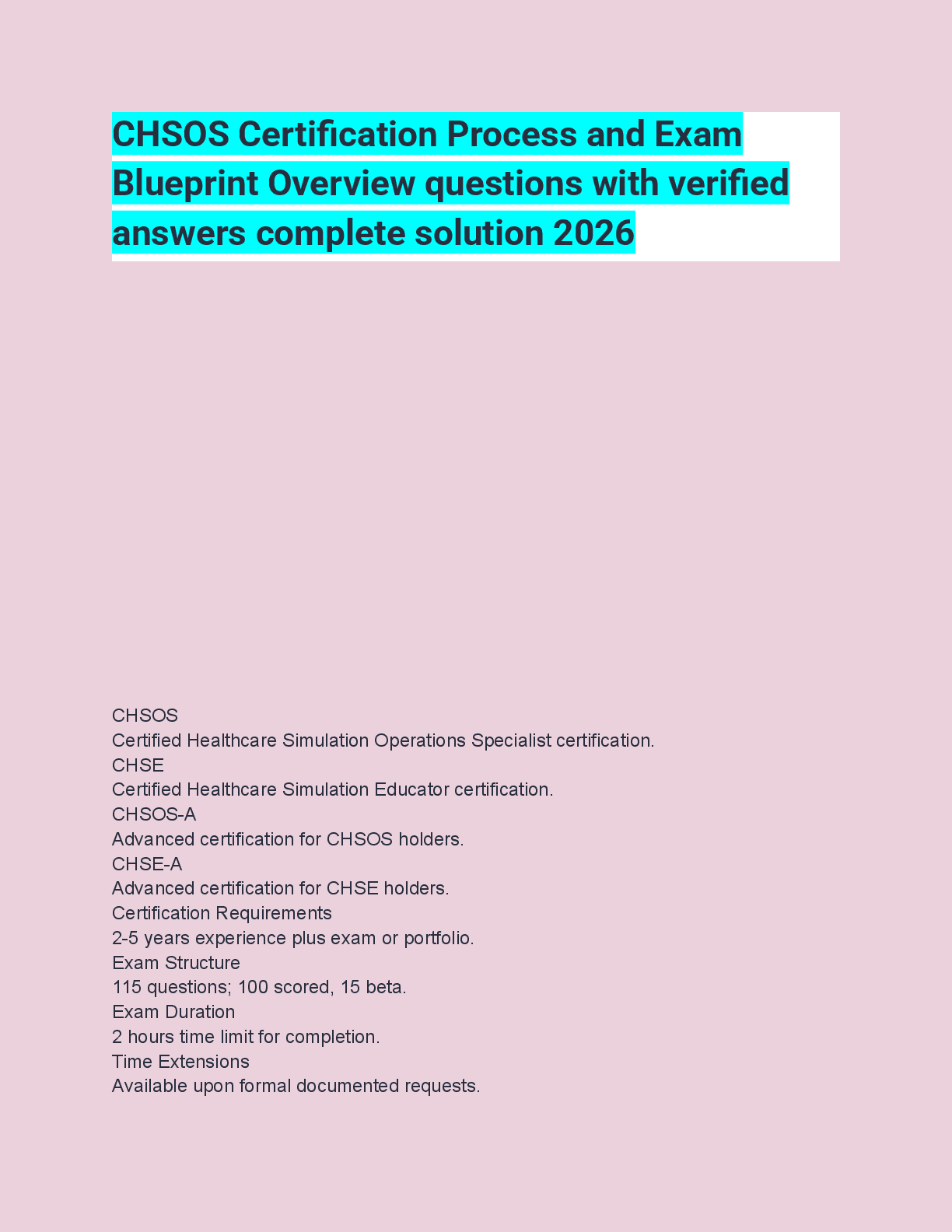
CHSOS Certification Process and Exam Blueprint Overview questi...
WGU C207 Self-Assessments Modules 1-6 Complete Q&A Solution 20...
WGU C207 Self-Assessments Modules 1-6 Complete Q&A Solution 20...
WGU C207 Self-Assessments Modules 1-6 Complete Q&A Solution 20...
WGU D469 Performance Assessment with complete solution 2026 Up...

ITE 152 Exam 2 study guide questions with correct answers 100%...

Complete Test Bank For Lehnes Pharmacotherapeutics for Advance...