Health Care > EXAM > NGR6200 HYPERLIPIDEMIA REVIEW STUDY QUESTIONS WITH CORRECT ANSWERS GUARANTEED PASS | RATED A+ (All)
NGR6200 HYPERLIPIDEMIA REVIEW STUDY QUESTIONS WITH CORRECT ANSWERS GUARANTEED PASS | RATED A+
Document Content and Description Below
Last updated: 1 year ago
Preview 4 out of 15 pages
Instant download

Loading document previews ...
Buy this Document to get the Full Access Instantly
Provided by Students Who Aced it
We Verify Document Content to Gurantee Accuracy
Reviews( 0 )
Document information
Connected school, study & course
About the document
Uploaded On
Dec 08, 2024
Number of pages
15
Written in
All

Additional information
This document has been written for:
Uploaded
Dec 08, 2024
Downloads
0
Views
55
Topic Tags
Recommended For You
Get more on EXAM »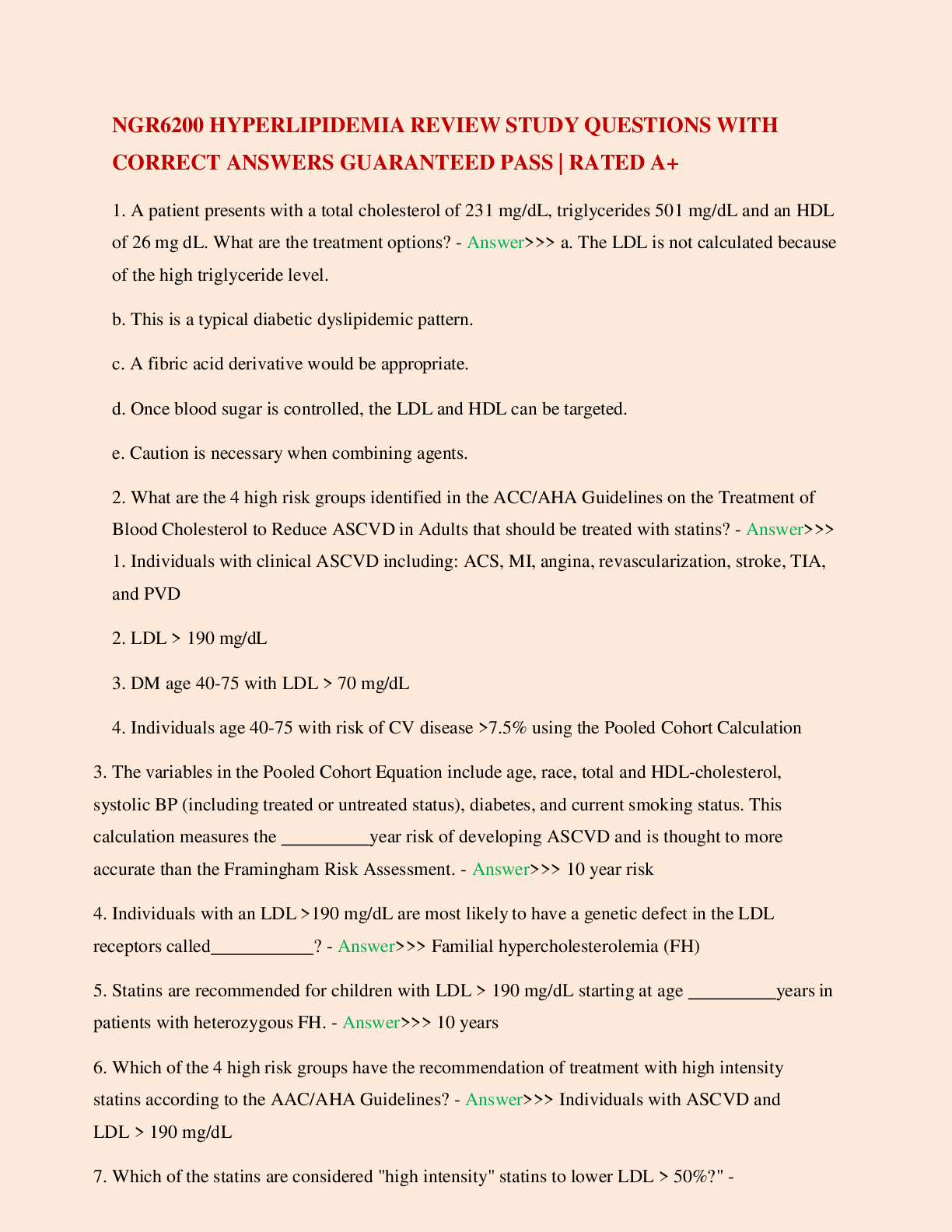


NGR 6200 Quizzes (Foundation and HEENT) - Complete Solutions
Test Bank for Shah's Public Health and Preventive Health Care...
Strategic Healthcare Management Planning and Execution 2nd Edi...
Sonography 5th Edition By Reva Curry, Marilyn Prince (Test Ban...
Test bank for Medical Emergencies-Essentials for the Dental Pr...
Test Bank for Physical Examination and Health Assessment 9th E...