Patho Exam 4 Modules | Questions with Verified Answers In which layer of the arterial wall can an atheroma form? A. Tunica externa B. Tunica musculara C. Tunica intima D. Tunica media Which substance contains the most
...
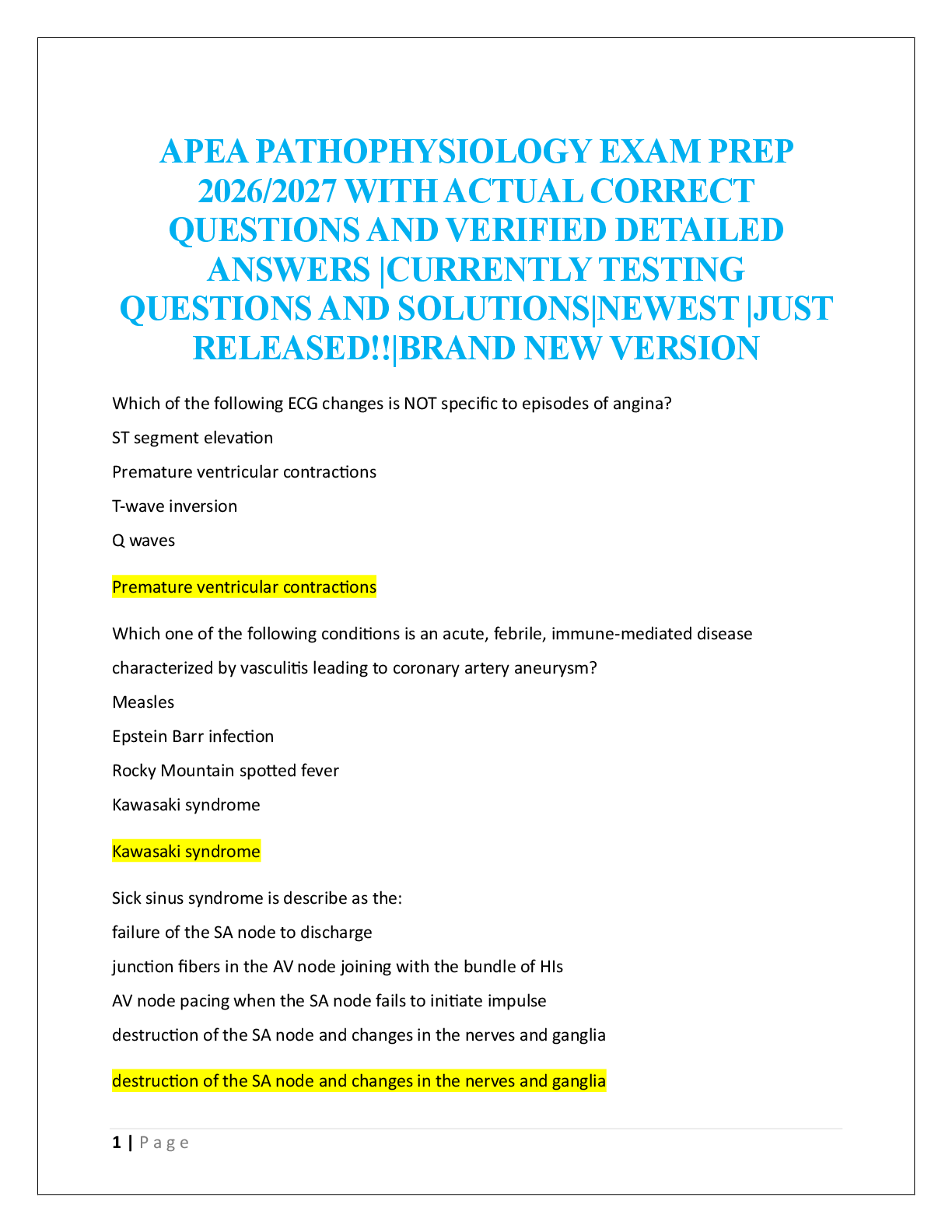
Patho Exam 4 Modules | Questions with Verified Answers In which layer of the arterial wall can an atheroma form? A. Tunica externa B. Tunica musculara C. Tunica intima D. Tunica media Which substance contains the most cholesterol? A. VLDL B. HDL C. LDL D. Chylomicron Which type of cell is associated with endothelial injury related to cholesterol? a. Red blood cells b. Macrophages c. Platelets d. Smooth muscle cells Which statement explains how cholesterol is processed in the body? A. The capillaries in the digestive tract transports dietary cholesterol to the cells. Low-density lipoproteins (LDLs) move cholesterol from the cells to the liver for processing into high-density lipoprotein (HDL) cholesterol. The HDL moves cholesterol in the blood back to the cells, where it accumulates as fat deposits inside the blood vessels. B. Dietary fat is processed in the liver into HDL and LDL. The LDL cholesterol is transported to cells in the body. HDL transports cholesterol back to the liver for reprocessing and excretion as bile salts. Excess cholesterol in the blood accumulates as plaques in the vessel walls. Mr. D. is 60 years old with a body mass index (BMI) of 32. He comes to the emergency department (ED) with severe chest pain radiating down his left arm. He is sweating, grasping his chest in pain, and complaining of nausea. He says the pain started early this morning, around 7 a.m.; it is now noon. He said he was mowing the lawn when the pain began, so he rested for a while. The pain did not subside. Mr. D.'s blood pressure is 180/100 mm Hg, pulse is 124, respirations are 20 breaths per minute, and temperature is 98.6°F. He has a medical history of coronary artery disease and diabetes mellitus. He smokes two packs of cigarettes per day, enjoys eating fried foods, and does not adhere to any nutritional guidelines. He does not exercise, and his job mostly involves sitting at a desk. Mr. D. is diagnosed with myocardial infarction from atherosclerosis. What makes up the plaque in Mr. D.'s arteries made of? Select all that apply. Lipid debris Collagen Blood cells Fibrous cap Lymphocytes Eosinophils Which processes in the blood vessel precede an atheroma rupture? a. Cholesterol builds up in the blood vessel, causing accumulation of blood clots and slowing blood flow. b. The blood vessel wall narrows from lipoproteins, allowing plaque to dissolve into the blood and thrombus formation. c. A blood vessel wall injury allows lipoprotein infiltration and monocytes migration, causing buildup and protrusion of fatty streaks into the blood vessel. d. Plaque in the blood allows vessel walls to thicken with lipid debris and causes thrombus formation. Mr. D. is 60 years old with a body mass index (BMI) of 32. He comes to the emergency department (ED) with severe chest pain radiating down his left arm. He is sweating, grasping his chest in pain, and complaining of nausea. He says the pain started early this morning, around 7 a.m.; it is now noon. He said he was mowing the lawn when the pain began, so he rested for a while. The pain did not subside.Mr. D.'s blood pressure is 180/100 mm Hg, pulse is 124, respirations are 20 breaths per minute, and temperature is 98.6°F. He has a medical history of coronary artery disease and diabetes mellitus. He smokes two packs of cigarettes per day, enjoys eating fried foods, and does not adhere to any nutritional guidelines. He does not exercise, and his job mostly involves sitting at a desk. Mr. D. is diagnosed with myocardial infarction from atherosclerosis.When Mr. D.'s blood work returns, the nurse notes abnormal cholesterol levels. What imbalance would you expect to see? a. High levels of HDL and LDL b. High levels of HDL and low levels of LDL c. Low levels of LDL and high levels of HDL d. Low levels of HDL and high levels of LDL What results from the abnormal production of renin? a. Increased sodium in the bloodstream b. Conversion of angiotensinogen to angiotensin I c. Lung constriction d. Pulmonary dilation Which organ passes along aldosterone causing water and sodium retention? Kidneys Heart Liver Lungs True or false: Reduction of blood flow to the kidneys causes the liver to secrete renin. TRUE FALSE Essential hypertension is a result of what? a. Reduced oxygen in the bloodstream b. Intra-arterial pressure damaging the blood vessel c. Blood clotting around damaged endothelial cells d. Increased cardiac output and vascular resistance Which event causes vessel constriction? Angiotensin I conversion to angiotensin II Aldosterone secretion in the bloodstream Increased blood volume Peripheral vascular resistance Increased sodium and water in the blood results in what? Renin production Arteriolar constriction Rapid blood flow Increased blood volume Which type of blood vessel is prone to aneurysms because of lack of supporting tissue? Femoral artery Carotid artery Aortic artery Pulmonary artery Which term describes a pathologic outpouching or sac-like dilation of an artery caused by the weakness of the vessel wall? Dissection Aneurysm Fusiform Infarction During a routine physical examination of a 66-year-old patient, the nurse practitioner notes a pulsating abdominal mass and refers the patient for further treatment. The nurse practitioner is educating the patient about aneurysms. Which pathophysiologic aspect of aneurysm would support the patient teaching? A. Aneurysms are commonly a result of poorly controlled diabetes mellitus. B. Hypertension is a frequent modifiable contributor to aneurysms. C. Individuals with an aneurysm are normally asymptomatic until the aneurysm ruptures. D. Aneurysms can normally be resolved with lifestyle and diet modifications. Which conditions have symptoms similar to an aortic dissection? Select all that apply. Stroke Heart attack Diabetes Atherosclerosis True or false: Most aortic aneurysms are discovered with no prior symptoms. TRUE FALSE Which patient is at the greatest risk for aortic aneurysm? A 60-year-old client with diminished oxygen saturation, low red blood cell levels, and pallor A 70-year-old client with jugular venous distention, shortness of breath, and pulmonary edema A 66-year-old client back pain and neck vein distention An 81-year-old client with acute cognitive changes as well as difficulty in speaking and swallowing Which are clinical manifestations of arterial disease? (Select all that apply.) Dull, aching pain Pain when walking Pallor Gangrene Edema Which are clinical manifestations of venous disease? (Select all that apply.) Dull, aching pain Pain when walking Pallor Gangrene Edema A patient complains of persistent leg cramps when at rest and has a leg ulcer at the medial malleoli surrounded by bluish-brown skin. The patient has hypertension. What is the cause of the leg ulcer? Arterial insufficiency Diabetes Venous insufficiency Respiratory insufficiency Which are symptoms of peripheral venous disease? Select all that apply. Numbness Intermittent claudication Diminished pulse in the legs and feet Discoloration Which description best defines afterload? A. The force that the contracting heart muscle must generate to eject blood from the ventricles B. Contractile performance of the heart C. Volume of blood that stretches the ventricle at end diastole D. Volume of blood ejected from the ventricle with each contraction Which statement defines preload? A. The force that the contracting heart muscle must generate to eject blood from the ventricles B. The amount of blood the heart must pump with each beat C. Volume of blood that stretches the ventricle at end diastole D. Volume of blood ejected from the ventricle with each contraction True or false: With systolic heart failure, an insufficient amount of blood gets pumped out for systemic circulation, eventually causing backup into the pulmonary circulation. TRUE FALSE
[Show More]