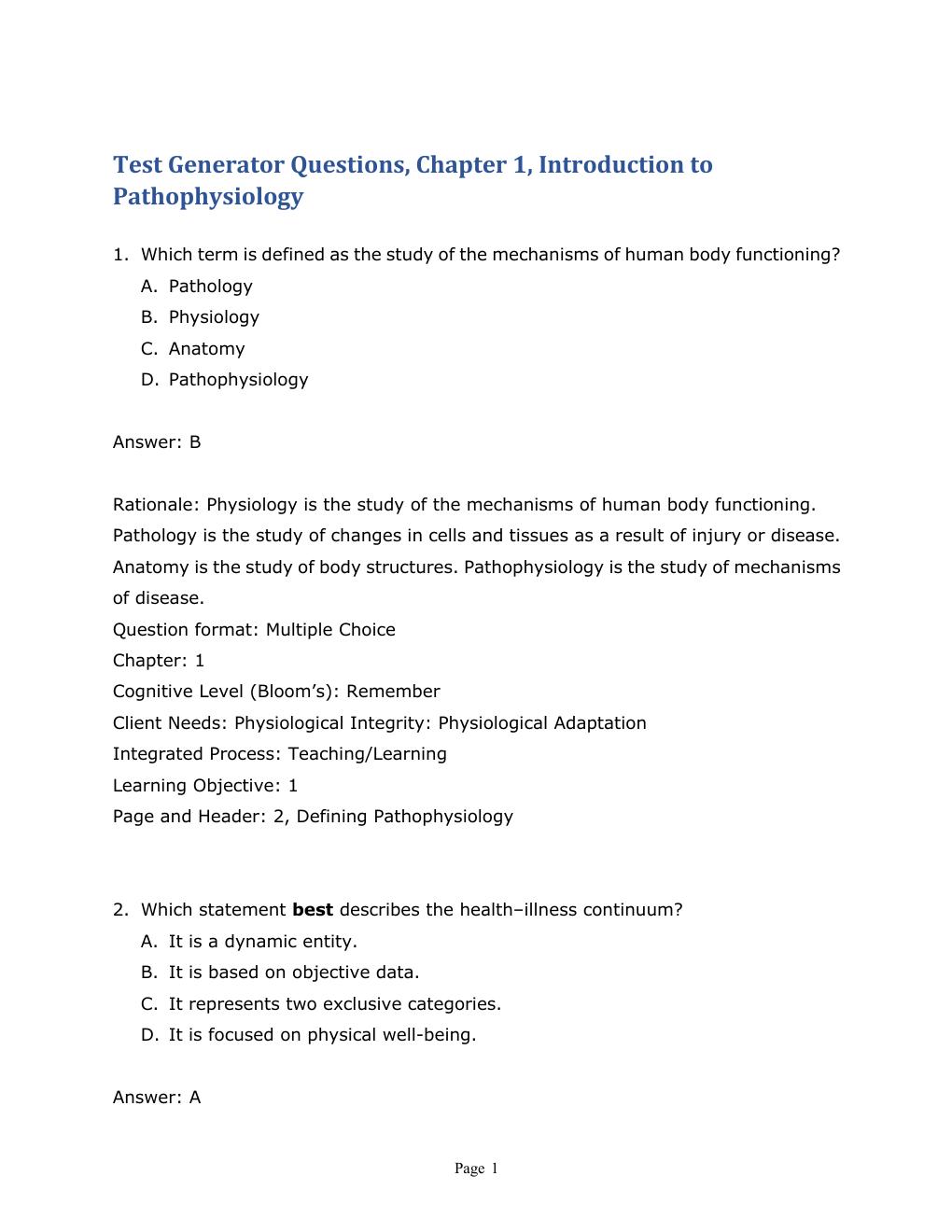
Test Generator Questions, Chapter 1, Introduction to Pathophysiology 1. Which term is defined as the study of the mechanisms of human body functioning? A. Pathology B. Physiology C. Anatomy D. Pathophysiology Answer: B R
...
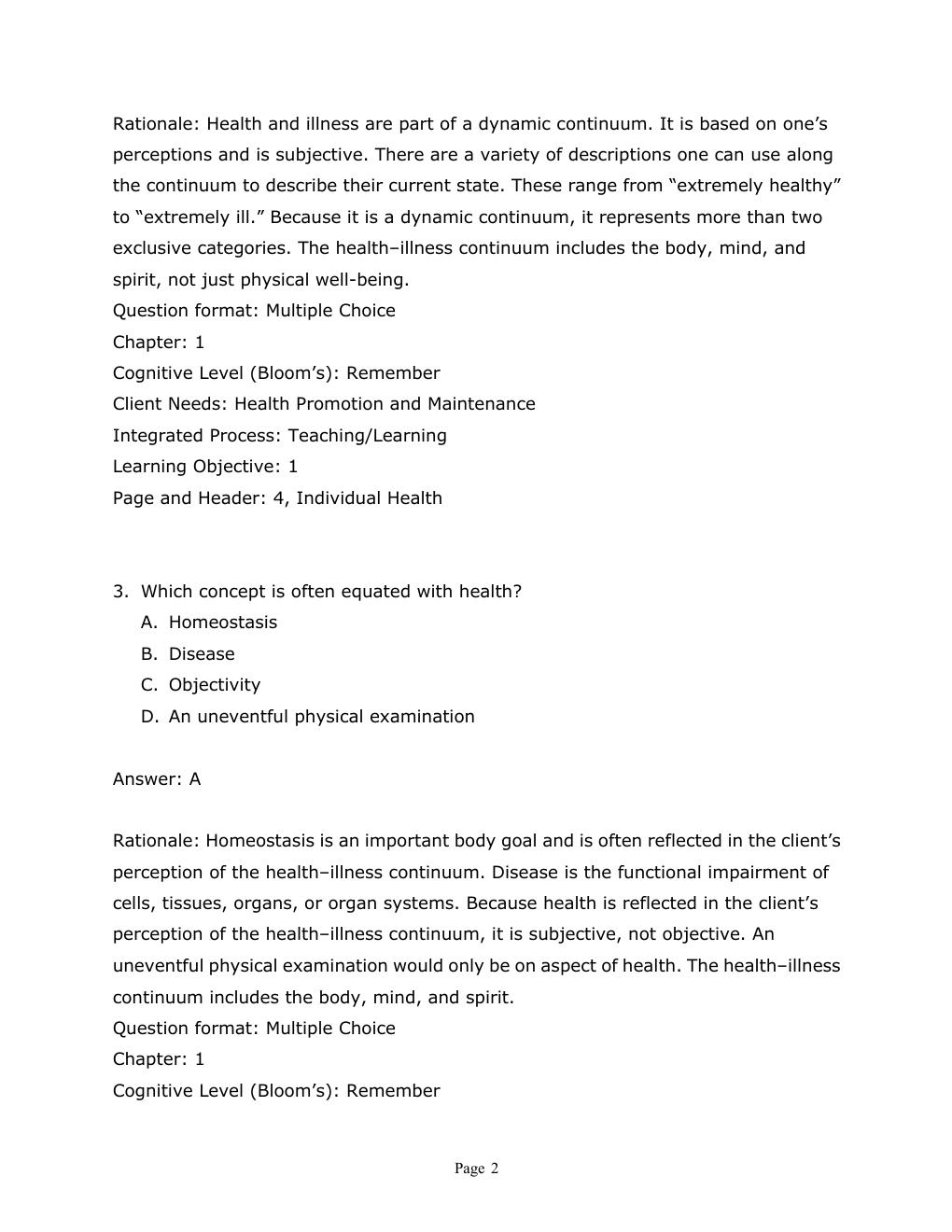
Test Generator Questions, Chapter 1, Introduction to Pathophysiology 1. Which term is defined as the study of the mechanisms of human body functioning? A. Pathology B. Physiology C. Anatomy D. Pathophysiology Answer: B Rationale: Physiology is the study of the mechanisms of human body functioning. Pathology is the study of changes in cells and tissues as a result of injury or disease. Anatomy is the study of body structures. Pathophysiology is the study of mechanisms of disease. Question format: Multiple Choice Chapter: 1 Cognitive Level (Bloom’s): Remember Client Needs: Physiological Integrity: Physiological Adaptation Integrated Process: Teaching/Learning Learning Objective: 1 Page and Header: 2, Defining Pathophysiology 2. Which statement best describes the health–illness continuum? A. It is a dynamic entity. B. It is based on objective data. C. It represents two exclusive categories. D. It is focused on physical well-being. Answer: A Page 1 Rationale: Health and illness are part of a dynamic continuum. It is based on one’s perceptions and is subjective. There are a variety of descriptions one can use along the continuum to describe their current state. These range from “extremely healthy” to “extremely ill.” Because it is a dynamic continuum, it represents more than two exclusive categories. The health–illness continuum includes the body, mind, and spirit, not just physical well-being. Question format: Multiple Choice Chapter: 1 Cognitive Level (Bloom’s): Remember Client Needs: Health Promotion and Maintenance Integrated Process: Teaching/Learning Learning Objective: 1 Page and Header: 4, Individual Health 3. Which concept is often equated with health? A. Homeostasis B. Disease C. Objectivity D. An uneventful physical examination Answer: A Rationale: Homeostasis is an important body goal and is often reflected in the client’s perception of the health–illness continuum. Disease is the functional impairment of cells, tissues, organs, or organ systems. Because health is reflected in the client’s perception of the health–illness continuum, it is subjective, not objective. An uneventful physical examination would only be on aspect of health. The health–illness continuum includes the body, mind, and spirit. Question format: Multiple Choice Chapter: 1 Cognitive Level (Bloom’s): Remember
[Show More]
Preview 10 out of 341 pages