1.
studies the structure of the body parts and their relationships to one another
2.
the function of the body; how the body parts work and carry out thru life-sustaining activities
3.
study of large body structure
...
1.
studies the structure of the body parts and their relationships to one another
2.
the function of the body; how the body parts work and carry out thru life-sustaining activities
3.
study of large body structures visible to the naked eye
4.
all the structures (muscles, bones, blood vessels, nerves) in a particular region of the body are
body structure is studied system by system
6.
study of internal structures as they relate to the overlying skin surface
7.
deals with structures too small to be seen with the naked eye
8.
the cells of the body
9.
study of tissues
10.
traces structural changes that occur in the body throughout the life span
11.
concerns developmental changes that occur before birth
kidney funciton and urine production
13.
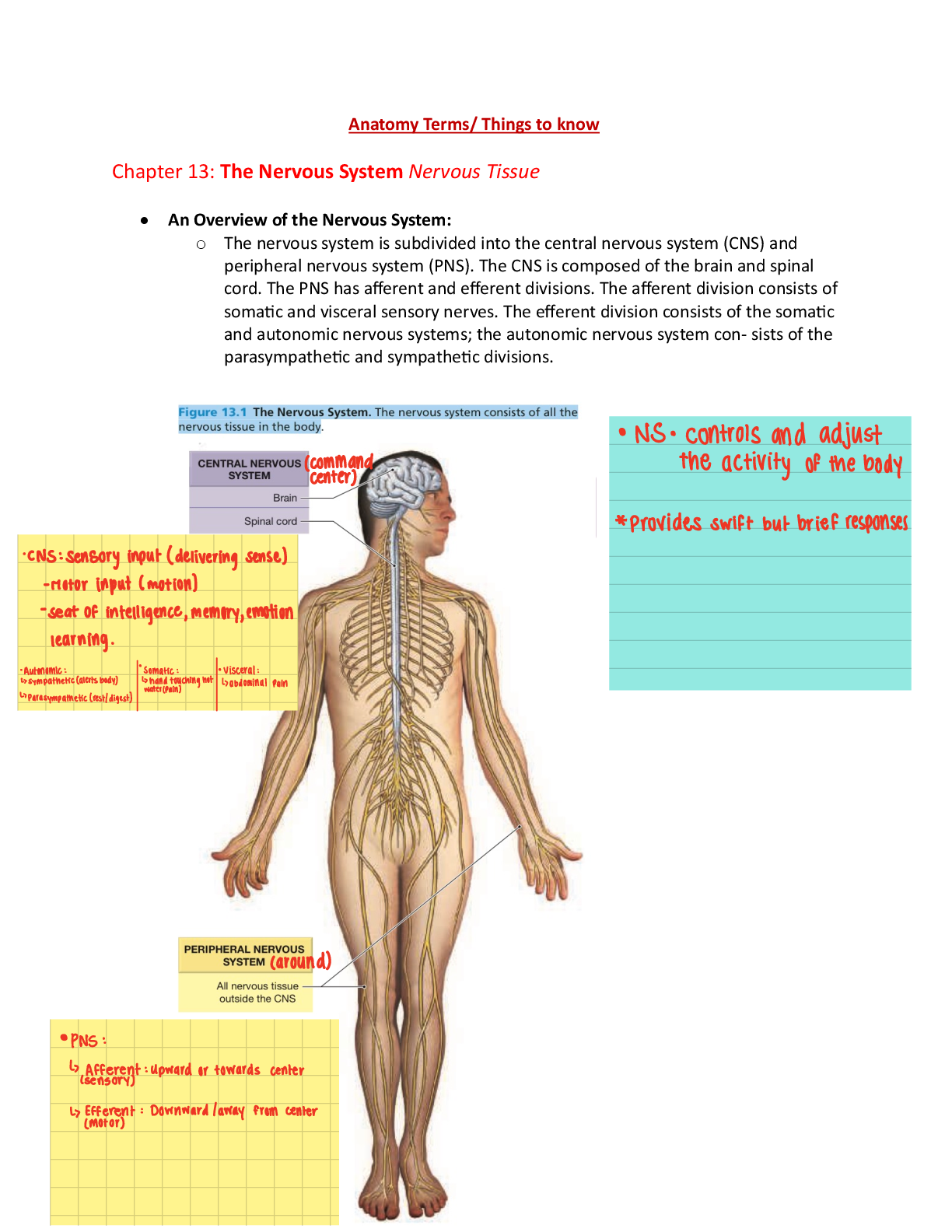
nervous system
14.
operation of the heart and blood vessels
15.
groups of similar cells that have a common function
16.
the smallest units of living things
17.
5
18.
discrete structure composed of at least two tissue types that perform a specific body function
19.
extremely complex functions become possible
20.
the sum total of all structural levels working to keep us alive
21.
includes the activities promoted by the muscular system, such as propelling ourselves from one place to another by running, and manipulating the external environment with our fingers
22.
ability to sense changes in the environment and then respond to them
23.
breaking down of ingested foodstuffs to simple molecules that can be absorbed into the blood
24.
mechanical and chemical breakdown of food
25.
includes all chemical reactions that occur within body cells. breaking down substances into their simpler building blocks
26.
breaking down of. complex to simple
27.
building up of. simple to complex
28.
process of removing wastes from the body
29.
occurs at the cellular and the organismal level
30.
an increase in size of body part or the organism as a whole. increase in the number of cells
31.
taken in via the diet, contain the chemical substances used for energy and cell building
32.
approx 60-80% of our body weight and single most abundant chemical substance in the body
33.
37c or 98.6f
34.
maintain stable internal conditions
type of sensor that monitors the external environment and responds to the changes
36.
disturbance of homeostasis
37.
body is erect with feet slightly apart
38.
head, neck, trunk
39.
vertical plane that divides the body into right and left parts
41.
sagittal plane that lies exactly at the midline
42.
lie vertically and divide into anterior and posterior. also called, coronal plane
43.
runs horizontally form right to left, dividing the body into superior and inferior parts
44.
cuts made diagonally between the horizontal and vertical planes
45.
inner layer, circular: middle; longitudinal: outer
46.
name based on direction of arrangement
47.
protects the nervous system organs. contains the cranial cavity and the vertebral or spinal cavity
48.
contains the thoracic cavity and the abdominopelvic cavity. collectively called the viscera
49.
surrounded by the ribs and muscles of the chest
50.
lungs
51.
encloses the heart and remaining thoracic organs
52.
stomach, intestines, spleen, liver
53.
pelvis and urinary bladder, some reproductive organs and the rectum
54.
covers the organs
55.
lines the organs
56.
defines the extent of the cell wall
57.
series of integral protein molecules in the plasma membrane of adjacent cells fuse together
58.
anchoring junctions- mechanical couplings scattered like rivets along the side of a budding cells to prevent their separation
59.
a communicating junction between adjacent cells
60.
allows ions to pass freely from cell to cell
61.
allows transmission of depolarizing current across entire heart
62.
the tendency of molecules or ions to move from an area where they are in higher concentration to an area of low concentration
63.
nonpolar and lipid soluble substances diffuse directly through the lipid bilayer
64.
gas exchange occurs by?
65.
transported substance either binds to protein carriers or moves through a cannel
66.
diffusion of a solvent through a selectively permeable membrane
67.
the tendency of water to move into a cell by osmosis
68.
back pressure exerted by water agains the membrane
69.
the same concentrations inside as well as outside of the cell
70.
higher concentration outside than inside
71.
higher concentration inside than outside
72.
requires carrier proteins that combine with substances
73.
transport macromolecules across with vesicles
74.
the cell engulfs some relatively large or solid material
cell drinking; aka fluid phase endocytosis
76.
bind to only certain proteins to enter cell
77.
eject substances from a cell into the extracellular fluid
78.
play a role in embryonic development and wound repair and in immunity
79.
bind specifically to plasma membrane receptors
80.
cellular material between the plasma membrane and the nucleus; site of most cellular activities
81.
viscous fluid in which the other cytoplasmic elements are suspended
82.
metabolic machinery of the cell; carries out a specific function in the cell
83.
"powerhouse of the cell"; provide ATP supply
84.
sites of protein synthesis
85.
interconnected tubes and parallel membrane enclosing fluid filled cavities
86.
"traffic director"; modify, concentrate, and package proteins from rough ER to export from the cell
87.
contain oxidase and catalyse
88.
abundant in phagocytes; eat things in the cell
89.
product, degrade, store, and export biological molecules, and degrade potentially harmful substances
90.
"cell skeleton" supports the cell structure
91.
strengthens cell surface and resists compression
92.
determine the overall shape of the cell as well as the distribution of cellular organelles
93.
cell center
94.
whiplike motile cellular extensions that occur on exposed surfaces
95.
what is mucus with filtrates moved by?
96.
longer than cilia; only one in human body is sperm
97.
centrioles forming the bases of cilia and flagella
98.
project from all exposed cell surfaces. increase plasma membrane surface area and mostly on absorptive cells
99.
control center of a cell
100.
in skeletal muscle cells, bone destruction cells, and liver cells; multiple nucleus
101.
double membrane barrier separated by a fluid-filled space
102.
30% dna and 60% histones and 10% rna
103.
fundamental units of chromatin
104.
period from cell formation to cell division
105.
division of the nucleus
106.
the division of the cytoplasm
107.
segment of a dan molecule that carries instructions for creating one polypeptide chain
108.
amino acid specifying informational sequences
109.
transfers info fro a dna base to the complementary base of an mRNA molecule
110.
the enzyme that oversees the synthesis of mRNA
111.
nucleic acid translated into proteins
found outside the cell; body fluids, cellular secretions, and extracellular matrix
113.
programmed cell death
114.
Mechanism of eliminating self cells without triggering an inflammatory response
115.
a decrease in size of an organ or body tissue
116.
accelerated growth
117.
sheet of cells that covers a body surface or lines a body cavity; avascular
118.
upper free surface exposed to the body exterior or the cavity of an internal organ
119.
attached
120.
adjacent to the basal surface; adhesive sheet that consists of glycoproteins
121.
deep to the basal lamina; extracellular material containing a fine network of fibers
122.
the two lamina
single layer of cells. absorption, secretion, and filtration occur
124.
composed of two or more cells layers stacked; high abrasion areas such as skin surface or the lining of the mouth
125.
flattened and scalelike
126.
boxlike, approximately as tall as they are wide
127.
tall and column
128.
eventually lose their ducts, product hormones
129.
one or more cells that make and secrete a product
130.
3 pairs of glands in salivary glands
131.
aqueous fluid that usually contains proteins
132.
internally secreting
133.
secretions placed directly into blood; make up whole system of body; blood transports secretions to target tissues for functions
134.
e
secretes hormones that are transported to target tissues via blood
causes changes in metabolic activities in specific cells
exerts effects relatively slowly (seconds or even days)
137.
has generally prolonged effects
138.
externally secreting
139.
sweat, salivary, etc.; secretions transported through ducts; function within a particular system of the body
140.
messenger chemicals that are secreted by exocytosis directly into the extracellular space
141.
why is diagnosing and treatment difficult?
142.
secrete their products onto body surfaces or into body cavities
143.
secrete their products by exocytosis as they are produced
144.
accumulate their products within until they rupture
145.
most abundant and widely distributed of the primary tissues; most of skin
146.
unstructured material that fills the space between the cells and contains the fibers
provide high tensile strength
148.
fibroblasts
149.
chondroblasts
150.
qualities between dense connective tissue and bone
151.
osteoblasts
152.
strength and stretchability;found in the ear and epiglottis
153.
mature bone cells
154.
the most atypical connective tissue
155.
skin
156.
line all body cavities that open to the outside of the body
157.
membranes found in closed ventral body cavities
158.
line the thoracic wall and cover the lungs
159.
serous membranes covering lungs and lining thoracic cavity
160.
pericardium
encloses the heart
161.
encloses the abdominopelvic viscera
162.
4-chambered muscular organ
within the mediastinum, medial cavity of thorax
164.
receives 1/20th of blood supply
how much of our body weight is the heart?
166.
how many times a year does the heart contract?
How many gallons of blood/year does the heart eject?
168.
3 layers of the heart
169.
lubricative outer covering, protects heart, anchors heart, prevents overfilling of heart
170.
muscular contractions that eject blood from heart chambers
171.
lubricative inner lining of chambers and valves
172.
blood enters right atrium through?
173.
blood returns to the body through
174.
Flowing from tricuspid valve to?
175.
through pulmonary semilunar valve to?
to the lungs and back to the left atrium from?
177.
from left atrium through bicuspid valve to?
178.
through aortic semilunar valve to?
179.
produced by closing of the valves
180.
caused by valvular leakage or turbulence of blood
181.
heart murmursgenerally of no clinical significance; 10%
182.
when cusps of valves do not form a tight seal
183.
when walls around valve is roughened or constricted
184.
frequent in hcildren, caused by turbulent movement of blood through heart during excercise
185.
striated, has myosin and actin myofilaments
186.1-2 nuclei/cell, short, thick, branched, and interconnected cells
187.
T tubules, I bands, sarcoplasmic reticula
188.
contraction by sliding
189.
long and thin, multinucleated
190.
what is the tongue made of?
191.
What is not found in Cardiac Muscle?
192.
junction of plasma membranes of adjacent cardiac cells
193.
prevent separation of adjacent cardiac cells during contraction
194.
desmo2 types of intercalated discs
195.
amount of blood pumped by each ventricle in 1 minute
196.
heart rate x stroke volume
197.
Nicotine stimulates heart to increase?
198.
:
HR X SV
199.
volume of bloodp umped out by a ventricle with each beat
200.
typical adult has how many liters of blood?
201.
Cardiac Reserve
difference between resting and maximal cardiac output
202.
heart rate
number of beats/min
203.
140-160/ min
heart rate is fastest in the fetus at what rate?
204.
es
heart rate increases/decreases with age?
205.
average heart rate in women?
206.
Average heart rate for men?
207.
most important extrinsic control of heart rate
209.
activation of sympathetic nervous system is by?
210.
Chemical Regulation hormones
211.
active form of norepinephrine
212.
increases metabolic rate and heat production in the body
3 ions
reduced level of calcium in blood
215.
reduces heart rate
216.
elevated levels of calcium in blood
217.
interferes with contractions
218.
two types of calcium diseases
219.
sodium related disease.. build up of sodium
may block contractions
221.
too much potassium
too much potassium may lead to cardiac arrest
223.
age, gender, exercise, body temp
factors that influence regulation of heart rate
224.
what type of delivery system does the body have?
225.
what do the blood vessels do within the body?
226.
3 types of blood vessels
carry blood away from heart
228.
arteries
Where is blood pressure the greatest?
229.
veins
carry blood to heart
230.
capillaries
have contact with cells of body
231.
3
How many layers are in a blood vessel?
232.
1/3
how many will die from breast cancer of the 1/13
233.
Tunica interna
innermost layer
234.
contains endothelium lining the lumen that minimizes friction
235.
middle layer of the blood vessel
236.tunica media
most circularly arranged smooth muscle cells and elastin
237.
outermost layer
238.
protects, reinforces, and anchors
decreases diameter of lumen
240.
vasodilation
increases diameter of lumen
241.
Vasodilation
Cytokines cause the capillary walls to dilate and become leaky; plasma flows to site of injury making it red, swollen and warm.
242.
volume of blood flowing through a vessel, organ, or body in a given period
243.
created by action of heart, is force exerted by blood against vascular walls, measured in millimeters of mercury, keeps blood moving
244.
opposition to flow, amount of friction in vessels
245.
most resistance is away from heart in peripheral circulation
246.
3 sources of resistance
247.
device used to measure arterial pressure, usually used to check brachial artery
248.normal pressure of an adult
249.
produced as blood is ejected from heart during ventricular diastole
250.
difference between systolic and diastolic pressure
251.
blood pressure of 140/90 or greater
252.
places increased strain on heart and vessels, common in obese people
253.
?
254.
lifeline of the body
255.
study of blood
excessive levels of bacteria or toxins in blood; blood poisoning
257.
clotted blood in tissues; usually results from injury
258.
continued rapid heart rate of >100 beats/min
persistent in heart rate of <60 beats/min
used to identify abnormal cardiac rhythms
causes unrestricted reproductions of immature leukocytes; causes anemia and tendency to bleed
262.
genetic disease; erythrocytes are disfigured or destroyed
263.
infectious disease transmitted by a virus in saliva; "kissing disease"
264.
hardening of arteries
265.
clogging of coronary vessels with fatty buildup
266.
an expansion or bulging of heart, aorta, or other artery
chemical that promotes formation of urine, reduces blood volume, often prescribed to manage hypertension
268.
failure of heart to contract
269.
heartbeat so strong, fast, or irregular that person becomes aware of it
270.
weakened veins that become stretched or swollen and leak
271.
varicose veins in rectum
272.
inflammation of vein; may result from bacterial infection, trauma, aftermath of surgery
274.
incision in vein to withdraw blood
275.
low blood pressure, usually not associated with health problems.
276.
includes heart attacks; inadequate coronary blood supply, anatomical disorder, or conduction of disturbances
277.
an inflammation of heart muscle followed by cardiac enlargement and congestive heart failure
278.
Metabolism of every cell requires?
279.
refers to breathing. refers to exchange of gases between atmosphere, blood, and individual cells
280.
thin-walled
structures through which gas is exchanged into cardiovascular system must be ?
281.
respiratory system
this membrane must be kept moist so oxygen
282.
cellular respiration
exchange of gas occurs in?
283.
urination
micturation
284.
pooping
defacation
285.
childbirth
parturition
286.
nose
houses olfactory receptors
287.
nasal cavity
pseudo stratified ciliated columnar epithelium filters air here and elsewhere in respiratory passageway
288.
lysozyme
antibacterial enzyme is secreted in this region
289.
paranasal sinuses
produces mucus, provides sound resonance, expels irritants from nasal cavity
290.
larynx
voice box, short passageway that connects pharynx to trachea
291.
The larynx:
produces voice, provides an open airway, and routes air and food into proper channels
292.
passageway for air; sound production; prevents food and foreign materials from entering trachea
larynx
293.
pharynx
passageway for air into larynx and for food into esophagus
294.
dead macrophages are carried out by ciliary current to?
receives bolus from oral cavity
296.
automatically continues deglutition of bolus to esophagus
297.
pharynx
common passageway for digestive and respiratory systems
298.
keep food out of lower respiratory passages
299.
cough reflex
initiated if something other than air enters the larynx
300.
flexible tubular connection between larynx and bronchial tree
301.
bronchial bronchi and branching bronchioles in lung
302.
tubular connection between trachea and alveoli
303.
alveoli
microscopic, membranous air sacs within lungs
304.
functional units of respiration
305.
site of gaseous exchange between respiratory and cardiovascular systems
306.
alveoli
sockets containing teeth
307.
lungs
located in plueral cavities in thorax
308.
area with alveoli; begins with terminal bronchioles within lungs
309.
walls of alveoli composed of squamous epithelial cells (type I)
310.
formed at junction of alveolar and capillary walls
311.
Oxygen to blood, carbon dioxide to?
312.
type II cells
cuboidal cells in walls of alveoli
313.
type II cells
secrete surfactant that coats alveolar surfaces
314.
alveolar macrophages
crawl freely along internal alveolar surface
315.
eupnea
normal respiratory rate and rhythm (12-15/min)
316.
inspiration and expiration
2 phases of breathing
317.
inspiration
air flows into lungs
318.during inspiration
volume of thoracic cavity increases during?
319.
inspiratory muscles
diaphragm, external intercostals contract
320.
moves down and flattens
diaphragm during inspiration
321.
elevated and broadens
rib cage during inspiration
322.
pulled forward
sternum during inspiration
323.
zero
during inspiration, air flows into lungs until intrapulmonary pressure is equal to?
324.
air flows out of lungs until intrapulmonary pressure is?
325.
air flows out of lungs
326.
risesduring expiration the diaphragm?
327.
descends due to gravity
the rib cage during expiration?
328.
lowered
the sternum is? during expiration
329.
500 mL in both sexes
330.
tidal volume
amount of air exhaled or inhaled at rest
331.
amount of air that can be forcefully inhaled after normal tidal inhalation
amount of air that can be forcefully exhaled after normal tidal exhalation
333.
amount of air remaining in lungs after forced exhalation
334.
total lung capacitymax amount of air in lungs after max inspiratory effect
335.
total lung capacity
336.
vital capacity
TV+IRV+ERV
337.
max amount of air that can be inspired after max expiratory effort
338.
Inspiratory Capacity
max amount of air that can be inspired after normal expiration
339.
TV+IRV
340.
volume of air in lungs after a normal tidal-volume expiration
341.
Functional Residual Capacity
ERV+RV
non respiratory movements of air
343.
cough
taking a deep breath, closing glottis, and forcing air from lungs against glottis
344.
similar to cough, but air forced through nasal and oral cavaties
345.
g
inspiration with short expirations
346.
emotionally induced mechanism
sudden inspirations caused by spasms of muscular diaphragm
348.
hiccups
sound occurs when inspired air hits vocal chords of closed glottis
349.
yawn
very deep inspiration with mouth wide open
350.
yawn
ventilates all alveoli
351.
infant respiratory distress syndrome
disorder of neonates
352.
alveoli of lungs are not developed sufficiently to sustain life until after?
responsible for about 1/3 of neonatal deaths
result from deficient production of surfactant fluid in alveoli
incomplete formation of palate
356.
opening between oral and nasal cavities
357.
genetic disorder that produces persistent infection
358.
an inherited disease of exocrine glands, particularly the pancreas. Pancreatic secretions are too thick to drain easily, causing ducts to become inflamed and promoting connective tissue formation that occludes the drainage passageway
359.
causes over-secretion of mucus that clogs respiratory passages
360.
inhaling something into lungs
361.when nasal septum is far to one side that it obstructs breathing
362.
mushroom-like benign neoplasms of nasal mucosa
363.
epistaxis
caused by many things including injury, high blood pressure, and leukemia
364.
inability ti breathe in horizontal position
365.
when air enters pleurae cavity surrounding either lung and causes lung to relax
366.
s
collapse of lung from any cause
367.
caused by rapid travel from low to very high elevation
368.
response to long-term change from low to high elevation
370.
hyperventilation
depth and rate of breathing are increased
371.
n
enhances alveolar ventilation; flushed carbon dioxide out of blood, increases pH of blood
low level of carbon dioxide in blood
breathing is slow and shallow
374.
apnea
cessation of breathing may occur until carbon dioxide again stimulates respiration
375.
rhinitisinflammation of nasal mucosa
376.
inflammation of sinuses
377.
most widely spread of all respiratory diseases
378.
viral disease that causes inflammation of upper respiratory track
379.
tonsillitis
inflammation of tonsils
380.
laryngitis
inflammation of larynx, produces hoarse voice and limits ability to talk
381.
hypoxia
inadequate delivery of oxygen to body tissues
382.
skin and nail beds become bluish
383.
leading cause of death from fire;
acute infection and inflammation of lung tissue accompanied by accumulation of fluid
385.
pleuristy
inflammation of pleurae; surfaces may become dry or rough
386.
chronic bronchitis and obstructive emphysema
387.
dyspnea
difficult or breathing; gets progressively more severe
388.
affects people who are allergic to dust mites, cockroaches, and cats dogs fungi, c
389.
causes swelling and blocking of lower respiratory tubes
390.
inhaled irritants lead to chronic excessive production of mucus
391.
bacteria thrive in stagnant pools of mucus, inflammation and fibrosis of mucosa in lower respiratory pathways
392.
obstructive emphysema
caused by breakdown of alveoli
393.
obstructive emphysema
leads to permanent "barrel chest" due to trapped air in lungs
394.
TB
about 1/3 of the human population is infected but most do not develop symptoms
395.
silicosis
chronic respiraoty disorder caused by tiny dust particles that get into lungs
396.
silicosis
associated with people in construction and open-pit mines
397.
silicosis
particles cut little holes in alveoli walls and cause them to fill with blood, preventing adequate amounts of oxygen and causing the heart to beat faster
398.
black lung disease
coal miners and welders; macrophages are overwhelmed with soot; accumulation of carbon in alveoli
399.
lung cancer
caused by repeated inhalation of irritating substances such as cigarette smoke
400.
lung cancer
1/3 of all deaths from cancer each year
401.
the lungs
Tracheotomy
402.
Epistaxis
403
hat is ?
Pneumonia
404.
is
Orthopnea
405.
the child to respiratory infections
cystic fibrosis
406.
Small cell carcinoma, Adenocarcinoma, Squamous cell carcinoma
407.
Emphysema
408.
acclimatization
409.
NOT HEADACHE, NOT SHORTNESS OF BREATH, NOT NAUSEA
410.
Eupnea
411.
:
hypoxia
412.
are
hiccups
413.nitrogen
414.
Expiratory reserve volume
415.
surfactant
416.
pneumothorax
417.
ciliated, psuedostratified, columnar, epithelial
418.
defacation and lifting heavy loads
419.
Laryngitis
420.
The nasal cavity is moisten the air.
paranasal sinuses
421.
Pleurae
from cells to blood
internal respiration (cellular respiration)
423.
moisten, cleanse, warm
424.asic functional units of respiration
Alveoli
425.
is
rhinitis
426.
is and redness of the skin over the inflammed vessel.
phlebitis
427.
is a the artery at risk of rupture
Aneurysm
428.
Heart failure, renal failure, stroke, vascular disease
429.
:
Pulse pressure
:
viscosity of blood, length of blood vessels, diameter of blood vessels
431.
have become tortuous and dilated bec of incompetent (leaky) valves
Varicose veins
432.
Externa
433.
Asystole
434.
is the volume
Stroke Volume
435.
:
heart murmurs and fairly common in young kids
436.
The plasma
Intercalated discs
437.
cells of cardiac muscle are:
intercalated
(long, thick, branched?)
438.
The ____ is on the inner surface of the myocardium, it lines chambers of the heart, and it covers the
endocardium
439.
is accumulated clotted blood in the tissues, usually resulting from injury
hematoma
440.
that does not consider other agglutinogens in blood that can trigger reactions to transfusions
AB
-persons with AB blood type are theoretically universal recipients and can receive blood transfusions from any of the ABO groups
441.
Agranulocytes include:
lymphocytes, monocytes, and macrophages.
442.
Granulocytes are:
neutrophils, basophils, and eosinophils
443.
Eosinophils counterattack
parasitic worms
444.
are the only formed elements in blood that are compete cells with nuclei and the usual organelles
Leukocytes
445.
All types of blood cells are formed in the ____ bone marrow
red
446.
refers to the percentage of formed elements in a sample of blood (mostly red blood cells)
hematocrit
447.
is an incision in a vein that is made to draw a sample of blood
Phlebotomy
448.
Nicotine from tobacco causes _____, _____ BP, and _____ CO
causes Vasoconstriction, Raises Blood Pressure, Increases Cardiac Output
449.
Pulmonary arteries carry ______ blood
oxygen poor
450.
is the automatic adjustment of blood flow to each tissue in proportion to the tissue's requirements
Autoregulation
451.
refers to an increase in diameter of the lumen of the blood vessels
vasodilation
452.
Although the insidious progress of atherosclerosis begins in childhood, it is accelerated by:
smoking and stress
453.
Reduced levels of Calcium in the blood is referred to as:
hypocalcemia
454.
At rest, HR of an average fetus is ____ than that of an average adult female
greater than
455.
is defined as the contractile strength achieved at a given muscle length
contractility
456.
The
Epicardium
metabolic processes
Endotherms
458.
Eosinophil
459.
Unique to the ABO blood groups is the presence in the plasma of preformed Antibodies called:
agglutinins
460.
What is used clinically to prevent undesirable clotting in PTs at risk for heart attack or stroke
Aspirin, Heparin, Warfarin
461.
Prothrombin activator catalyzes transformation of the plasma protein _____ to the active enzyme thrombin
Prothrombin
462.
Erythrocytes normally constitute 45% of total volume of a blood sample, a percentage known as:
hematocrit
463.
The respiratory system assists in abdominal compression during:
Micturition, Parturition, Defacation
464.
refers to mushroomlike benign neoplasms of the nasal mucosa
nasal polyps
465.
Asthma is characterized by episodes of:
coughing, dyspnea, wheezing, chest tightness
466.
About ____ of the world's population is affected with TB
1/3
467.
Symptoms of acute mountain sickness include:
headaches, dizziness, nausea, fatigue
468.
very high concentration of oxygen generates huge amounts of harmful free radicals resulting in
disturbances to brain and spinal cord, coma, and death
469.
The total lung capacity is tidal volume plus _____ volume.
inspiratory reserve volume, expiratory reserve volume, residual volume
470.
During contraction, the muscular diaphragm _____
flattens
471.
Inflammation of the pleurae that often results from pneumonia
Pleurisy
472.
On average, a human clears and swallows more than ____ alveolar macrophages per hour
2,000,000
473.
Because smoking inhibits and ultimately destroys cilia, smokers with respiratory congestion should avoid medications that inhibit the ______ reflex
cough
474.
The valsalva maneuver aids:
lifting, defecation, and stabilization
475.
Rhinitis may be caused by:
cold viruses, streptococcal bacteria, allergies
476.
Vibrissae
477.
The respiratory system transports:
O2, CO2, and Microorganisms
478.
water, hormones, proteins
479.
Erythrocytes have:
hemoglobin
480.
is a condition in which the blood has abnormally low oxygen-carrying capacity
Anemia
poor caused by extreme vasodilation
Vascular shock
482.
Constant flow of blood to the cerebrum is necessary because neurons are totally intolerant of:
Anosmia
(cant smell)
483.
the auscultatory method, a sphygomomanometer, a BP cuff
484.
the kidneys to conserve water.
Antidiuretic hormone and Vasopressin
485.
the neck and thorax
Baroreceptors
486.
Endocarditis may be caused by _____
Contaminated needles, an autoimmune response, and fungal infection
487.
the volume of blood pumped out by 1 venticle with each beat
stroke volume
488.
Electrical currents generated in and transmitted through the heart spread throughout the body and
an Electrocardiograph
489.
_____ forces the heart to repump the same blood over and over because the valve does not close
endocardium
491.
The apex of the heart is held in place by ______.
Frenulum
492.
What blood group is the universal donor
O
493.
_______.
Hair follicles, sebaceous glands, sweat glands
494.
495.
Otorhinolaryngology is a branch of medicine that deals with diagnosis and treatment of diseases of the _____.
ears, nose, and throat
496.
497.
Emphysema is distinguished by permanent enlargement of the:
bronchial passages
498.
______ is an increase in the rate and depth of breathing that exceeds the body’s need to remove carbon dioxide.
O2
Vital
501.
Boyle's law
502.
Remarkably efficient _______ crawl freely along the internal alveolar surfaces.
alveolar macrophages
503.
smokers
504.
. The ____ maneuver is a procedure in which air in the victim’s lungs in used to pop out or expel an obstructing piece
505.
The air passageways in the lungs branch and branch again, about ____ times overall.
23
506.
_____ is collapse of a lung from any cause.
atelectasis
507.
508.
is swallowing food to move it from the mouth to stomach.
Deglutition
509.
There are _____ salivary glands in the mouth.
6
-3 pairs
510.
Kidneys metabolize vitamin _____ into its active form.
D
511
Labial frenulum
512.
______ are the structural and functional units of the kidneys.
nephrons
513.
During swallowing, the soft palate and its pendulous ______ move supriorly, an action that closes off
Uvula
514.
hemophilia
515.
is the amount of blood pumped out by each ventricle in one minute
cardiac output
517.
HR is significantly influenced by:
age, gender, exercise, and body temp
518.
veins that have become tortuous and dilated because of incompetent valves
519.
Ingestion of alcohol causes BP to drop by:
inhibiting release of anti-diuretic hormone, depressing the vasomotor center, and promoting vasodilation
520.
On average, the HR of a trained athlete is ______ the HR of a developing fetus
521.
The respiratory zone, the actual site of gas exchange is composed of _____
522.
The part of the nasal cavity just superior to the nostrils called the _____ is lined with skin containing sebaceous and sweat glands and numerous hair follicles
523.
524.
Areas with rich blood supplies are required for ____
is an antibacterial enzyme secreted in the nasal cavity, that physically traps dust, bacteria, etc. and chemically destroys bacteria
Lysozyme
526.
Sufonamides (Sufanilamide, sufamethoxazole, trimethoprim)
527.
Isoniazid
Liver Damage
528.
Isoniazid
529.
Isoniazid
Synthetic
Amoxicillin, Piperacillin)
Narrow/ broad (depending on the drug)
532.
Penicillium notatum and penicilium chrysogenum and some are semisynthetic
533.
Cephalosporins (cephalothin, cephalexin)
Allergic reactions, kidney damage
534.
Cephalosporins (cephalothin, cephalexin)
Broad
535.
)
Few Reported
537.
Carbapenems (Meropenem)
Broad Spectrum
538.
Carbapenems (Meropenem)
Strepromyces cattley
539.
Vancomycin
Gram- positive bacteria, especially staphylococci
541.
Vancomycin
Streptomyces orientalis
542.
Bacitracin
Kidney damage, if injected
543.
Polymyxin B
, especially in wounds
545.
Polymyxin B
Bacillus Polymyxa
546.
)
Hearing defects and kidney damage
547.
, neomycin)
Primarily gram negative bacteria and staphylococci
548.
Aminoglycosides (streptomycin, gentamicin, neomycin)
Streptomyces species, micromonospora species
549. cyclines (chlortetracycline, minocycline, doxycycline)
Discoloration of teeth, kidney and liver damage
550.
Chloramphenicol
Allergic reactions, Gray syndrome
551.
Broad Spectrum
552.
553.
Macrolides (Erythromycin,Clarithromycin, Azithromycin)
Broad spectrum
Psudomembranous colitis
555.
Streptogramins (Quinupristin, dalfopristin)
Muscle aches, rash and headaches
556.
Streptogramins (Quinupristin/ dalfopristin)
Resistent strains of staphylococcus and enterococcus
557.
Streptogramins (Quinupristin/ dalfopristin)
Streptomyces species
558.
Oxazolidinones (linezolid)
Toxic to mitochondria
559.
Sythetic
560.
Fluoroquinotones (Levoflaxcin)
Gastrointestinal distress and allergic reactions
561.
Rifampin
Liver damage, allergic reactions
562.
Rifampin
Tubercle bacilli, some gram-negative bacteria.
563.
Rifampin
Streptomyces, mediterranei, semisynthetic
564.
Rifampin
Inhibitor of RNA synthesis
566.
Tetracyclines (Chorotetracycline, Minocycline, Doxycycline)
Broad, rickettsiae, chlamydiae
567.
Lincosamides (Clindamycin)
Gram-positive bacteria
568.
Lincosamides (Clindamycin)
Streptomyces lincolnesis
569.
Oxazolindinones (Linezolid)
Last resort antibiotics, gram positive bacteria
Fluoroquinolones (Levoflaxin)
Broad spectrum
572.
Competitive inhibitors of DNA precursor synthesis
Sulfonamides (sulfanilamide,sulfamethoxazole, trimethoprim)
573.
Inhibitors of Cell wall synthesis
Isoniazid
Penicillins (Penicillin G, ampicillin, amoxicillin, pipercillin)
Cephalosporins (cephalothin, cephalexin)
Carbapenems (meropenem)
Vancomycin
Bacitracin
574.
Inhibitors of cell membrane function
Polymyxin B
575.
Inhibitor of protein synthesis
Aminoglycosides (Streptomycin, gentamicin, neomycin)
Tetracyclines (chlortetracycline, minocycline, doxycline)
Choramphenicol
Macrolides (Erythromycin, clarithromycin, azithromycin)
Lincosamides (clindamycin)
Streptogramins (quinupristin, dalfopristin)
Oxazolidinones (Linezolid)
576.
Inhibitors of DNA sythesis
Fluroquinolones (Levofloxacin)
577.
Sulfonamides (sulfanilamide,sulfamethoxazole, trimethoprim)
Synthetic
579.
Baciltracin
Bacillus subtilis
580.
Tetracyclines( Chloretetracycline, minocycline, doxcycline)
Streptomyces species and some semisythetic
581.
Chlorophenicol
Streptomyces venezuelae
582.
Microlides (Erythromycin,clrithromycin, azithromysin)
Streptomyces erthreus, some semisynthetic)
583.
Glycolysis where
Cytoplasm
Importance of glycolysis
Converts energy, pyruvate necessary for krebs cycle, intermediates feed other pathways
588.
Transitional Phaste Where
Prokaryotic: cytoplasm
Eukaryotic: Mitochondira or cytoplasm
589.
Transitional Phase conditions
Aerobic
590.
Transitional Phase requires
Pyruvate, NAD, CoA, enzymes
591.
Transitional Phase Products
CO2, NADH, Acetyl CoA
592.
Transitional Phase
Fees Krebs Cycle
593.
Krebs Cycle Where
Prokaryotic: Cytoplasm
Eukaryotic: Mitochondria
594.
Krebs Cycle
Energy, intermediates
595.
Krebs cycle conditions
Aerobic (similar anaerobic forms)
596.
Required for Krebs Cycle
Acetyl CoA, Oxaloacetate, enzymes, NAD, CoA, ADP, FAD, water
597.
Krebs Cycle Products
CoA, NADH, ATP, oxaloacetate, CO2, enzymes, FADH2, Intermediates
598.
Electron Transport Chain
Prokaryotes: cell membrane
Eukaryotes: Mitochondria
599.
Electron Transport Chain Condition
Depends on genetics or terminal electro acceptor
600.
Electron Transport Chain Requires
Enzymes, NADH, FADH2 transport compounds, terminal electron acceptor, hydrogen, ADP
601.
Electron Transport Chain Products
ATP, NAD, FAD, water, hydrogen, transport/ electron carriers
602.
Electron Transport Chain purpose
Converts a lot of energy
603.
Where for photosynthesis
Cyanobacteria:Thylakoid
Eukaryotes: Thylakoid within chloroplast
604.
Required for photosynthesis
Water, Light, Electron acceptor, Redox compound, ADP, Photosynthesis, NADP
605.
Photosynthesis Products
ATP, NADPH, Hydrogen, O2, Electron carriers and acceptors
606.
Importance of photosynthesis
Produces ATP for energy
607.
Digestive System
principal function is to prepare food for cellular use and remove indigestible remains
608.
ingestion
taking of food into digestive system by way of mouth
609.
Mastication
chewing to pulverize food and mix it with saliva
610.
Deglutition
swallowing of food to move it from mouth to stomach
611.
deglutition
swallowing
612.
Segmentation
mixes food with digestive juices, increases efficiency of absorption
613.
Absorption
passage of molecules of food through mucous membrane of small intestine
614.
cardio vascular and lymphatic system for distribution
Where does Absorption occur?
615.
Peristalsis
rhythmic, wavelike intestinal contractions that move food through digestive tract
616.
Peristalsis
Responsible for propulsive movement of chyme, wavelike contractions that usually are weak and short
617.
peristalsis
both of the 2 muscle layers of small intestine are involved in ?
618.
Defecation
discharge of indigestible wastes
619.
Alimentary canal and Accessory organs
Digestive System divided into two parts:
620.
Alimentary Canal
Organs of GI tract; extends from mouth to anus; gastrointestinal/ GI tract
621.
Accessory Organs
Aid in breakdown of food
622.
teeth, tongue, salivary glands, liver, gallbladder, pancreas
Accessory Digestive Organs
623.
Gut
generally refers to developing stomach and intestines in embryo
624.
Viscera
any of the organs (lungs, stomach, spleen, etc,)
625.
Basic Functional Concepts
Action such as sensors, response, and controls are initiated by mechanical and chemical stimuli
626.
sensors in GI tract walls detect
stretch, osmolarity and pH, substrates and end products
627.
Response of GI tract:
activate or inhibit glands that secrete digestive juices or hormones
stimulate smooth muscle to mix and move contents.
630.
structural layers of alimentary canal
vary in thickness and function with location
631.
Mucosa
innermost layer surrounding lumen of GI tract
632.
absorbs end products of digestion in blood, secretes mucus, digestive enzymes, and hormones
633.
has two layers of smooth muscle
634.
continuous with lining of renal tubules and urinary bladder; secretes mucous to lubricate and protect ureter
innermost- stretches; have flaps over ureters to prevent backflow
636.
Goblet Cells
secrete mucus throughout GI tract
637.
digestive enzymes
Mucus protects GI tract from digestive enzymes
Enzymes and hormones secreted in?
639.
lamina propria
Mucous consists of simple columnar epithelial tissue supported by?
640.
propria
a thin, binding layer of connective tissue
contains numerous lymph nodules important in protecting against disease
642.
distention
gives increased capacity
643.
absoprtion
nutrients and water
644.
a
provides autonomic nerve supply to muscularis mucosae
646.
Muscularis externa
responsible for segmental contractions and peristaltic movement
647.
serosa
outermost layer of GI tract
648.
serosa
binding and protective layer, covered with simple squamous epithelium and connective tissue
649.
serosa
outermost; only on superior surface, actually a continuation of peritoneum
650.
mouth
receptacle for food, initiates digestion through mastication, swallowing of food, forms words in speech, air passageway
651.
Buccal Cavity
Vestibule of the oral cavity; the space between the lips, gums, and the teeth.
(vs oral & nasal cavities)
652.
Bolus
wad of food that we swallow
depression between cheeks and lips externally
654.
labia minora that includes vaginal and urethral openings
655.
oral orifice
opening of oral cavity
656.
fauces
opening between oral cavity and pharynx
cheeks and lips
assist in manipulating food in oral cavity; aid in speech
fold of mucosa that attaches the inner lip to the gum.
659.
vermillion or red margin
transition zone between outer skin and mucous membrane of oral cavity
660.
tongue
fills most of oral cavity when mouth is closed
661.
tongue
responsible for forming bolus
662.
2/3 in oral cavity; 1/3 in pharynx
Where does the tongue reside
663.
lingual tonsils
located on dorsal surface of base tongue
664.
taste buds
sense taste
665.
connects under surface of tongue to floor of mouth
666.
small elevations on dorsal surface of tongue
667.
tongue
668.
to touch, most numerous of the three, aids in licking semisolid food like ice cream
keratin and gives tongue whitish appearance
670.
fungiform
in V-shape on posterior surface, house taste buds
672.
underlain by bone
674.
palatal rugae
transverse ridges along hard palate area
675.
soft palate
fold of mostly skeletal muscle
676.
free edge that projects downward
uvula
677.
accessory digestive gland, produce saliva
produced by 3 pairs of glands
679.
parotid gland
largest and is below and in front of ear, mumps virus causes swelling ofthis gland
680.
inferior to mandible about midway on inside of jaw
681.
on the floor of mouth and under tongue
682.
teeth
we have heterodont dentition
683.
4 pairs, chisel-shaped for cutting and shearing, have single root
684.
canines (cuspids)
two pairs, cone-shaped for holding and tearing, have single root
685.
)
one, two, three roots, used for crushing and grinding
686.
two sets of teeth in lifetime
687.
20
deciduous or milk teeth 6months -2.5 years
replacement begins age 6-17
689.
Dental Formula
types, numbers, and position of teeth
690.
Deciduous teeth
20 teeth
691.
Permanent Formula
32 teeth
692.
enamel, dentin, and cementum are calcified and resemble bone, but they are avascular
693.
Esophagus
located within mediastinum of thorax, originates at larynx and located posterior to trachea,
opening through diaphragm for esophagus
696.
restricts backflow of food
697.
regurgitation of small amounts of gastric contents in esophagus
Why cants rats regurgitate
699.
Stomach
recieves bolus from esophagus
700.
stomach
most distensible portion of GI tract
701.
gastric juice
Stomach churns bolus with?
702.
stoamch
initiates digestion of protein
703.
chyme
pasty food material that is moved into small intestine
704.
duodenum
Stomach moves chyme into?
relatively fixed, C-shaped tube
706.
Regions of the stomach
upper, narrow region
708.
Fundus
dome-shaped part that contacts diaphragm
709.
Body
large central portion
710.
Pylorus
funnel-shaped terminal portion
711.
Pyloric Sphincter
junction with small intestine (prevents backflow)
712.
broadly rounded surfaces of stomach
713.
medial concave border
714.
extends between lesser curvature and liver
715.
716.
Greater omentum
attached to greater curvature
717.
smooth muscle
Muscularis layer has 3 layers of?
718.
gastric rugae
longitudinal folds of mucosa
719.
gastric rugae
smooth out as stomach fills, many gastric glands
720.
Regulation of gastric secretion
occurs before food enters stomach; triggered by aroma, taste, sight, or though of food
722.
gastric reflex
occurs when food reaches stomach; distension of stomach activates stretch receptors; about 2/3 of gastric juice is released by this reflex;
723.
gastrin
hormone released in stomach; triggered by partially digested proteins and caffeine in stomach
724.
gastrin
triggered by partially digested proteins and caffeine in stomach
725.
occurs when food reaches small intestine
726.
hormone released in small intestine
reflex
inhibits gastric secretions
728.
effect is to protect small intestine from hard due to excessive acidity, and to keep small intestine's processing ability in time with chime that is entering the small intestine
729.
reflex center to empty stomach through esophagus, pharynx, and oral cavity
730.
medulla oblongata
vomiting center is controlled by?
731.
emetics
drugs that can stimulate vomiting reflex
732.
pyloric sphinctor
strong, sustained contractions of upper small intestine, followed by contractions of?
733.
caused by stimuli of vomiting center
734.
receives chyme from stomach and secretions from liver and pancreas
735.
chemically and mechanically breaks down chyme
736.
between pyloric sphincter of stomach and ileocecal valve opening into large intestine
738.
Mesentary
supports and attaches small intestine
739.
contains blood vessel,s nerves, and lymphatic vessels
Mesentary
740.
muscular wall is relaxed
How big is the small intestine
741.
Name the 3 parts of the small intestine
742.
Jejunum
1 meter long
743.
Ileum
the remaining 2 meters
deep folds in mucosa and submucosa, covered by small villi
745.
villus in the Plicae circulares
contains a capillary network, autonomically innervated smooth muscle, and a specialized lymph vessel called the lacteal
746.
" appearance
747.
Rhythmic segmentations,Pendular movements, Peristalsis
Mechanical activités of small intestine
748.
local, ringlike contractions, occur 12-16/min in regions containing chyme
749.
occur primarily in longitudinal muscle layer of SI; no particular frequency; contrictive wave that moves along segment on intestine, stops, then moves in opposite direction
750.
how long does it take chyme to travel the length of the small intestines
751.
largest internal organ of body
752.
Why is the right kidney lower than the left?
753.
what gives liver its reddish color
754.
saclike organ attached to inferior surface of liver
755.
yellowish-green fluid used in digestive process
756.
soft, lobulated, glandular organ, secretes pancreatic juice into duodenum
757.
both and endocrine and exocrine gland
758.
secrete glucagon and insulin which control fate of digested carbohydrates
759.
endocrine portion of pancreas
insulin
2 hormones secreted by pancreas
receive undigested wastes from small intestine
763.
absorbs water and electrolytes, forms, stores, and expels feces through defecation reflex
764.
how long does it take for food to travel the length of the GI tract?
765.
begins at terminal end ___ and terminates at?
766.
cecum
dilated pouch below ileocecal valve
767.
ileocecal valve
valve that prevents back flow of chyme
768.
vermiform appendix
attached to inferior margin of cecum; may serve to resist infection
769.
rectum
terminal 20 cm; last portion is anal canal
770.
external opening of anal canal
771.
Some problems in digestive system reflect emotional state?
772.
What percent of people over the age of 50 suffer from some type of digestive disorder
773.
Why is cleft palate and immediate problem?
774.
inflammation of lips
775.
ia
difficulty swallowing, may be due to obstruction or injury to esophagus
inflammation of intestinal mucosa
777.
most common type of dysentery
caused by ingesting pathogenic bacteria or their toxins
779.
an organism that causes food poisoning
780.
Botulism
most serious type of food poisoning
781.
Clostridium botulinum
when Botulism, food is contaminated by?
782.
Entamoeba histolytica
Dysentary is caused by?
What is so harmful in the Clostridium botulinum organism that causes Botulism
tooth decay
785.
persons over age 35 are more susceptible
786.
orthodontics
branch of dentistry that prevents and corrects misaligned teeth
787.
Bruxism
grinding or clenching of teeth
788.
gingivitis
inflammation of gums
789.
Halitosis
offensive breath odor
790.
Mumps
viral disease of parotid salivary glans
791.
Pernicious anemia
caused by lack of vitamin B-12 which is needed to produce mature RBC's
792.
injection of vitamin B-12
How to cure Pernicious anemia
793.
massive overeating followed by purging, such as self-induced vomiting, taking laxatives, excessive excercising
794.
inflammation of liver; may lead to cancer and death; usually caused by virus
795.
Many causes of Cirrhosis
797.
Hepatomas
malignant cancerous tumors of liver
798.
Cholelithiasis
formation of gallstones; they obstruct common bile duct, cause intense pain
799.
jaundice
What can Cholelithiasis cause; dysfunction of liver or gallbladder expressed as a yellowish discoloration of skin
800.
Pancreatitis
inflammation of pancreas; usually caused by blockage of pancreatic duct;
801.
trypsin
Pancreatitis causes build-up of enzyme?
802.
Peptic Ulcer
erosions in mucous membrane of stomach or duodenum
803.
pepsin
Peptic Ulcers are produced by enyme?
804.
gastric ulcers
ulcers in stomach
805.
duodenal ulcers
ulcers in duodenum
806.
Enteritis
inflammation of intestinal mucosa referred to as intestinal flu
807.
acute inflammation of appendix
808.
surgical removal of appendix
809.
inflammation of walls of colon
primary cause is lack of fiber foods in diet
811.
Colitis
inflammation of colon and rectum
formation of an abdominal exit of GI tract by bringing a loop of the colon to surface of abdomen. If rectum is removed because of cancer, the colostomy provides a permanent outlet for feces
813.
Jujunoileal Bypass
A surgical procedure for creating a bypass of a considerable portion of small intestine. It reduces absorptive ability to control obesity
discharge of pus at base of teeth at gum line
815.
trench mouth
contagious bacterial infection that causes inflammation, ulceration, and painful swelling go floor of mouth. Generally it is contracted through direct contact by kissing an infected person .
816.
vagotomy
surgical transection of the fibers of the vagus nerve where it enter stomach to eliminate nerve impulses that stimulate gastric acid secretion. This procedure helps to cure ulcers
817.
200 Liters per day
Kidneys filter
818.
toxins, metabolic wastes, excess ions
carried away in urine
819.
water, salts, pH of blood
urinary system regulates these levels in body
during prolonged fasting; kidneys supply glucose
821.
granular cells from kidney in the urinary system produce?
822.
enzyme to help regulate blood pressure and function of kidneys
What is the function of renin?
823.
produces erythropoietin
Kidney
824.
erythropoietin
a hormone that is produced in the kidneys, stimulates production of RBC's in marrow
825.
Vitamin D
What does the kidneys metabolize?
826.
Parts of urinary system
2 kidneys, 2 ureters, 1 urinary bladder, and 1 urethra
827.
urogenital ridge
urinary and reproductive systems both originate from?
828.
urine and semen transport
In male the urethra is used for?`
829.
pronephos, mesonephros, metanephros
3 successive types of kidneys in human embryo
830.
pronephos
develops during 4th week of development
831.
Pronephos
• Develops through 4th week
• most superior, least function
o develops other kidneys
832.
to cloaca by?
833.
Mesonephros
develops at end of 4th week; functions throughout embryonic development
834.
Metanephros
begins development during week 5; becomes functional at end of 8th week; urine is expelled into amniotic fluid
835.
Urachus
intitally drains urine. later is reduced to a support for urinary bladder
836.
ontogeny recapitulates phylogeny
3 types of kidneys illustrate?
837.
"lower" invertebrates
Pronephric kidneys
838.
adult fishes and amphibians
Mesonephric kidneys
839.
reptiles, birds, and mammals
metanephric kidneys
840.
kidneys
reddish brown and lima-bean shaped
renal capsule
842.
neal
behind peritoneal cavity
843.
renal sinus
deep depression on concave side
844.
hilus
entrance to renal sinus
845.
renal capsule
attachment and protects from trauma and infection
846.
Outer Kidneys
renal fascia
847.
renal fascia
anchors kidneys to peritoneum and abdominal wall
848.
adipose capsule
849.
protection
850.
cortex and medulla
parts of kidney
cortex and medulla
2 major divisions of adrenal gland
852.
cortex
reddish brown and granular
853.
Medulla
darker colored and striped; inner layer
854.
receives urine from nephrons
855.
small collecting depression
856.
Major calyx
larger collecting depression
largest collecting depression
858.
Ureter
transports urine from kidney
859.
Ureters
retroperitonealin location; thickest where enters bladder; Mucosa nd Muscularis
860.
Nephron
functional unit of kidney
861.
Nephron
responsible for formation of urine, greater than 1,000,000/kidney, rich blood supply
862.
allow passage of much water and dissolved solutes
863.
urinary tubules
o parts of a nephron
glomerular (bowman's) capsule
proximal convoluted tubule (many microvilli)
descending limb of loop of Henle
ascending limb of loop of Henledistal convoluted tubule (few microvilli
864.
Muscularis
inner longitudinal and outer circular layer of smooth muscle
865.
muscularis
3 layers and referred to as detrusor muscle
866.
Muscular peristaltic waves
What moves urine along the length of the ureter
867.
Urinary bladder
storage sac for urine
868.
uterus and vagina
Urinary bladder in females contact
869.
prostate gland is below bladder
urinary bladder in males
870.
Apex
is secured by the urachus
layers of the urinary bladder
872.
conveys urine from urinary bladder to outside of body
873.
2 muscular sphincters of the urethra
874.
Internal urethra sphinctor
formed by detrusor muscle of urinary bladder
875.
External urethral sohinctor
voluntary striated muscle;
876.
urethral orifice
in females EUS empties urine through?
877.
urethral orifice
not as simple as females, prostatic urethra
receives drainage from prostate gland and 2 ejaculatory gland
880.
membranous erethra and penile urethra
2 ejaculatory ducts in males
external urethral muscle is here
882.
penile urethra
surrounded by erectile tissue
883.
Micturition
urination
884.
micturation
reflex action that expels urine from urinary bladder
885.
700-800mL
capacity of adult bladder
886.
200-300mL
micturation reflex is triggered at?
887.
Urology
medical specialty in urinary system
888.
urinalysis
analysis of urine for diagnosing health
889.
common malformations of kidneys
horseshoe 1/600
unilateral 1/200
890.
horseshoes (1/600 births)
kidneys are joined together to form a horseshoe shape
891.
Unilateral (1/200)
kidneys either right next to each other or stacked one on top of the other on one side of the abdomen
892.
hypospadias
in males only; urethra is open on underside of penis
893.
hyperspadias
urethra is open on the upper side of penis
894.
cystitis
a nonsexually transmitted infection of the urinary bladder
895.
Pyelitis
renal pelvis infection
896.
Nephritis
nephron infection
897.
Pyelonephritis
inflammation of entire kidney; may be successfully treated with antibiotic thrapy
898.
anuria
low urinary output; nephrons may cease to function; blood pressure may be low too
899.
nocturia
is a condition in which you wake up during the night because you have to urinate.
900.
urinary retention
bladder unable to expel its urine, treatment may require insertion of catheter
901.
nephrotoxin
substance that is toxic to kidney
902.
renal calculi
kidney stones
903.
calcium, magnesium, or uric acid
kidney stones are made up of?
904.
Incontinence
Inability to control bladder or bowel movement
905.
nocturnal enuresis
bed wetting;
906.
cystoscopy
viewing tube inserted into bladder; examines mucosal surface of bladder
907.
trigone
regions of points used to describe location of urinary bladder lesions
908.
pica
appetite for abnormal substances
909.
indicates electrolyte deficiencies
pica indicates?
910.
antacid
counteracts acidity; sodium bicarbonate, used to manage heartburn
911.
Toll- like receptors
Allow sentinel cells to detect extracellular molecules that signify the presence of microbes
912.
NOD- like receptors
Allow cells to detect internal invaders or cell damage
913.
Rig like receptors
Allow cells to detect viral nucleic acid. Virally infected cells respond by making interferons and causing nearby cells to prepare to undergo apoptosis if they become infected with a virus
914.
Major outcomes of complement system
Opsonization, inflammatory response and lysis of cells
915.
opsoniaztion
Enhanced phagocytosis caused by coating of a particle with an opsonin.
916.
Opsonin
Molecule such as complement system component C3B and certain antibody classes that binds to invading particles, making it easier for phagocytes to engulf them.
917.
Steps of phagocytosis
Chemotaxis, recognition and attachment, engulfment, phagosome maturation and phagolysosome formation, destruction and digestion and exocytosis
918.
Activated macrophage
Increase killing power by assistance from certain T cells
919.
Giant Cells
Phagocytes fused togetherj
920.
Granulomas
Macrophages, giant cells and T cells
921.
Acute inflammation
Characterized by presence of neutraphils
922.
Chronic Inflammation
Characterized by macrophage and giant cell accumulation and granuloma formation
923.
Pyroptosis
Eliminating self cells and triggering inflammatory response
924.
Types of granulocytes
Neutrophils, Eosinophils and Basophils
925.
Neutrophils
Most common type of circulating leukocyte, few in tissues except during inflammation.
Phagocytize and digest engulfed materials.
926.
Eosinophils
Few in tissues except in certain types of inflammation and allergies.
Participate in inflammatory reaction and immunity to some parasites.
927.
Basophils
In circulation but in most tissues, present as mast cells.
Release histamine and other inflammation inducing chemicals from the granules.
928.
Mononuclear phagocytes
Monocytes, macrophages and dendritic cells
929.
Monocytes
Differentiate into either macrophages or dendritic cells when they migrate into tissues.
Phagocytize and digest engulfed materials
930.
Macrophages
Present in virtually all tissues; known by various names based on the tissue in which they are found.
Phagocytize and digest engulfed materials.
931.
Dendritic cells
Initially in tissues, but they migrate to secondary lymphoid organs.
Collect antigen from the tissues and then bring it to lymphocytes that gather in the secondary lymphoid organs.
932.
Lymphocytes
There are many different types.
Present in lymphoid organs and also in circulation.
Participate in adaptive immune responses.
933.
Steps of inflammation
Trauma
Vasodilation
Phagocyte attraction
Tissue Repair
934.
First step of inflammation
Tissue macrophages initiate phagocytosis and secrete cytokines
935.
Phagocyte attraction
Phagocytes (neutrophils and monocytes) attach to blood vessel walls and then migrate into the surrounding tissue (diapedesis) where they arrive and begin phagocytosis. Monocytes differentiate into macrophages and mast cells also arrive.
936.
Mast cell
Contains many granules rich in histamine or heparin
937.
Tissue Repair
As bacteria are eliminated a fibrin wall accumulates around the mixture of plasma, leukocytes, bacteria and tissue cells forming a clot. Pus might also be a product.
938.
Alternative pathway triggered by
C3B binding to microbial invaders
939.
Lecithin pathway
Triggered by mannose binding lecithin binding to invaders
940.
Classical pathway
Triggered by antibodies binding to invaders
941.
Three pathways of the complement system
Classical, alternative and lecithin.
942.
All pathways of complement system lead to
Formation of C3 convertase which splits C3.
943.
When C3 is split, C3A
C3A and C5a induce changes that contribute to local vascular permeability and attract phagocytes
(INFLAMMATION)
944.
C3B
binds to microbial cells functioning as an opsonin
Also combines with C3 convertase to form an enzyme that splits C5
945.
C5
C5A leads to inflammatory responses
C5b combines with C6, C7, C8 and C9 to form membrane attack complexes that insert into cell membranes
946.
Thyroid gland removed rat and Pituitary gland removed rat with low metabolism. Inject them with what
Thyroxine
947.
What are the tropic hormones
TSH, FSH, ACTH, TRH, CRH
948.
what stimulates the thyroid gland to secrete T4
TSH
949.
what stimulates the ovarian follicle growth to secrete estrogen
FSH
950.
what stimulates the adrenal cortex to secrete cortisol
ACTH
951.
what stimulates the pituitary gland to secrete TSH
TRH
952.
what stimulates the pituitary gland to secrete ATCH
CRH
953.
specific cells that hormones exert on
target cells
954.
what gland regulates metabolism
thyroid
955.
what gland secretes Aldosterone
adrenal gland
956.
what gland is associated with increasing reabsorption of calcium
parathyroid gland
957.
what gland regulates T cell development
thymus gland
958.
Amylase Starch, pH 7, temp 37
yes will digest
959.
Starch solution litmus cream bile salts, pH 7, temp 37
no enzyme to digest
960.
lipase litmus cream bile salts, pH 7, temp 37
yes will digest
961.
ADH is produced in the
hypothalamus
962.
The secretion of aldosterone is directly stimulated by _______.
Angiotensin II
963.
The secretion of ADH is directly stimulated by _______.
a change in body fluid osmolarity
964.
decrease it
965.
of aldosterone, _______.
K+ concentration increased and urine volume decreased
966.
with _______.
both ADH and aldosterone
967.
(
True
968.
2
969.
wrong enzyme. should not be pepsin. Should be amylase
970.
calcitonin
971.
Pituitary gland
hydrostatic pressure gradients, osmotic pressure gradients and Starling forces
973.
tubular reabsorption, tubular secretion, glomerular filtration
974.
Estrogen
975.
increasing the efferent arteriole radius and decreasing the afferent arteriole radius
, what changes can occur to maintain glomerular filtration rate?
constriction of the afferent arteriole and dilation of the efferent arteriole
978.
_______.
the back pressure in the Bowman's capsule Increases
pituitary gland
980.
renal corpuscle and renal tubule
982.
Which of the following resulted in an increase in glomerular filtration rate?
decreasing the efferent arteriole diameter and increasing the afferent arteriole diameter
983.
increasing the efferent arteriole diameter and decreasing the afferent arteriole diameter
984.
by facilitated diffusion
into the peritubular capillaries
by secondary active transport
through transmembrane proteins
985.
Glucose reabsorption occurs where
in the PCT
986.
As of glucose in the _______.
distal tubule decreased and bladder decreased
987.
glucose is excreted in the urine & not all of the glucose is reabsorbed
988.
What of a carbohydrate?
placing the tubes in ice
989.
peristalsis
990.
What secretion
peristalsis
991.
What type of motility is associated with the digestive function below?
Empty the stomach
peristalsis
993.
What type of motility is associated with the digestive function below?Mechanical Breakdown of food or mix food with saliva
994.
What type of motility is associated with the digestive function below?
995.
What type of motility is associated with the digestive function below?
996.
What type of motility is associated with the digestive function below?
Sweep undigested contents of the stomach and small intestine into the terminal ileum
997.
What type of motility is associated with the digestive function below?
Mix Chyme with intestinal secretions or Bring chyme repeatedly into contact with absorptive epithelium
As food travels through the digestive track, the absorption of water and salt back into the body happens in the _______________.
999.
As food travels through the digestive track, the absorption of nutrients from the digested food into the
1000.
low cortisol and high ATCH
[Show More]