NGN HESI > Summary > New Graduate Nurses in the Intensive Care Setting Preparing Them for Patient Death (All)
New Graduate Nurses in the Intensive Care Setting Preparing Them for Patient Death
Document Content and Description Below
Last updated: 2 years ago
Preview 1 out of 11 pages
Instant download

Buy this Document to get the Full Access Instantly
Provided by Students Who Aced it
We Verify Document Content to Gurantee Accuracy
Also available in bundle (1)
Click Below to Access Bundle(s)

NGN RN ATI/ARCHER/ NGN PHARMACOLOGY /NCLECX -RN /NCLEX -PN/NCLEX-RN SAUNDERS /NCLEX NGN /NGN NCLEX COMPREHENSIVE/BSN / SIMPLE NURSING EXANS WITH 100 %VERIFIED ANSWERS AND SOLUTION
NGN RN ATI/ARCHER/ NGN PHARMACOLOGY /NCLECX -RN /NCLEX -PN/NCLEX-RN SAUNDERS /NCLEX NGN /NGN NCLEX COMPREHENSIVE/BSN / SIMPLE NURSING EXANS WITH 100 %VERIFIED ANSWERS AND SOLUTION
By EXCELLENCE NURSING LIBRARY 2 years ago
$608
49
Reviews( 0 )
Document information
Connected school, study & course
About the document
Uploaded On
Nov 24, 2023
Number of pages
11
Written in
All

Additional information
This document has been written for:
Uploaded
Nov 24, 2023
Downloads
0
Views
175
Topic Tags
Recommended For You
Get more on Summary »
PHARMACOLOGY AND THE NURSING PROCESS 9TH EDITION NGN LILLEY TE...

Archer Respiratory - notes needed during revision for nursing...

Archer Maternity - notes needed during revision for nursing sc...

2023 HESI EXIT EXAM NEXT GENERATION (NGN) TEST BANK LATEST ACT...
NCLEX NGN RN ACTUAL EXAM LATEST MAY 2023 TEST BANK 150 QUESTIO...
2023 HESI EXIT EXAM NEXT GENERATION (NGN) TEST BANK LATEST ACT...
NGN NCLEX RN EXAM TEST BANK ACCURATE AND VERIFIED 600 QUESTION...

2023 (NGN) NEW GENERATION NCLEX QUESTIONS AND ANSWERS FOR NCLE...

[NGN] 2023/2024 HESI EXIT RN EXAM VERSION 1-7 NEW UPDATE QUEST...

[NGN] 2023_2024 HESI EXIT RN EXAM VERSION 1_ VERSION 7 LATEST...
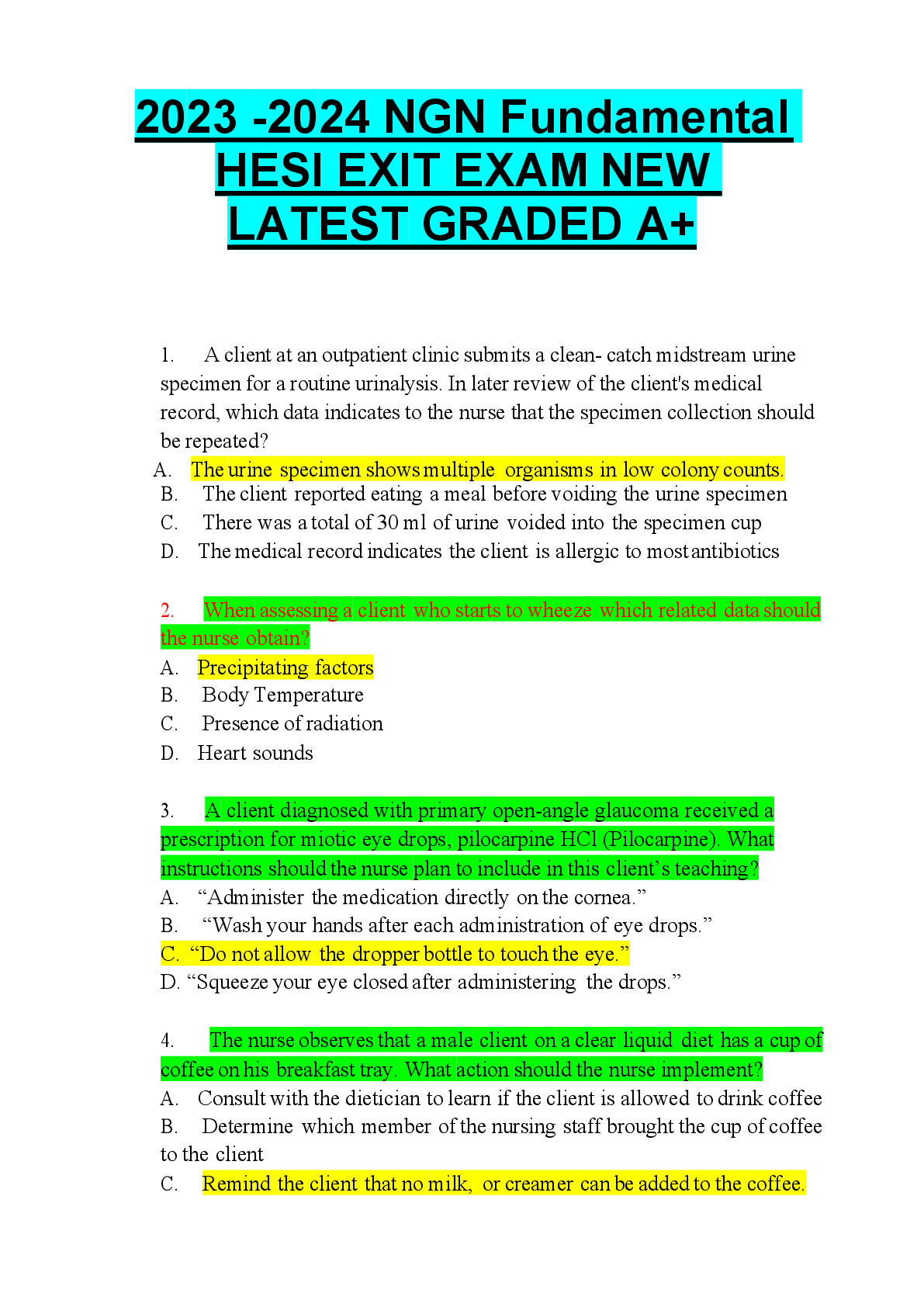
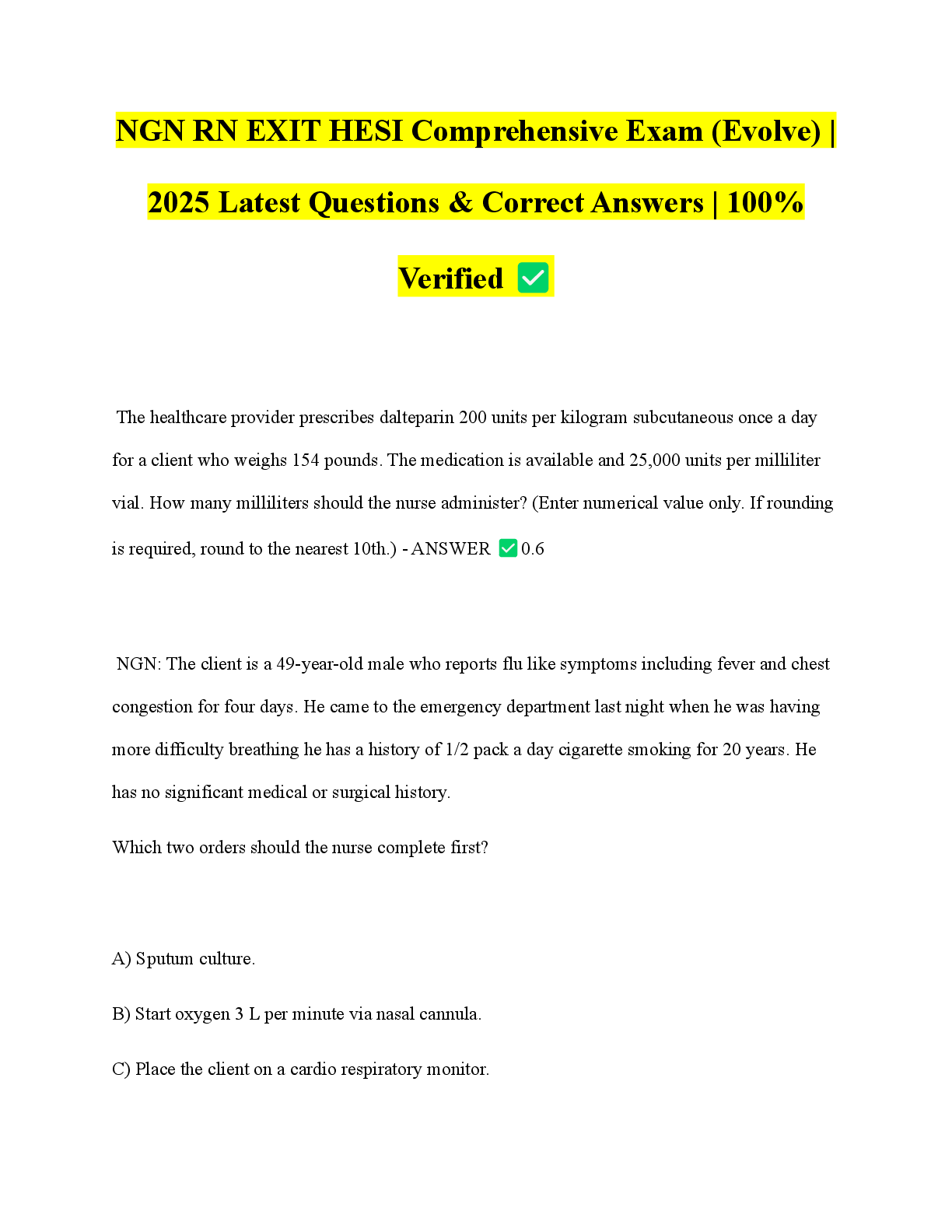
NGN RN EXIT HESI Comprehensive Evolve Exam 2024/2025 – 100% Pa...

Summary NSG 405 EXAM 1 Completed Study Guide > latest (Spring...
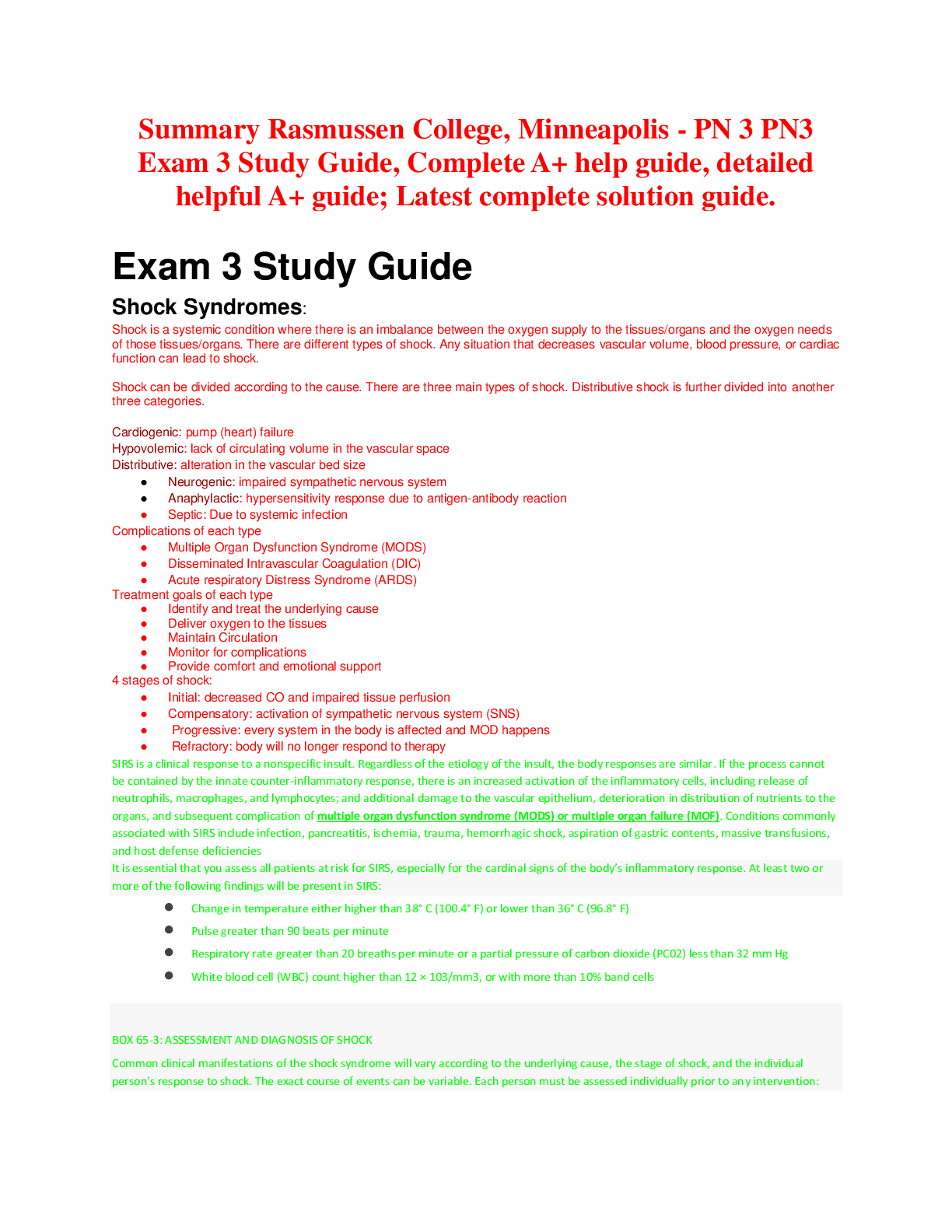
Summary Rasmussen College, Minneapolis - PN 3 PN3 Exam 3 Study...

Summary Med surg ATI (study guide; latest Fall 2020, A+ help

BIOS242 / BIOS 242 Final Study Guide Chapter 1 -9 : Fundamen...

NR566 / NR 566 Week 1 Notes (Latest): Advanced Pharmacology fo...
NUR2214 / NUR 2214: Nursing Care of the Older Adult Module 3 O...