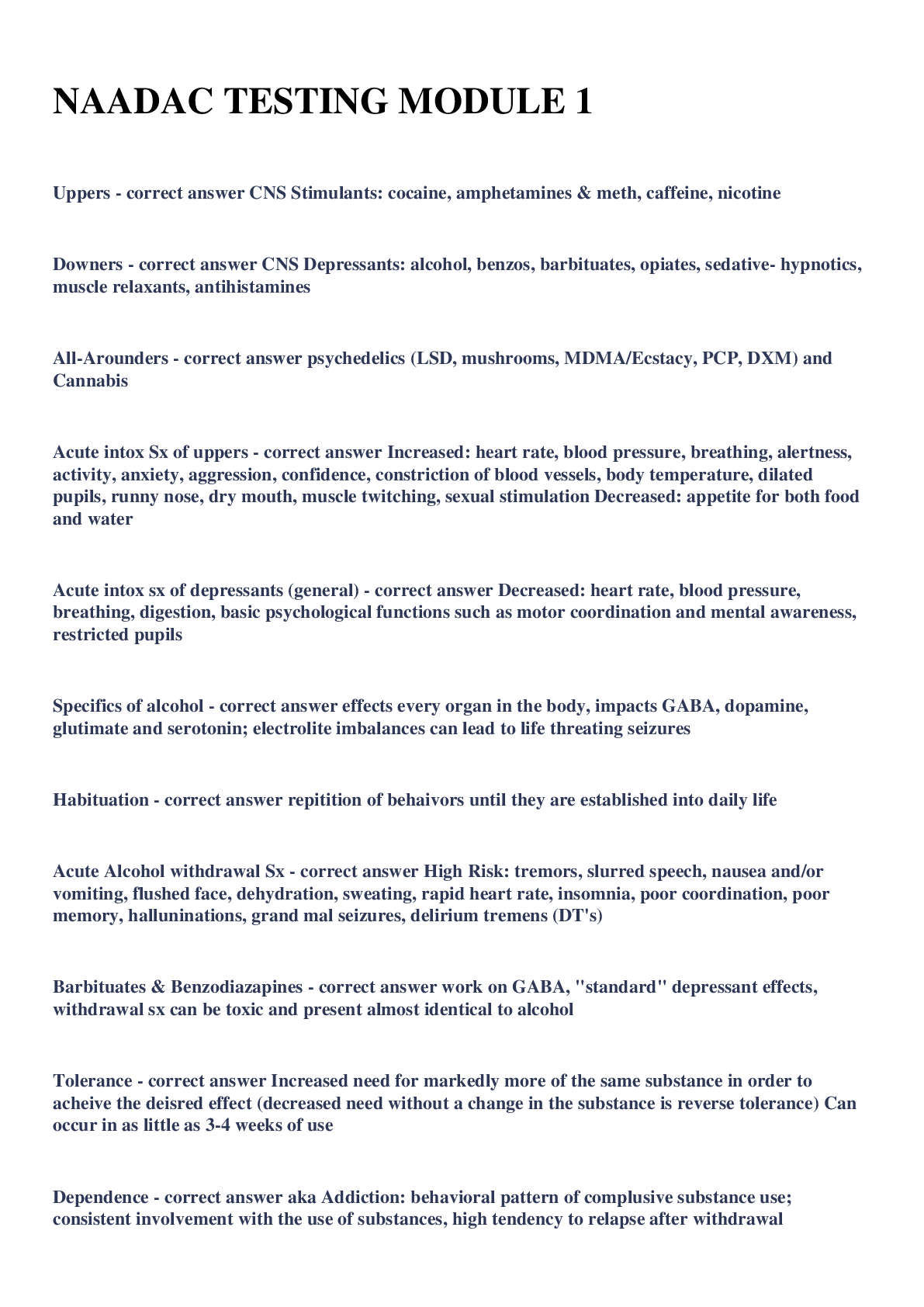
Uppers
CNS Stimulants: cocaine, amphetamines & meth, caffeine, nicotine
Downers
CNS Depressants: alcohol, benzos, barbituates, opiates, sedative- hypnotics, muscle relaxants, antihistamines
All-Arounders
...
Uppers
CNS Stimulants: cocaine, amphetamines & meth, caffeine, nicotine
Downers
CNS Depressants: alcohol, benzos, barbituates, opiates, sedative- hypnotics, muscle relaxants, antihistamines
All-Arounders
psychedelics (LSD, mushrooms, MDMA/Ecstacy, PCP, DXM) and Cannabis
Acute intox Sx of uppers
Increased: heart rate, blood pressure, breathing, alertness, activity, anxiety, aggression, confidence, constriction of blood vessels, body temperature, dilated pupils, runny nose, dry mouth, muscle twitching, sexual stimulation Decreased: appetite for both food and water
Acute intox sx of depressants (general)
Decreased: heart rate, blood pressure, breathing, digestion, basic psychological functions such as motor coordination and mental awareness, restricted pupils
Specifics of alcohol
effects every organ in the body, impacts GABA, dopamine, glutimate and serotonin; electrolite imbalances can lead to life threating seizures
Habituation
repitition of behaivors until they are established into daily life
Acute Alcohol withdrawal Sx
High Risk: tremors, slurred speech, nausea and/or vomiting, flushed face, dehydration, sweating, rapid heart rate, insomnia, poor coordination, poor memory, halluninations, grand mal seizures, delirium tremens (DT's)
Barbituates & Benzodiazapines
work on GABA, "standard" depressant effects, withdrawal sx can be toxic and present almost identical to alcohol
Tolerance
Increased need for markedly more of the same substance in order to acheive the deisred effect (decreased need without a change in the substance is reverse tolerance) Can occur in as little as 3-4 weeks of use
Dependence
aka Addiction: behavioral pattern of complusive substance use; consistent involvement with the use of substances, high tendency to relapse after withdrawal
Detoxification
Process of eliminating all psychoactive substances from the body
Methods of administration
oral- mouth via swallowing or smoking; Nasally- snorting or inhaling; IM- injection into a muscle; IV- Injecting into a vein; Subcutanious- injecting beneith the skin; Topical- applyed on top of the skin; Sublingually- dissolving under the touge; rectally- inserted into the anus; Vagionally- inserted into the vagional opening
Physiological dependence
continued use of the substance is needed in order to prevent withdrawal symtoms
Psychological dependence
percetion that the effects produced by a substance, or the associated condtions of use, are needed to maintain optimal well- being.
Cross- Tolerance
the ability of pharmacologically similar substances to substiture for the other in relation to tolerance and to prevent withdrawal
Abuse Liability
risk potential associated with a substance becoming repeatedly used and/or dependence inducing
designer psychoactive substances
Substances specifically invented with a different molecular formula to evade law inforcement
Half- Life
The amount of time it takes to eliminate 1/2 of the original dosage from the body
Central Nervous System (CNS)
Brain & spine
Limbic system
Within the CNS, Controls Emotions
Reticular Activating System
Within the CNS, responsible for the state of arousal
Basal Ganglia
Within the CNS: responsible for involuntary and fine motor skills
Cerebral Cortex
within the CNS: part of the limbic system that controls voluntary motor skills and sensory input
Hypothalamus
Part of the limbic system: liaison between CNS & ANS
Autonomic Nervous System (ANS)
montiors unconscious bodily functions such as heart rate, breathing, and digenstion
Sympathetic Nervous System
secondary within the ANS- when activated increases breathing, heart rate, etc.
Parasymphathetic Nervous System
Secondary within the ANS- when activated decreases breathing, heart rate, etc.
Neurotransmitters most affected by AOD
acetylcholine, norepinephrine, epinephrine, dopamine, serotonin, GABA, glutamate, endogenous opioids
Inhibitory Neurotransmitters
Dopamine, serotonin, GABA
[Show More]