Pathophysiology – Exam 2
Study Guide
Module 4
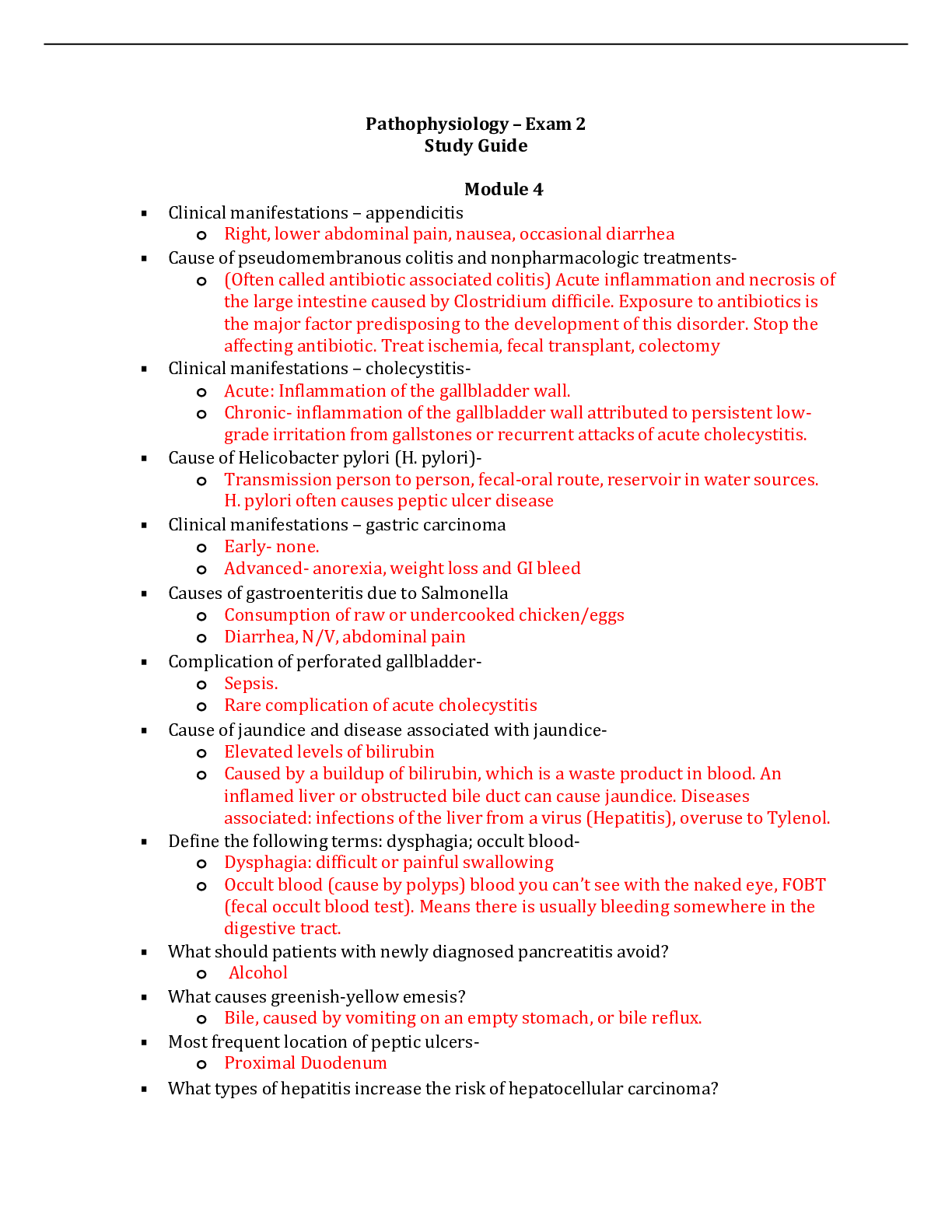
Clinical manifestations – appendicitis
o Right, lower abdominal pain, nausea, occasional diarrhea
Cause of pseudomembranous colitis and nonpharmacologic treatmentso
...
Pathophysiology – Exam 2
Study Guide
Module 4
Clinical manifestations – appendicitis
o Right, lower abdominal pain, nausea, occasional diarrhea
Cause of pseudomembranous colitis and nonpharmacologic treatmentso (Often called antibiotic associated colitis) Acute inflammation and necrosis of
the large intestine caused by Clostridium difficile. Exposure to antibiotics is
the major factor predisposing to the development of this disorder. Stop the
affecting antibiotic. Treat ischemia, fecal transplant, colectomy
Clinical manifestations – cholecystitiso Acute: Inflammation of the gallbladder wall.
o Chronic- inflammation of the gallbladder wall attributed to persistent lowgrade irritation from gallstones or recurrent attacks of acute cholecystitis.
Cause of Helicobacter pylori (H. pylori)-
o Transmission person to person, fecal-oral route, reservoir in water sources.
H. pylori often causes peptic ulcer disease
Clinical manifestations – gastric carcinoma
o Early- none.
o Advanced- anorexia, weight loss and GI bleed
Causes of gastroenteritis due to Salmonella
o Consumption of raw or undercooked chicken/eggs
o Diarrhea, N/V, abdominal pain
Complication of perforated gallbladdero Sepsis.
o Rare complication of acute cholecystitis
Cause of jaundice and disease associated with jaundiceo Elevated levels of bilirubin
o Caused by a buildup of bilirubin, which is a waste product in blood. An
inflamed liver or obstructed bile duct can cause jaundice. Diseases
associated: infections of the liver from a virus (Hepatitis), overuse to Tylenol.
Define the following terms: dysphagia; occult bloodo Dysphagia: difficult or painful swallowing
o Occult blood (cause by polyps) blood you can’t see with the naked eye, FOBT
(fecal occult blood test). Means there is usually bleeding somewhere in the
digestive tract.
What should patients with newly diagnosed pancreatitis avoid?
o Alcohol
What causes greenish-yellow emesis?
o Bile, caused by vomiting on an empty stomach, or bile reflux.
Most frequent location of peptic ulcerso Proximal Duodenum
What types of hepatitis increase the risk of hepatocellular carcinoma?
o Hep B and C
Clinical manifestations of chronic gastritis
o Upper abdominal pain
o Indigestion
o Bloating
o N/V
o Weight loss/loss of appetite
o Hematemesis may occur bc of damage to the gastric epithelial mucosa
[Show More]