BTEC Applied Science Unit
Document Content and Description Below
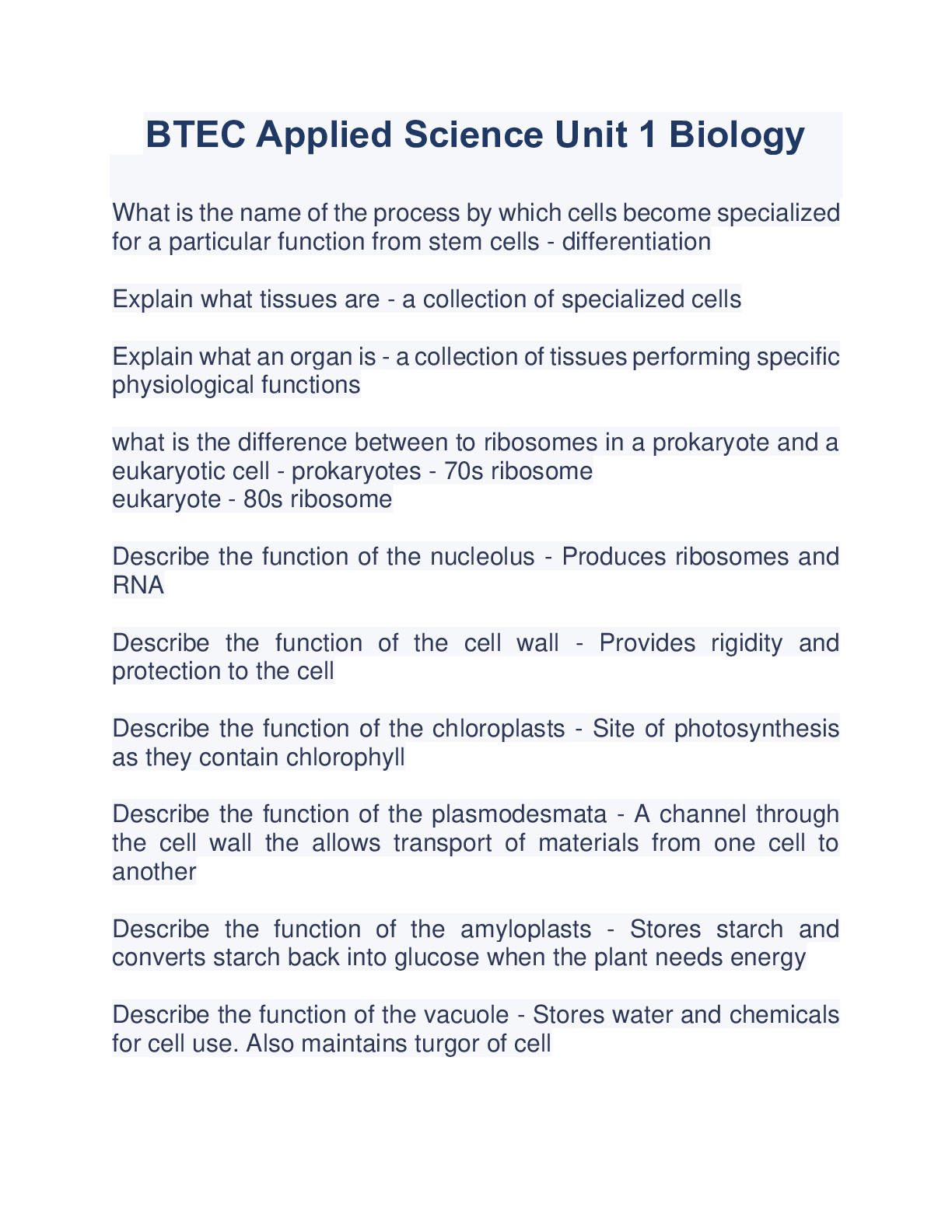
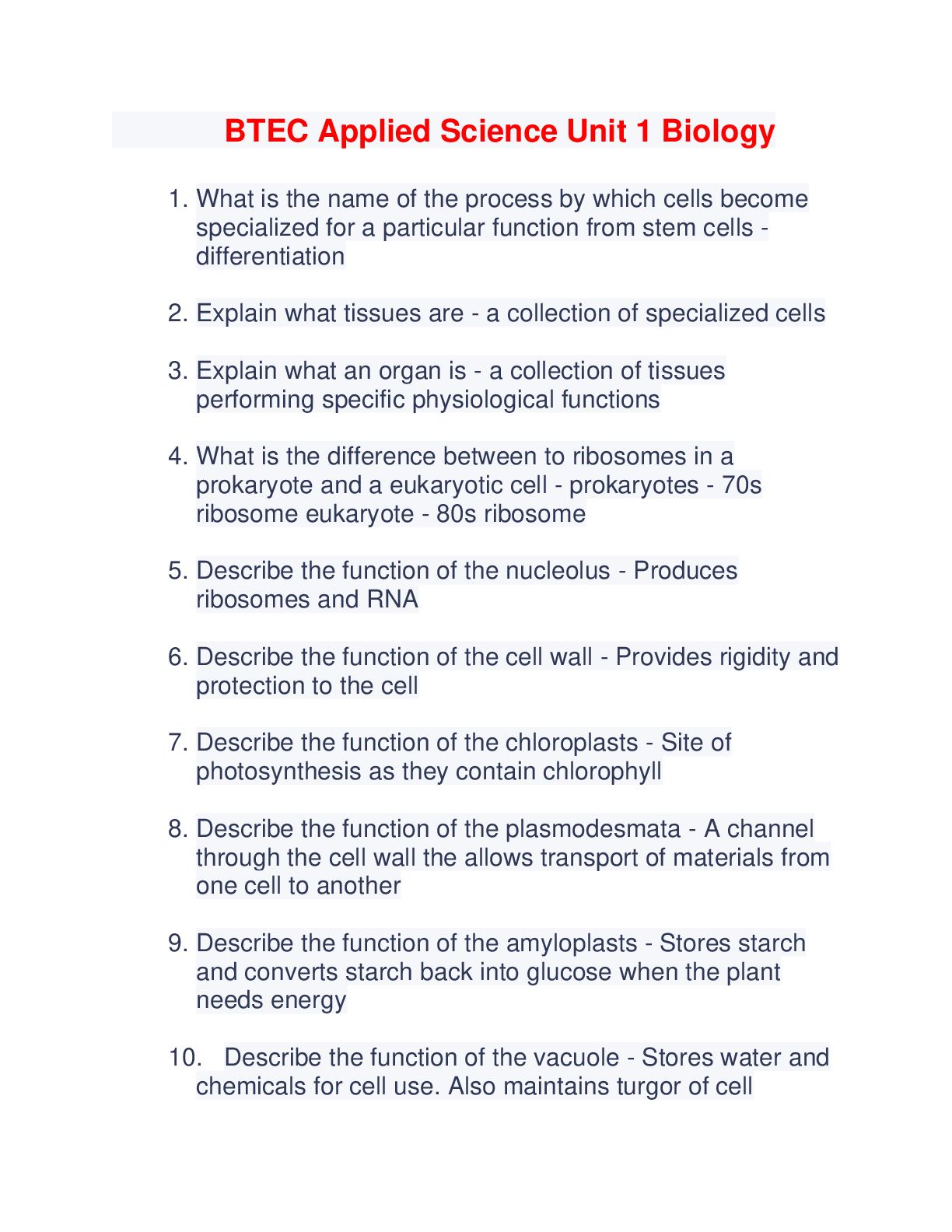
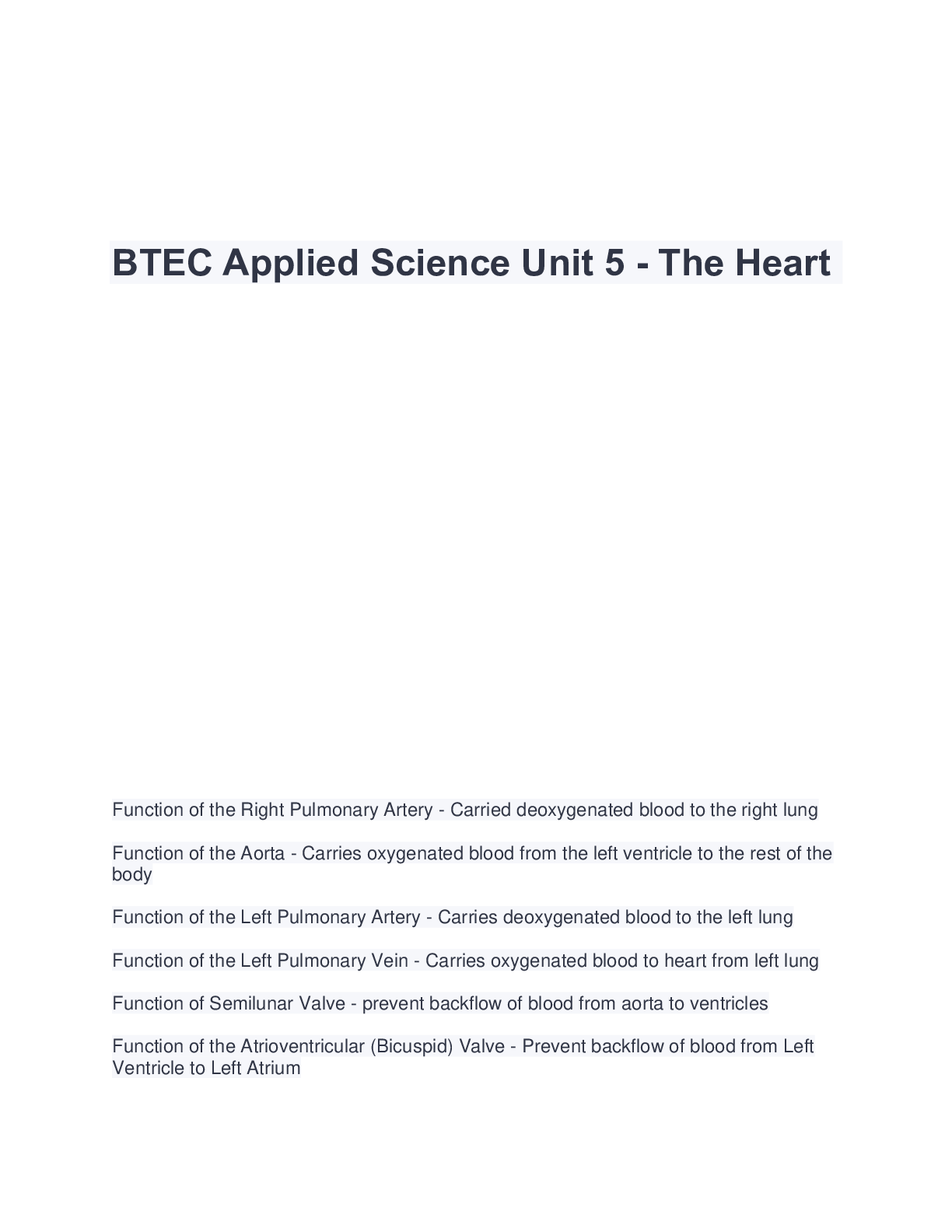
What is the name of the process by which cells become specialized for a particular function from stem cells - differentiation
Explain what tissues are - a collection of specialized cells
Explain what an organ is -
...
[Show More]
Last updated: 2 years ago
Preview 1 out of 6 pages
Instant download
Buy this document to get the full access instantly
Instant Download Access after purchase
Reviews( 0 )
Document information
Connected school, study & course
About the document
Uploaded On
Jul 01, 2023
Number of pages
6
Written in
All

Additional information
This document has been written for:
Uploaded
Jul 01, 2023
Downloads
0
Views
264
Document Keyword Tags
Recommended For You
Get more on EXAM »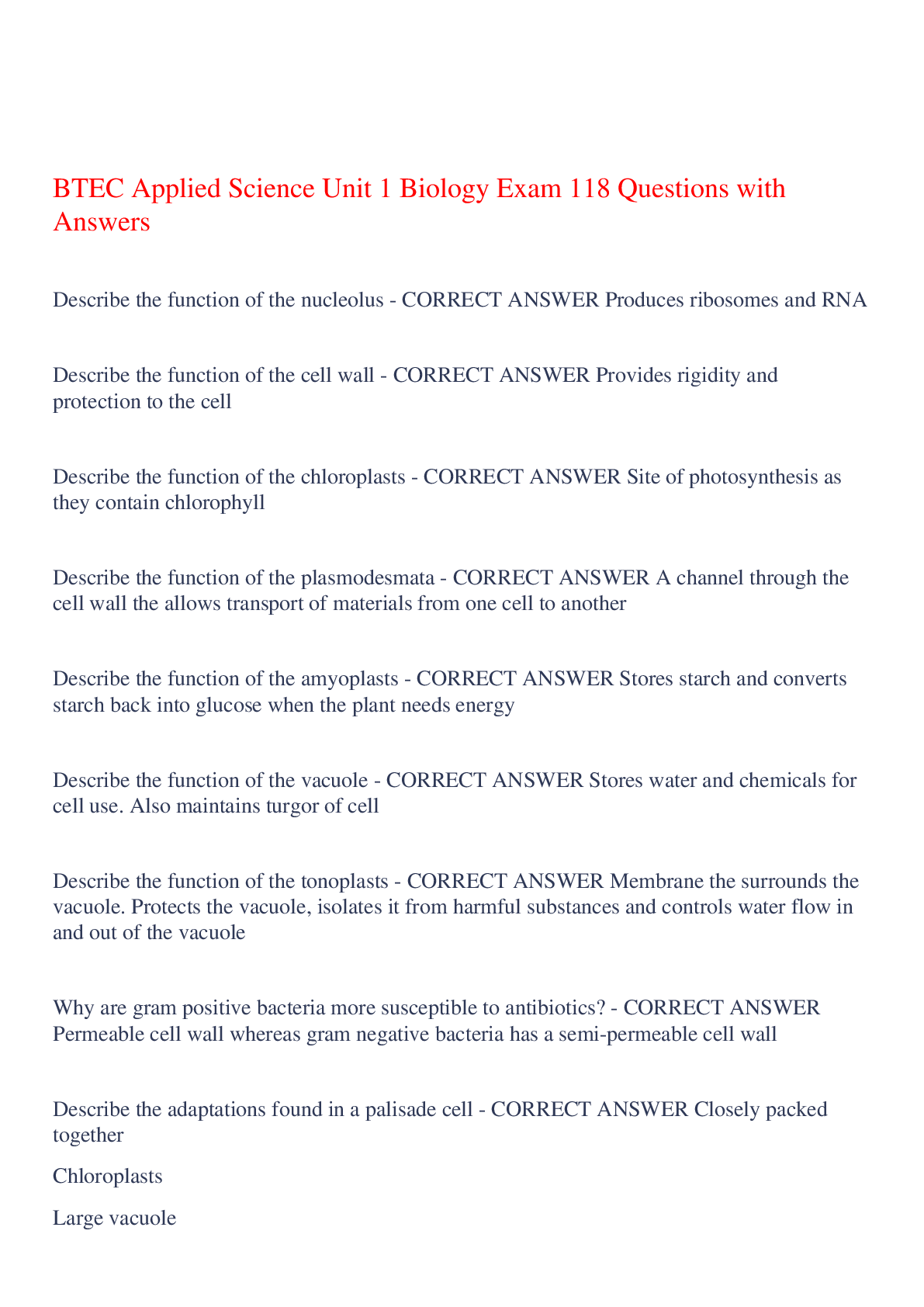
$10.5
12 Pages
BTEC Applied Science Unit 1 Biology Exam 118 Questions with An...
$11
13 Pages
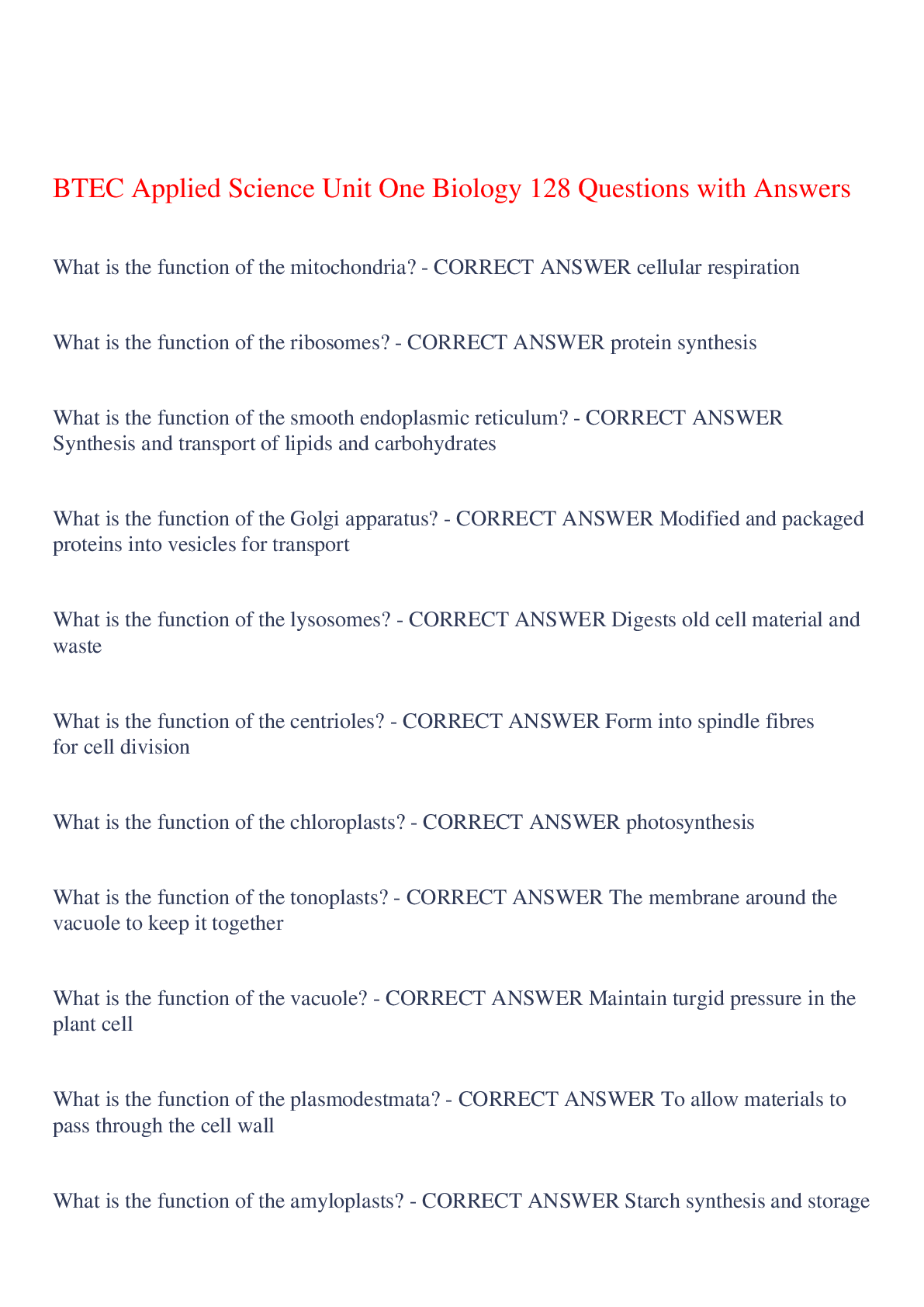
BTEC Applied Science Unit One Biology 128 Questions with Answe...

$13
6 Pages
BTEC Applied Science Unit 1 Biology questions and answers
$13
6 Pages
BTEC Applied Science Unit 1 Biology questions and answers

$11.5
11 Pages
BTEC Applied Science Unit 8 LAC: Digestive System: Nutrition...
$13
26 Pages
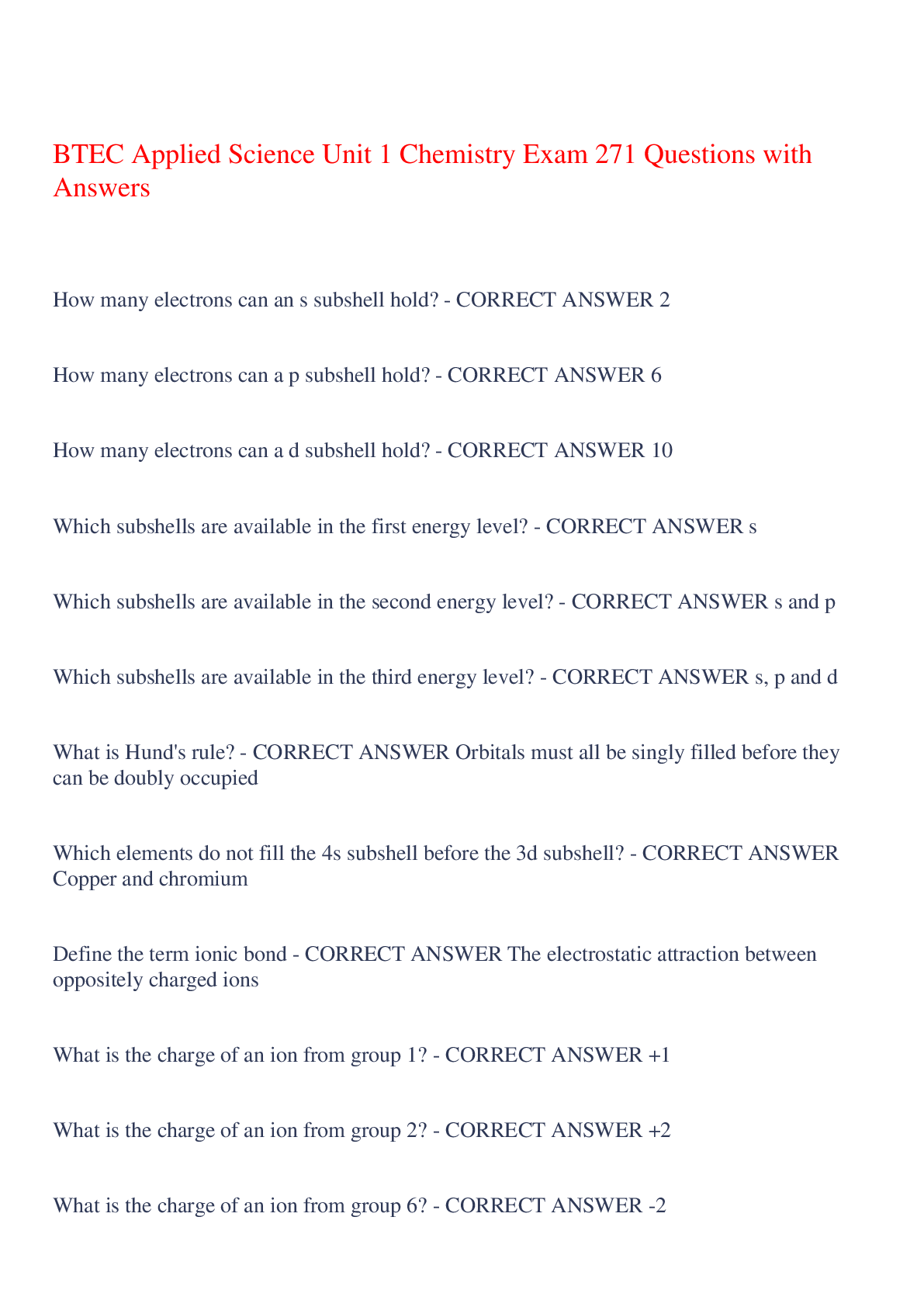
BTEC Applied Science Unit 1 Chemistry Exam 271 Questions with...
$11
13 Pages
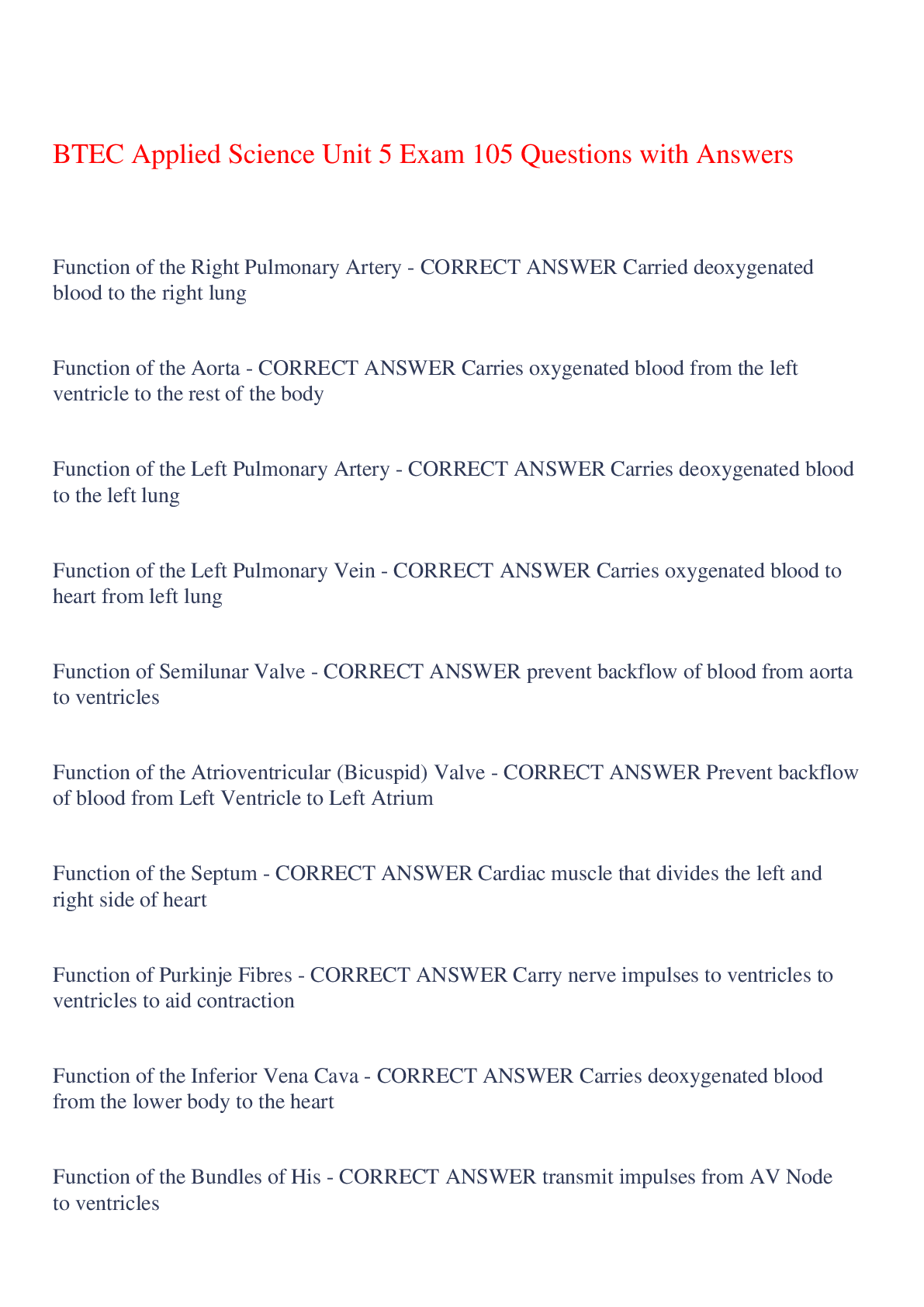
BTEC Applied Science Unit 5 Exam 105 Questions with Answers,10...
$11
2 Pages
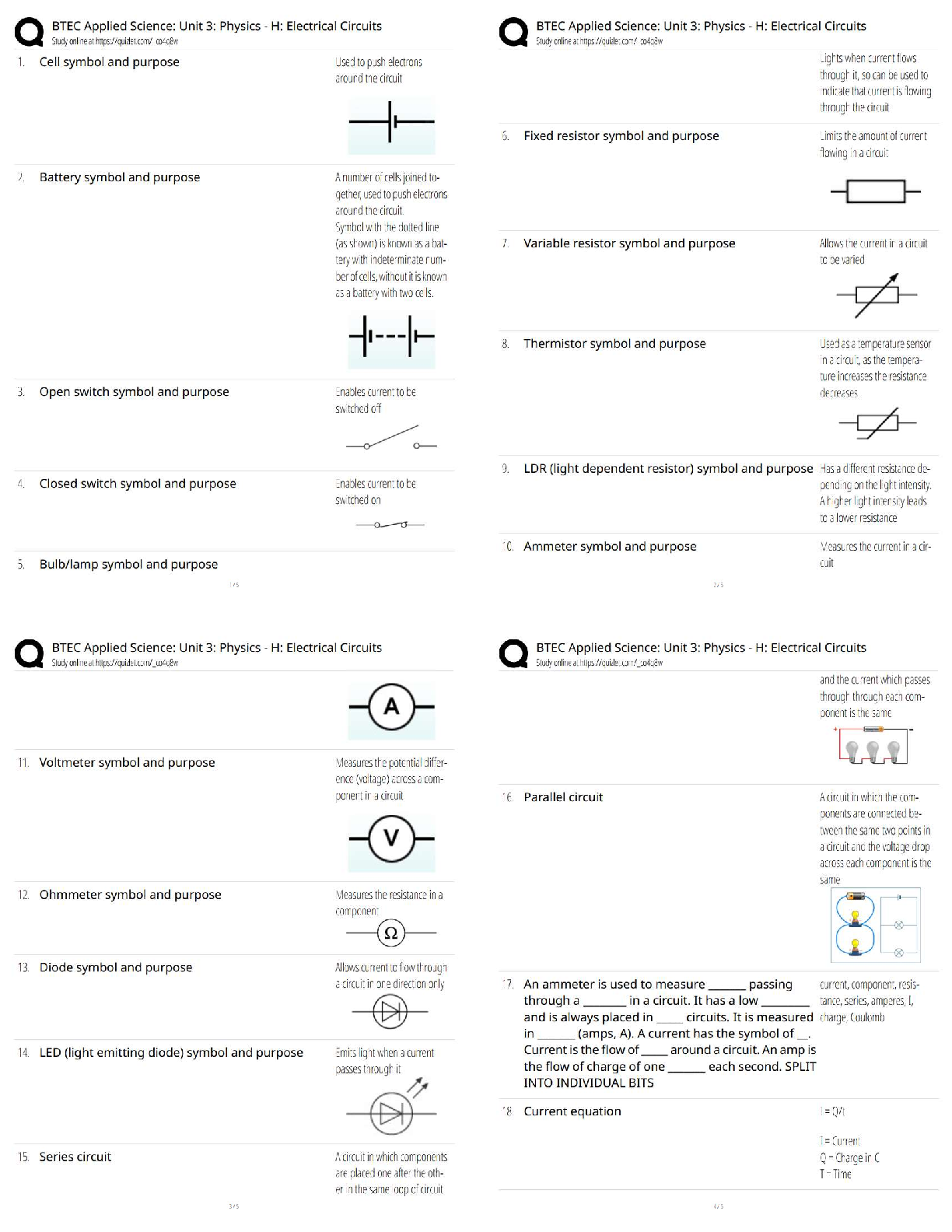
BTEC Applied Science Unit 3 Physics – Electrical Circuits /...
$10
5 Pages
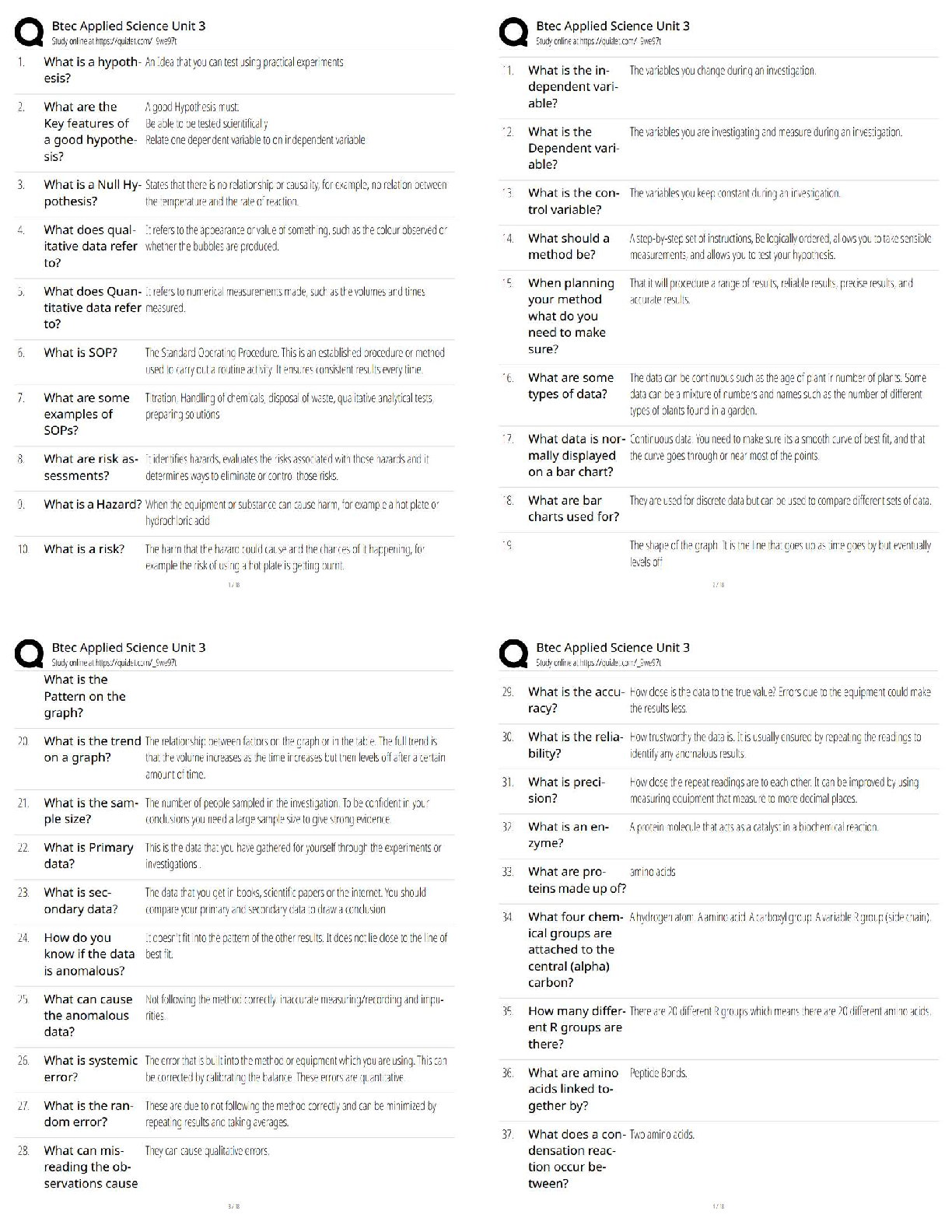
BTEC Applied Science Unit 3 / 2025 Update / Study Guide & Te...
$12
1 Pages
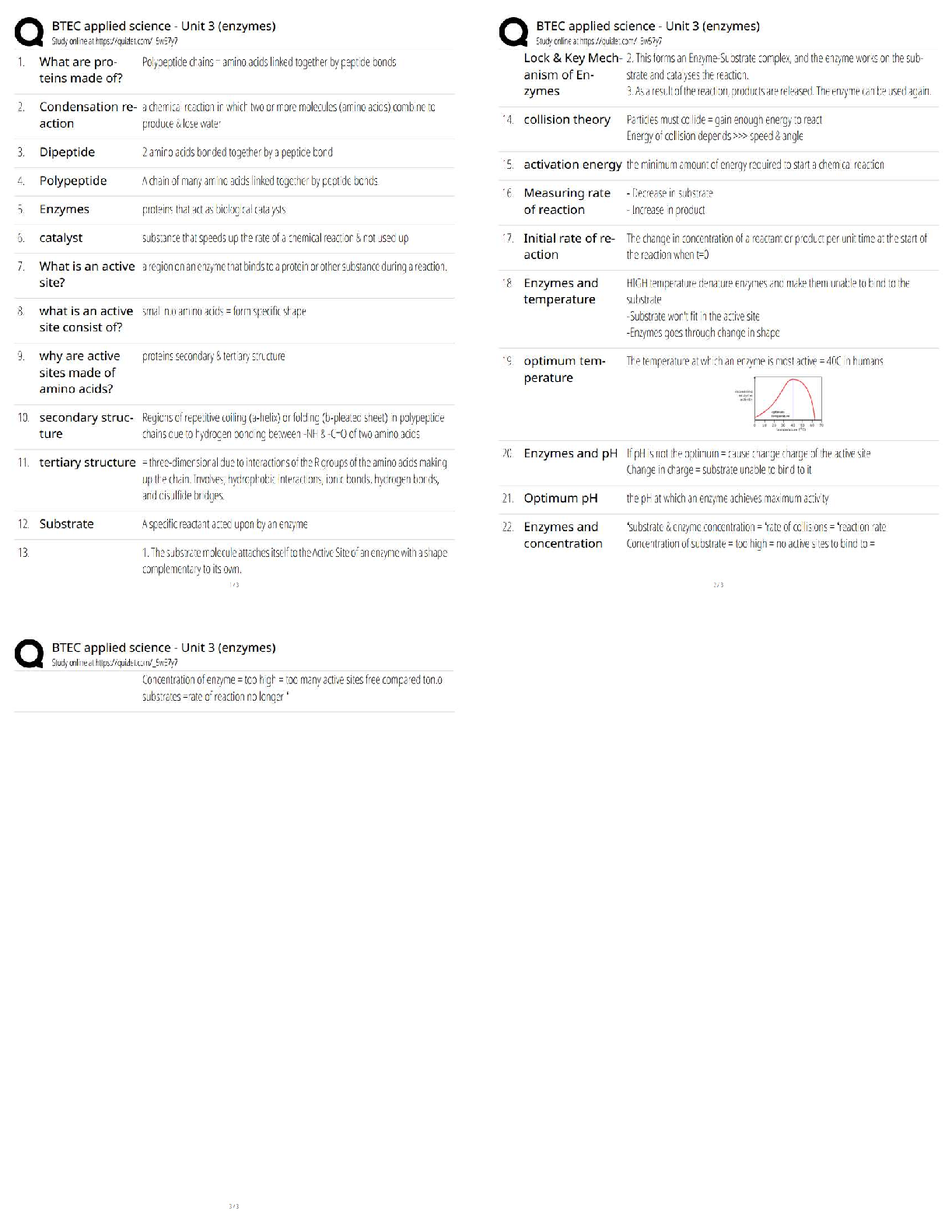
BTEC Applied Science Unit 3 Enzymes / 2025 Update / Study Gu...

$10
2 Pages
BTEC APPLIED SCIENCE UNIT 15 C AND D - DISTINCTION! RATED A+


$10
2 Pages
BTEC Applied Science Unit 2 Assignment A - Titration! RATED A+
More related documents below