Computer Science > EXAM > WGU C170 - Data Management - Applications (All)
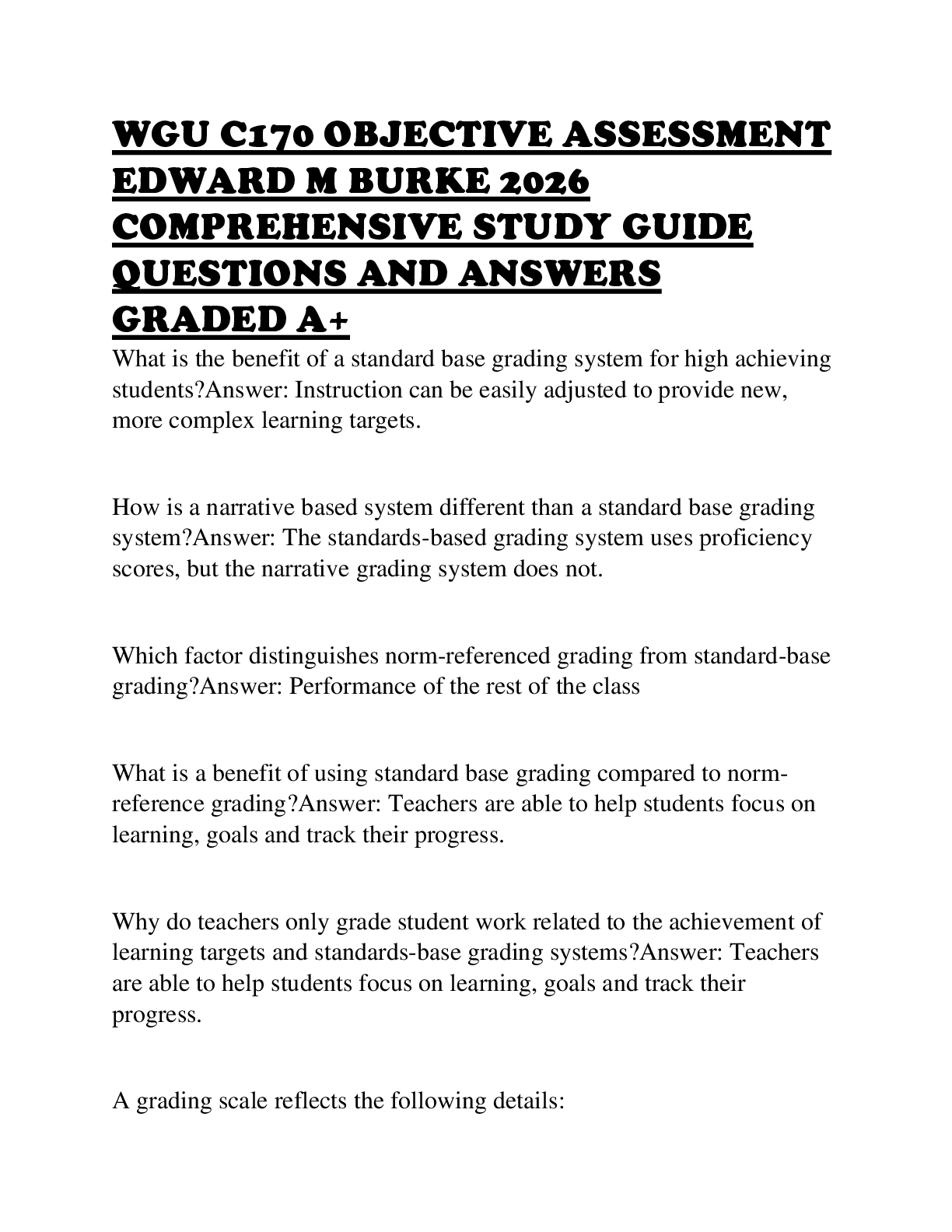
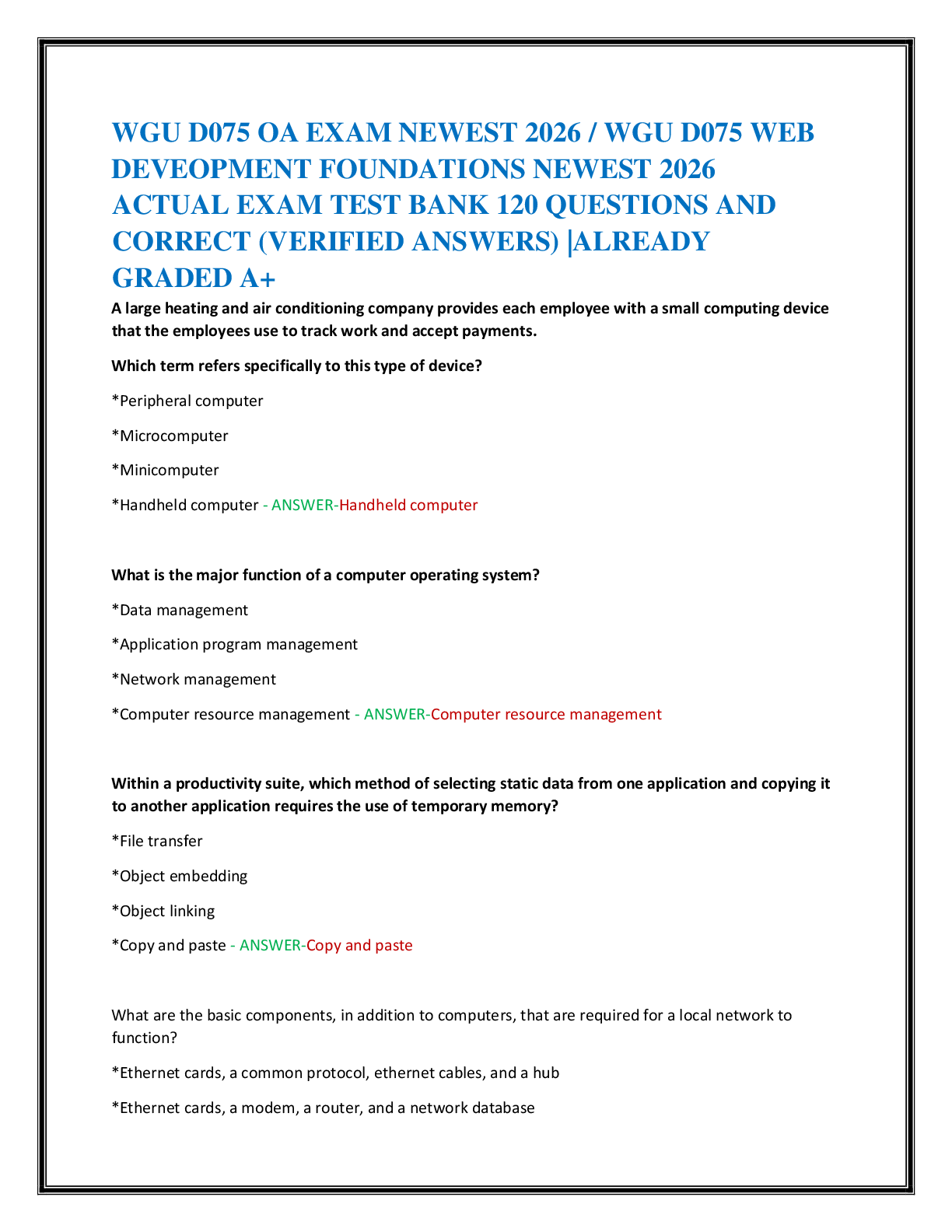
WGU C170 - Data Management - Applications
Document Content and Description Below
Last updated: 3 years ago
Preview 1 out of 18 pages
Instant download

Buy this document to get the full access instantly
Instant Download Access after purchase
Also available in bundle (1)
Click Below to Access Bundle(s)
WGU c170 TESTS COMPILATION BUNDLE
WGU c170 TESTS COMPILATION BUNDLE
By Crum 3 years ago
$15.5
13
Reviews( 0 )
Document information
Connected school, study & course
About the document
Uploaded On
Oct 21, 2022
Number of pages
18
Written in
All

Additional information
This document has been written for:
Uploaded
Oct 21, 2022
Downloads
0
Views
249
Document Keyword Tags
Recommended For You
Get more on EXAM »
.png)
WGU C170 Data Management Applications Questions and Answers Ra...
.png)
WGU C170 Data Management – Applications Questions and Answers...
.png)
WGU - C170 - Data Management Applications Questions and Answer...

WGU Course C170 - Data Management (Applications) Questions And...
WGU Course C170 - Data Management (Applications) Questions And...


WGU C170 Data Management - Applications (Latest 2022/2023)
.png)
WGU Course C170 Exam - Data Management (Applications) Latest...

DATA MANAG C170 VHT2 TASK 1: NORMALIZATION AND DATABASE DESIGN...