(TCO 1) The second step of the scientific method is:
observation and description of a phenomenon.
testing a research question or hypothesis.
generating a hypothesis.
collecting data.
(TCO 1) Wh
...
(TCO 1) The second step of the scientific method is:
observation and description of a phenomenon.
testing a research question or hypothesis.
generating a hypothesis.
collecting data.
(TCO 1) Which of the following is TRUE regarding the science of nutrition?
As compared to many other scientific disciplines, nutrition is a young science.
Discoveries by the first nutritional scientists established the connection between deficiencies and illness.
In developed countries, current research in nutrition focuses on the relationship between diet and chronic diseases.
All of these are true.
(TCO 1) The type of study that observes a large population to determine factors that may influence nutritional habits and disease trends is called a (n):
case-controlled study
clinical trial
epidemiological study
animal study
(TCO 1) Which of the following is NOT an essential nutrient?
Water
Alcohol
Vitamins
Minerals
(TCO 2) Which of the following is associated with diets high in added sugars?
Hyperactivity
Tooth decay
Diabetes
All of these
(TCO 2) The type of study that observes a large population to determine factors that may influence nutritional habits and disease trends is called a (n):
case-controlled study.
clinical trial.
epidemiological study.
animal study.
(TCO 2) Which of the following is associated with the development of ketosis?
A diet that contains too much fat
A diet that contains insufficient fat
A diet that contains too much carbohydrates
(TCO 3) If a person is suffering from GERD, the ________ is malfunctioning.
gallbladder
pancreas
epiglottis
gastro-esophageal sphincter
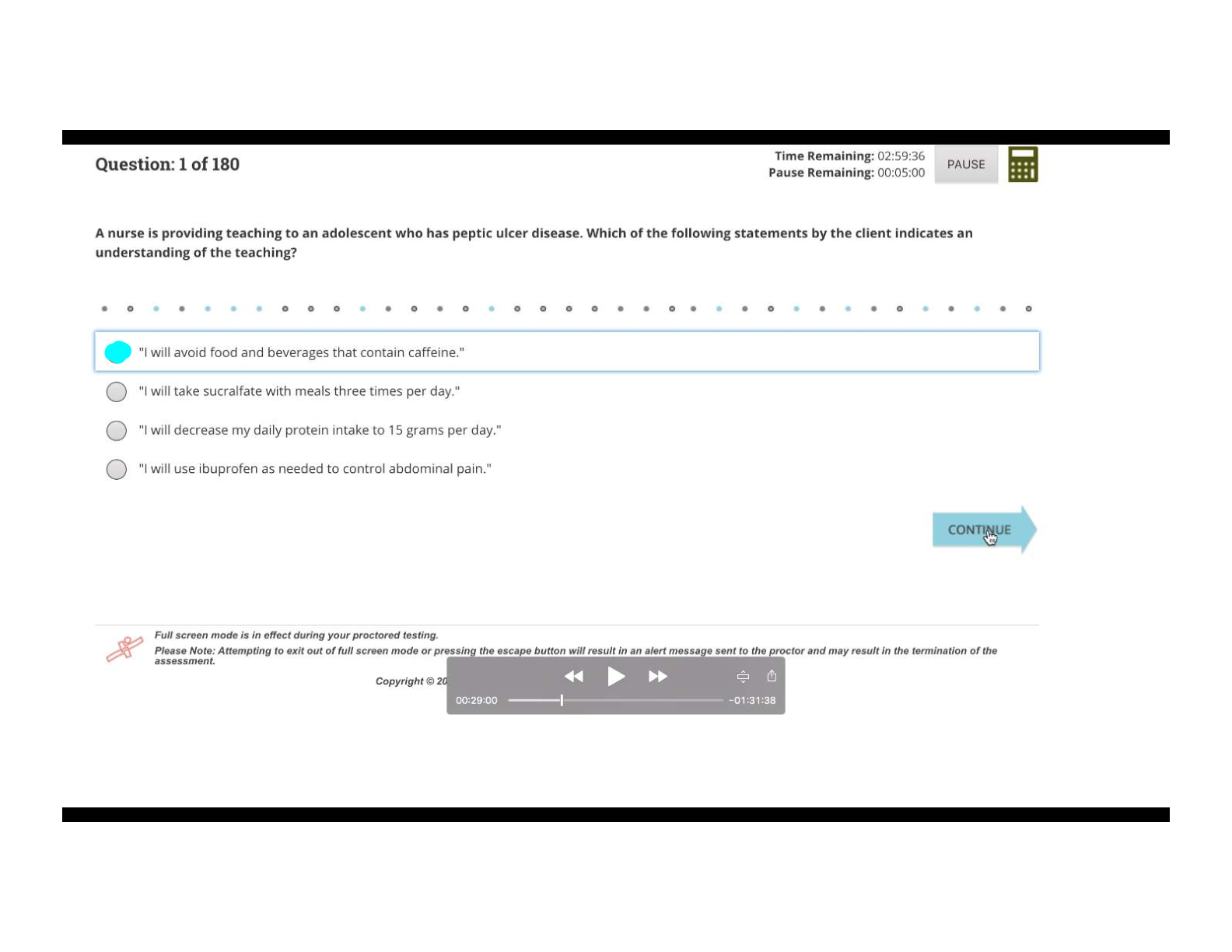
(TCO 3) What is the primary cause of peptic ulcers?
Stress
H. pylori bacteria
Prolonged use of aspirin
Eating too many spicy foods
(TCO 3) Which of the following would be an appropriate treatment approach for someone suffering from GERD?
Surgical removal of the gallbladder
Omission of all lactose foods
Antibiotic therapy
Loses weight and quits smoking
(TCO 4) The simplest units of carbohydrates are called:
fatty acids.
amino acids.
monosaccharides.
calories.
(TCO 4) ________ is a highly branched arrangement of glucose molecules found in liver and skeletal muscle cells.
Fructose
Starch
Glycogen
Raffinose
(TCO 4) Which of the following carbohydrates is the end product of photosynthesis?
Glycogen
Galactose
Lactose
Glucose
(TCO 5) What are the three classes of lipids?
Monosaccharide, disaccharides, and starch
Triglycerides, sterols, and phospholipids
Sterols, amino acids, and polysaccharides
Phospholipids, glycogen, and dipeptides
(TCO 5) Triglycerides are classified by:
the length of the fatty acids.
the saturation of the fatty acids.
the shape of the fatty acids.
all of these.
(TCO 5) The vast majority of fat digestion and absorption occurs in the:
pancreas.
liver.
small intestine.
gall bladder.
(TCO 5) A fatty acid that contains a chain of 10 carbons and two double bonds is termed a:
saturated, medium-chain fatty acid.
polyunsaturated, medium-chain fatty acid.
monounsaturated, medium-chain fatty acid.
monounsaturated, long-chain fatty acid.
(TCO 6) Which of the following supplements would you recommend that a vegan add to his or her diet?
Protein
Fiber
Vitamin B12
Vitamin C
(TCO 6) Which of the following is a genetic disorder resulting in debilitating protein abnormalities?
Cystic fibrosis
Mad cow disease
Marasmus
Kwashiorkor
(TCO 6) Of the 20 amino acids relevant to the human body, how many are considered essential?
They are all essential.
11
Nine
10
(TCO 6) The absorption of proteins occurs in the:
stomach.
small intestine.
large intestine.
liver.
(TCO 7) Which of the following is MOST likely to occur if you were to consume too much calcium via the diet?
You would experience hypercalcemia.
You would begin to produce kidney stones.
Your gastrointestinal tract would limit the absorption of calcium.
Calcium deposits would accumulate in the soft tissues of the body.
(TCO 7) Rickets is associated with a deficiency of:
Vitamin D.
Vitamin B12.
iron.
Vitamin C.
(TCO 7) Due to the fact that newborns do not have enough bacteria in their small intestine to make _______, they are given an injection of this nutrient.
Vitamin K
iron
calcium
folate
(TCO 7) The absorption of calcium is inhibited by________.
Vitamin C
Vitamin D
oxalic acid
essential fatty acids
(TCO 8) Most water is lost daily via the ________.
skin
lungs
kidneys
colon
(TCO 8) Which of the following will likely result if the concentration of electrolytes inside of a cell is higher than in the extracellular environment?
The cell will burst.
The cell will shrink and dry up.
The cell will undergo mitosis and divide.
The cell will be unaffected.
(TCO 8) Water has a high heat capacity. What does this term mean?
Water is resistant to changes in temperature.
Water heats up or cools down very quickly.
Water provides a useful source of stored kilocalories.
Water transports the energy-yielding nutrients throughout the body.
(TCO 8) Insensible water loss is:
water lost during illness or trauma.
water lost during intense exercise.
water lost through perspiration and respiration.
water lost through urination.
(TCO 9) All of the following may contribute to the development of bulimia EXCEPT:
birth order.
more angry and disruptive interactions among family members.
a less stable family organization.
a less nurturing family.
(TCO 9) In which of the following events would carbohydrate loading be the most beneficial?
Weight lifting
Baseball game
Cross country skiing
100-yard dash
(TCO 9) The type of eating disorder characterized by episodes of denial of hunger is:
anorexia nervosa.
bulimia nervosa.
disordered eating.
binge eating disorder.
(TCO 10) During the second trimester, women are advised to gain no more than:
three to five pounds.
one pound per week.
10-15 pounds
15-20 pounds
(TCO 10) What substance, often found in fish, should be monitored during pregnancy?
Mercury
Lead
Arsenic
Nitrogen
(TCO 10) All of the following are physiological changes that typically occur with aging EXCEPT:
decreased lean body mass.
decreased bone density.
decreased fat mass.
decreased immune function.
(TCO 1) There are four characteristics to a healthful diet. Please list these characteristics and provide an explanation for them as well.
(TCO 2) Besides being involved in the synthesis of DNA and the prevention of neural defects, folate is necessary for a few other things in the body. Please explain and make sure to elaborate on folate's relationship with other B-vitamins and heart disease.
(TCO 3, 5) Beginning with the mouth, describe the digestion and absorption of dietary protein. What is the final fate of protein in the human body?
(TCO 4) Describe how low-grade inflammation is involved in the development of heart disease.
(TCO 5) Describe the optimal diet for a long-distance runner and discuss the types of foods that this type of athlete should eat.
(TCO 6) Please explain the relationship among energy balance, weight gain, and weight loss.
(TCO 7) Why is the development of atrophic gastritis detrimental to the absorption of Vitamin B12?
(TCO 8) What are some of the reasons why adolescents may be at risk for poor nutrition, and what can parents do from a nutrition perspective to help their children through this transition period?
(TCO 10) Why is alcohol so dangerous during pregnancy?
[Show More]




.png)